
Alberta, Canada
Technical Theatre/Design 10-20-30 - Makeup
7 units • 4 professional development courses aligned to
1 - demonstrate understanding of the purpose of makeup
View all Standards for Alberta, Canada
1 demonstrate understanding of the purpose of makeup
This page lists 7 units and 4 professional development courses aligned to 1 from the Alberta, Canada. Designed for drama teachers, these resources directly address 1 - demonstrate understanding of the purpose of makeup
Unit
11
of
14
in
Drama One
Curriculum
UNIT
Japanese Theatre
by Karen Loftus
4 lessons
This unit will enable students to identify, compare, and contrast three different styles of Japanese theatre: Noh, Bunraku, and Kabuki. There are three proposed projects in this unit: a research assignment where groups delve into further detail about one of the three styles; a performance project where students utilize what they’ve learned by enacting a scene from a Kyogen (comedic) play; and a Bunraku puppet play.
Unit
5
of
6
in
Technical Theatre Mini Units
Curriculum
UNIT
Free Play Makeup
by Josh Hatt
8 lessons
This is a student centred mini-unit on makeup design. Makeup is useful in transporting an audience to a different world.
The purpose is for students to understand that makeup is a tool that theatre technicians can use in order to contribute to effective performance aesthetics; to understand basic makeup rules and care instruction; to understand how to complete a makeup design plot; to look at a project and figure out for themselves what they need to succeed.
Unit
6
of
6
in
Technical Theatre Mini Units
Curriculum
UNIT
Culminating Project
by Josh Hatt
Once students have completed the five Tech Theatre Units (Lighting, Sound, Costume, Staging, Free Play Makeup), you can give them this culminating project.
Depending on how you structured your technical theatre unit, you can adapt this project to suit your needs and context.
Up to this point, all the work in the units have been exploratory. This is where students will apply their skills and knowledge.
UNIT
Introduction to Film Analysis: Mise en scène
by Lindsay Price
7 lessons
Lindsay Price has developed this Introduction to Film Analysis Unit: Mise en scène. In order to develop visual literacy, students have to be able to analyze what they see. In a film, the composition of everything you see on screen is called mise-en-scène. In this unit, students will explore the individual elements that make up mise-en-scène, be able to identify those elements in stills and film scenes, and apply their knowledge in a culminating analysis activity.
Heads up. You’re going to need some technology for this unit. Students need to be able to view, either as a class or 1:1 images, a google slide deck and selected film scenes.
Unit
13
of
13
in
Stagecraft Without a Theatre
Curriculum
UNIT
Culminating Project
by Karen Loftus
Now it’s time for your students to take everything they’ve learned and creatively apply those skills. The goal is for students to take what they’ve been exposed to, explored, and researched about each of the arts and crafts of technical theatre and apply it to a project.
Unit
11
of
13
in
Stagecraft Without a Theatre
Curriculum
UNIT
Make-Up Design
by Karen Loftus and Josh Hatt
1 lesson
Students will be able to explore the use of make-up as a theatrical tool and demonstrate their knowledge of make-up effectiveness.
UNIT
Old Age Makeup
by Matt Webster
8 lessons
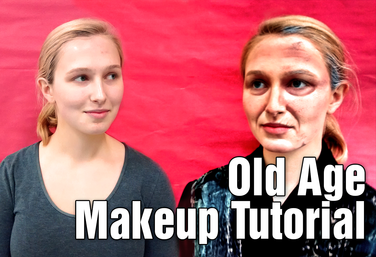
In this unit, students will learn the terminology, technology, and application of old age makeup. It is designed to lead students through a hands-on exploration of the techniques used to create an old age effect with makeup. By breaking the entirety of the human face down into different, distinct areas, students will be able to concentrate on smaller, more focused lessons, building up to a complete old age makeup design.
View all Standards for Alberta, Canada Standards Master List