
Facebook Pixel Skip to main content

📣SCRIPT SALE! Treat yourself to an easier Fall. Save 30% on 5+ perusal scripts with code SPRING30 before May 3 and head into summer stress-free.

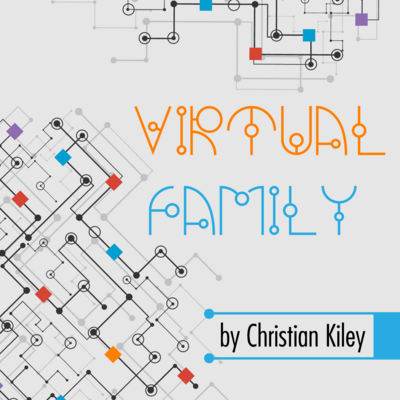
Virtual Family

Virtual Family

by Christian Kiley

Who needs to go outside when you've got a screen to show you what outside should look like? Who needs to do chores when laundry can be folded at the push of a button? And who needs a real family, anyway? Isn't it better to talk through text messages and receive preprogrammed communications from your parents? Sure it is.

Live safe and sound in the Virtual Family, a soothing world where complete dependence on technology is the name of the game. When technology takes away all your ills, conflicts, and concerns, you become a happier human being. Right?

Virtual Family has three endings to choose from.

Drama Issue-Based

Average Producer Rating:

Recommended for High Schools

Running Time
About 30 minutes
Approximate; excludes intermissions and scene changes
Cast
5 Characters
5 Any Gender
Set
Simple Set
Length
28 pages
Free Excerpt

What to order?

Not sure what you need to order? Check out our pricing and ordering guide.

Performance Royalty Fees

Royalty fees apply to all performances whether or not admission is charged. Any performance in front of an audience (e.g. an invited dress rehearsal) is considered a performance for royalty purposes.

Exemption details for scenes and monologues for competition.

5 Characters
5 Any Gender

Characters in this play are currently identified as male or female. Directors are welcome to assign any gender (binary or non-binary) to any character and modify pronouns accordingly.

Child [A] 98 lines
The Oldest Child
Child 2 [A] 82 lines
The Second Oldest Child
Child 3 [A] 39 lines
The Youngest Child (born without a PAD)
PAD [A] 69 lines
The Oldest Child’s PAD
PAD 2 [A] 54 lines
The Second Oldest Child’s PAD

Praise for Virtual Family

Jo Matheson
Newlands College
The students loved performing this piece. They designed slides to complement the topics, created a clever soundtrack, and used a simple set that perfectly captured the futuristic feel. It all came together beautifully, and they had a fantastic time presenting it at the One Act Play Festival.
Kelly McCabe
Barrington Enrichment Summer Theatre
The 3 possible endings was exciting, and allowed for interesting discussion when deciding what we wanted the final tone to ultimately be.
Brittany Copeland
Fr. Tolton Catholic High School
We had a good time with this play and combined it with another futuristic one-act for a night of "spooky" dystopian plays. Set, props, and costumes are very simple, and the message is clear.

More Plays Like Virtual Family

flawless leArnIngs

by Kirk Shimano

In a data-driven future, an AI teacher's chilling efficiency sparks a fight for authenticity and self-expression.

Look Me in the Eye

by Lindsay Price

In the future teenagers are obedient and polite. But this behaviour comes at a price. A thought-provoking harrowing tale.

MĂ­rame en los Ojos

by Lindsay Price

A Spanish translation of Look Me in the Eye.

The Factory

by Lindsay Price

Robots will always do their jobs better than real people. And rules are what make the Factory productive.

Labeled

by Lindsay Price

We label people every day. We’ve done it in the past, we’ll do it in the future.

A Reporter and a Sidekick livestream from great moments in American history.

From the Drama Teacher Learning Centre

Playwright Spotlight: Get to Know Claire Broome
General

Playwright Spotlight: Get to Know Claire Broome

Welcome to "Playwright Spotlight" — your exclusive backstage pass to the creative minds crafting the incredible plays featured in our Theatrefolk catalogue. Discover the magic, quirks, and genius of the playwrights who help bring the stage to life. Let's meet one of these exceptional playwrights who offers the chance for your student performers to shine in their spotlight. What inspired you to start writing plays specifically for high school & middle school students?I believe Theatre is such a wonderful way for young people to explore issues and the world around them. I wanted to write work that they would enjoy performing and might challenge the way they see the world. Can you share a bit about your creative process when developing plays that resonate with students?Sometimes one of my students will say something that will inspire me (giving me a line for a play). Sometimes it is seeing what is happening in the world, or seeing what challenges students are facing in the high school I work in. Are there any challenges you face when writing for student performers, and how do you overcome them?I want to make sure the language I use reflects young people, but is not stereotypical. I want to make sure the character voice sounds authentic. To overcome this, I will ask students to read my work and give me feedback. I have really appreciated their thoughts in the process. What themes or messages do you aim to convey through your plays?It depends on the play, but I am hoping to leave casts, crews, and audiences with a sense of hope. How do you balance education and fun in your scripts?I want to make my work accessible - that it doesn't require a lot of sets, props, lighting, etc, to tell the story. Can you share a memorable experience or feedback from a student performance that left an impact on you?A student director shared that Gone from Same Room Different Story had a impact on them. They appreciated telling a story with complex emotions. They really liked that "what happened to him" was not what the story was about, but how the friend group dealt with their loss. Any advice for teachers or directors looking to choose engaging and age-appropriate plays for their student performers?If you find a play that you like, have a read through and get feedback from your students to see how they feel about it. Are they comfortable with the content? Next ensure that your administration and parents are on board. What is your favourite play you've written so far?Too hard to choose. I love Homework and Gone from Same Room Different Story, but Virtual Platform has a special place in my heart for the creative process it went through. It was written during a lockdown during the pandemic. Anything else you'd like students and/or directors to know about you as a playwright?I am a Drama Teacher.
Theatrefolk Featured Play – Virtual Family by Christian Kiley
Featured Plays

Theatrefolk Featured Play – Virtual Family by Christian Kiley

Welcome to our Featured Play Spotlight. Virtual Family by Christian Kiley examines our relationship with and dependence on technology. Who needs to go outside when you’ve got a screen to show you what outside should look like? Who needs to do chores when laundry can be folded at the push of a button? And who needs a real family, anyway? Isn’t it better to talk through text messages and receive preprogrammed communications from your parents? Sure it is. Live safe and sound in the Virtual Family, a soothing world where complete dependence on technology is the name of the game. When technology takes away all your ills, conflicts, and concerns, you become a happier human being. Right? Virtual Family has three endings to choose from. Why did we publish this play? If you’re a fan of Black Mirror, this is the play for you. Virtual Family explores the potential of our future relationship with technology. We love plays that take place in a completely different world. It’s not the present, it’s the possible. In the theatre, you can create any place, any time, and have your characters be anything. As long as you explain the rules of the world, your audience will be engaged. This play is all about future technology and isolation from the “outside world.” It would make perfect sense to stage this play on a virtual platform! Let’s hear from the author!1. Why did you write this play? It was over ten years ago but I think it had to do with my genuine fear that technology was becoming a bigger and bigger part of our lives. I still remember, as a kid, having to actually stand up and walk to the television to change the channels and hearing the click, click, click of the dial. To that younger version of myself, a cell phone would basically be a PAD. I continue to be fascinated by technology and the benefits and challenges that it presents to human beings. 2. Describe the theme in one or two sentences. Virtual Family investigates the potential dependence human beings have on technology. Can something with such upside potential, actually cause more harm than good? 3. What’s the most important visual for you in this play? The way the actors playing the PADs interact with the human characters. There are great opportunities for dynamic interaction. One moment that comes to mind is when PAD and PAD 2 “Initiate sleep sequence.” And the PADs try to get the children ready for bed like a parent (but a robot-parent). 4. If you could give one piece of advice for those producing the play, what would it be? Experiment with physicality. It might be easy to become complacent with the blocking. Push the limits and give the PADs power to create a world that would be hard to leave (that is the dilemma at the end (with three possible endings for the cast to choose from). Creating a world that is inviting and ultimately hard to walk away from is essential. 5. Why is this play great for student performers? This is a very relevant issue for current student-artists. Young Theatre artists are actually taking time and investing in moments of sans technology connection. I strongly believe that they can lead the way in illustrating that people don’t need to be reliant on technology. 6. Do you have any advice for people looking to perform this play online or socially distanced? Virtual Family would be fun and engaging to produce via video conference in that it would really play up the isolation that can be caused by technology. It brings a whole new meaning to “going outside” and this is very relatable, particularly with the circumstances of the play as it relates to social distancing and quarantine. Get your copy of Virtual Family right here, right now!Not right for your group right now? Search our play catalogue to find one that your performers will love!
Striking Simplicity: Virtual Family
Featured Plays

Striking Simplicity: Virtual Family

Virtual Family by Christian Kiley is a look at a soothing world where complete dependency on technology takes away all ills. But is everything really perfect? Plus, three endings to choose from! Who needs to go outside when you’ve got a screen to show you what outside should look like? Who needs to do chores when laundry can be folded at the push of a button? And who needs a real family, anyway? Isn’t it better to talk through text messages and receive preprogrammed communications from your parents? Sure it is. Live safe and sound in the Virtual Family, a soothing world where complete dependence on technology is the name of the game. When technology takes away all your ills, conflicts, and concerns, you become a happier human being. Right? Kelly McCabe from Barrington Enrichment Summer Theatre had an amazing time with their intern-directed production of Virtual Family. The gifted student performers from the theatre group in Barrington, RI were able to bring a true theatrical experience to their entire group: “One of our interns directed this piece as his senior project. The group as a whole, campers, staff, audience, and even the director of the library whose space we used were all very impressed with the piece. The simplicity of the presentation allowed for a very striking piece. The 3 possible endings was exciting, and allowed for interesting discussion when deciding what we wanted the final tone to ultimately be.”
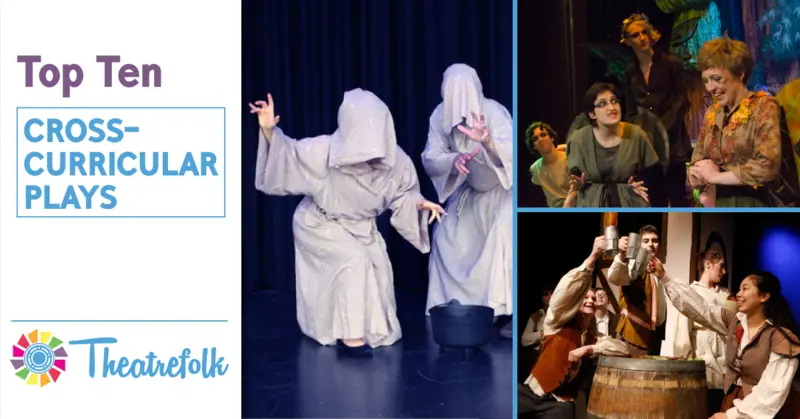
Theatrefolk’s Top 10: Cross-Curricular Plays
Featured Plays

Theatrefolk’s Top 10: Cross-Curricular Plays

Time for a Tfolk Top Ten Plays For….Cross-curricular. Cross-curricular is a magic word for many admins and quite frankly there’s a good reason for that. Here in the 21st century we no longer live in an isolated world and students shouldn’t be taught in isolation. What we do in the drama classroom has always had implications outside of the drama classroom and it’s time to showcase that connection. If you want students to increase their critical thinking skills, their communication skills, and their collaboration skills, reach out across department lines! You can do plays that will interest your history department, english department, social studies, technology and more. Click the link and you’ll be taken to the webpage for each play. There you’ll get the details and read sample pages. Hand this list over to your student directors and see what they think. All the best with your search!
Global Citizenship: A Cross-Curricular Opportunity
Teaching Drama

Global Citizenship: A Cross-Curricular Opportunity

Here at Theatrefolk, we’re big on cross-curricular opportunities for students. We’ve got lots of cross-curricular plays, as well as exercises for students to try, such as A Picture Tells a Thousand Words, Writing Your Research and Speeches From History. Global citizenship is applicable to so many different subjects. It touches on real-life topics and issues that are current and important to students. As we mentioned in our introductory post about global citizenship, the goal of global citizenship is to celebrate our diverse cultures while encouraging students to take ownership of their voices and use them to make positive changes for the future. Using dramatic techniques and resources taught in the drama classroom helps students make these big topics and issues more manageable and accessible. Read on for some suggestions for including global citizenship-related topics and exercises in your drama classes and rehearsals. Social Studies / Humanities• Research local performance groups from different ethnic or cultural backgrounds and take your students to see them perform. Arrange for performers from these groups to come and teach a workshop for your students in their style of performance. • Research stories/legends/fairy tales from different nations (perhaps from your students’ various cultural backgrounds). Have students summarize the stories and present them in a series of narrated tableau scenes. • Have students create their own myth, legend, or morality tale to teach a lesson about being a positive global citizen. Have students write a scene (or series of scenes) that they could present for students at an elementary school. Science / Environmental Studies• Go green for your next production, and challenge yourself and your students: • To use e-copies of scripts/scores rather than printing out paper copies. • To use and re-purpose only props and costumes that already exist within your stocks or students’ own homes – no new purchases. • To figure out low-energy alternatives for lighting and sound that use reduced electricity – perhaps performing outdoors using natural light, and found objects/foley sound effects/acoustic instruments instead of electronic sound effects. • To produce only e-programs that audience members can read on their phones. • To sell concession items in reusable or recyclable packaging (or, hygiene permitting, without packaging at all) and have appropriate recycling bins available for waste. Politics• Have students research recent a political movement or event (locally, nationally, or globally) and challenge them to create and perform three short scenes: • A dramatic presentation of the event (such as a news report, or a re-creation of the event using mime or tableau), • A scene showing what might happen if the event continues on the way it’s currently going, and • A scene showing what could happen if the event goes in a different way. • Read plays (or scenes from plays) with your students that feature politically-charged or issue-based topics, such as Look Me in the Eye, Power Play, or Virtual Family (all available from Theatrefolk!) Challenge your students to make connections between the issues that arise in these plays and issues that are currently occurring in the real world. What are the similarities and differences? • Brainstorm with your students different ways that drama and theatre can be used to raise awareness and/or money for various issues or specific charities (for example, staging a production of Matilda: The Musical with a portion of the ticket sales going to a charity that promotes children’s literacy, or creating an information packet with resources for mental health and teen suicide prevention to accompany a production of Heathers: The Musical). Your students will have many other ideas for theatrical exercises and activities that promote global citizenship. Encourage them to share their thoughts and ideas on how they can use their voices to create change in their community, and eventually work towards making the world a more equal, fair, and sustainable place.
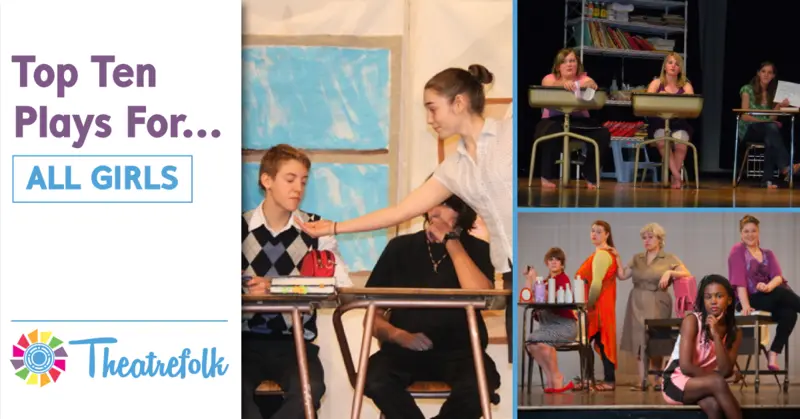
Theatrefolk’s Top 10: All Girls Plays
Featured Plays

Theatrefolk’s Top 10: All Girls Plays

Time for a Tfolk Top Ten Plays For…All Girls! You have an abundance of girls in your program and you want good parts for everyone. With all of these plays either all the characters are girls or gender-flexible. Click the link and you’ll be taken to the webpage for each play. There you’ll get the details and read sample pages. All the best with your search! Ten Minute Plays: All Girls Juliet and Ophelia in the afterlife. An eggplant in a bridesmaid dress. Seeing the light about your best friend and then joining the Slow Songs Make Me Puke Club. A collection of short plays with interesting, engaging, and vivid parts for girls. Every one is a winner. Just Girls Talking What starts as a meeting to finalize frivolous graduation ceremony details ends with one young woman faced with a life-changing decision. Five girls on five different paths hit head-on in a collision of values that leaves the viewer asking: What would I do? Nice Girl Mia does her friends’ homework, lets people cut in line and pretends to be someone she’s not. Being nice requires a lot of sacrifice and frustration. Mia reaches her breaking point as she tries to find the balance between being her true self and being “the nice girl.” Typecast Ms Thespis casts by look and personality – the students are okay with their set roles. Until one show when Ms. Thespis is away and all the girls are cast against type. They’re forced to learn to play the roles they’re totally wrong for. Smarty Pants All the parts in this play are gender neutral with names provided. Dallas can’t wait to show off in her new Advanced Placement class. But there’s more Play-doh than Plato and more colouring than Van Gogh. What kind of advanced class is this? Will Dallas figure out Kindergarten High or will she flunk? Who’s the real smarty pants? Flaky Lips Two young women live in separated societies. One skin colour on this side. One skin colour on that side. They have never seen what the other looks like, until circumstances throw them together. A small cast but a challenging acting opportunity. Carrying The Calf A teenager fed-up with being bullied drags her reluctant friend to a self-defence class. But more important than the karate training, the instructor challenges the group to find self-confidence, independence, and to choose their own destiny. Diverse roles. They Eat Sunshine, Not Zebras All the parts are gender neutral in this look at conformity and individuality through the metaphor of grass and a single dandelion. A dandelion will turn the field upside-down. A dandelion must be destroyed. Isn’t that what you do when something is different? Virtual Family In the Virtual Family, you don’t need to go outside, or do chores, or even have a real family. When technology takes away all your ills, conflicts, and concerns, you become a happier human being. Right? All the roles are gender neutral. Ten/Two Ten short two-person plays (inspired by the numbers 10 and 2!) in a variety of themes and lengths. Excellent for classwork and for competition. 8 of the 10 plays are either for 2 women or have “either” characters.
Spread the Love: Virtual Family by Christian Kiley
Production

Spread the Love: Virtual Family by Christian Kiley

This week on Spread the Love, Lindsay and Craig talk about Virtual Family, a futuristic drama for teenagers by Christian Kiley.
Social Issue Plays for High Schools / Middle Schools
Teaching Drama

Social Issue Plays for High Schools / Middle Schools

Our website lists all of our plays with social issue themes but it struck me that they’re only lumped as “issue plays” without a good guide to sorting out which title addresses which issue. So I’ve categorized them for you to hopefully give you a helping hand in your quest to find the perfect script for your school. Check them out. As usual, all of the titles have extensive free sample pages for you to read. I think you’ll find the writing honest, fresh, and believable – three qualities sadly lacking from a lot of “teen-issue” plays out there in the world. Alienation / Feeling Alone in the World• Anonymous by Allison Green • The Art of Rejection: Two One Act Plays by Christian Kiley • A Box of Puppies by Billy Houck • Constantly, Incessantly, All The Time by Billy Houck • Huge Hands by Billy Houck Body Image• Body Body by Lindsay Price • The Four Hags of the Apocalypse Eat Salad at their General Meeting by Lindsay Price • The Battle of Image vs. Girl by Johanna Skoreyko • Hoodie by Lindsay Price • Breathless by Wendy-Marie Martin Censorship• Censorbleep by Lindsay Price Human Rights• Look Me in the Eye by Lindsay Price • Sweep Under Rug by Lindsay Price Racism• Flaky Lips by Lindsay Price • With Liberty and Justice For All by Jeyna Lynn Gonzales • Not Going Anywhere by Emma Fonseca Halverson • The Burgundy Letter by Kirk Shimano • Let Me In by Sholeh Wolpe *** Rumours and Lies• Have You Heard? by Krista Boehnert • The Redemption of Gertie Greene by Taryn Temple Individuality• Hoodie by Lindsay Price • Virtual Family by Christian Kiley • The Happiness Shop by Lindsay Price • A Deep, Poetic Journey Into Something by Forrest Musselman • Carrying the Calf by Shirley Barrie • Monster Problems by Lindsay Price • Stereotype High by Jeffrey Harr • Sixteen in 10 Minutes or Less by Bradley Hayward • Nice Girl by Amanda Murray Cutalo • Pressure by Lindsay Price • They Eat Sunshine, Not Zebras by Dara Murphy • The Super Non-Heroes by Taryn Temple • Smarty Pants by Bradley Hayward Identity• Box by Lindsay Price • Labeled by Lindsay Price • We Are Masks by Lindsay Price • Stressed by Alan Haehnel • Anonymous by Allison Green • Constantly, Incessantly, All The Time by Billy Houck • The Super Non-Heroes by Taryn Temple School Violence• Huge Hands by Billy Houck • Power Play by Lindsay Price • Clowns with Guns (A Vaudeville) by Christopher Evans • The Butterfly Queen by Christian Kiley • Life and Death in an Empty Hallway by Christopher Evans • Water. Gun. Argument. by Alan Haehnel Sexual Abuse• The Waking Moment by Bradley Hayward • Breathless by Wendy-Marie Martin Substance (alcohol & drug) Abuse• Bottle Baby by Lindsay Price • Floating on a Don’t Care Cloud by Lindsay Price • One Beer Too Many by Billy Houck Suicide• The Bright Blue Mailbox Suicide Note by Lindsay Price • Chicken. Road. by Lindsay Price • The Butterfly Queen by Christian Kiley Teen Pregnancy• The Pregnancy Project by Lindsay Price • Among Friends and Clutter (one scene) by Lindsay Price Illness/Health• Chemo Girl by Christian Kiley • The Other Room by Christian Kiley • Red Rover by Christian Kiley • Waiting Room by Christian Kiley • Breathless by Wendy-Marie Martin • Shreds and Patches by Robert Wing • Inanimate by Christian Kiley • Constantly, Incessantly, All The Time by Billy Houck Depression/Anxiety• darklight by Lindsay Price • Fidget by Bradley Hayward • Among Friends and Clutter (one scene) by Lindsay Price • Constantly, Incessantly, All The Time by Billy Houck • who are we, who we are by Forrest Musselman Bullying• Finishing Sentences by Scott Giessler • Funhouse by Lindsay Price • Power Play by Lindsay Price • The Redemption of Gertie Greene by Taryn Temple • Sixteen in 10 Minutes or Less by Bradley Hayward • Carrying the Calf by Shirley Barrie Divorce• Split by Bradley Hayward Gender• Life, Off Book by Scott Giessler • Anonymous by Allison Green • Baalzebub by Rachel Atkins (Baalzebub – One-Act Version here) • Completely, Absolutely Normal: Vignettes About LGBTQ+ Teens by Bradley Walton • Finding Jo March by Laramie Dean • Thought Traps by Lindsay Price Empathy• Discovering Rogue by Christian Kiley • Boat by Lindsay Price • We Are Masks by Lindsay Price • The Butterfly Queen by Christian Kiley Dependence on Technology• Virtual Family by Christian Kiley • Inanimate by Christian Kiley
We accept

In addition to the above payment methods, Purchase Orders are accepted from US and Canadian Schools.

Info for your purchasing department