Facebook Pixel Skip to main content

📣SCRIPT SALE! Treat yourself to an easier Fall. Save 30% on 5+ perusal scripts with code SPRING30 before May 3 and head into summer stress-free.

Issue Based

Theatrefolk Featured Play - With Liberty and Justice For All
Featured Plays

Theatrefolk Featured Play - With Liberty and Justice For All

Welcome to our Featured Play Spotlight. A powerful and timely piece, With Liberty and Justice for All by Jeyna Lynn Gonzales brings student voices to the stage, capturing a moment in history while reflecting the ongoing fight for justice. It’s June 2020. Set on a street in downtown Atlanta, With Liberty and Justice for All follows eight people as they attend a BLM protest. They come together as a community, share their voices, and share their stories. But as day turns to night, as the curfew comes and goes, it’s every person for themselves. There’s only one thing on their mind: run. A timely and poignant play with incredibly strong performance potential from a variety of actors. Why did we publish this play? At Theatrefolk, it's important to us that student voices are heard in the characters that appear in our plays. We want students to be able to see themselves on stage. This is a key factor in With Liberty and Justice for All. Jeyna Lynn writes in her author's notes: "There are too many people who have never seen a character share their same name, and there are too many people who have never watched a play that represents their lives and/or history." Adding to that, it's such a well written play with a timely message. Let's hear from the author! 1. Why did you write this play?The world has many ways of making one feel powerless, and this play is my resistance to that oppression. In the midst of the pandemic, I felt the need to speak up. Five years later, I've seen little change and cannot emphasize enough the importance of empathy, education, and accountability. 2. Describe the theme in one or two sentences?With Liberty and Justice For All is a deeply moving piece of docu-theatre that features stories inspired by advocates challenging oppression. It is both a time capsule and a mirror held up to society. 3. What's the most important visual for you in this play?The most important visual in this play is the end of Scene 13: Please Rise. 4. If you could give one piece of advice for those producing the play, what would it be?Be fearless. Speak up for both yourself and others who may not have the privilege of being listened to. 5. Why is this play great for student performers?Theatre helps students build social-emotional learning skills by practicing understanding other perspectives. This play is great for students to study and perform because it introduces them to critical thinking and discussion. It provides a safe environment for students to begin forming their own views about the world outside of their neighborhood or see their community's stories represented. 6. Who is your favourite character in the play? OR Which character would you be in this play?My favorite character in the play is Ona. I think she is courageous, inspirational, and a beacon of hope. 7. What is your favourite line in the play?My favorite line in the play is "And I took her portrait."
Issue-Based Plays in Rehearsal
Directing

Issue-Based Plays in Rehearsal

So you’ve chosen to produce an issue-based play with your students. Awesome! Issue-based plays are a great learning opportunity for your students and your audiences, as they tackle issues such as body image, racism, censorship, social issues, mental health, gender identity, and bullying in a theatrical manner. Issue-based plays aren’t always heavy and serious — some are comedic, some absurd, some are musicals — but addressing serious topics is still a challenge, no matter the style or format. It takes a lot of mental and physical energy to tackle an issue-based play. Therefore, it’s imperative to take care of yourself and teach your students to take care of themselves throughout the rehearsal process. Here are a few practical tips for working on these types of shows in rehearsal. 1. Do check-ins and take breaks.Self-care is important throughout any theatrical process, and that goes double for issue-based plays. Students may resonate deeply with the subject matter, which can feel heavy for them when they’re working on the material. Doing check-ins before, during, and after rehearsal (you as director with your students, students with their peers and scene partners, and you with yourself) can help to separate the real-life people from the characters, and remind students that they themselves don’t need to carry the burdens that their characters are holding. It’s also helpful to take short breaks so everyone (students and staff alike) can rest and recalibrate during rehearsal. Try not to talk about the show during breaks; allow yourselves to fully separate from the work, even for a couple of minutes. If you’re worried about forgetting something important, write it down and come back to it when rehearsal starts again. Refresh yourself, reset, and re-enter the rehearsal space with renewed energy. 2. Shake up the energy.While we’re on the subject of energy, we’ve mentioned that issue-based plays often “carry weight” or “feel heavy.” That can result in feelings of sluggishness, pacing issues, and low energy during rehearsals or performance. While it’s important to make an emotional impact through the performances, you don’t want the show to feel bogged down. If you’re feeling this way, take a moment to shake up the energy. Try a verbal exercise such as doing a speed-run of the lines or saying each line like it’s a question, or a visualization exercise such as performing the scene while each character is floating in a pool, experiencing zero-gravity on the moon, or holding onto a high-powered helium balloon. Raise some energy by doing a stretch break, dancing like crazy for 30 seconds, or doing 10 jumping jacks. Even something as simple as opening some windows or turning on a fan can help alleviate feelings of weight. It might seem silly in the moment but can really help to lighten the mood. Our brains enjoy and often crave novelty, because it activates the dopamine system, which helps to raise our mood. Additionally, be aware that plays that “feel heavy” can result in pacing issues. Check out our tips to address any potential pacing issues, and remind students to keep the energy flowing so it doesn’t drag down the running time of the show. 3. Use humour.Sometimes you need a laugh to lighten the mood and ease the tension. I’m not saying to turn the show into a farce or let rehearsals devolve into silliness, but a well-timed joke or funny code word/phrase, when used sparingly, can be helpful. Even something unintentionally humourous can turn into an in-joke with the cast and crew, and become a useful tool in rehearsal. Recently I directed Carrie: The Musical with high school students, which is based on the novel by Stephen King and deals with many difficult topics including bullying, violence, and death. At one rehearsal, we were rehearsing (spoiler alert!) the big, highly choreographed destruction scene at the prom. After running the section a few times, the students were clearly tired, so we took a short break. At the end of the break, I announced to them, “Ok, we’re going to run the scene a couple more times so please go back to your death positions!” For some reason, the students found that hilarious, and would use it as a recurring joke throughout the remainder of the rehearsal process: “Should we go to our death positions now?” “I don’t know if I’m in the correct death position,” and so on. It’s probably not funny to anyone who wasn’t there, but it helped us to lighten the mood when we were working on heavy material. Don’t forget to include and enjoy humourous moments in the show as well. Even the most solemn and dramatic of plays will have moments of lightness and mirth. Lean into those moments; it’ll make the more serious moments even more effective. 4. Be available to answer questions and provide support.As mentioned earlier, some students will resonate strongly with the topic of the issue-based play you’re working on. Students may have lived experiences that mirror the issues in your play. You may need to provide support for these students throughout the rehearsal process, such as physical resources or referring them to people who can provide guidance or counselling. As well, students may discover concerns or boundaries that arise during the rehearsal process that they didn’t expect. That’s ok, it’s a new experience. Just be ready to point students in the direction of support, and use self-care tools (breaks, check-ins, closure practices, etc.) to help. Conversely, some students may not resonate with the material, and might require additional education on why the material in the play is important and relevant. Again, arm yourself with educational resources that you can share with these students. Do not depend on or expect any students with lived experiences to provide education or examples to other students, unless they volunteer to do so. It’s not their responsibility. As well, if you are aware of any students with lived experiences that they haven’t disclosed publicly, don’t share that information with other students or even hint that someone in the cast/crew is dealing with or has dealt with the issue. It’s nobody’s business, and unless that student wishes to share, it’s better to keep real life and the life of the play separate.
Approaching Issue-Based Plays in the Drama Classroom
Teaching Drama

Approaching Issue-Based Plays in the Drama Classroom

“Issue-based plays” explore a myriad of topics that are current and relevant for your students, such as bullying, mental health, body image, violence, sexuality, identity, and human rights. Issue plays are educational and entertaining at the same time, and they are so important for students to study. Students may see themselves or someone like them represented in an issue-based play. Conversely, studying issue-based plays can open students’ eyes and minds to issues that they themselves may not have experienced, but should be aware of. They can be a great way to open up lines of communication about important topics that need to be talked about. Here are a few things to consider if you’re thinking about studying or performing an issue-based play in your drama classroom: 1. Be aware and make an educated choice.Whether you are new to your school or a seasoned veteran, you need to stay abreast of issues that are prevalent in your particular school, district, or city. What is appropriate for one school may be a hard no for another school. Issue-based plays can bring out strong emotions during the process of studying, and you’ll need to decide whether you think this particular play would be a great area for exploration or if it could be triggering for some of your students. While it’s important to challenge your students, drama class must not cause harm. 2. Communication is key.When selecting an issue play to study, you will need to ensure that your administration is aware of your choice of material and that they are supportive of that choice. Let them know what the play is, what topics it’s focused on, your goals for teaching it, and what educational standards will be met by studying it. Discuss how you’ll study the play: Will you read it aloud, will you watch a live or film version of it, and/or do you plan on performing it? Will you need to have the guidance office available in case a student needs that resource? If admin presents pushback, do you have an alternative play that you can present? You may also want to let students’ parents/guardians know in advance that you’ll be studying an issue-based play. Creating a brief overview of the play, the subject matter, and your educational and theatrical approaches will be helpful for keeping parents informed about what their children are talking about in class. Be aware that parents may have more concerns about the material and the topic than the students do. 3. Prepare support materials and resources.Oftentimes we are unaware of potential triggers until we are right in the moment. While we can’t anticipate every possible outcome of a situation, we can prepare ourselves with information and resources to support our students, or at least point them in the right direction. Compile a list of local and national resources (websites and phone numbers) that students can reach out to that are related to the issue. Compile pamphlets, articles, and book lists that you can give to your students. Arrange a visit with an expert to come and talk to your students about the topics they’re studying in the play. Reach out to school clubs, peer helpers, and guidance and let them know what your class is studying, in case students would like someone to talk to. Think about what topics or lessons your students might benefit from prior to studying the play, and put them in your schedule. End your classes with closure practices to help students leave any heavy or lingering feelings in the drama classroom. You don’t need to have all the answers, but your students will appreciate your efforts to support them. Related Articles: Social Issue Plays for High Schools / Middle Schools Talking About Issues Through Theatre Acting the Issue Play
July Reading List: Issue-Based Plays
Featured Plays

July Reading List: Issue-Based Plays

As you start planning for the new school year, why not explore some incredible issue-based plays? These thought-provoking scripts tackle real-world challenges and spark meaningful conversations in your classroom or on stage. These plays are perfect for fostering meaningful discussions and bringing diverse voices to your stage or classroom. Add them to your collection and watch your students engage with drama that truly matters!
neeT Teen
Featured Plays

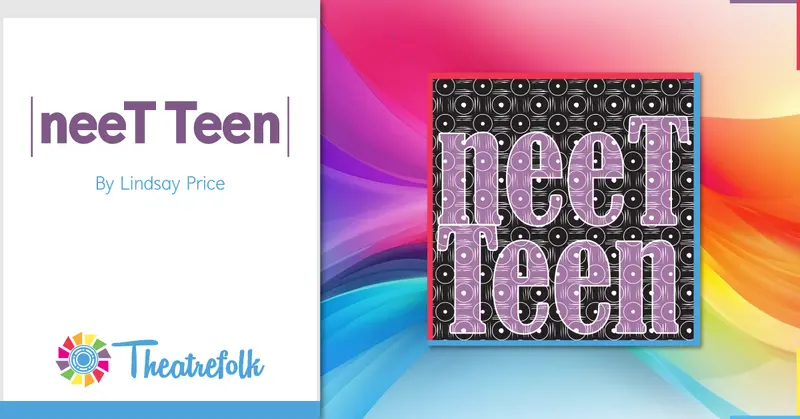
Theatrefolk Featured Play - neeT Teen

Welcome to our Featured Play Spotlight. neeT Teen by Lindsay Price is a fantastic play for your group. It's got a little bit everything - from the absurd, to movement, to audience participation, to song... There's even the opportunity to add your own scene to the mix! Teen life – backwards, forwards and inside-out. From dealing with the tractor beam of insecurity and doubt, to dealing with parents who couldn’t hear you if they tried. From fighting pimples to fighting the hallway. From knowing math skills aren’t going to get the girl to knowing that happy teenagers exist. They may not get the laughs, or the drama, or the big monologue, but they’re there. Let's hear from the author!1. Why did you write this play? I wanted to write a vignette play that went out of my comfort zone in terms of exploring form. And there is every type of form in this play from kitchen sink scenes, to absurd, to movement based moments, to choral work, to audience participation, to song, to groups adding their own scene. 2. Describe the theme in one or two sentences? Teen life – backwards, forwards, inside out. 3. What's the most important visual for you in this play? I love the ending where the entire cast is singing about not feeling great, not being liked and not getting worried about it. They're not going to change who they are. 4. If you could give one piece of advice for those producing the play, what would it be? Don't get bogged down by the different forms. Focus on the individual characters in each scene and express the form through what those characters want and the obstacles in their way. 5. Why is this play great for student performers? It looks at teen life and tackles topics that many teens go through in a unique and varied way. 6. Who is your favourite character in the play? She's not my favourite character, but for me, it's the most vivid moment in the play. Tyne has bullied another girl to the point where she felt she had to take her own life. Tyne is trying to grapple with the vast weight of this moment and rationalizing her actions as just "a little mean." It's one of my "favourite" monologues in its rawness and how words have consequences. 7. What is your favourite line in the play? "The world would be a better place if people weren’t so easily offended by words that don’t actually do anything, they just exist."
Theatrefolk Featured Play - The Happiness Shop
Featured Plays

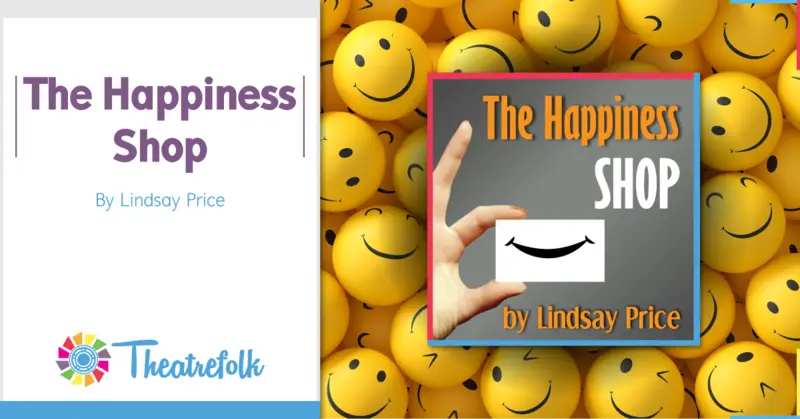
Theatrefolk Featured Play - The Happiness Shop

Welcome to our Featured Play Spotlight. The Happiness Shop by Lindsay Price is an excellent class project that explores important issues for students. Three middle school students find themselves in an odd curiosity shop. They don’t know what it is, where they are, or how they got there. But that’s no surprise. The Happiness Shop is not like any other. It is filled with Roppets. A Roppet is not quite a robot and not quite a puppet. A Roppet is completely happy all the time. Full of smiles, hugs and hi-fives. Isn’t that all it takes for a middle school student to be happy? They’re too young to have problems. Blake, Melanie and Wally know that’s not true. They all have pretty big problems. But in the shop they have one question to answer and one question only: What would you do to be completely happy? Let's hear from the author! 1. Why did you write this play?I wrote this play specifically for middle school students after a couple of eye opening experiences. First, I watched a 13 year old boy deliver one of my monologues in a competition. The character in the monologue talks about his life and how his family treat him after a suicide attempt. The monologue was written for a 16 year old character and the impact of seeing it done by a 13 year old was huge. Does suicide happen in middle school? Secondly the director of one of my plays shared a rehearsal exercise she did with her cast in which her middle school students wrote on post-it notes the positive and negative things they say to themselves or hear others say to them. The negative board had three times more post-its than the positive one. (The exercise is included in this play's free Classroom Study Guide.) Do middle school students get depressed? I’m the first to admit, until writing this play I did not fully realize that middle school students could experience depression. I thought depression didn’t hit until high school. That’s when I started researching the topic. I found that not only do middle school students get depressed but it’s often overlooked as laziness, and ignored because they’re “too young” to be depressed. Many times the issue is never addressed. I knew I had to bring this issue to life in a play. 2. Describe the theme in one or two sentences?Happiness does not come from burying your feelings and pretending to be happy. Students suffering from depression are not alone in their feelings and they don’t need to suffer alone. 3. What's the most important visual for you in this play?The Roppets. They are supposed to be completely happy and smile all the time. But what's hiding behind those smiles? 4. If you could give one piece of advice for those producing the play, what would it be?Be prepared for discussions. You never know how students are going to be affected by being in the play. You may want to discuss the play with the guidance department. You are not a therapist and shouldn't take on that role. 5. Why is this play great for student performers?The play demonstrates the different faces of middle school depression and the different choices made because of it. Not all the choices these students make are good ones. I feel that’s important to stage. I think, too, it's important to show positive choices. 6. Who is your favourite character in the play?Phoenix is Melanie's best friend and I absolutely loved writing for them. The character is weird and loves being weird. They are not popular and are often bullied, but still has a great outlook on their life. They see their bullies as sad animals and never lets the bullies actions affect them. 7. What is your favourite line in the play?"Oh you did help me. You helped me see myself."
Theatrefolk Featured Play - The Battle of Image vs Girl
Featured Plays

Theatrefolk Featured Play - The Battle of Image vs Girl

Welcome to our Featured Play Spotlight. The Battle of Image vs Girl by Johanna Skoreyko is a moving duet piece about female body image. One Girl. One Mirror. Against the world. Why did we publish this play? We have a long history with this play. It was originally published as part of a collection of student writers. When that was discontinued, we asked to publish it in a collection of short plays for young women. When that was discontinued we wanted to continue to have the play available because it is a script that does not and cannot let go. It is intense, it is uncomfortable, it is raw and authentic. Let’s hear from the author! 1. Why did you write this play?I wrote this play as an assignment for a High School English class. I remember that I brainstormed ideas for my play until a few days before the deadline for the assignment-- nothing felt quite right. Finally, with the pressure upon me, I sat down and the whole play just poured out of me. The conversation that the main character has with her mirror self was in many ways an authentic conversation I was having in real time as I wrote it. It was very cathartic. I had just returned from a year as an exchange student in Germany, where my host sister (who I was very close to) had anorexia and bulimia, and I was still processing the conflicting emotions I had: fear and worry for her, and jealousy of her extreme thinness. Although I didn't have an eating disorder, I thought constantly about what I ate and exercised obsessively. I was very critical of my body. I wanted to be healthy and strong, but I also completely understood why she starved herself, and that scared me. 2. Describe the theme in one or two sentences.Control is the opposite of self-acceptance. 3. What’s the most important visual for you in this play?The smashed mirror at the end. 4. If you could give one piece of advice for those producing the play, what would it be?Update the references and the language in the play to make it reflect the way teenagers talk today. I think it should sound current. 5. Why is this play great for student performers?I think it's visually striking, easy to produce, and I like that it's an opportunity for two actors to get really deep into character study together, and maybe to dissect their own critical internal voices too. And I love that it has the raw, dramatic emotionality of a real teenage voice. 6. Who is your favourite character in the play?When I performed this for my High School Drama class, my sister took the role of the main character, and I played the mirror. It was a very powerful release to speak the vicious meanness that I heard in my head. Letting it out revealed how absurd and how wrong the voice was. 7. What is your favourite line in the play?The final line of the play, "It's only a phone," (which was "It's only a camera" in 2001). The character's anxiety about her lost phone was an example of the anxiety she felt about not being in control, and her eating disorder was born of a desire to get that control back. Letting go of the phone and just going to bed was a really important symbolic gesture, and I like the simplicity and lightness with which it ends this really intense scene.  Get your copy of The Battle of Image vs Girl right here, right now!
Theatrefolk Featured Play – Characters Behaving Badly by Lindsay Price
Diversity

Theatrefolk Featured Play – Characters Behaving Badly by Lindsay Price

Welcome to our Featured Play Spotlight. The vignette play, Characters Behaving Badly, by Lindsay Price, asks students to look at the concept of what it means to be “good” and “bad”, as well as what it means to play a character with whom they might not agree. Perfect for class performances! If you saw a wallet on the ground, bulging with money, and no one around, would you take it? What’s the worst thing a person can do? Is it murder? Is it lying? Is it getting an A-? What defines “good” and “bad” behaviour? Can “good” people have “bad” thoughts? Let’s hear from the author!1. Why did you write this play? Over the years, I have witnessed a lot of young or student actors being reticent to take on a “bad” character because they felt it would reflect in their own personal character. “If I play a bad character, then I am seen as a bad person.” Which leads to a great question: What does it mean to be “good” or “bad”? And who gets to decide what is “good” or “bad?” And there was my starting point. 2. Describe the theme in one or two sentences. What does it mean to be “good” or bad?” What does it mean to play a “bad” character. 3. What’s the most important visual for you in this play? There’s a moment when a character holds up a wallet full of money and asks the other characters and the audience if they would take it if they found it on the ground. Would you? 4. If you could give one piece of advice for those producing the play, what would it be? It’s a vignette play so it’s easy to default to a blackout between every scene. If you look at the script, it’s specifically designed to avoid that. Blackouts suck the life out of the drive and forward motion of a play. Use choreographed transitions and music to move from moment to moment. 5. Why is this play great for student performers? Not only are the characters great for analysis in this play, the question around what is “good” and what is “bad” is an excellent topic for discussion. How do your students define the two?
Acting the Issue Play
Acting

Acting the Issue Play

Want to give your students some fantastic acting material that they can really sink their dramatic chops into? Consider doing an issue play for your next production. Issue plays explore problems and topics that are current and relevant for your students, including body image, bullying, mental health, identity, individuality, and human rights. Students are able to resonate with the issues that the characters face, and these plays can be a great way to entertain and educate at the same time. While issue plays are rewarding, they can be challenging as well. Issue plays can bring out some strong emotions when you and your students are working on them, and it’s important to approach them with thoughtfulness and care. Here are some tips for acting the issue play: 1. Be wary of how many times your character expresses extreme emotion. In a one-act play, characters should only cry once. Shout at each other once. Hit once. Scream once. If you abuse the extreme emotion it becomes ineffective. The more you shout, the less the audience will listen. All they will hear is the noise, and not the content. 2. Fight the urge to ‘act’ sad. Sad plays are already sad. The text is sad. Use all forms of emotion to react to the issue. Anger can be quiet, sad people laugh, and so on. That is what will make the moment alive instead of stereotypical. 3. Always remember the audience. The issue play can sometimes turn into an insular experience for the cast if they get too involved with what they’re doing. Always keep in mind that your job is to keep the audience on the edge of their seats. That has to be done in a variety of ways. Variety is the key. It’s always more effective to make an audience laugh right before you hit them in the gut with something dramatic. Silence works in tandem with shouting. Always have a moment of stillness after a moment of chaos. 4. Take the most dramatic moment in the play and rehearse it with the opposite emotion. If there are two characters screaming at each other, turn the moment on its head and have the characters laugh at each other. It will give you a fresh perspective of the scene. You’ll find new rhythms in the pace of the dialogue. It’s a great way to create a break between the character going through the issue, and the actor. On that note… 5. Remember that it is the characters who are in the issue, not the actors. Every time you rehearse a tense, emotional moment, create a clean break. Play a silly improv game at the end of rehearsals. Sing. Do yoga. Play duck duck goose. Create a ritual to bring yourself out of character. 6. Have an outsider watch the show. If you and your cast are knee-deep in your issue, you may not think the show is straying into the overdramatic. A fresh eye (that you trust!) can let you know if the show is on the right track.
Theatrefolk Featured Play – The Burgundy Letter by Kirk Shimano
Diversity

Theatrefolk Featured Play – The Burgundy Letter by Kirk Shimano

Welcome to our Featured Play Spotlight. The Burgundy Letter by Kirk Shimano is a comedic retelling of the classic novel The Scarlet Letter set in a high school and reframed for a digital age. In an online community, Hester90 is publicly shamed and shunned for a racial slur against another student, but refuses to name her cohort in the hateful conversation. RoChi wants the conspirator found out and humiliated. Climate_Dale wants everyone to come to his annual Earth Day address. How do we strike a balance between holding individuals accountable while still having compassion for those who apologize for their mistakes? Why did we publish this play? We love adaptations here at Theatrefolk and The Burgundy Letter is an excellent example. It’s a comedic retelling of the classic novel The Scarlet Letter set in a high school and reimagined for a digital age. There’s a lot to be explored about how public shaming currently works in social media and this play offers so much in terms of conversation about how we can strike a balance between holding individuals accountable for what they say while still having compassion for those who apologize for their mistakes. Add to that, we love complex teen characters and this play has so many wonderful roles for student actors to play! This play might have our favourite character name of all time:
Theatrefolk Featured Play – Funhouse by Lindsay Price
Featured Plays

Theatrefolk Featured Play – Funhouse by Lindsay Price

*Welcome to our Featured Play Spotlight. * Funhouse by Lindsay Price is an incredibly unique and challenging vignette-style play that is an excellent catalyst for conversations around bullying. This play looks at the bullied, the bully, and the bystander through mostly non-verbal vignettes. Life for the bullied is like a funhouse, but the funhouse is anything but fun. How can you stand your ground when you’re on a falling floor? How can you move forward when you’re caught like a mouse in a maze? How can you win Whac-A-Mole when you’re the mole? How can you like yourself while standing in a distorted hall of mirrors? There are no cotton candy answers here. Why did we publish this play? A lot of our plays come from listening to customers. A piece of feedback from middle school teachers we received is that they loved our non-verbal play _Emotional Baggage _but the concept was a little beyond their students. Could we provide one specifically for middle school? With a larger cast? _ _ Funhouse looks at the bullied, the bully and the bystander through mostly non-verbal vignettes. When looking at other plays on the topic, there wasn’t a lot we liked – many end with a bully-bullied confrontation in which the bully instantly sees the error of their ways and promises to be a better person. And they all lived happily ever after. This never happens in real life. Can bullies change? Of course! But not in one moment on stage. It’s so destructive to show such a fairy tale ending because there will be students in the audience watching the show, being bullied, knowing their situation is not being represented. And therein lies a huge problem. Issue plays are tricky because they deal with issues that are happening right then, right now to someone watching the play. It’s not therapy, it’s not an informational brochure and theatricality must always preside, but the issue play does have some responsibility to address the reality of the issue. Having said that, just as you can’t show the sitcom “everyone loves each other” happy ending, you can’t go to the other extreme and show flat out no-win annihilation. Because then that student sitting in the audience, being bullied, has the very terrifying thought of, “Well there’s no hope, is there?” And that is something we’re not prepared to sit on the shoulders of a 10- or 11-year-old. _Funhouse _has the right balance between the extremes, in a theatrical context and that’s why it’s in our catalogue. It’s unique and a great catalyst for post show discussion on the issue of bullying. It’s a challenging piece, but by no means is it beyond the middle school scope. Let’s hear from the author!1. Why did you write this play? I heard from middle school teachers that they loved the non-verbal elements in Emotional Baggage but were looking for a middle school specific play, and could it have a larger cast? Done and done! I had seen a number of plays that addressed the topic of bullying and wasn’t happy with what I saw – a lot of bullies seeing the error of their ways. I wanted to write something different. 2. Describe the theme in one or two sentences. The funhouse aims to turn reality upside-down – it shows you a distorted version of yourself in a mirror. It tilts the floor away when you least expect it. It jumps out at you from the shadows. It distorts the truth. It’s a vivid image for what life is like for the bullied. 3. What’s the most important visual for you in this play? Sometimes the bullies win. That’s important to show. These acts are vital to the reality of the play, for indeed they are vital to showing the reality of what a bullied student must face. 4. If you could give one piece of advice for those producing the play, what would it be? It’s a play that relies primarily on action rather than dialogue, so that’s going to be your focus. How does action tell the story in each moment? It’s a challenging play but by no means beyond the middle school performer scope. 5. Why is this play great for student performers? The scope of bullying is pretty far reaching these days, from physical to verbal, to the different ways boys bully than girls, to the insidiousness of cyberbullying. This play offers a opportunity for students, in the play and watching the play to engage in conversations on this, unfortunately, extremely relevant issue. Get your copy of Funhouse_ _right here, right now!Not right for your group right now? Search our play catalogue to find one that your performers will love!
Theatrefolk Featured Play – Split by Bradley Hayward
Featured Plays

Theatrefolk Featured Play – Split by Bradley Hayward

Welcome to our Featured Play Spotlight. Split by Bradley Hayward is an emotional, theatrical, ensemble-driven play that your student performers are sure to love. Children of divorce are united through humor in this honest and theatrical look at the day to day reality of growing up in a family that’s been torn apart. As these teenagers navigate a winding road that includes new bedrooms, new siblings and new responsibilities, they begin to put the pieces of their broken homes back together. Why did we publish this play? First of all the play has such a theatrical journey. The most important aspect of an issue play is how it’s theatricalized. _Split _has wonderful physical moments, like the symbolic rebuilding of the home at the end. It’s so lovely. Second, Bradley has such a keen ear for writing for teen aged characters – the voice of each character, and how they deal with the issue just leaps off the page. Lastly, it’s always a plus when issue plays include humour. Variety of tone is key and Bradley knows exactly how to use tone to great effect. Let’s hear from the author!1. Why did you write this play? While the play is inherently about divorce, that word is never uttered once in the entire script. I wanted to write a play that celebrates love, among family and friends, by showing what happens when that love is threatened. 2. Describe the theme in one or two sentences. The play is about how people react when their lives are split in different directions, and the variety of approaches they take in order to put the pieces back together. 3. What’s the most important visual for you in this play? The closing moment of the play, when the characters finally feel safe enough to set foot into the home they build together, always brings me to tears. It is my favourite moment in any of the plays I have written. 4. If you could give one piece of advice for those producing the play, what would it be? All of the characters are well developed; however, they have a limited number of lines each to get their stories across to the audience. This makes it a great play for young actors to read between the lines of dialogue to come up with a back story for each character. I would suggest having each actor write a biography for their characters, which will help them with any motivation they might need while performing the play. 5. Why is this play great for student performers? Since the scenes are so short, learning the lines should not be too difficult. This opens up student actors to really dig deep into every single moment they are on stage, and make each of those moments count. 6. Do you have any advice for people looking to perform this play online or socially distanced? The entire play is split into short scenes, not unlike you would see on TikTok. I think it would be interesting to see an online production as though it was a collection of TikTok videos put together, and then have the final scene be the first time the entire cast of characters are together in one place.
Theatrefolk Featured Play – Not Going Anywhere by Emma Fonseca Halverson
Diversity

Theatrefolk Featured Play – Not Going Anywhere by Emma Fonseca Halverson

Welcome to our Featured Play Spotlight. Sometimes you come across a play that demands to be read, performed and shared. Not Going Anywhere by Emma Fonseca Halverson is one of those plays. The Mexican family of Ale, Miguel, Mami and Papá are struggling to get by while ICE attempts to tear them apart. Miguel wants nothing more than to not go anywhere, whereas Ale is desperate to leave and pursue theatre. This works out while Miguel works and helps out at home, and Ale goes to class and rehearsals, but when Miguel isn’t there anymore, Ale must choose between her future and her family. Why did we publish this play? We’re thrilled to be able to share Not Going Anywhere. Emma has created compelling characters and a story that, for many students, will hit close to home. The piece crackles with authenticity. It should be performed, it should be read and discussed in class. The story of what happens to Ale in the play is not uncommon – what happens when you have to choose between your future and your family? Let’s hear from the author!1. Why did you write this play? This was at the start of quarantine when I wrote the first draft, and I was sitting at home a lot stewing in my thoughts about the world. My cousin who had lived with us had also just been forced to go back to Mexico without warning, and it the topic of immigration and ICE was very fresh on my mind. It was definitely a source of processing a lot of my own feelings that really helped me have an outlet. 2. Describe the theme in one or two sentences. What are obligations to ourselves and to our families? How does family impact the choices we make in our lives? Family and culture would be the biggest themes in my eyes. 3. Why is this play great for student performers? It views immigration through a teenagers eyes, and explores topics I think a lot of teenagers think about; and relate to family, culture, future, and identity. 4. Do you have any advice for those producing this play online or socially distanced? I would say that even though the physical touch would be gone, to focus on the non- physical affection between the characters and their words.
Theatrefolk Featured Play – The Butterfly Queen by Christian Kiley
Featured Plays

Theatrefolk Featured Play – The Butterfly Queen by Christian Kiley

*Welcome to our Featured Play Spotlight. * The Butterfly Queen by Christian Kiley looks at the nature of sacrifice and putting others first, and is an opportunity to have a truly transformative experience with your students. One teacher protects her class from danger. One bystander helps someone timid overcome a fear. One stranger saves another from a burning building. We all have the capacity to put others before ourselves regardless of the consequences. That is the theme of The Butterfly Queen. A touching ensemble piece where sacrifice is as simple as a pair of wings. Why did we publish this play? Christian is a long time Theatrefolk playwright and we are always thrilled to share his work. In _The Butterfly Queen _Christian explores how sacrifice can be passed forward and how the impact we have on others can be immense. This is a beautiful play with a vivid extended metaphor. The premiere production of _The Butterfly Queen _won its district festival with almost perfect scores. It’s easy to see why. Let’s hear from the author!1. Why did you write this play? I continue to be disturbed deeply, as I know many others are, by the violence in our schools. There are many brave people who have sacrificed their lives to save their students. In my small way, I wanted to honor those courageous teachers. 2. Describe the theme in one or two sentences. We not only have the power to positively change someone’s life; we can save someone’s life. 3. What’s the most important visual for you in this play? The transformation when Miss Victoria reveals her butterfly wings. 4. If you could give one piece of advice for those producing the play, what would it be? Heart. Allow your heart to lead you during this process. It will take you back to your childhood and the people you love(d) with unconditional regard. 5. Why is this play great for student performers? The students I serve and work with are the best at connecting with the depth of emotion involved in life. This is a chance for our talented young people to do just that. 6. Why is this play great for online performances? I am curious as to how I might approach this if I were to direct it in an online production. I think creating a classroom that is separate for each actor (their private space) and making it communal, sharing it, finding common connections between the actors and their living/playing spaces would be a challenge that I would love to see articulated. Like most great questions, the answers of the talented people producing the play will always be best. Get your copy of _The Butterfly Queen _right here, right now!Interested in studying this play with your class? Don't miss our FREE classroom study guide! Not right for your group right now? Search our play catalogue to find one that your performers will love!
Theatrefolk Featured Play – Completely, Absolutely Normal: Vignettes About LGBTQ+ Teens by Bradley Walton
Diversity

Theatrefolk Featured Play – Completely, Absolutely Normal: Vignettes About LGBTQ+ Teens by Bradley Walton

*Welcome to our Featured Play Spotlight. * Completely, Absolutely Normal: Vignettes About LGBTQ+ Teens by Bradley Walton is a collection of ten interconnected vignettes with LGBTQ+ themes that are unified by the emotion and humanity found in anyone who is completely, absolutely normal. A girl’s big moment of coming out takes an unexpected turn. High school sweethearts holding hands in public for the first time are greeted by hatred. A transgender teen struggles with an unaccepting best friend. Why did we publish this play? This play is about human contact and showing that all human contact is normal. As we see this concept being challenged and legislated against, it’s important to take a stand and provide a voice for students. All students. Let’s hear from the author!1. Why did you write this play? When I started writing this play, I didn’t know it was going to become “this play.” It began as a monologue about a teenager coming out at their dad’s grave. That monologue gave way to a second vignette, and then a third, and…you get the idea. Now, as to why I wrote this play after I knew that this play was turning into “this play”… I wanted to show that human emotion is universal regardless of sexual orientation or gender identity. 2. Describe the theme in one or two sentences. LGBTQ+ teens are completely, absolutely normal. 3. What’s the most important visual for you in this play? The visual simplicity of the play as a whole is very important for me. It’s a bare stage show. There’s no fancy lighting. It’s stripped-down and intimate, with all of the emphasis on character and emotion. 4. If you could give one piece of advice for those producing the play, what would it be? Include questions in the audition paperwork to find out what students are comfortable and not comfortable portraying onstage—ask if they’re okay with doing a same-sex kiss, and find out if there are roles they don’t want to play. Don’t ask for explanations, and respect their answers. 5. Why is this play great for student performers? It is bursting at the seams with great acting opportunities featuring characters with complex emotions. 6. Do you have any advice for people looking to perform this play online or socially distanced? The play has ten scenes. Five of them are monologues and the other five have two characters. Socially distanced performance shouldn’t be a huge issue for 90% of the show, but the scene “Brave” is specifically about a couple holding hands and kissing. In light of the current pandemic, I think the hand-holding could be mimed, and I would be okay if the kiss was omitted (the end of the scene wouldn’t be as powerful, but the dialogue would still make sense). I could also see the show being performed like a staged reading, with the two-person scenes performed by students on opposite sides of the stage delivering their dialogue directly out to the audience. I have a hard time imagining the play being done online. I feel like it demands a level of connectivity with the audience best achieved through in-person performance. A staged reading-style approach might work. But with that being said, if someone has a vision for an online production that they think would be fabulous…go for it. Just keep that sense of audience connection at the front of your mind.
Theatrefolk Featured Play – Pandemic Pancake by Lindsay Price
Distance Learning

Theatrefolk Featured Play – Pandemic Pancake by Lindsay Price

*Welcome to our Featured Play Spotlight. * Pandemic Pancake addresses the ongoing changes in the new world we find ourselves in – and is great for virtual or socially distanced performances, or a hybrid of the two. Pandemic Pancake asks the question: What now? Characters decide, for good and for ill, how they will respond to this evolving new world. Do they find hope? Do they shut down? Do they open doors? Do they strategize long-term? Or do they take it day by day, hour by hour, minute by minute? We are no different than the characters in this play. We all must decide “what now?” Let’s hear from the author!1. Why did you write this play? After writing Scenes From A Quarantinein April 2020 I’ve known that I wanted to do a follow up play as circumstances surrounding the pandemic have changed. Also, as we continue along, I wanted to explore the “what now” of the future rather than remain in the past of the situation. Lastly I wanted to present characters who have figured out how to have hope in this situation. That was the most important element I wanted to present – that there has to be hope as we move forward. 2. Describe the theme in one or two sentences. Things are different but they’re not impossible. 3. What’s the most important visual for you in this play? There’s a scene at the end of the play in which two teens, who are on a zoom call and one of them says “Clasp your hands together and close your eyes. Hold tight. I’m holding your hand. That’s me. We’re together.” And they do. And that visual of each of them showing that they support each other sums up the whole play. 4. If you could give one piece of advice for those producing the play, what would it be? Whether you’re performing virtually or you’re in person, it’s all about the characters. Focus on the characters as they experience their story. Focus on character physicalization. It doesn’t matter if you’re sitting in front of a screen, an upper body physicality is still important. You can still make a character specific. 5. Why is this play great for student performers? The characters are mostly teen aged and the story is relevant and current. 6. Do you have any tips for those who are performing this play online? Everything is in the script. The play was written to be performed on line, hybrid, or social distanced with suggestions for how to adapt scenes to fit your situation. Get your copy of Pandemic Pancake right here, right now!Not right for your group right now? Search our play catalogue to find one that your performers will love!
Theatrefolk Featured Play – who are we, who we are by Forrest Musselman
Featured Plays

Theatrefolk Featured Play – who are we, who we are by Forrest Musselman

*Welcome to our Featured Play Spotlight. * who are we, who we are by Forrest Musselman is an excellent ensemble piece with a variety of movement and staging opportunities. who are we, who we are addresses anxiety and depression in teens. Clay is having issues because of his mother’s failing health. At the beginning of the play he finds himself inside his own brain, where he meets other teens from his school who are also suffering. Clay learns to listen and ask for help as the first step on his road to recovery. Why did we publish this play? Teen anxiety and depression are topics we should be constantly talking about. Forrest’s play brings these issues to light in an incredibly theatrical manner. The message is timely and the ending is really on point. Before publication this play was in competition at the Minnesota State High School League One-Act Play competition where it received 1st in conference, 1st in subsection, and 1st in section 1A. We’re not surprised it did so well. It’s a lovely play with an ensemble cast and so many movement and staging opportunities. Let’s hear from the author!1. Why did you write this play? Clay’s story is based off of a real student of mine that was dealing with similar issues. I wanted to tell his story and explore other aspects of anxiety and depression. 2. Describe the theme in one or two sentences. Anxiety and depression should not be suppressed or ignored. If you are having problems, take the first step and tell someone. 3. What’s the most important visual for you in this play? When I did the show, I had glowing boxes that added a very cool visual element. I realize a lot of schools wouldn’t have this option, but you can still use the ensemble to create interesting stage pictures. 4. If you could give one piece of advice for those producing the play, what would it be? Take some time to talk through all the different characters and identify with what they are dealing with. The more the actors can make these characters real, the stronger it will become. 5. Why is this play great for student performers? It’s totally relatable to the various struggles they may be going through. 6. Why is this play great for online performances? You may want to reconsider how to do the final scene between Clay and Annie since they can actually hug. Perhaps just give a line or two to Clay where he finally asks for help. Get your copy of who are we, who we are right here, right now!Interested in studying this play with your class? Don't miss our FREE classroom study guide! Not right for your group right now? Search our play catalogue to find one that your performers will love!
Theatrefolk Featured Play – Chicken. Road. by Lindsay Price
Featured Plays

Theatrefolk Featured Play – Chicken. Road. by Lindsay Price

Welcome to our Featured Play Spotlight. Chicken. Road. by Lindsay Price is an issue-based play for high school performers that is not an answer to the issue, but an amazing forum to start the discussions. Why did the chicken cross the road? Why is the sky blue? What’s two plus two? Why did he kill himself? A group of teenagers grapple with unanswered questions as they struggle to understand why someone would run out on to the highway in front of semi. Especially when that someone seemed to have it all. Here’s a chicken. Here’s the road. There’s the other side. What do you do when there is no answer? Why did we publish this play? Our philosophy at Theatrefolk is that issue plays should start conversations, not be the answer to the issue. Chicken. Road. is all about questions, especially the big one “Why would someone who has it all, kill themselves?” The play shows students struggling with this questions and others, and it presents a possible doorway for teenagers to share their own struggles. The original staging for the play is very simple – a line of students. There is no identified set. This would translate easily to a virtual platform, in fact, the isolation that some of these characters feel would make for a vivid image in a virtual production. Love the play but need a shorter version? Check out Chicken. Road. Competition Version too! Let’s hear from the author!1. Why did you write this play? The question “why” is always the first people often ask when someone they know commits suicide. And that’s because they want a clear cut answer – two+two=four. And the truth is there is no answer. I wanted to explore that question in a theatrical context. I also feel that issue plays should start conversations rather than be the one and only answer. That was definitely my goal for the script. 1a. Why did you write a separate Competition Length version of this play? One of the challenges with some of my plays is their length—plain and simple. Schools that compete with 30-minute productions can’t perform 50-minute plays, no matter how strong the material. Recently, I’ve taken on the challenge of revisiting several of my longer works, aiming to preserve their integrity and intention while making them more concise. It’s been an exciting project, and I’ve loved reconnecting with pieces I haven’t read in over a decade. I’m eager to see if this streamlined version of Chicken. Road. can find a new audience. 2. Describe the theme in one or two sentences. Suicide cannot be easily explained. 3. What’s the most important visual for you in this play? There’s a moment in one of the final monologues in which the best friend of the teenager who killed himself describes the reaction from his mother: “She wants to throw her swarm of questions at me and watch me die from the stings.” I think that is a vivid picture of someone who is desperate to find an answer, and someone who just doesn’t have the answer. 4. If you could give one piece of advice for those producing the play, what would it be? Yes, this is a serious subject and should be treated seriously. But also remember that this is a play. It has to be theatrical. There has to be a variety of tone. An audience will turn off if the play is one note from beginning to end. There’s some humour in the play, don’t ignore or downplay it. 5. Why is this play great for student performers? This is a topic that some adults would rather not discuss with teens. They don’t want to touch sensitive subjects – if they don’t talk about them, they don’t happen. Which of course is the opposite of how to address a sensitive topic. Students need to talk, to figure out how they feel, and to express their opinions. Refusing to talk about suicide helps no one. 6. Why is this play great for online platforms? The staging of the play is very simple – a line of students. This would translate easily to rows of Zoom boxes.
Theatrefolk Featured Play – Virtual Family by Christian Kiley
Featured Plays

Theatrefolk Featured Play – Virtual Family by Christian Kiley

Welcome to our Featured Play Spotlight. Virtual Family by Christian Kiley examines our relationship with and dependence on technology. Who needs to go outside when you’ve got a screen to show you what outside should look like? Who needs to do chores when laundry can be folded at the push of a button? And who needs a real family, anyway? Isn’t it better to talk through text messages and receive preprogrammed communications from your parents? Sure it is. Live safe and sound in the Virtual Family, a soothing world where complete dependence on technology is the name of the game. When technology takes away all your ills, conflicts, and concerns, you become a happier human being. Right? Virtual Family has three endings to choose from. Why did we publish this play? If you’re a fan of Black Mirror, this is the play for you. Virtual Family explores the potential of our future relationship with technology. We love plays that take place in a completely different world. It’s not the present, it’s the possible. In the theatre, you can create any place, any time, and have your characters be anything. As long as you explain the rules of the world, your audience will be engaged. This play is all about future technology and isolation from the “outside world.” It would make perfect sense to stage this play on a virtual platform! Let’s hear from the author!1. Why did you write this play? It was over ten years ago but I think it had to do with my genuine fear that technology was becoming a bigger and bigger part of our lives. I still remember, as a kid, having to actually stand up and walk to the television to change the channels and hearing the click, click, click of the dial. To that younger version of myself, a cell phone would basically be a PAD. I continue to be fascinated by technology and the benefits and challenges that it presents to human beings. 2. Describe the theme in one or two sentences. Virtual Family investigates the potential dependence human beings have on technology. Can something with such upside potential, actually cause more harm than good? 3. What’s the most important visual for you in this play? The way the actors playing the PADs interact with the human characters. There are great opportunities for dynamic interaction. One moment that comes to mind is when PAD and PAD 2 “Initiate sleep sequence.” And the PADs try to get the children ready for bed like a parent (but a robot-parent). 4. If you could give one piece of advice for those producing the play, what would it be? Experiment with physicality. It might be easy to become complacent with the blocking. Push the limits and give the PADs power to create a world that would be hard to leave (that is the dilemma at the end (with three possible endings for the cast to choose from). Creating a world that is inviting and ultimately hard to walk away from is essential. 5. Why is this play great for student performers? This is a very relevant issue for current student-artists. Young Theatre artists are actually taking time and investing in moments of sans technology connection. I strongly believe that they can lead the way in illustrating that people don’t need to be reliant on technology. 6. Do you have any advice for people looking to perform this play online or socially distanced? Virtual Family would be fun and engaging to produce via video conference in that it would really play up the isolation that can be caused by technology. It brings a whole new meaning to “going outside” and this is very relatable, particularly with the circumstances of the play as it relates to social distancing and quarantine. Get your copy of Virtual Family right here, right now!Not right for your group right now? Search our play catalogue to find one that your performers will love!
Theatrefolk Featured Play – Water. Gun. Argument. by Alan Haehnel
Featured Plays

Theatrefolk Featured Play – Water. Gun. Argument. by Alan Haehnel

*Welcome to our Featured Play Spotlight. * Water. Gun. Argument. by Alan Haehnel is a thought provoking and powerful piece in a docu-theatre style. An argument is a lie you choose to believe and defend. Every year the students of Ratherford High participate in a squirt gun competition called Assassin. There are rounds, rules and judges. It’s the oldest game in the world, right? Kids trying to shoot at each other with play guns? It’s become a national phenomenon, so what’s the harm? If there was an actual school shooting, of course they’d stop playing. And a squirt gun would never be mistaken for a real gun, right? An argument is a lie you choose to believe and defend. Why did we publish this play? We feel that issue plays should ask questions rather than provide solutions. The last act of an issue play is the discussion afterward. Water. Gun. Argument. presents a thesis that offers a lot of opportunity for in-depth discussion: ‘”An argument is a lie you choose to believe and defend.” Is a water gun always a water gun? What if it’s mistaken for the real thing? Alan Haehnel is a long time Theatrefolk writer and we are proud to include his latest in our catalogue. Let’s hear from the author!1. Why did you write this play? I have always been fascinated by the tension between one’s philosophy and one’s actions. In other words, why do we believe something yet act in a way contrary to that belief? I felt the game of Assassin, which has become a tradition at the liberal school where I teach, really encapsulates this conflict. How do students come from families that regularly preach against violence and guns yet gleefully engage in this activity that celebrates both? 2. Describe the theme in one or two sentences. Our actions reveal our true philosophies. 3. What’s the most important visual for you in this play? Probably the blackout that comes just before the gunshot. Truthfully, though, this is a play that relies much more on the commitment of the actors to good, honest, vulnerable performances than on stage visuals. 4. If you could give one piece of advice for those producing the play, what would it be? Don’t let things like costuming, sets, etc., take up too much time. This is an acting piece and cannot succeed without a strong focus on acting. 5. Why is this play great for student performers? Water. Gun. Argument. is a play that will engender great thoughts and discussions for performers and audiences alike. Teenagers like to make some trouble; this play, well-presented, will do that, in a good way. 6. Do you have any tips for those who are performing this play online? Since this is a play, essentially, about building arguments, having everyone speaking directly into the “camera” and not able to move or interact much should work well. Keep the focus on faces, well-lit; make sure the backgrounds in individual homes aren’t distracting.