📣SCRIPT SALE! Treat yourself to an easier Fall. Save 30% on 5+ perusal scripts with code SPRING30 before May 3 and head into summer stress-free.
School Plays
Featured Plays
Theatrefolk Featured Play – Power Play by Lindsay Price
*Welcome to our Featured Play Spotlight. * Power Play by Lindsay Price is a dramatic play for your high school performers that is sure to evoke discussion and dialogue.
A gunshot is heard. Which of the five characters did it and why?
Was it the Goth girl? The football star? The super-intelligent geek?
High school violence is a hot media topic, but it is too often simplistically portrayed by putting teens into tidy categories and pointing at the outsider.
Power Play explores the realities and the stereotypes of high school violence – not just the brutal shock of the school shooting, but also verbal harassment and bullying. Violence is about power. So is high school.
NOTE: This play requires the onstage appearance of a gun.
Why did we publish this play?
This play has absurd moments, vivid characterization, and a powerful message: school violence happens everyday and as the title suggests, it’s all about power. It’s a topic that needs to be talked about, and theatre is a great way to initiate that conversation. This is one of our more graphic plays because you can’t whitewash or dumb down violence, though many administrators would like to. We have many plays that we’re happy to adjust lines or cut lines but I knew from the beginning that this play would have to stand as is.
Let’s hear from the author!1. Why did you write this play?
Violence, all types, physical, verbal and emotional is prevalent in school environments – it happens every day. I wanted to not only show characters going through it but how they deal with it.
2. Describe the theme in one or two sentences.
Violence is about power. So is high school.
3. What’s the most important visual for you in this play?
The contrast between the intense realism between the five characters and the exaggerated absurd nature of the presentation moments.
4. If you could give one piece of advice for those producing the play, what would it be?
Don’t forget the humour. No one wants to watch intense anger or sobbing, or yelling for 30 minutes straight. Dramas need variety and humour is the way to set up your intense moments for the most dramatic impact.
5. Why is this play great for student performers?
It’s an unfortunately, relatable and current topic. The play also gives students the opportunity to do some really detailed character and physical action work.

Featured Plays
Worth the Wait: Wait Wait Bo Bait
Wait Wait Bo Bait by Lindsay Price is a vignette play all about waiting that’s definitely worth the wait. A high school play with a separate middle school version, students of all ages will not have to wait to impress their audiences or themselves.
Waiting… Waiting… Waiting… What are you waiting for, right now?
Christmas to come? The phone to ring? Class to be over? The man of your dreams? The line to move? The answer? To be yelled at for setting a toilet on fire?
We all have to wait. How long will you? Could you wait all day, or is it killing you? Are you staring at the phone, the line, the door, a clock? A watched clock never boils you know…
The drama team at Fennimore High School in Fennimore, Wisconsin did not have to wait to impress their audience with their performance of Wait Wait Bo Bait. Director Lisa Evans was thrilled to share their success:
“My Dramatic Production class at Fennimore High School presented Wait Wait Bo Bait to members of the student body as the culminating activity for their first semester class. I was very proud of my students and the production. Some of the class members had never appeared on stage before.”

Featured Plays
Theatrefolk Featured Play – Chemo Girl and Other Plays by Christian Kiley
Welcome to our Featured Play Spotlight. Chemo Girl and Other Playsby Christian Kiley is an incredible dramatic collection of plays that can be performed as a full night of theatre or as a cutting for competition.
A collection of plays that examine the impact of cancer as seen through the eyes of teenagers. Characters deal with the difficulty of saying the word cancer out loud, the difficulty of admitting a friend or family member has the disease, and the difficulty of finding the energy and the attitude needed to fight.
Why did we publish this play?
We are incredibly proud to publish Chemo Girl and Other Plays. Not only do we respect Christian Kiley as a writer, we love that he trusted us with this particular work as it comes out of his own fight against cancer. Christian has fully theatricalized “the C word” and examines the impact of cancer through the eyes of teenagers – that’s a perspective we don’t often see with this disease.
Let’s hear from the author!1. Why did you write this play?
In May of 2012, I got really sick and was diagnosed with Hodgkin’s Lymphoma. I wanted to do something meaningful, powerful even, while I was undergoing chemotherapy. I started writing “Red Rover” and I realized that I had a story to tell. One that I hoped would give people insight into the experience of battling cancer and maybe even inspire people to fight.
2. Describe the theme in one or two sentences.
Chemo Girl and Other Plays is a look at the resiliency people, particularly young people, have in fighting cancer. We are strong, stronger that we know, and we have to dig deep to find the courage to overcome life’s biggest challenges.
3. What’s the most important visual for you in this play?
I have been amazed with the artwork, photographs, and moments in productions that I have seen of Chemo Girl and Other Plays. I love this question because my answer can change based on a production I have not seen yet (a version of the play that has yet to be produced). My favorite image in the collection of plays is when Camille swims down to attempt to cut the red wire. This is an image that exemplifies the bravery and resiliency required to overcome one of life’s biggest challenges.
4. If you could give one piece of advice for those producing the play, what would it be?
I know this is true for Theatre in general too, but, push the limits, explore your imagination. Experiment, explore, and say yes to creative ideas! One of the things I am most proud of with this play is that it relies almost entirely on the actors individually and as an ensemble to create the world of the play. It is a great challenge for a group of dynamically talented actors to rely on themselves. Embrace the challenge!
5. Why is this play great for student performers?
It hands the issue, the fight, over to talented young people. They are the ones that very soon will have their hands on the wheel that guides the direction of our future, our planet. For me, Jasmine Hamming (the very talented student director) guided the production of Chemo Girl (2012) so beautifully when I was out, not at school, receiving treatment, and returned to see the product, I honestly said what I honestly felt, that I could not have done a better job. I was honored and humbled that a student could convey such love and respect to a mentor/teacher in such a profound way.
In the handful of productions of Chemo Girl and Other Plays that I have seen in Southern California (and they have been high-quality productions), I have been struck by how much the experience has meant to the students. Our young people want to fight for noble causes, they want to make the world better. This play is my small contribution to the myriad of possibilities available for artist-students to fight the good fight.
.png)
Featured Plays
Expect the Unexpected: They Eat Sunshine, Not Zebras
The large-cast, gender-neutral play, They Eat Sunshine, Not Zebras by Dara Murphy, demonstrates that nothing stands in the way of green grass. A great ensemble piece that can lead to important discussions.
The field believes in uniformity. Lovely rows of blades all the same height. Lovely rows of blades exhibiting standard behaviour of green grassness.
Nothing stands in the way of their orderly life. Until they wake up one morning to see a yellow dandelion in their midst. Sunny (that’s the dandelion) is bright and warm and just wants to be friends. The field wants nothing to do with her nonstandard, non-green ways.
A dandelion will turn their orderly way of life upside-down. A dandelion must be destroyed. Isn’t that what you do when something is different?
Monica Andrews and the incredibly talented drama group at Monarch High School in Coconut Creek, Florida challenged themselves to step out of their shells and go beyond the expected – much to the delight of audiences and students alike. We’re so thrilled that they shared their experience – and some amazing photos – of their journey with us:
“I selected this show to highlight the talents of both our performers and design team. As a director, I had always done lighthearted comedy one-acts and wanted to challenge myself as well as our students with a piece that sent a message about our society.
I believe They Eat Sunshine Not Zebras allowed our students to expand upon their theatrical skills and to grow (pun intended) as story-tellers. Our audiences loved it and students found it very rewarding. We are presenting this production at our upcoming District Thespian Festival and hope the judges love the show as much as our audiences did at our school.”
Featured Plays
An Award-Winning Theatrical Production: The Bright Blue Mailbox Suicide Note
The Bright Blue Mailbox Suicide Note by Lindsay Price is an incredibly theatrical high school play that runs the full gamut of emotions.
Jake finds a suicide note in his mailbox. He doesn’t know who it’s from, or to whom it is addressed. His friends speculate, joke, and lose interest while Jake becomes obsessed. He goes on a crusade to find the author of the note. Instead, he stumbles upon a secret he never wanted to know.
This play explores how a group of teenagers publicly and privately deal with the issue of suicide. It is honest, straightforward, and also humorous. There is a great balance between ensemble, character, and monologue work.
Nancy Reimer from New Town School District in New Town, North Dakota was thrilled to share the journey and the success that her drama team experienced with their productions:
“I want to tell you first-hand what an inspiration the play has been to my team! It brought out the talents and skills that I knew my students had. We competed in the Region 9 One Act Play competition and my team was able to do a complete award sweep. We took 1st place, plus every actor also received a superior actor as an ensemble, and I received the director of the year award.
We then performed at the state competition on against some very polished teams with elaborate sets. We knew we had our work cut out for us. With a simple set of just boxes, we brought home the North Dakota State Class B One Act Play Runner-Up. My actor that played “Ken” also brought home a state Superior Actor Award. This was a first in our school’s history and in my career as a coach.
TIPS: Keep it simple and focus all direction on character development, emotion and interaction with other characters! Let the play convey the message! This is a true ensemble piece and timing is crucial.”

Featured Plays
Theatrefolk Featured Play – Prom Night by Sylvia Davenport-Veith
*Welcome to our Featured Play Spotlight. * In Prom Night by Sylvia Davenport-Veith, an unlikely romance between the outcast and the linebacker brings prom night magic.
Prom night has not been fun for Imena Hart. She fought off her date, tore her dress, broke her high heel, left her glasses at home and her mother won’t stop calling.
Dillon McGinty’s not having a ball, either. His date wasn’t named Prom Queen, so she got drunk and accused Dillon of not being fun anymore.
This unlikely pair meet in the woods on a moonlit night in their fancy clothes. They tell the truth, share secret wishes and find out what’s behind the “uncool” Catholic girl and the linebacker Prom King.
Together, Dillon and Imena create their own prom night magic.
Why did we publish this play?
What drew us to the play was the clear characters that go beyond the stereotype of “Prom King” and “Geek Girl.” A sweet story without ever being cloying – this would be a showstopper of a competition piece.
Let’s hear from the author!1. Why did you write this play?
From first grade through senior year, I was an awkward, shy girl who lived on the outside of the social world of my peers. I had no problem getting up on stage and acting, but I could barely converse with others in real life. Of course, no one asked me to the Prom. Like Imena, I liked old music and old movies, and I was certain I had no appeal.
Everything changed when I attended college and met many different types of people who found me interesting and attractive! I ended up teaching high school students for 25 years and chaperoned countless dances and Proms. I wanted to write a play about a girl who realizes her potential on Prom Night, instead of waiting for college. In order to do that, I had to create the right characters to surround this awkward girl and bring her out of herself.
Grace shows her that being “cool” doesn’t always end well. Dillon shows her that what she thinks and feels make her a unique and fascinating person. She doesn’t have to feel bad about the books she reads or the music she likes or the way she looks. She just has to be herself. One final thing: I wrote this play with diversity in mind.
2. Describe the theme in one or two sentences.
The play emphasizes the importance embracing one’s own individuality as well as summoning the courage to take a chance.
3. What’s the most important visual for you in this play?
I have to say that the play is written to provide many visuals for the audience. Imena’s stumping around on a broken heel in a torn dress; Grace’s drunken antics; Dillon’s mocking dance moves; the romantic pantomime, ending in a kiss; Dillon’s lifting Imena onto the tree stump so he can dance with her better; their romantic slow dance as the lights go down. Directors should make every effort to make the play a series of memorable visuals.
4. If you could give one piece of advice for those producing the play, what would it be?
Casting is the key. This is for actors who are mature enough to open themselves up and play for keeps.
5. Why is this play great for student performers?
I directed the first production of Prom Night, and the student actors were completely immersed in the characters. Each had past stage experience and were masterful with the comic timing. Additionally, after Grace passes out, Imena and Dillon were able to move easily into the deeper parts of the play. Later, they were able to look into each other’s eyes and make the stage kisses tender and real. Nothing was artificial. The audience loved every moment, and the actors told me that had a ball!

Featured Plays
Theatrefolk Featured Play – Something to Keep us Warm by Stephen Gregg
*Welcome to our Featured Play Spotlight. * Something to Keep us Warm by Stephen Gregg is a fantastic competition piece and an incredible experience for your high school student performers.
Norma is running out of time. Thanksgiving Trick or Treat is upon her and the tablesweat isn’t finished and she can’t remember which of her daughters is older. How does a family deal with watching one of their own disappear?
This heartbreaking and hilarious one act would be a wonderful experience for students onstage and off. Lots for your tech team to explore—from ghost costumes, to lighting, to creating a “tablesweat.”
Why did we publish this play?
Stephen Gregg is well known for his play This is a Test. It’s been performed by high schools for over 20 years. Something to Keep us Warm is a different experience – Humour and heartbreak is difficult to pull off, and that is exactly what Stephen’s new work does. Add to that, any time a script has the opportunity for student driven tech elements, we’re in. A fantastic competition piece.
Let’s hear from the author!1. Why did you write this play?
I started the play 25 years ago. It was meant to be the first scene of a full-length play that I was working on but, when I finally decided to publish the longer play without it, I had a 25 minute min play that didn’t belong anywhere. And it didn’t really stand on it’s own. Norma, the mother, was dying and the kids were angry. There was no center and no drive, so I put it away.
Then one week I was due to present at my writer’s group, Lab Twenty6, and I didn’t have anything. I brought in the play and the feedback was smart, and over the course of about four months I developed the play.
It has what I didn’t have 25 years ago: clear objectives. I want to go to the party. I want to comfort a loved one. I want to stop my mother’s crazy behavior. I want to protect my family, even after I’m gone.
2. Describe the theme in one or two sentences.
The things we love best never altogether go away.
3. What’s the most important visual for you in this play?
Easy. It’s the tablecloth that extends all the way across the stage at the end of the play.
4. If you could give one piece of advice for those producing the play, what would it be?
Play the lines of conflict, not the ending. Keeping the warm end of the play too much at front of your production will result in what I had for twenty or so years: a play that sags under the weight of its sentiment.
5. What is your favourite moment in this play?
My favorite moment is the end: the actions and the character and the themes all get wrapped up — literally wrapped up — in the tablecloth that the mother has been furiously working. (It has often made people cry.)

Featured Plays
A Swashbuckling Student Success: Treasure Island
Treasure Island by Todd Espeland is a theatrical, character-driven adaptation that’s worth it’s weight in gold – or in this case, a treasure chest full of ‘pieces of eight’!
Fifteen men on the dead man’s chest… Pirates sponging for rum, treasure maps filled with pieces of eight!
Join Jim, Long John Silver and the rest of his scurvy crew for this classic pirate adventure. Easy staging (including Silver’s peg leg) gender flexible options, and a thrilling journey to Skeleton Island.
Yo, ho, ho!
Under the direction of Richard Martin, the student performers at Lusher Charter School in New Orleans, LA had all hands on deck with their production of Treasure Island. Their experience was both a theatrical and a technical success – and that’s the real treasure:
“I recently closed Todd Espeland’s Treasure Island with my middle school students at Lusher Charter School in New Orleans. The production was such a success! The kids had a blast portraying pirates. They especially liked including scars and wrinkles in their makeup designs for the characters.
My stage crew were very inventive, tackling the challenges of turning trunks into different scenic locations. I would highly recommend this script to any middle school teacher. The language was meaty enough to be a challenge for my actors and the linear plot allowed me to teach story elements in depth. Thanks for a great script!”
Featured Plays
Theatrefolk Featured Play – Scarlet Expectations of a Drowned Maiden and Two Greek Queens by Robert Wing
*Welcome to our Featured Play Spotlight. * Scarlet Expectations of a Drowned Maiden and Two Greek Queens by Robert Wing is a fabulous theatrical gem of a comedy that allows student performers to have a ton of over-the-top fun.
On today’s episode of The Dee Dee Show, legendary TV talk show host Dee Dee Dane welcomes women who just can’t seem to get it right when it comes to men. But, Dee Dee’s guests aren’t just any women.
These relationship-challenged women are none other than some of literature’s most memorable characters: Hester Prynne from The Scarlet Letter, Ophelia from Hamlet, Miss Havisham from Great Expectations, Penelope from The Odyssey and Medea from, well, Medea.
It is a farcical and funny meeting of minds that makes today’s episode very special indeed.
Why did we publish this play?
I love plays that take explore theatricality and there’s nothing more theatrical than to take a character from one scenario and drop them into another. The talk show format has been done before and it’s hard to do in the theatre – there’s a lot of sitting. It takes a special play and special characters to make it comes to life and Robert has done just that.
Let’s hear from the author!1. Why did you write this play?
This play started off as a “riff” during a class I was teaching. My students and I were discussing something from The Scarlet Letter (I think I’m the last teacher in the world who assigns the book) and I got off track (as usual) and starting yakking about one of my favorite female characters in literature, Miss Havisham from Great Expectations . I described her splendid decay and her gorgeously-narcissistic decision to give herself over to grief at being left at the altar – toooo fabulous for words! (If memory serves me correctly, I imitated her disheveled ambling the classroom. Ah, good times.)
2. Describe the theme in one or two sentences.
Strong women from literature and the weak men they love – next on the Dee Dee Dane show!
3. What’s the most important visual for you in this play?
When Miss Havisham reappears after her makeover – too funny. I’m giggling just thinking about it. And the commercials! They took forever to record when my school produced it, because Duke Symanski, (the psychology teacher at my school with a beautiful, deep announcer’s voice) couldn’t stop laughing when recording the voice over. None of us in the studio could for that matter. (I wonder where that recording is…I must have it somewhere.)
4. If you could give one piece of advice for those producing the play, what would it be?
Good grief – have FUN! Don’t hold back. This play is over-the-top. No, that’s incorrect: this play is that place you get to after you go over-the-top, you know, the over-over-top-top. Oh, have fun with this one, gang – have fun!
5. Why is this play great for student performers?
Curiously enough, this play actually has a fair amount of instructional value. All the characters share their tales of romantic woe, and in doing so encapsulate the plots of some timeless tales. Let’s see…There’s Hester Prynne (Scarlet), Miss Havisham (Expectations), Ophelia (Drowned Maiden), Medea, and Penelope (Two Greek Queens). Ta-da – there’s the title!

Featured Plays
Theatrefolk Featured Play – Just Girls Talking by Robert Wing
*Welcome to our Featured Play Spotlight. * Just Girls Talking by Robert Wing is a fabulous drama for female performers. If “doing the right thing” could destroy a life, would you do it?
“You’re the push of a button away from changing two lives. Mine and yours. You can’t do it. You won’t do it.”
What starts as a meeting to finalize frivolous graduation ceremony details ends with one young woman faced with a life-changing decision. Five girls on five different paths hit head-on in a collision of values that leaves the viewer asking: What would I do?
Why did we publish this play?
Do you like plays that start in one direction and take a left turn? Do you want great parts for girls? We do and that’s what drew us to this play. Fabulous character-driven parts for girls. Your audience will talk about Just Girls Talking long after they leave the theatre.
Let’s hear from the author!1. Why did you write this play?
After years and years of teaching, I am still often stunned by the things my students say – and the things their parents do. Though this play is pure fiction , it is topical, given the recent headline-making college admission scandal in the United States involving wealthy parents who buy places for their children at top universities.. So, why did I write about it? Because I have seen it happen, not in the way it unfolds in the play, but I have seen it. Wealth buys access. It’s unfair, and anti-democratic, and it infuriates not only teachers, but hardworking students too.
2. Describe the theme in one or two sentences.
Sophocles said it best: “ There is a point at which even justice does injury.” The characters in J.G.T. are poised at that precise moment where “doing the right thing” could destroy a life and they have to decide if it’s worth it.
3. What’s the most important visual for you in this play?
The image that comes to my mind appears in the final moments in the play when Amanda is trying to get the phone away from Molly. Both actors are in a desperate state: Amanda wants to preserve her power and Molly is struggling with her unexpected (and not entirely wanted) power.
4. If you could give one piece of advice for those producing the play, what would it be?
Though it is a one act play, give this piece a good, long rehearsal window. Allot time during production to discuss the concept of justice, and make sure the actors understand the complexity of these characters. There are depths to them all, even to Amanda that need to be fully understood to inform the actors’ choices. Take your time with this play. There’s very little in the way of setting and costuming to worry about – spend your time living in the characters’ heads.
5. Why is this play great for student performers?
Students will be familiar with these characters. On the surface, they fall into the timeless categories of young adult depiction: smart kid, sassy kid, rich kid, etc. Easy enough. Students and audiences will find this familiar, if not predictable. They are lulled into what they think is going to be a traditional teen angst narrative – and then an entirely unexpected depth is revealed and, hopefully, audience members leave the theatre asking themselves, “What would I do?”

Featured Plays
A Vignette Victory: Anxiety is Orange
““Oppositicitis. Like appendicitis. Only different.””
Anxiety is Orange by Lindsay Price helps us examine how we navigate the world through a sea of green, grey, blue, red, pink, yellow and orange. Does orange make you anxious?
Colours can be symbolic. Red is fiery. Purple is royal. Blue is calming. Sometimes, colours can take on too much meaning. I can’t date you – you wear wenge! He sent yellow flowers! Orange gives my brother anxiety!
The talented student performers at Gulf Coast Academy of Science and Technology in Spring Hill, Florida were able to utilize the short, vivid scenes in this vignette play to maximize their experience and character-development opportunities. Director Stephan Hoda was thrilled to share their success:
“The play went beautifully and was, according to the students, their favorite, thus far. We’ve also performed Circus Olympus, Sleepy Hollow, Lord of the Pies, and Snow Queen.
Vignette plays are WONDERFUL for middle school. I hadn’t directed one before but it really made life much easier. The students were able to learn their lines faster and we were able to focus on performance almost immediately. This is essential for a four-week turnaround.”

Featured Plays
Theatrefolk Featured Play – The Myths at the Edge of the World by Matthew Webster
Welcome to our Featured Play Spotlight. The Myths at the Edge of the World by Matthew Webster is a unique cross-curricular storytelling adventure, with excellent opportunities for mask and movement.
Four campers are not only lost in the wood, they are lost at the edge of the world with no land, water, stars or sun. The only way to bring life back is to ask the right questions that will release stories from the wind. These stories come from all over: China, Africa, Native lore, and the Aztecs. Do you know the Myth of the Water Dragons? Or The Girl who Scattered the Stars? Perhaps you are at the edge of the world too…
Why did we publish this play?
How many times have you used Greek myths in your classroom? But what about the myths of other cultures? What about myths closer to home? One of the things that drew me to The Myths at the Edge of the World was that it incorporated stories that I had never heard of. It is a unique cross-curricular storytelling adventure with fantastic opportunities for mask and movement.
Let’s hear from the author!1. Why did you write this play?
This play was written as a collaborative project between a Theatre professor, a Dance professor and an Art professor. It was our intention to create a project where all three disciplines could contribute to a performance project. We decided that a theatre production would be the best way to weave these art forms together, and hit upon the idea of creation myths as the source material for the project. I then researched the stories and wrote the script.
2. Describe the theme in one or two sentences.
A group of campers are lost in the woods. As they wonder out loud how everything around them came to be, the world suddenly disappears. With the help of The Wind, they must unlock stories of creation from around the globe in order to rebuild the world, and find their way home.
3. What’s the most important visual for you in this play?
There are a lot of exciting visual possibilities in this play. Each myth presented provides an opportunity to create a unique visual environment, especially when you combine it with the specific cultures presented in the play.
4. If you could give one piece of advice for those producing the play, what would it be?
Look for creative ways of telling these stories. Do not think in terms of realistic design when producing this play. Think instead about clever ways to bring the stories to the stage using shadows, puppets, masks and other kinds of fun theatrical magic.
5. Why is this play great for student performers?
Besides exposing students to mythology from different parts of the world, this play gives students the opportunity to create characters that are non-realistic and bigger than life!
Featured Plays
Theatrefolk Featured Play – Being Bianca: The Semi-Complete Guide by Alan Haehnel
*Welcome to our Featured Play Spotlight. * Being Bianca: The Semi-Complete Guide by Alan Haehnel is a fun play for a huge cast – perfect if you’re in a rebuilding year with your program.
Bianca just knows that everyone wants to be her. And why not? By her estimation, she has everything: good looks, humour, popularity, fashion sense, and, above all, intelligence.
When told she should be engaged in volunteer work, Bianca decides to perform a work of great service to mankind: She will teach us all how to “Be Bianca.”
From brushing your teeth to choosing the best stuffed animal, she leads us gleefully through her semi-complete guide.
In the end, while the audience may not be convinced that “Being Bianca” is the best idea, they will certainly agree that watching her is a sure formula for hilarity!
Why did we publish this play?
Big cast, easy to stage, great characters – _Being Bianca _has everything we’re looking for. On top of that, this play is a delight – lively, fun and frothy. It’s a play that gives you the opportunity to “play.” You can’t ask for more than that in a comedy!
Let’s hear from the author!
1. Why did you write this play?
Pure fun. I’ve long had amusingly-unintelligent characters involved in my plays, but to feature one as the protagonist was a blast.
2. Describe the theme in one or two sentences.
That’s a tough question for a play that is really just about having fun making fun of a character who has no idea how clueless she is. The theme, then (dramatic music, please): Some people are ridiculously clueless!
3. What’s the most important visual for you in this play?
The highly-colorful and costume-varied depiction of Bianca’s fashion world.
4. If you could give one piece of advice for those producing the play, what would it be?
Keep the pace fast and the choices bold!
5. Why is this play great for student performers?
This play is a great opportunity to make broad, energetic choices that will surely get big laughs.
.png)
Featured Plays
Simple Set, Strong Theme: Hoodie
Hoodie by Lindsay Price is one of our most popular middle school plays that asks all of the tough questions that middle schoolers deal with every day.
Middle schoolers face a tornado of questions every day. What do I wear? What if I wear the wrong thing? What is she wearing? What do I look like? Stop looking at me!
Hoodie examines image and appearance in the vignette style and poses what may be the most difficult question of all – Do I stay in the clump or do I stand alone?
Dorothy Lance and the incredibly talented group of student performers at Clark Lane Middle School in Waterford, Connecticut put on an evening of entertaining theatre for cast, crew and audiences alike:
“Our show is over and was a great success. As a first act, we did Quippage, The Big Lie and Santa Runs a Sweat Shop, featuring my four graduating eighth graders. Great little plays for developing a character in a short piece.
The second act was Hoodie, and got all the attention. Parents, students and staff had nothing but great comments. I had the clump in pale gray T shirts, dark jeans and white sneakers. Characters in scenes added small accent pieces to their costumes. What I liked best was that, including all four plays, I had 21 students playing more than 50 characters-a challenge for all of us.
Thank you for your wonderful writing. Your understanding of the adolescent mind and personality provides an entertaining and insightful evening for all.”

Featured Plays
Theatrefolk Featured Play – Layers by Gary Rodgers
Welcome to our Featured Play Spotlight. Layers by Gary Rodgers is a fantastic play within a play… within a play!
Step inside Robin’s world as he grapples with his conscience and his anti-conscience. And then deeper into a world of misinformed theatrical anthropologists from the 25th century. And then deeper still as the writer tries to figure out an ending… which he may not be able to do if he’s not actually the writer.
This is not just one play. It’s a play within a play within an onion within a cabbage. Layers is filled with, well, layers. Characters and story overlap and cabbage gets thrown. Make sure you read to the very end because it’s not the writer who writes the final word…
Why did we publish this play?
This play is an onion. It’s a play within a play within a play. That alone makes it an interesting challenge: when are we in which world? Add to that we have characters grappling with both their conscious and their anti-conscious, characters from the 125th century, and a writer who isn’t the writer. This all could be a jumble as one layer piles on another, but it’s not. It’s so well written. We love the challenge of this play, love the fun of the challenge and we love being able to offer the challenge you!
Let’s hear from the author!1. Why did you write this play?
I approached this production with the intention of creating a play within a play within a play (and believe me I toyed with the idea of putting it all in another play) and adding several standard aspects of theatre including a quasi-chorus group, the breaking of the forth wall, and an audience plant. The plan was to create something entertaining for both performers and the audience. I had a fantastic cast to work with when we performed the original production and I was delighted with how well it all came together.
2. Describe the theme in one or two sentences.
I always thought the theme of Layers is that all decisions have consequences, however, it is questionable whether we are actually in control of our decisions. Surely, we all make decisions that guide our fate in life but is it possible that our decisions are actually guided by fate? Do we really make independent choices or is it our destiny to have made them? In other words, are we creating a script as we go or are we simply following one?
3. What’s the most important visual for you in this play?
The characters Knowledge and Quote add a whole other dimension to this play, or shall I say “layer.” Though acknowledged by the Writer and Advisor, their presence cannot be explained. They do however, create the impression that they are controlled by some outside entity and are displeased with their situation.
It is important that their body language and positioning portray the idea that they are not the masters of their own fate, though they should not act as robots, but rather slaves. This sets them up well for the skirmish scene at the very end when they battle with Robin for the laptop, which represents the opportunity for one of them to rewrite their destiny.
4. If you could give one piece of advice for those producing the play, what would it be?
It’s almost impossible for actors to overact the characters in this play. I would advise anyone performing these roles to ham it up and bring as much life and animation to each character as possible. This play moves surprisingly fast and if every performer brings a pile of energy to their role, the audience will hang on every word.
5. Why is this play great for student performers?
This is just a super fun play that is great to act in. It has a level of complexity and sophistication that can challenge student performers yet is not overly complicated or confusing. It has a clever wit about it, not only in individual lines but in the fabric of the situations created. Ultimately, young performers will feed off their audience’s ample reactions to this play.

Featured Plays
Theatrefolk Featured Play – Somewhere, Nowhere by Lindsay Price
Welcome to our Featured Play Spotlight. The heartwarming and heartbreaking story, _Somewhere, Nowhere _by Lindsay Price, is a full-length play made up of four one-act plays. See the characters grow, change, and stumble through four seasons.
Somewhere, Nowhere is a place to call home. A place to leave. The best place in the world. Nothing but a memory. How many of us feel one way or the other about the place we grew up? How many of us love or hate our hometown? Maybe it’s both at the same time.
The characters in Somewhere, Nowhere face a dilemma: Do they stay close to home at the end of high school, or do they get as far away as possible? What if they want to do both at the same time? What then?
Why did we publish this play?
Home is a universal topic – and leaving home is something every senior high school student has to face – do they want to get as far away as possible, or is the thought terrifying? A topic like this makes for an excellent play material and that’s what Somewhere, Nowhere explores to the fullest: Relatable characters going through the ups and downs of dealing with their relationship with home. Great for every program.
Let’s hear from the author!1. Why did you write this play?
On a long distance drive I had an experience in a small town oil change place and was so taken by the young people working there, it was the spark that lead to the whole play. I basically wrote the rest of the trip! I’m also always interested in the places that people call home – what makes people stay? What makes people leave?
2. Decribe the theme in one or two sentences.
What does home mean to you? What does it mean to leave home?
3. What’s the most important visual for you in this play?
It’s not something that we see, but it’s a visual that is vital to each character – and that’s how they see the town. I’m purposefully vague about where the town is because I want each cast to make it their own. Every character has a specific relationship to the town and that has to come through in every moment.
4. If you could give one piece of advice for those producing the play, what would it be?
Establish the relationships between characters outside the world of the play. The play shows four scenes in the year of the life of these characters in summer, fall, winter, and spring. There’s a lot of time in-between where characters change, sometimes drastically. It’s important to establish how those changes happen.
5. Why is this play great for student performers?
Character work is always great for student performers – how do they interpret the information in the text and make the play come alive? Also, the play addresses the question every teenager has to answer for themselves by the end of high school – do they leave? Do they stay? Who will decide not to go away to school and face the consequences? Who will want to leave, but fears the unknown? Who will end up covered in egg cartons and shaving cream?
.png)
Featured Plays
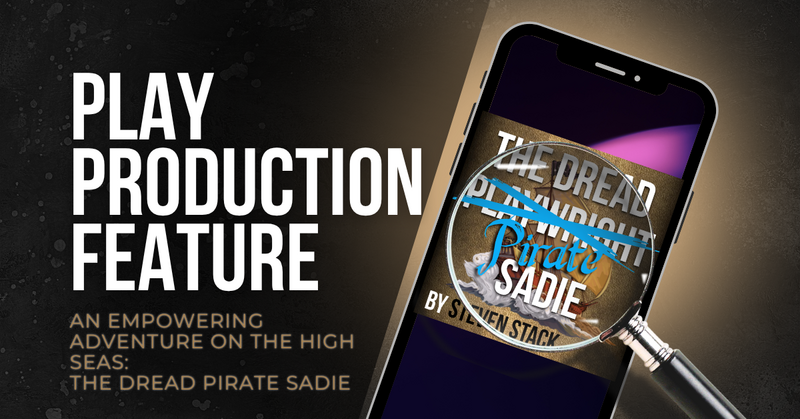
An Empowering Adventure on the High Seas: The Dread Pirate Sadie
Yes, girls can be pirates too! Casts will love the comedic, swashbuckling adventure of The Dread Pirate Sadie by Steven Stack.
Sadie wishes to leave her life on the high seas to pursue her true passion: theatre. But there’s a problem. She’s not just Sadie; she’s The Dread Pirate Sadie, the most feared pirate in all the land. And there’s another problem. She’s a horrible pirate.
Not only that, Sadie’s lost her boyfriend, her last play was attended by approximately no one, and Blacklegs, the world’s second-most-feared pirate, is after her.
Will Sadie ever open that little theatre in the woods? Or will she find herself at the wrong end of Blacklegs’ sword?
Avast! Amber Guldan and the swashbuckling students at The School District of Auburndale in Auburndale, WI had an amazing time sharing their adventure with cast, crew and audiences. The group had all hands on deck as they let their creativity reign. No landlubbers in this group!
“This play was a great play for the spring season. The cast practiced in two groups composed of the two crews until we got closer to the production date. This made scheduling practices very flexible.
TIPS: The students really enjoyed creating the backdrops, scene changes, and props that are involved. We could have done a bare stage, but the students really wanted to try doing scene changes. We used a free standing door to help separate the pub scenes and the audience loved the changes throughout the play.”
.png)
Featured Plays
A Conversation that Needs to be Had: darklight
Sadness. Hopelessness. Irritability. Anger. Hostility. Angst. Doubt. darklight by Lindsay Price examines the important and relevant issues of depression and anxiety in teens. Characters fight their inner thoughts, search for their truths, and have surreal conversations with death. Some fail, some find hope.
This is a relevant and necessary issue to explore.
Rachelle Kinn and the skilled student performers of the Century High School Theatre Department in Bismarck, ND challenged themselves and their audience as they shared the important messages in the play:
“darklight is a great play about a topic no one want to talk about. It was a challenging and rewarding play to direct. Rehearsals were not always fun, but the students tackled a subject they could relate to. The topic is heavy, but it resonated with everyone in our audience. We performed darklight for the state play contest, and we took first place!
TIPS: It is important to have fun during rehearsal. Since the topic is serious and takes a toll on emotions, students need to laugh. We tried to start or end with a game or dance to break up the seriousness of the message.
The lines can be delivered many different ways, so we worked hard to have each vignette portray the emotions a little differently since everyone copes with anxiety and depression differently.
We reminded ourselves every rehearsal what our purpose was with the production–that there is hope even in the darkest of times.”
Congratulations, Century High School!

Featured Plays
A Powerful Production: Clowns with Guns
Clowns with Guns (A Vaudeville) by Christopher Evans takes a theatrical and absurd look at the repeated and seemingly endless cycle of school violence.
Step right up! Step right up! It’s the SCHOOL-SHOOT-O-RAMA! And the question everyone’s asking is “Am I walking out alive today?”
Clowns with Guns takes a theatrical and absurd look at the repeated and seemingly endless cycle of school violence. It happens, everyone is terribly upset, things continue on as normal, it happens again.
This story is mean. There are guns. The play puts school shooting violence out in the open and forces all of us to do the same. Read the play with this knowledge.
Director Lisa Rowlands was eager to share the powerful experience that the student performers at Neath Little Theatre in Neath, United Kingdom had with their production of Clowns with Guns (A Vaudeville):
“A fantastic piece. It was such a powerful play that genuinely had the entire audience thinking and even more importantly talking about the subject matter afterwards. Even though the play takes place in the USA it has implications in the UK that were definitely understood by the audience.
TIP: Definitely include the cast as much as possible. The production evolved throughout rehearsals with youth members becoming more and more engaged as their understanding of the play grew.”
Great job, Neath Little Theatre!

Featured Plays
Theatrefolk Featured Play – The Absolutely Insidious and Utterly Terrifying Truth About Cat Hair by Bradley Walton
Welcome to our Featured Play Spotlight. The Absolutely Insidious and Utterly Terrifying Truth About Cat Hair by Bradley Walton is hilarious, easy to stage, and suitable for an insanely large cast. Brenda! Put down that brush! Step away from the cat!
Cat hair is infinite. No matter how much hair you brush off of a cat, there will always be more. Always.
Cat hair has existed since the beginning of time, and it will be here long after cockroaches have become extinct. It is the secret driving force behind business and politics, and is plotting the downfall of humanity even as we speak.
Why did we publish this play?
The title totally stands out and our first question was, does the play match the awesomeness of the title? Boy does it ever! This play has the longest title, the largest cast, the strangest characters and an infinite amount of cat hair.
And the great thing is that the cat hair is integral to the play, so the ensemble has an active role. The cat hair has personality. This is a play filled with unique characters: granola bar, lint roller, masking tape, vacuum cleaner. It’s fabulous if you’re looking to introduce non-human characters to your middle school students. Let the fun and the cat hair begin!
Let’s hear from the author!1. Why did you write this play?
My wife and I had an incredibly sweet cat named Nuala. She shed. A lot. To the point that it seemed infinite. One night I was staring at all the cat hair that had accumulated on a rug I was sure I had very recently vacuumed, and the ideas for this script started to germinate in my head. So I started typing, with no idea where the concept was going, and wrote the play in tiny increments of about 300 words a day over the space of a month. I remember at one point thinking it was a mess and I should give up on it. But I didn’t, and I pulled it together. It became my most popular play, and I have since come to regard it as a gift from Nuala.
2. Describe the theme in one or two sentences.
Cat “owners” are actually helpless, powerless slaves to their pets. (And also, cat hair really is infinite and not to be trusted.)
3. What’s the most important visual for you in this play?
The actors playing the cat hairs moving and functioning as a cohesive unit. The more strongly they pull this off, the better it sells the concept of the play.
4. If you could give one piece of advice for those producing the play, what would it be?
Tying in to the previous question, treat the movement of the cat hairs more as choreography than blocking. They should be smooth, graceful, and vaguely sinister.
5. Why is this play great for student performers?
Although the play can be performed with as few as 16 people, it is beyond perfect for large groups. The only limit to your cast size is the number of bodies you can fit on your stage. And ALL of the parts are gender flexible.