
California VAPA Standards (2019)
7.TH:Re9 Apply criteria to evaluate artistic work.
8 units • 6 professional development courses aligned to
7.TH.Re9.b - Identify how the intended purpose of a drama/theatre work appeals to a specific audience.
View all Standards for California VAPA Standards (2019)
7.TH.Re9.b Identify how the intended purpose of a drama/theatre work appeals to a specific audience.
This page lists 8 units and 6 professional development courses aligned to 7.TH.Re9.b from the California VAPA Standards (2019). Designed for drama teachers, these resources directly address 7.TH.Re9.b - Identify how the intended purpose of a drama/theatre work appeals to a specific audience.
PD COURSE
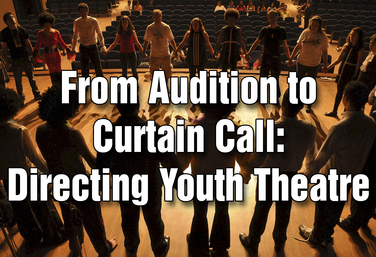
From Audition to Curtain Call: Directing Youth Theatre
by Steven Stack
11 modules
1 hours, 42 minutes
3 Credit Hours
Directing youth theatre can be one of the most thrilling, rewarding, and exhausting jobs there is – because it’s not just about staging a play. It’s about creating an environment that fosters hard work, dedication, trust, and the willingness to take chances, to “play without fear.”
As a writer/teacher/director of youth theatre for over 15 years, I have developed tools and strategies that enable my students and me to focus on the process of creating theatre while fostering an environment that leads to creative freedom and a cohesive groups that doesn't act as individual “stars,” but as a community of one.
In this course, I will share with you these tips and strategies, along with the ways to implement them in your theatre environment.
PD COURSE
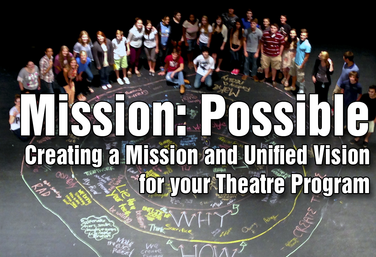
Mission Possible: Creating A Mission And Unified Vision For Your Theatre Program
by Amy Patel
7 modules
56 minutes
2 Credit Hours
Whether you're in a new school or have an existing program, you can use a Mission Statement to define your program, unify your students and let everyone know from administration, to parents, to the community why you do theatre, what you do and how you do it. Learn how to create this powerful and vital statement with your students. Mission Possible takes you through step by step from asking the right questions, to looking at your school culture and traditions, to writing and revising, to shouting your statement from the rooftops.

PD COURSE
Marketing the Arts
by James Van Leishout
8 modules
2 hours, 1 minutes
4 Credit Hours
This course covers the four stages of creating and implementing a marketing plan. It starts with the question, what are you selling?, and goes all the way through to evaluation. The course covers both traditional and new media, with examples and opportunities to apply the learning to each teacher's own situation.
PD COURSE
Play Adaptation Project
by Lindsay Price
6 modules
44 minutes
2 Credit Hours
Adaptation is a fabulous classroom project: it requires students to analyze, adapt, modify, plan synthesize, devise. All the higher order thinking skills.
But you can’t just throw a narrator into a script and call it a day. You have to have a preparation process leading up to the writing process.
In this course you will learn practical exercises and a path to prepare your students to take on their own adaptation project. We’ll look at the guidelines to adaptation, things to think about when choosing a text, how to analyze the source material and writing that first draft.
So join me, Lindsay Price, in the Play Adaptation Project.
PD COURSE
Hands-On Theatre History: Anti-Realism
by Wendy-Marie Martin
11 modules
1 hours, 41 minutes
3 Credit Hours
This course is a mix of individual and group activities requiring students to use both their analytical and creative mind. It gives students an overview on the Anti-Realism movement of the late-19th and early-20th century, and introduces them to some key theorists, playwrights, and theater makers involved in this movement.
Together we will guide students through the wild world of the “isms,” more specifically Symbolism, Dadaism, Surrealism, Expressionism and Absurdism. We will introduce students to various manifestos and theories as we track the characteristics of each of our five “isms.” As we combine analysis and creative exercises, students bring their entire self to process and prepare to design an ISM Theme Park project, which they will share with the class at the end of the course.
PD COURSE
Screenplays 101 - Part 1: Basic Structure
by Nicholas Pappas
8 modules
1 hours, 22 minutes
3 Credit Hours
Screenwriter Nick Pappas leads a two-part course on screenplays 101. Great scriptwriting is not something that can be covered in a single course: so we're going to start with the basics. Those basics are going to be split up into a Part 1 and a Part 2. Part 1, this course, will concentrate on basic film structure. Part 2 will concentrate on screenplay formatting.
By the end of this course, students should have a basic understanding of history, terminology, and are able to identify the barest bones of the three-act structure, all with an eye toward developing their own screenplay.
View all Standards for California VAPA Standards (2019) Standards Master List