Facebook Pixel Skip to main content

Ontario, Canada
Grade 12 - Foundations - Responsible Practices

13 units • 6 professional development courses aligned to
C.3.3 - demonstrate an understanding of correct theatre worker and audience etiquette in classroom drama work and formal performance contexts

View all Standards for Ontario, Canada

C.3.3 demonstrate an understanding of correct theatre worker and audience etiquette in classroom drama work and formal performance contexts

This page lists 13 units and 6 professional development courses aligned to C.3.3 from the Ontario, Canada. Designed for drama teachers, these resources directly address C.3.3 - demonstrate an understanding of correct theatre worker and audience etiquette in classroom drama work and formal performance contexts

Part One - Pre-Production

by Karen Loftus

In Part One of The Production Classroom, you’ll take your students through a series of pre-production units designed to help students gain as much comprehension as possible about putting on a successful production.

Part Two - Rehearsal and Performance

by Karen Loftus

Part Two offers articles on each step in the process, samples and forms, a suggested pacing, role definitions and task checklists, an outline for a typical class, as well as performance duties. This section also outlines the assessment piece for The Production Classroom – the production binder.

Part Two - Documents

by Karen Loftus

This section provides samples and worksheets for actor forms, costume department, general binder, lighting and sound, marketing samples, scenic and prop samples, and stage management and production manager samples and forms.

Part Three - Reflection and Assessment

by Karen Loftus

Part Three provides a Post-Performance Reflection. Unpack the experience with students, reflect back on what went right and what could be changed for next time. A written Reflection is included as well as a Rubric for student production binders.

Our Town Unit

by Lindsay Price

This is a read, discuss, and apply literature unit. Students will study the play Our Town by Thornton Wilder. Our Town is often referred to as “nostalgic.” It’s seen as an antiquated look at a moment in time. But this play is called Our Town, not My Town. What’s happening in Grover’s Corners happened in the past, the distant past, in our present, and even in the future. The themes of the play—the ordinary versus universality, the concept of time, the cycle of life, the ignorance of humanity to the eternal—these are just as relevant in the twenty-first century as they were when the play was written. The purpose of the unit is not to have students recall knowledge about the play. Students will be able to identify, articulate, and dramatize text themes and concepts and compare/contrast these concepts to their own experiences.

Introduction to Technical Theatre: Distance Learning

by Lindsay Price

When an audience watches a piece of theatre, they never see what goes on behind the scenes or know the people who work to make the production look their best. But theatre is a collaboration between what happens onstage and off. This distance learning unit will introduce students to the world of technical theatre. Through video, they will learn information on specific technical theatre roles and how they work together, types of stages, parts of a theatre and stage geography, and then apply this knowledge through synchronous exercises. For example, students will take on the role of a producer and decide how a budget will be divided among different departments. They will practice the calls a stage manager uses. The culminating assignment has students solve a common technical theatre issue: a unique stage direction in a play. NOTE - Please read the Troubleshooting Hyperdocs instructions in the Overview, if you are having issues. If your students have trouble accessing the videos, try VERSION 2 Hyperdoc links provided under each module.

Acting for the Camera

by Ruthie Tutterow

The purpose of this unit is for students to know the differences and practice skills for film versus stage acting. They should also know the basic vocabulary of acting for the camera. It will also be helpful for them to get practice in editing. By seeing both sides of the camera, they will gain valuable experience in seeing what works from both the producing and acting side. Students will be able to see and reflect on their work.

Virtual Acting for the Camera

by Ruthie Tutterow

The unit is adapted for a virtual environment. The purpose of this unit is for students to know the differences and practice skills for film versus stage acting. They should also know the basic vocabulary of acting for the camera. It will also be helpful for them to get practice in editing. By seeing both sides of the camera, they will gain valuable experience in seeing what works from both the producing and acting side. Students will be able to see and reflect on their work.

Abstract Scene Performance

by Annie Dragoo

In this unit, students will create and perform an abstract theatre scene. Abstract is a genre that does not rely on realism and deliberately breaks the rules of a given form. In the case of theatre, this refers to the commonly presented rules of performance, acting, and the relationship with the audience. Movement is often stylized and symbolic. Ideas and themes are expressed visually and aurally with little dialogue using music, lights, costumes, and props.

Foundations of Acting

by Annie Dragoo

Students will demonstrate an understanding of the foundations of acting. At the end of the unit, students will be able to understand the value of making rich acting choices on stage. This unit gives students an opportunity to explore and develop acting skills on a more advanced level, regardless of experience. They will explore skills, including voice, movement, emotional recall, memory, playing objectives, and character development culminating in a final scene.

The Dilemma Project

by Claire Broome

The Dilemma Project is based on a situation that requires a decision: push a button and get a great reward, but there’s also a great consequence. Don’t push the button and there’s no reward. This unit will lead to a group performance including characters, costumes, set, acting theory, acting tools, and a student written script. The final script will be about ten pages in length which means roughly ten minutes of stage time.

The Crucible Unit

by Lindsay Price

This is a research, read, discuss, and apply theatrical literature unit. Students will study the play The Crucible by Arthur Miller. The Crucible is Miller’s most produced play. There are hundreds of high school productions each year, and the play is in many high school curricula. As with every Miller work, there is much to discuss and many rich themes to explore. The unit is divided into three sections. Each section is a complete set of lessons. You can choose to do all three sections, or if you have your own way to teach the play, you can pick and choose exercises.

Laban: Advanced Characterization

by Drama Teacher Academy
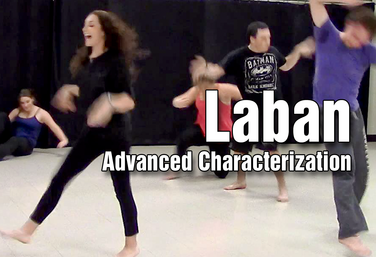
This is an advanced acting unit in playing character through the Laban movement technique. Students will explore dance theorist Rudolf Laban’s eight efforts and their component parts; turn these elements into physicalizations through which one can express character; use Laban efforts and connect them to a character’s voice and body; and demonstrate knowledge through the creation of an original character. Reminder: This is an advanced acting unit. You will need students who can do work on their own outside of class time, commit to movement and sound, and commit to making instinctual choices.

View all Standards for Ontario, Canada    Standards Master List