Facebook Pixel Skip to main content

Texas Essential Knowledge and Skills for Theatre Arts
HS 117.316 LII - Creative Expression: production

17 units • 10 professional development courses aligned to
C.3.B - read and analyze cultural, social, and political aspects of a script to determine technical elements.
View all Standards for Texas Essential Knowledge and Skills for Theatre Arts

C.3.B read and analyze cultural, social, and political aspects of a script to determine technical elements.

This page lists 17 units and 10 professional development courses aligned to C.3.B from the Texas Essential Knowledge and Skills for Theatre Arts. Designed for drama teachers, these resources directly address C.3.B - read and analyze cultural, social, and political aspects of a script to determine technical elements.

Using SketchUp in the Classroom

by Ray Palasz
6 modules 55 minutes 2 Credit Hours
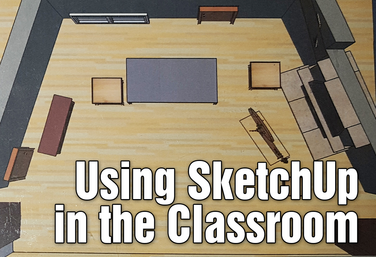
Instructor Ray Palasz leads this introductory course in using SketchUp in the classroom. This course is broken down into five easy modules. One, downloading the program. Two, getting started with using the program. Three, drawing two and three-dimensional objects. Four, using the 3D warehouse, which will save you and your students tons of time. And five, a sample assignment and assessment for your students. Each module also comes with a handout with visuals from SketchUp to guide you through the process. You will learn how SketchUp can add so much to your program.

21st Century Skills Through Devising

by Allison Williams

12 modules 1 hours, 18 minutes 4 Credit Hours
Allison Williams leads the course: 21st Century Skills Through Devising. This course covers what devising is, why to do it, how to do it, and how your students can master the 21st Century Skills of collaborations and cooperation, critical thinking, creative thinking through devising. High school is a great place to try devising with your students. But it’s not something you want to throw at your students without any preparation. Framework is important and this course takes you through a number of exercises you can take into the classroom tomorrow to help build a place of physical safety, a place where students work at making a lot of choices instead of waiting for the perfect choice, and a place where students feel comfortable making creative choices. The material also reviews the process of putting together a show from the idea/research stage to editing, to giving feedback. Your students have what it takes to create their own material, collaborate with each other, and have a unique theatrical experience!

Director's Toolbox 2: Teaching Students to Direct

by James Van Leishout
8 modules 2 hours, 47 minutes 4 Credit Hours
Director’s Toolbox 2: Teaching Students to Direct, explores the tools of the actor, rehearsal, space, and design. The tool of the actor will focus on creating a safe place to play, auditions, and how to communicate with actors. Rehearsals will look at the whole process from the first meeting to opening night. The tool of space will explore how to direct in different spaces and how to create focus through stage composition. Discover how an understanding of the elements of design help student-directors communicate with designers. The final step is a return to self and the mastery of self evaluation.

Approaching Drama Class with an Indigenous Perspective

by Allison Green
6 modules 57 minutes 2 Credit Hours
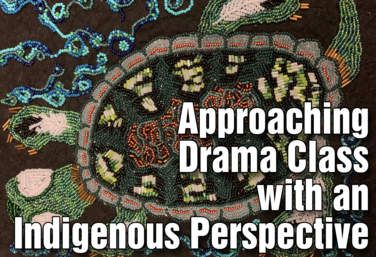
This course is led by Allison Green, a member of the Algonquin Band of Mattawa, and a drama and social sciences teacher in Northern Ontario, Canada. She believes that drama teachers should look at their teaching through an Indigenous lens for a few reasons: - It is time in North America to take a conscientious look at Indigenous people’s approach to learning and teaching. - For our Indigenous students, it’s important to see themselves in materials, activities, and classroom routines. - It is also valuable for our non-Indigenous students to see and better understand the diverse nature of the creative process and ways of seeing our world through this lens. This course aims to help teachers see their drama class through an Indigenous lens - by exploring the learning circle, culturally responsive approaches, and Indigenous pedagogy.

The Do-it-All Director's Introduction to Costuming

by Holly Beardsley
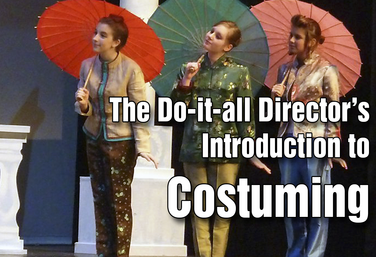
10 modules 2 hours, 12 minutes 4 Credit Hours
Do you know the difference between a bustle and a buckram frame? Or what works best as an emergency hem? Some directors are blessed with a big budget and a full support staff—a choreographer, a set designer, and a costumer. But the drama teacher often becomes director, choreographer, set designer, and costumer all in one. And a budget? What’s a budget? The Do-It-All Director’s Introduction to Costuming will give you, the director, who must do it all, the confidence and skills to costume and direct, no matter your experience or budget. This course will teach you costuming basics, budget tricks, organization, and most importantly, the art of costuming as a director.

The Do-it-All Director's Introduction to Set Design

by Holly Beardsley
10 modules 1 hours, 40 minutes 3 Credit Hours
Holly Beardsley is a do-it-all director. She started directing middle and high school students in her early college years and since then has written over ten shows and directed twice as many. Do-it-all directors are responsible for everything it seems – the direction, the costuming, the choreography and of course, the set too. And though directors are ready to direct, to costume and even dance, there is something intimidating about designing and building a set. The Do-it-All Director’s Introduction to Set Design will give you the director, who must do-it-all, the confidence and skills to not only direct but build your own set as well - no matter your experience or budget. This course will teach you set design basics, construction tips, budget tricks, and how to tackle your precious performance space armed with a hammer, and most importantly, without fear.

Commedia II: Style

by Todd Espeland

11 modules 2 hours, 31 minutes 7 Credit Hours
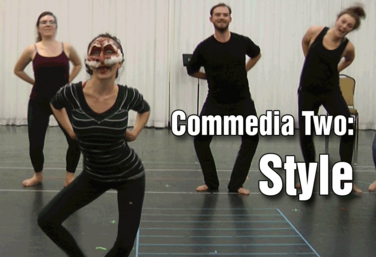
Commedia dell’arte is a 16th Century masked acting form. It’s the basis of all comedy and it’s a form that many teachers want to include in their curriculum. Instructor Todd Espeland has designed two courses that work hand-in-hand with teaching this fantastic physical form. In Commedia II: Style - Todd moves on to the specific style of Commedia dell’arte. This includes a history of commedia, the stock characters and how to physicalize them, sample lazzi and a capstone assignment. The course includes video demonstrations so you can see the exercises and activities in action.

Google Tools in the Theatre Arts Classroom

by Anna Porter
9 modules 1 hours, 32 minutes 3 Credit Hours
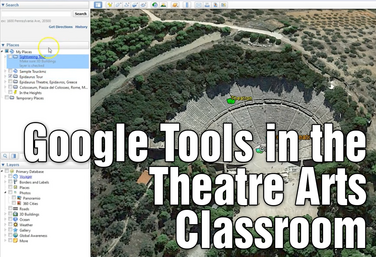
Have you been wanting to find some new ways to enhance your classroom with technology? Have you been told you need to integrate technology in your classroom but don’t know where to start or what would even make sense to use in the drama classroom? Whether you want to find some new ways to diversify your instruction and assessment, provide new resources and opportunities for your students, or simply needs some help with organization and communication, Google Tools has a treasure trove of resources ready for you to use today. Instructor Anna Porter covers the tools of Google Forms, Photos, Calendar, Earth, Custom Search and Sites. Each lesson has video examples of how to use the tools as well as tips and resources for each module.

Hands-On Theatre History: Creating a Modern Day Morality Play

by Wendy-Marie Martin
11 modules 1 hours, 25 minutes 3 Credit Hours
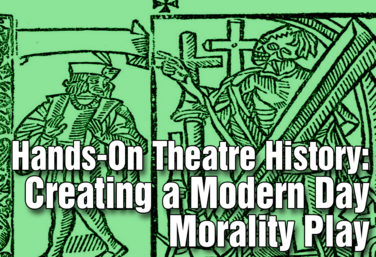
Who says theatre history has to be boring? Hands-On Theatre History: Creating a Modern Day Morality play is an interactive course by Wendy-Marie Martin, combining hands-on activities with research and analysis techniques leading to a full performance of the popular medieval morality play, Everyman. This course gives students an overview of the medieval period and the various medieval play forms and teaches students the key points of storytelling and adaptation. It includes dynamic individual and group exercises leading students from the first steps of the adaptation process through a final, full-class performance of Everyman—and proves, once and for all, that theatre history can be fun and exciting to learn.

Hands-On Theatre History: Anti-Realism

by Wendy-Marie Martin

11 modules 1 hours, 41 minutes 3 Credit Hours
This course is a mix of individual and group activities requiring students to use both their analytical and creative mind. It gives students an overview on the Anti-Realism movement of the late-19th and early-20th century, and introduces them to some key theorists, playwrights, and theater makers involved in this movement. Together we will guide students through the wild world of the “isms,” more specifically Symbolism, Dadaism, Surrealism, Expressionism and Absurdism. We will introduce students to various manifestos and theories as we track the characteristics of each of our five “isms.” As we combine analysis and creative exercises, students bring their entire self to process and prepare to design an ISM Theme Park project, which they will share with the class at the end of the course.

View all Standards for Texas Essential Knowledge and Skills for Theatre Arts    Standards Master List