
Texas Essential Knowledge and Skills for Theatre Arts
HS 117.317 LIII - Creative Expression: performance
11 units • 5 professional development courses aligned to
C.2.D - experiment with improvisation and scripted scenes of various styles to portray believable characters.
View all Standards for Texas Essential Knowledge and Skills for Theatre Arts
C.2.D experiment with improvisation and scripted scenes of various styles to portray believable characters.
This page lists 11 units and 5 professional development courses aligned to C.2.D from the Texas Essential Knowledge and Skills for Theatre Arts. Designed for drama teachers, these resources directly address C.2.D - experiment with improvisation and scripted scenes of various styles to portray believable characters.
PD COURSE
Friendly Shakespeare
by Todd Espeland
9 modules
2 hours, 5 minutes
4 Credit Hours
Friendly Shakespeare teaches a simple and effective method of script analysis for Shakespeare. It uses punctuation and keywords in the text to help students understand the characters' needs, make specific acting choices, and get them on their feet immediately.
This is not dry, sitting in a classroom discussion. It’s physicalizing the text, focusing on the character’s needs and tactics (something every drama student should know full well) and bringing Shakespeare to life.
At the end of the class you will be able to demystify Shakespeare's text and understand how to help your actors make clear, active and emotionally connected choices in Shakespeare's plays.
PD COURSE
Strong Ensemble = Strong Play
by Craig Mason
5 modules
1 hours, 8 minutes
2 Credit Hours
This mini-course will give you a toolkit to bring your shows to the next level by having an engaged, active, ensemble.
The ensemble is a critical part of a large cast show. But you can't leave them to fend for themselves. They need structure. They need exercises and activities.
In Strong Ensemble = Strong Play, you'll be given ensemble-building exercises. You'll also discover specific activities that will help your ensemble become three-dimensional characters who have something to do and something to play in every moment they are on stage.
We'll look at case studies that take the exercises learned in the course and apply them to specific shows.
PD COURSE
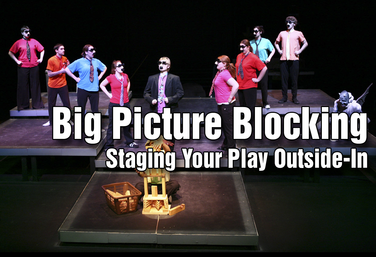
Big Picture Blocking: Staging Your Play Outside-In
by Todd Espeland
10 modules
2 hours, 3 minutes
6 Credit Hours
Working in educational theatre I know how easy it is to get bogged down in actor coaching and away from the bigger picture storytelling when directing a show. I saw a need for a method of text analysis and physical staging tools that help the director stay focused on the bigger picture of telling the story of the play.
This class is in two parts: The first consists of the text analysis tools P.A.S.T.O and Major Dramatic Question. From these tools you will brainstorm keywords to define your vision of the story.
In the second part of the class you will focus on taking the information generated in the text analysis and crafting the ideas into vibrant physical pictures through an exercise called Starburst.
PD COURSE
Copyright for Drama Teachers
by Craig Mason
9 modules
2 hours, 24 minutes
5 Credit Hours
An in-depth and interactive look at copyright as it applies to school theatre programs. Learn about how works become copyrighted, how long it lasts, how to get permission to use copyrighted work, and more.
PD COURSE
21st Century Skills Through Devising
by Allison Williams
12 modules
1 hours, 18 minutes
4 Credit Hours
Allison Williams leads the course: 21st Century Skills Through Devising. This course covers what devising is, why to do it, how to do it, and how your students can master the 21st Century Skills of collaborations and cooperation, critical thinking, creative thinking through devising.
High school is a great place to try devising with your students. But it’s not something you want to throw at your students without any preparation. Framework is important and this course takes you through a number of exercises you can take into the classroom tomorrow to help build a place of physical safety, a place where students work at making a lot of choices instead of waiting for the perfect choice, and a place where students feel comfortable making creative choices. The material also reviews the process of putting together a show from the idea/research stage to editing, to giving feedback.
Your students have what it takes to create their own material, collaborate with each other, and have a unique theatrical experience!
View all Standards for Texas Essential Knowledge and Skills for Theatre Arts Standards Master List