
National Core Arts Standards
Apply criteria to evaluate artistic work - Grade HS Accomplished
9 units • 5 professional development courses aligned to
TH:Re9.1.HSII.c - Verify how a drama/theatre work communicates for a specific purpose and audience.
View all Standards for National Core Arts Standards
TH:Re9.1.HSII.c Verify how a drama/theatre work communicates for a specific purpose and audience.
This page lists 9 units and 5 professional development courses aligned to TH:Re9.1.HSII.c from the National Core Arts Standards. Designed for drama teachers, these resources directly address TH:Re9.1.HSII.c - Verify how a drama/theatre work communicates for a specific purpose and audience.
PD COURSE
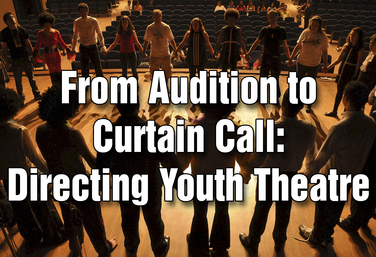
From Audition to Curtain Call: Directing Youth Theatre
by Steven Stack
11 modules
1 hours, 42 minutes
3 Credit Hours
Directing youth theatre can be one of the most thrilling, rewarding, and exhausting jobs there is – because it’s not just about staging a play. It’s about creating an environment that fosters hard work, dedication, trust, and the willingness to take chances, to “play without fear.”
As a writer/teacher/director of youth theatre for over 15 years, I have developed tools and strategies that enable my students and me to focus on the process of creating theatre while fostering an environment that leads to creative freedom and a cohesive groups that doesn't act as individual “stars,” but as a community of one.
In this course, I will share with you these tips and strategies, along with the ways to implement them in your theatre environment.
PD COURSE
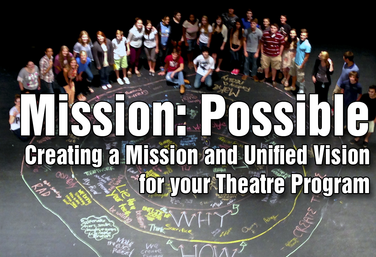
Mission Possible: Creating A Mission And Unified Vision For Your Theatre Program
by Amy Patel
7 modules
56 minutes
2 Credit Hours
Whether you're in a new school or have an existing program, you can use a Mission Statement to define your program, unify your students and let everyone know from administration, to parents, to the community why you do theatre, what you do and how you do it. Learn how to create this powerful and vital statement with your students. Mission Possible takes you through step by step from asking the right questions, to looking at your school culture and traditions, to writing and revising, to shouting your statement from the rooftops.
PD COURSE
21st Century Skills Through Devising
by Allison Williams
12 modules
1 hours, 18 minutes
4 Credit Hours
Allison Williams leads the course: 21st Century Skills Through Devising. This course covers what devising is, why to do it, how to do it, and how your students can master the 21st Century Skills of collaborations and cooperation, critical thinking, creative thinking through devising.
High school is a great place to try devising with your students. But it’s not something you want to throw at your students without any preparation. Framework is important and this course takes you through a number of exercises you can take into the classroom tomorrow to help build a place of physical safety, a place where students work at making a lot of choices instead of waiting for the perfect choice, and a place where students feel comfortable making creative choices. The material also reviews the process of putting together a show from the idea/research stage to editing, to giving feedback.
Your students have what it takes to create their own material, collaborate with each other, and have a unique theatrical experience!

PD COURSE
The Dilemma Project
by Claire Broome
16 modules
1 hours, 29 minutes
3 Credit Hours
Moral dilemmas are not only faced by characters in gripping plays, but are also faced by our students. The project outlined in this course will help students develop their critical thinking skills through the use of one of the dilemma questions to shape a student written production.
If you had the choice to press a button and earn $25,000,000... but a species (not of your choosing) would become extinct, what would you do? More importantly, what would your character do?
Join drama teacher and playwright Claire Broome through this course which includes role-playing, Stanislavski’s Magic If, character creation, playwriting and staging.
PD COURSE
Screenplays 101 - Part 1: Basic Structure
by Nicholas Pappas
8 modules
1 hours, 22 minutes
3 Credit Hours
Screenwriter Nick Pappas leads a two-part course on screenplays 101. Great scriptwriting is not something that can be covered in a single course: so we're going to start with the basics. Those basics are going to be split up into a Part 1 and a Part 2. Part 1, this course, will concentrate on basic film structure. Part 2 will concentrate on screenplay formatting.
By the end of this course, students should have a basic understanding of history, terminology, and are able to identify the barest bones of the three-act structure, all with an eye toward developing their own screenplay.
View all Standards for National Core Arts Standards Standards Master List