Facebook Pixel Skip to main content

North Carolina Essential Standards 2024
Accomplished High School Respond

8 units • 4 professional development courses aligned to
AC.RE.1.2 - Describe how individual and collective experiences impact the interpretation of theatre works.

View all Standards for North Carolina Essential Standards 2024

AC.RE.1.2 Describe how individual and collective experiences impact the interpretation of theatre works.

This page lists 8 units and 4 professional development courses aligned to AC.RE.1.2 from the North Carolina Essential Standards 2024. Designed for drama teachers, these resources directly address AC.RE.1.2 - Describe how individual and collective experiences impact the interpretation of theatre works.

Unit 13 of 14 in Drama One Curriculum

Front of House

by Karen Loftus

3 lessons
This unit looks at theatre jobs in the business category: front of house, marketing, and box office. The aim of these jobs is to interact with the public. Students are able to identify what “front of house” refers to and understand the various roles of a theatre company’s front of house members. Students will also explore how a show is marketed and demonstrate their knowledge of marketing by creating a simple marketing campaign for an original show.
Unit 14 of 14 in Drama One Curriculum

Drama One Final Project

by Karen Loftus

5 lessons
The final project will incorporate multiple areas that students have studied over the course of the year/semester: playwriting, acting, scenic design, and marketing. They are putting everything they’ve learned into a final package, including writing, rehearsing, and performing.
Unit 7 of 7 in Drama Two Curriculum

Devising

by Corinna Rezzelle

13 lessons
While the Drama Two Curriculum has a focus on acting, it’s always important to include a unit on the technical theatre skills that are necessary to any production. Students will also be able to use what they’ve learned in this unit in their upcoming devising project. Students will begin by exploring design for the stage by experimenting with line, shape, texture, size, and color. They will expand their understanding of stage properties and scenic flats. They will then apply their knowledge of these building blocks of design to create a high-concept design for a miniature “stage.”

Theatre Etiquette

by Kerry Hishon

5 lessons
When teaching students who are brand new to theatre, it’s important to discuss and apply the expectations of the drama classroom and the theatrical world. How do you implement and instill theatre etiquette in your classroom and your rehearsals – before a show and backstage? A cohesive theatrical community starts with the rules and codes of behaviour both onstage and off. Topics covered within the unit include: What is Etiquette, Real World vs Theatre World Etiquette, Audience Etiquette, Audition Etiquette, Pre-Show and Performance Etiquette. The unit ends with a culminating activity which included a rubric and reflection.
Unit 1 of 10 in Musical Theatre Curriculum

Introduction to Musical Theatre

by Drama Teacher Academy

In this unit, students will be introduced to the musical theatre form by asking and answering the question “What is a musical?” They will learn and demonstrate knowledge of musical theatre vocabulary terms. They will be introduced to two foundational songs in the musical form: the “I want” song and the “I am” song and analyze an example of each song. They will also start to think about their own voices and reflect on their skill set and confidence level with regard to singing in front of others. Students will learn the musical theatre warm-up that will be used throughout the curriculum. This set of exercises will help students prepare to perform through a physical and voice warm-up. Finally, students will watch, discuss and analyze one or two musicals (depending on your time and access to materials).
Unit 2 of 10 in Musical Theatre Curriculum

The Evolution of Musical Theatre

by Drama Teacher Academy

In this unit, students will learn and apply knowledge about musical theatre history. Two different approaches are provided to give you a variety of ways to apply this unit. Note that a class period is defined as 75 minutes. If your classes are longer or shorter, adjust accordingly.

Introduction to Film Analysis: Mise en scène

by Lindsay Price

7 lessons
Lindsay Price has developed this Introduction to Film Analysis Unit: Mise en scène. In order to develop visual literacy, students have to be able to analyze what they see. In a film, the composition of everything you see on screen is called mise-en-scène. In this unit, students will explore the individual elements that make up mise-en-scène, be able to identify those elements in stills and film scenes, and apply their knowledge in a culminating analysis activity. Heads up. You’re going to need some technology for this unit. Students need to be able to view, either as a class or 1:1 images, a google slide deck and selected film scenes.

Tech Theatre Unit: Costuming When You Don't Sew

by Drama Teacher Academy
8 lessons
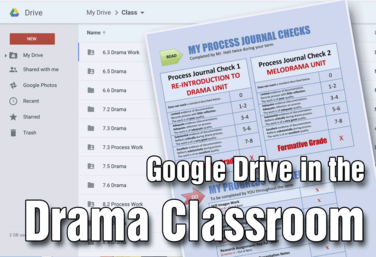
In this unit, students will take on the role of the costumer, which is different from a costume designer. It introduces costuming concepts in order to execute a costume. No complicated sewing is required, which is great if you don’t have the background, the access, or the resources to have a class of students create costumes. Instead of making costumes from scratch, as a designer would, students will create costumes from stock, borrowed items, or low-cost finds. They will take finished products and adapt them into what they need to create the right atmosphere. In order to help with their adaptations, students will try different distressing techniques and learn three SIMPLE stitches that they’ll be able to use over and over again. It’s a valuable tech theatre skill to teach students how to execute on costumes when you (and they) don’t sew!

View all Standards for North Carolina Essential Standards 2024    Standards Master List