Facebook Pixel Skip to main content

📣SCRIPT SALE! Treat yourself to an easier Fall. Save 30% on 5+ perusal scripts with code SPRING30 before May 3 and head into summer stress-free.

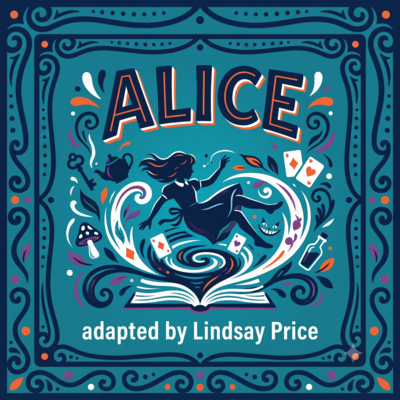
Alice

Alice

adapted by Lindsay Price from Lewis Carroll

A one-act adaptation of the famous novel by Lewis Carroll.

Alice follows the white rabbit down the rabbit hole into Wonderland, where she meets a cornucopia of strange creatures.

A caterpillar gives advice, the Mad Hatter and March Hare are always at tea time, and the Queen of Hearts continually cries, "Off with her head!"

The Cheshire Cat says everyone in Wonderland is mad, and therefore Alice must be too. Has Alice lost her head? Only the Cheshire Cat knows for sure.

Comedy Classical Adaptation Movement-based

Average Producer Rating:

Recommended for High Schools and Middle Schools

Running Time
About 45 minutes
Approximate; excludes intermissions and scene changes
Cast
13 Characters
2 M | 3 F | 8 Any Gender, Plus Ensemble
Set
Simple Set
Length
27 pages
Free Excerpt

What to order?

Not sure what you need to order? Check out our pricing and ordering guide.

Performance Royalty Fees

Royalty fees apply to all performances whether or not admission is charged. Any performance in front of an audience (e.g. an invited dress rehearsal) is considered a performance for royalty purposes.

Exemption details for scenes and monologues for competition.

13 Characters
2 M, 3 F, 8 Any Gender, Plus Ensemble

Characters in this play are currently identified as male or female. Directors are welcome to assign any gender (binary or non-binary) to any character and modify pronouns accordingly.

Alice [F] 115 lines
A curious girl in a curiouser world.
White Rabbit [A] 23 lines
Late, and in a hurry.
Caterpillar [A] 11 lines
a Pompous inchworm with serious ego.
Pigeon [A] 8 lines
On the lookout for serpents.
Duchess [F] 6 lines
A rough-handling matron, tasked with calming a little boy.
Cheshire Cat [A] 15,12,11 lines
A mischievous spirit of Wonderland. All smiles. (played by three performers)
Mad Hatter [M] 35 lines
The loony toastmaster of the tea party.
March Hare [A] 17 lines
First guest at the tea party.
Dormouse [A] 15 lines
Sleepy
King of Hearts [M] 34 lines
The tentative judge of the unusual trial.
Queen of Hearts [F] 16 lines
Terribly tyrant of Wonderland. A bad sport.

Chorus
Doors (four) [A] 2 lines
Bar Alice’s way.
Key [A] 4 lines
A helpful little key. Where does it fit?
Bottle [A] 3 lines
it doesn’t say poison, so it must be safe to drink.
Cake [A] 3 lines
“Eat me!” Who needs invitation?
Footmen [A] 2,5 lines
They guard their doors like good soldiers.
Lackey [A] 2 lines
Has an invitation from the queen.
Cook [A] 5 lines
A rude and grumpy cook.
Cards [A] 3 lines
two, five, and seven – Dutifully perform the Queen’s wishes.
Knave [A] 1 line
On trial… but, for what?
Jury [A] 2 lines
Here to pass justice.
Praise for Alice

Sarah Dagg
Vankleek Hill Collegiate Institute - Upper Canada District School Board
The students had a blast. We put it on for our school and everyone loved it!
Julia DiFazio
Robious Middle School
We LOVED Alice. This interpretation allows for a lot of simple creativity. We enjoyed figuring out the visuals and transitions from one scene to the next. The opening chase through the ensemble was particularly fun to stage and became a favorite scene among the cast. There are great character parts with plenty of ensemble roles so that everyone has their moment. Our audience loved it. Clever script!
Danielle Akers
Grace M. James Academy of Excellence
Alice in Wonderland is always a popular choice of play for middle school, and it was the perfect choice for the all-girls middle school I work at. Our cast and crew loved the technical elements of this show - we had a lot of fun getting into the nitty-gritty of prop and costume creation. It was popular with our cast, crew, and audiences. It's definitely one that I will revisit in several years as it's a great choice for young actors, plus the fact that genders don't really matter really helped us out.

More Plays Like Alice

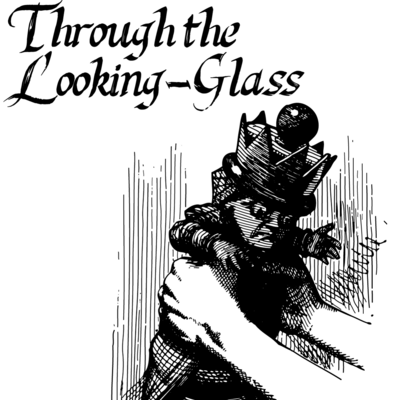
Through the Looking-Glass

adapted by Lindsay Price from Lewis Carroll

Alice is back in Wonderland and looking to become Queen. This adaptation is a fantastical physical journey for both actor and audience.

Storied

by Bradley Walton

In a magical dimension, three teenagers are pulled into a conflict between Good and Bad Ideas from classic tales. Who is to blame for the bad idea?

Four campers are not only lost in the wood, they are lost at the edge of the world with no land, water, stars or sun. The only way to bring life back is to ask the right questions that will release stories from the wind.

Grim and Gruesome Grimm

adapted by Mrs. Evelyn Merritt from Jacob and Wilhelm Grimm

A playful and theatrical adaptation of Grimm's grimmest tales.

The Pauper Princess

by Holly Beardsley inspired by Mark Twain

A retelling of Mark Twain’s The Prince and the Pauper.

Theseus is a young man on an adventure. As he makes his way to Athens to meet his father he must fight bandits, carnivorous pigs, and travel the underworld.

From the Drama Teacher Learning Centre

How to Boost Your Drama Class With Our Free Study Guides
Teaching Drama

How to Boost Your Drama Class With Our Free Study Guides

You’ve found the perfect play! It’s engaging, relevant, and a great fit for your students. BUT, you can’t produce it this year, for any number of reasons. Maybe your performance calendar is already full. Maybe your budget is looking more “two rolls of gaffer tape” than “full-scale production.” Or maybe your performance space won’t be available for months. What do you do? Good news: You don’t need to mount a production to make the most of a play. You can explore its characters, dialogue, and themes — minus the stress of auditions and tech week. That’s where Theatrefolk’s free Classroom Study Guides come in. These study guides are designed to help you get the most out of every script you read in class. And the best part? They’re totally free and ready to download whenever you need them. Before the Read: Build Curiosity and ConnectionsEvery guide starts with Pre-Read Questions and Activities to get students engaged before page one. These are short, focused exercises that: • Introduce the play’s themes and big ideas. • Encourage personal connections so students feel invested. • Spark curiosity about the story they’re about to read. Example: For Hoodie - a middle school vignette on self-image - the “Identity Chart” exercise asks students to explore how they see themselves, just as the characters do in the play. During the Read: From “What?” to “Why?”The Close Reading Questions are organized to guide students through three levels of thinking: 1. What happened? (Comprehension) 2. How did it happen? (Looking at language, staging, and character choices) 3. Why does it matter? (Making connections to playwright intention and personal experience) It’s a simple structure that works whether you’re reading aloud in class or assigning scenes for homework. You can use these questions as group discussion starters, exit slips, or reflections. Example: In Underwater, a powerful drama about a competitive teenage swimmer losing her love for the sport, students are asked to analyze the pacing and how it would affect an audience member. After the Read: Put Creativity Into ActionIt’s always important to have students explore a play beyond just reading the script. The Post-Read Activities give students the chance to bring the script to life without the pressure of a full production. They can: • Stage one key scene. • Design a poster that captures the mood of the play. • Write a brand-new monologue for a side character. It’s hands-on, it’s fun, and it keeps theatre-making front and center in your classroom. Example: In the adaptation of Lewis Carroll’s Alice, students can design costumes or rehearse a scene from a fresh angle, all while sharpening their performance instincts. Question: How do I find the free study guides for a play? Go to the individual play’s page and scroll down to the section with details like play length and cast size. There, you’ll see a message that says: Classroom Study Guide Download a free Classroom Study Guide for this play Just click the link to access your free digital guide! Ready to give it a try? Check out our full library of Classroom Study Guides, pair one with a Classroom Script License to bring the play to life in your classroom, and start building your next great drama class unit - no stage required.
March Reading List: Plays With Iconic Characters
Featured Plays

March Reading List: Plays With Iconic Characters

As March takes centre stage, we're stepping into a world full of iconic characters from well-known stories. Each play in this month's lineup includes beloved characters, ready to leap off the page and onto your stage or classroom. So, grab your popcorn, settle in, and immerse yourself in our March Reading List. These plays promise to take you on unforgettable adventures alongside some of literature's most memorable characters. It's time for an adventure like no other!
Fun & Games: Creating a Drama Board Game
Games

Fun & Games: Create a Drama Board Game

In this activity, students will demonstrate their knowledge of a selected play or musical and combine it with their creative and artistic skills to make their own theatrical board game. They’ll design and present a racing-style board game, like The Game of Life or Candyland, complete with a customized game board and tokens and an entertaining storyline based on important moments from the show. This activity is great for partners or small groups. An evaluation rubric is included at the bottom of this article. 1. Decide on a game journey.Have students select a show you’re currently studying or performing, or a different show of their choosing. Students will create a timeline of the major events in the play or musical, which they will use throughout the game to tell the story of the show. Map out a list of the important moments throughout the play that they need to include, and put them in chronological order. Determine how these moments will fit onto the game board or into the game. For example, will the moments be written on game spaces for the players to read, or do the players need to solve a show-related riddle or puzzle to win? The goal for the “game journey” is for the student game designers to demonstrate that they know the important plot points from the show’s storyline, while making the game fun at the same time. 2. Determine the gameplay and rules.Students will need to decide how the tokens will move around the board (e.g., using dice, playing cards, or another counting method) and any special spaces, such as “lose a turn,” “move back ___ spaces,” or “advance token to ____ space.” Special spaces can be game-related or action-related. For example, if the group chose The Phantom of the Opera for their game board, some special space examples might be, “You receive a threatening note from The Phantom — lose a turn” or “You’ve joined the corps de ballet — demonstrate your best moves and gain an extra three spaces” or “Madame Giry demands that you answer a trivia question to earn an extra dice throw.” Some board games include drawing extra cards or gaining bonus tokens for various reasons. Students are encouraged to add a unique slant to their games, whether that be answering trivia questions, completing physical tasks, collecting bonus tokens from landing on certain spaces, or something else related to the play or musical basis for the game. A game based on Alice in Wonderland might have game players collecting vials of “Drink Me” potion throughout the game, while a game based on Peter and the Starcatcher might require game players to retrieve bags of starstuff. Students will type up the rules and include them with their board game, ensuring they are clear and concise. (Nobody wants to spend ages reading through the rules before getting into the gameplay!) 3. Design tokens and a game board.Using their design skills, students will create a colourful and elaborate game board and unique playing tokens for their game. If students are studying The Addams Family, they might choose to make tokens that look like Morticia, Gomez, Wednesday, and Lucas Beineke, with a board designed entirely in black and gray. A Wizard of Oz game might have the game board divided into different zones such as Munchkinland, the spooky forest, the poppy field, and the Emerald City — with the Yellow Brick Road as the game track of course! For this assignment, students must also include a three-dimensional feature to their game board, similar to a scale model set design. They might wish to design a game backboard that looks like the French Taunter’s castle from Spamalot, have high rise buildings in each corner for a How to Succeed in Business… game, or build a miniature bed stacked with many mattresses for tokens to climb for a Once Upon a Mattress game. The possibilities are endless! 4. Play the game!Have each group pair up with another group, and test play each group’s board games. Then, give each team notes. What worked well? What needed improvement? How well did the team integrate the source play or musical into the design of the game? As time permits, have students try out a few different games. If you wish, have them vote on their top three games!
An Award-Winning Journey: Through the Looking Glass
Featured Plays

An Award-Winning Journey: Through the Looking Glass

Through the Looking Glass by Lindsay Price is a fantastical physical journey for both actor and audience, and a great companion to our adaptation of Alice. Alice is back in Wonderland and things are more confusing than ever – Flowers talk, the White Queen cries before she pricks her finger, and there’s a life-sized chess game going on. Alice wants to play, but mostly wants to be queen. Will she make it to the eighth square? Director Laura Michels was thrilled to sing the praises of the amazingly talented student performers at North Branch Area High School in North Branch, MN – and we can see why! “We placed first at subsections, sections, and are performing at the state level at the Minnesota State High School League One Act Festival.”
A Magical Journey into Wonderland: Alice
Featured Plays

A Magical Journey into Wonderland: Alice

Prepare for a magical trip to Wonderland with the classical adaptation, Alice by Lindsay Price. Alice follows the white rabbit down the rabbit hole into Wonderland, where she meets a cornucopia of strange creatures. A caterpillar gives advice, the Mad Hatter and March Hare are always at tea time, and the Queen of Hearts continually cries, “Off with her head!” The Cheshire Cat says everyone in Wonderland is mad, and therefore Alice must be too. Has Alice lost her head? Only the Cheshire Cat knows for sure. Director Amber King was eager to share how the student performers at Woonona High School in Woonona, New South Wales, Australia were able to transport themselves and their the audience to their magical adventures into Wonderland for an incredibly fun experience for them all. “Thank you again for allowing Woonona High School to perform your script. The kids loved it. Its such a classic and your script made it all the easier to perform. The large cast opportunities, larger-than-life character and shorter performance time meant it was achievable and a realistic performance for a one-drama-teacher department.”
All the Wonder of Wonderland: Alice
Featured Plays

All the Wonder of Wonderland: Alice

Follow us down the rabbit hole to discover wonderful adventures in the theatrical adaptation, Alice by Lindsay Price. Based on Lewis Carroll’s classic book, this one-act adaptation is a ton of fun for student performers and includes special effects that are practical, economical and entertaining. Alice follows the white rabbit down the rabbit hole into Wonderland, where she meets a cornucopia of strange creatures. A caterpillar gives advice, the Mad Hatter and March Hare are always at tea time, and the Queen of Hearts continually cries, “Off with her head!” The Cheshire Cat says everyone in Wonderland is mad, and therefore Alice must be too. Has Alice lost her head? Only the Cheshire Cat knows for sure. The drama students at Rio Grande High School in Albuquerque, New Mexico were truly wonderful in their production of Alice, and teacher Caitlin Reardon was happy to share their success with us!
The Wonder of Wonderland: Alice
Featured Plays

The Wonder of Wonderland: Alice

Nothing brings Cheshire Cat-sized grins to an audience like the comedic, classical adaptation Aliceby Lindsay Price. Audiences in New Zealand followed director Juliet Cottrell and the Drama Workshop down the rabbit hole through a wonderland of crazy and classic characters. It was no ordinary production. The theatre had been destroyed by fire four weeks prior… and yet the show did indeed, miraculously, go on! The costumes for Alice were created by Angela Elliott from Foxie Red Costumier who worked around the clock to get them ready in time. How the play came together: “This production miraculously came together four weeks after our theatre was destroyed by fire. We lost all of our props and costumes and the sound and lighting was all destroyed. We had to scramble to find new premises for 120 drama students, create new costumes and pick ourselves up off the floor and carry on! It’s moments like these that you just put one foot in front of the other, head down and focus. Ten days after the fire our village was hit by a water contamination bug and 5000 people became ill. All schools closed for the week so we had to close too! We lost about two weeks though as people recovered and came back to class. – Juliet Cottrell”
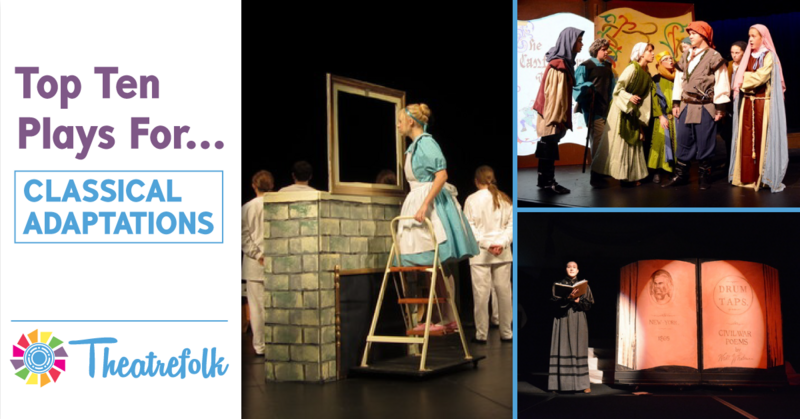
Theatrefolk’s Top 10: Classical Adaptations
Featured Plays

Theatrefolk’s Top 10: Classical Adaptations

Time for a Tfolk Top Ten Plays About…Classical Adaptations! Who’s looking for a little arts integration? How about some cross-curriculum? Or how about a great story turned into a great play. It’s time for ten classical adaptations. Adaptations are my favourite type of play to write. It’s an intriguing challenge to take a story in one form and determine what will make it a theatrical experience. Click the link and you’ll be taken to the webpage for each play. There you’ll get the details and read sample pages. All the best with your search! Shuddersome: Tales of Poe Original: Stories and Poems by Edgar Allan Poe Not only our most popular adaptations, but one of our most popular plays! Specters, ghosts and ghouls come alive in this vivid theatrical vision of Edgar Allan Poe’s best works including: The Tell-Tale Heart, The Raven, and The Masque of the Red Death. Hamlette/Mmmbeth Original: Hamlet & Macbeth by William Shakespeare The first of many of Shakespeare adaptations. We’ve paired Hamlette and Mmmbeth together because they make for a hilarious evening of theatre. Imagine if you will that “Hamlet” was not “Hamlet” at all, but “Hamlette” – a woman! Great for competitions. AND in Mmmbeth everything goes wrong. The witches take over the storytelling, Queen Duncan would rather open a donut franchise than die, Lady M’s a bloodthirsty June Cleaver, and the murderers are preoccupied with creating a commercial for their services. Introduce your students to the world of the Bard with these parodies. Will and Whimsy Original: Sonnets by William Shakespeare Shakespeare was meant to be performed, not read. This vignette play does that by bring his sonnets to life. Modern scenes play hand in hand with the original text. Mix and match the sonnets to your whimsy! Lord of the Pies Original: Lord of the Flies by William Golding In this parody piece a pie shop erupts into panic after Franny, a brash cat-lady, announces the arrival of the apocalypse. SHe starts to reconstruct society and takes out anyone who stands in her way with baby food and scotch tape. Drum Taps Original: Drum Taps by Walt Whitman The poems in Drum Taps represent Walt Whitman’s first hand account of the Civil War. See the words, the emotion, the blood come to life in this theatrical adaptation. This is not your typical poetry reading. This is war. Alice/Through The Looking Glass Original: Alice’s Adventures in Wonderland and Through the Looking Glass, and What Alice Found There by Lewis Carroll These two make excellent theatrical companion pieces. Both are one-act adaptations of the famous novels by Lewis Carroll. They follow Alice’s adventures down the rabbit hole and across the life-sized chess game. Fantastical physical journeys! The Canterbury Tales Original: *The Canterbury Tales by Chaucer* Chaucer’s classic collection of tales comes to life! A group of travelers set out for Canterbury on a pilgrimage. Each and every performer gets a chance to shine in this spirited, charming script. Text uses modern English. Pandora’s Fire Original: Pandora’s Box, Ancient Greek Myth Everybody knows the story of Pandora. Her curiosity got the better of her and she is to blame for releasing all the ills into the world. But is that the whole story? Pandora’s Fire is a wonderful mix of Ancient Greek choral storytelling with a modern twist. Hamlet, Zombie Killer of Denmark Original: Hamlet by William Shakespeare Denmark is plagued with zombies led by Hamlet’s uncle/step-father, the current king. Will Hamet become a zombie himself? A gruesomely comic adaptation of the Shakespeare’s classic tragedy, this version blends original text with new, zombified dialogue – written in iambic pentameter! The Tragicomedy of Julia Caesar Original: Julius Caesar by William Shakespeare Sarah and Dave think it would be fun to direct a play for drama club. And they both love Julius Caesar. What could go wrong? Oh, a post-death dance number, Brutus is allergic to peanut butter, Rome is now Georgia, and giant killer robots. That’s all….
3 Tips: How to Stage a Show on a Small Budget
Directing

3 Tips: How to Stage a Show on a Small Budget

For many drama teachers, a dwindling production budget is an ongoing struggle. How do you put up a full production with limited funds? Beth Goodwin portrays the double whammy she works in a small school with a small budget. And how she still ends up with consistently stunning visuals. Here are 3 tips from her successful productions. Tip #1: Don’t rely on a set.Even something as simple as changing your curtain colour and then using it as a backdrop can make a big difference, as seen in Beth’s production of Alice. Beth says: “With Alice, I was tired of the black curtains on the stage in our gym. I went through a prom book and found red polyvinyl for $50.00, hooked it up over the black curtains, and then we had red curtains. It was awesome. We do a lot of reduce, reuse, and recycle.” Tip #2: You can costume on a budget.Beth has a few tricks up her sleeve (pun intended!) that involve planning ahead and being on the lookout for deals: • Shop a fabric store like Jo-Ann’s and look for Red Tag Sale clearance fabric • Yard sale in the summertime and stockpile for the coming year • Look on eBay for fabric lots (with free shipping!) Here’s an example of how Beth used festival t-shirts and transformed them into costumes for a production of The Absolutely Insidious and Utterly Terrifying Truth About Cat Hair: “We buy t-shirts for the festival competition that we participate in, so I got long-sleeved ones and the students turned them inside out. We made hoods to coordinate with the t-shirt colours, added makeup, and they all had black pants, leggings, and shoes. So, they were 24 cat hairs for the price of a t-shirt and some makeup.” Tip #3: Don’t rely on the bells and whistles.Often the best productions are those that don’t rely on the extras, the fancy sets, or lighting. It’s all about the actors and their characters. Beth says, “Without the bells and whistles, the actors have to be strong. The characters have to be strong. I drill it into their head, you know? If you don’t believe in what you’re doing, the audience isn’t going to believe it.” This is a practice (not dress) rehearsal of Oddball by Lindsay Price. You can see it required a lot of concentration on the beginning dance entrance. Want to hear more about Beth’s success staging productions on a budget? Click here to listen to the podcast.
Drama Teachers: Creating the Director’s Vision
Directing

Drama Teachers: Creating the Director’s Vision

Directors need to have a vision for the play. That means ALL directors: professional, community, high school, and middle school. Why is it important to have a vision? • A vision gives the play a drive, a look, a tone. • A vision creates a unifying factor—something that can be communicated not just through the text but through staging, lights, sets, sound, and costume. • A vision helps students focus on the bigger picture. It’s more than learning lines and blocking. • A vision gives a director purpose; it’s the creative element the director brings to the table. Visions do not have to be complicated and esoteric. The simpler the vision, the easier it will be to convey to the cast, crew, and designers. There’s nothing wrong with a vision of fun and frivolity. Just make it clear and then be consistent with what you’re trying to achieve. For Example: I directed the original production of my Alice in Wonderland adaptation Alice. The line of dialogue that really jumped out at me after reading the book was from the tea party: ‘We’re all mad here so you must be, too.’ I thought it was interesting that Alice’s response was that she didn’t want to be mad, like she didn’t want a cold. What was my vision? My vision was to focus on the madness of Wonderland and see if the other characters could make Alice crazy as well. I created a huge physical division between the Wonderland characters and Alice. Alice was the only character with flesh showing–all the others were as inhuman as possible. I had a trio of girls play the Cheshire Cat instead of one to emphasize the fact that the cat wasn’t “real.” The Wonderland characters mistreated Alice at every opportunity; shoving her, towering over her, pinching her. They hissed at her from the darkness. She was not of their ‘world’ and the only way she could be is if she changed, becoming more like them. This is how I took my vision of “mad world” and translated it to the staging, to communicating acting choices, and to informing the costuming. How Do I Find A Vision? • Highlight the one word, image, or action that speaks to you in the script. • Find music that represents the story and the main character. • Give each character a colour. • Find magazine pictures, pictures of art, sculptures—anything that can help you and everyone you talk to about the play to SEE the play. • Create a scrapbook. The more visual the vision can be, the better. Exercise #1 Go see a play and try to decipher the director’s vision. Write it out in one sentence. What is the director trying to say with his or her interpretation of the play? You might find that this is a difficult task and, if you do, think about why that is. If you can’t see a vision, maybe it’s because the director’s hasn’t created one. Exercise #2 Take the script you’re working on. Describe the play using the five senses. What is the taste, touch, sight, sound, and smell of the play? How does describing the play in this way define the play for you? This is an excellent exercise for student directors who might have no idea that directors need a ‘vision.’ Exercise #3 Play ‘What If?’ with the text. That’s how many of the most interesting visions are born—a director simply said “what if” and then went for it! What if Romeo and Juliet took place today instead of in the 11th century? What if Sweeney Todd was set in a mental institution where the patients played their own instruments? What if the alienation of the main character was shown in the costumes, with everyone else in black? Example: What if Hamlet was played as a metaphorical contrast between LA and New York? Claudius and Gertrude are ‘LA’ people; they’re tan and wear bright colours. Polonius wears Hawaiian shirts and a bad toupee. Gertrude looks like she’s had a facelift. Claudius is Hamlet Sr.’s much younger brother so he’s closer to age and looks to Hamlet Jr. Hamlet, on the other hand, is New York flung into a human being – he scowls, wears a lot of black (combat boots and a satchel), and smokes. Ophelia also dresses like this because she loves Hamlet. But hers is a more subtle, or really, a less successful look. She’s such an awkward girl. Maybe she hides the black under a bright sweater, so Polonius doesn’t find out. Maybe she has a secret tattoo. Both she and Hamlet have incredibly white skin in comparison to everyone else around them. The new Denmark is kind of like a party—a luau where the Beach Boys are always playing and the light streams across the stage like bright sunshine. It’s a big change after much darkness. But is it really a party? Or has evil just papered over the darkness with fake cheer and brightness? Colours: Bright vs Dark Texture: Sun and Sand vs City steel Sound: The Beach Boys vs hard guitar and drums Sight: Bright colours, beach, but it looks like it’s trying too hard. There’s a fakeness to it. Also, Hamlet looking incredibly out of place on a beach. Smell: It smells like the ocean, but a fake air freshener version of the ocean. There’s also the occasional “rotten” whiff. Taste: Tropical Fruit and ice cream. But everything looks better than it tastes. The play has a clear visual conflict. There’s a clear colour palate for costumes, lights, and set. There’s a defined sound to the play. There’s a set direction. There’s a very simple visualization of light and dark (which plays in opposite to who are the light and dark characters in the play). This is how a vision can work for you. O** ne thing to always keep in mind…** Remember that while the director’s vision is your own interpretation of the script, you have to stay true to the playwright’s intention. You can’t come up with a vision and then change the play to suit the vision.
Theatrefolk’s Top 10: Most Popular Plays
Production

Theatrefolk’s Top 10: Most Popular Plays

Time for a Tfolk Top Ten For…Our Most Popular Plays! Sometimes you want a sure thing. So this week we offer our most popular plays. These are the works that get done time and time again whether it’s because of their subject matter, their humour, their ease of production or their unique theatrical take. Read one, read them all! Click the link and you’ll be taken to the webpage for each play. There you’ll get the details and read sample pages. All the best with your search! Hoodie Hoodie examines image and appearance in the vignette style and poses what may be the most difficult question of all – Do I stay in the clump or do I stand alone? Sixteen in Ten Minutes Or Less The lives of seven teenagers become intertwined in this humorous and oftentimes bittersweet collection of ten minute plays. Alice Alice follows the white rabbit down the rabbit hole into Wonderland, where she meets a cornucopia of strange creatures. A one-act adaptation of the famous novel by Lewis Carroll. Shuddersome: Tales of Poe The thumping of a heartbeat. The creek of a door. The sound of beating wings getting closer and closer… Specters, ghosts and ghouls come alive in this vivid theatrical adaptation of some of Edgar Allen Poe’s best-known works. Ten/Two Ten short two-person plays (inspired by the numbers 10 and 2!) in a variety of themes and lengths. Excellent for classwork and for competition. Drop Dead, Juliet Juliet has had enough! Enough with the poison, enough with the stabbing, and especially enough with the dying. She wants a new story and she wants it now. _ Romeo and Juliet_ will never be the same – or will it? The Absolutely Insidious and Utterly Terrifying Truth About Cat Hair Cat hair is infinite. It is the secret driving force behind business and politics, and is plotting the downfall of humanity even as we speak. Unbelievable? Find out for yourself in this hilarious, insidious and utterly terrifying tale… Emotional Baggage Seven strangers meet in a train station. Instead of luggage, they all carry their “emotional baggage.” This unique play is based solely on action and has no dialogue. The Bottom of the Lake An awesome combination of ghost stories, urban legends, teen issues, romance, absurd comedy, and film noir, all in a single play! Apostrophe’s Are you sometime’s amazed at how many apostrophe’s s’ome people manage to fi’t into s’entence’s? Then you’re not the only one. That’s just the problem that needs to be solved in this outrageous comedy. Planning on performing one of these or another Theatrefolk play? Let us know all about it with pictures and highlights – we might even feature you on our site! Click here to submit your story.
To Research or to Not Research?
Acting

To Research or to Not Research?

As an actor, character research is part of your job. Doing research gives you the foundation and background to help make your character believable to an audience. Research helps you understand a character fully in terms of why he/she does the things they do and thinks the way they think. What should you research for your character? Where do you start? Start with the scriptThe script is your ultimate tool for starting the research process. Go through the script page by page and make notes about your character. Circle or underline important information/clues about your character: actions, thoughts, stage directions, and lines (both spoken by your character and spoken about your character by others). Put a star next to ideas you want to explore with your director/teacher, or concepts you don’t understand. Those are things you’ll want to research further. Start with source materialsIf your script is an adaptation or based on a previous work (like a book, film, television show, or comic), find the original source and study it. For example, there are many stage versions of the famous protagonist Alice from the book Alice’s Adventures in Wonderland by Lewis Carroll. Theatrefolk even has one! It would be useful to read the original story, then compare and contrast it with your version. Perhaps your production will be similar to the original, or perhaps your director will have a totally different concept and approach! (For example: Alice doesn’t necessarily have to wear a blue dress and white pinafore.) Start with previous productions/performancesThe internet is your friend. Look at photos and videos of previous productions. If you’re performing a musical, listen to previous cast albums, if they’re available. Read interviews by actors who have previously played the role – what are their thoughts? How did they approach the role? Use caution when looking at previous productions – don’t let someone else’s performance influence your own. It’s great to look for inspiration, but remember that your performance will be different (because it’s YOU performing the role!). Start with real-life situationsIf your show is based on real events, you will definitely want to research those real events. For example, if you are working on a show like The Diary of Anne Frank or The Laramie Project, you will want to learn more about the real people that inspired those productions (i.e. Anne Frank and Matthew Shepard, respectively). It is also extremely useful to research the time period that your show is set in. Look at historical events, the economy, political leaders and events, and fashions and trends during that time period. How did those events affect what life was like for your character? How does that time period compare to your contemporary life right now? Researching the time period will help you understand why your character might use a kind of slang, refer to a product or person you aren’t familiar with, or dress a certain way. This type of research will help you avoid anachronisms – something that is not in its correct historical or chronological time (like an MP3 player in the 1960s). The most common anachronism I usually hear in productions is actors saying “OK” or “Yeah” when they should be saying “Yes”! Start with things that directly affect your characterThere are many “things” that may be unfamiliar to you which can affect your character. For example: • Illness or a disability. If you’re working on Rent or The Normal Heart, you’ll want to research HIV/AIDS. If you’re working on The Miracle Worker, research blindness and deafness. • A talent or skill. In Billy Elliott, the title character is a talented ballet dancer. In Robin Hood, the protagonist is a skilled archer and quarterstaff fighter. You may need to take lessons or classes to learn your character’s skill and perform it proficiently. • An accent or different language spoken by or to the character. You may need to seek out a dialect coach. You could also watch YouTube videos! • A different way of moving. For example, you might be playing an animal – how does a gorilla move? A rabbit? A bear? A snake? Watching documentaries or YouTube videos might be helpful. If you are not familiar with the “thing” that affects your character, doing research will help you to understand it and perform it more accurately. Kerry Hishon is a director, actor, writer, and stage combatant based in London, Ontario, Canada. Check out her blog at www.kerryhishon.com.
We accept

In addition to the above payment methods, Purchase Orders are accepted from US and Canadian Schools.

Info for your purchasing department