
Facebook Pixel Skip to main content

Georgia Performance Standards - Theatre Arts
Grade 8 - Connecting

14 units • 9 professional development courses aligned to
TA8.CN.1 - Explore how theatre connects to life experience, careers, and other content.
a. Investigate and prove common themes and structure among theatre and other disciplines.
b. Defend how theatre reflects life.
c. Incorporate multi-disciplinary aspects into theatre performance.
d. Identify and analyze professions associated with different forms of production (e.g. director, stage manager, designer, technician, playwright, actor).
View all Standards for Georgia Performance Standards - Theatre Arts

TA8.CN.1 Explore how theatre connects to life experience, careers, and other content.
a. Investigate and prove common themes and structure among theatre and other disciplines.
b. Defend how theatre reflects life.
c. Incorporate multi-disciplinary aspects into theatre performance.
d. Identify and analyze professions associated with different forms of production (e.g. director, stage manager, designer, technician, playwright, actor).

This page lists 14 units and 9 professional development courses aligned to TA8.CN.1 from the Georgia Performance Standards - Theatre Arts . Designed for drama teachers, these resources directly address TA8.CN.1 - Explore how theatre connects to life experience, careers, and other content.
a. Investigate and prove common themes and structure among theatre and other disciplines.
b. Defend how theatre reflects life.
c. Incorporate multi-disciplinary aspects into theatre performance.
d. Identify and analyze professions associated with different forms of production (e.g. director, stage manager, designer, technician, playwright, actor).

Mission Possible: Creating A Mission And Unified Vision For Your Theatre Program

by Amy Patel
7 modules 56 minutes 2 Credit Hours
Whether you're in a new school or have an existing program, you can use a Mission Statement to define your program, unify your students and let everyone know from administration, to parents, to the community why you do theatre, what you do and how you do it. Learn how to create this powerful and vital statement with your students. Mission Possible takes you through step by step from asking the right questions, to looking at your school culture and traditions, to writing and revising, to shouting your statement from the rooftops.

Introduction to Stage Management Part Two

by Karen Loftus
8 modules 1 hours, 28 minutes 3 Credit Hours
Karen Loftus instructs this second course in stage management - a companion to Introduction to Stage Management Part One. This course will review the major concepts covered in Introduction to Stage Management, and discuss the different types of technical rehearsals and how student stage managers prepare for and run them. You’ll learn how to teach your students to notate and call cues for a show. The course will also introduce strategies for student stage managers who work with student crews. It will discuss how you can provide the support your student stage managers need to be effective, and how that support helps to strengthen your overall program and theatre community. Student stage managers start in the classroom, train during school productions, and can take these newly discovered and acquired skills on with them to colleges and careers and theatre (and beyond)!

Theatre Etiquette 101

by Kerry Hishon

11 modules 1 hours, 40 minutes 3 Credit Hours
Instructor Kerry Hishon is an actor, director, writer, and stage combatant with years of experience in youth theatre. Her course, Theatre Etiquette 101, is designed to help students be successful in their theatrical journeys. When teaching students who are brand new to theatre, it’s important to discuss and apply the expectations of the drama classroom and the theatrical world. This course starts by explaining "what is theatre etiquette", and then moves through every step in the production process from audition to post-show recovery. Every module has tips for both you and your students, classroom exercises, rehearsal exercises, and reflections. There are also printable posters included to use in your classroom or backstage.

Marketing the Arts

by James Van Leishout
8 modules 2 hours, 1 minutes 4 Credit Hours
This course covers the four stages of creating and implementing a marketing plan. It starts with the question, what are you selling?, and goes all the way through to evaluation. The course covers both traditional and new media, with examples and opportunities to apply the learning to each teacher's own situation.

Google Tools in the Theatre Arts Classroom

by Anna Porter

9 modules 1 hours, 32 minutes 3 Credit Hours
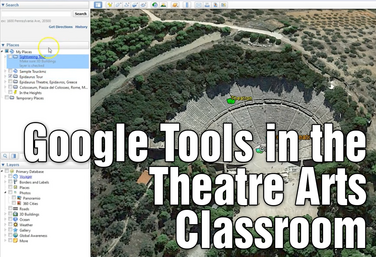
Have you been wanting to find some new ways to enhance your classroom with technology? Have you been told you need to integrate technology in your classroom but don’t know where to start or what would even make sense to use in the drama classroom? Whether you want to find some new ways to diversify your instruction and assessment, provide new resources and opportunities for your students, or simply needs some help with organization and communication, Google Tools has a treasure trove of resources ready for you to use today. Instructor Anna Porter covers the tools of Google Forms, Photos, Calendar, Earth, Custom Search and Sites. Each lesson has video examples of how to use the tools as well as tips and resources for each module.

Hands-On Theatre History: Anti-Realism

by Wendy-Marie Martin
11 modules 1 hours, 41 minutes 3 Credit Hours
This course is a mix of individual and group activities requiring students to use both their analytical and creative mind. It gives students an overview on the Anti-Realism movement of the late-19th and early-20th century, and introduces them to some key theorists, playwrights, and theater makers involved in this movement. Together we will guide students through the wild world of the “isms,” more specifically Symbolism, Dadaism, Surrealism, Expressionism and Absurdism. We will introduce students to various manifestos and theories as we track the characteristics of each of our five “isms.” As we combine analysis and creative exercises, students bring their entire self to process and prepare to design an ISM Theme Park project, which they will share with the class at the end of the course.

Creating the Ensemble-Based Classroom

by Gai Jones
5 modules 2 hours, 12 minutes 4 Credit Hours
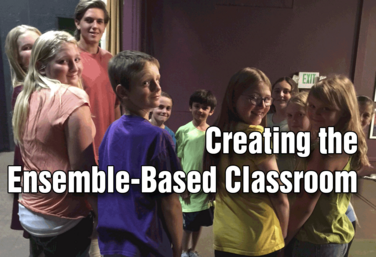
Gai Jones will help you establish an ensemble-based environment from the first day of class or rehearsal. Learn how to set up your ensemble-based classroom from day one, get students to set classroom norms, and find the balance between creative activity and structure. You’ll learn how to give your students creative freedom through structure and classroom management. The cornerstone of this course are the detailed ensemble experiences from large group to small group and even individual experiences. This course culminates in a devising model that you can use with your students, and takes you through process, product, performance and an evaluation. You too can create the ensemble-based classroom.

21st Century Skills Through Devising

by Allison Williams
12 modules 1 hours, 18 minutes 4 Credit Hours
Allison Williams leads the course: 21st Century Skills Through Devising. This course covers what devising is, why to do it, how to do it, and how your students can master the 21st Century Skills of collaborations and cooperation, critical thinking, creative thinking through devising. High school is a great place to try devising with your students. But it’s not something you want to throw at your students without any preparation. Framework is important and this course takes you through a number of exercises you can take into the classroom tomorrow to help build a place of physical safety, a place where students work at making a lot of choices instead of waiting for the perfect choice, and a place where students feel comfortable making creative choices. The material also reviews the process of putting together a show from the idea/research stage to editing, to giving feedback. Your students have what it takes to create their own material, collaborate with each other, and have a unique theatrical experience!

The Do-it-All Director's Introduction to Set Design

by Holly Beardsley

10 modules 1 hours, 40 minutes 3 Credit Hours
Holly Beardsley is a do-it-all director. She started directing middle and high school students in her early college years and since then has written over ten shows and directed twice as many. Do-it-all directors are responsible for everything it seems – the direction, the costuming, the choreography and of course, the set too. And though directors are ready to direct, to costume and even dance, there is something intimidating about designing and building a set. The Do-it-All Director’s Introduction to Set Design will give you the director, who must do-it-all, the confidence and skills to not only direct but build your own set as well - no matter your experience or budget. This course will teach you set design basics, construction tips, budget tricks, and how to tackle your precious performance space armed with a hammer, and most importantly, without fear.

View all Standards for Georgia Performance Standards - Theatre Arts    Standards Master List