
Alberta, Canada
Technical Theatre - Application
12 units • 6 professional development courses aligned to
16 - demonstrate the integration of technical theatre with other disciplines in order to enhance dramatic communication
View all Standards for Alberta, Canada
16 demonstrate the integration of technical theatre with other disciplines in order to enhance dramatic communication
This page lists 12 units and 6 professional development courses aligned to 16 from the Alberta, Canada. Designed for drama teachers, these resources directly address 16 - demonstrate the integration of technical theatre with other disciplines in order to enhance dramatic communication
PD COURSE
Yes, And... How to Teach Improv
by Jennine Profeta
10 modules
2 hours, 10 minutes
4 Credit Hours
“Yes, and…” is the guiding principle behind all improv. This course will teach you how to teach improv, and more importantly how to give feedback to your students. The course looks at making strong offers and also using gibberish to ironically improv communication skills. You will also see how feelings can safely be used to add flavour and get laughs in our scenes.
Jennine Profeta, Second City performer and theatre educator, leads this course with a clear methodology for teaching and giving positive nurturing feedback. This course will give you all the tools and the insight you need to teach improv with confidence.
PD COURSE
Introduction to Stage Management Part One
by Karen Loftus
8 modules
1 hours, 16 minutes
3 Credit Hours
In this course, instructor Karen Loftus explores the responsibilities of a stage manager. You'll learn exercises that will help you demonstrate those responsibilities and the necessary skills of a stage manager to your students. You'll learn how to train your students to serve as stage managers for your school’s productions.
The course takes you through what a stage manager does prior to rehearsal and throughout the rehearsal and performance process to have a smooth-running backstage. It includes learning about the paperwork required, including prompt scripts, rehearsal preparations, notating blocking, and a stage manager’s kit and checklist to wrap it all together.
PD COURSE
Introduction to Stage Management Part Two
by Karen Loftus
8 modules
1 hours, 28 minutes
3 Credit Hours
Karen Loftus instructs this second course in stage management - a companion to Introduction to Stage Management Part One.
This course will review the major concepts covered in Introduction to Stage Management, and discuss the different types of technical rehearsals and how student stage managers prepare for and run them. You’ll learn how to teach your students to notate and call cues for a show. The course will also introduce strategies for student stage managers who work with student crews. It will discuss how you can provide the support your student stage managers need to be effective, and how that support helps to strengthen your overall program and theatre community.
Student stage managers start in the classroom, train during school productions, and can take these newly discovered and acquired skills on with them to colleges and careers and theatre (and beyond)!
PD COURSE
Coaching Improv
by Jennine Profeta
9 modules
2 hours, 14 minutes
4 Credit Hours
Second City performer and theatre educator Jennine Profeta is back and ready to help you take your Improv classes to the next level. It’s all getting students to perform - and how to be a great improv coach who can keep them supported and grounded (and having fun!)
In this course, you’ll learn the golden rules of improv. You’ll learn a bunch of improv games (great for warm-ups, teaching tools, and even for competitions). You’ll learn Jennine’s tips and tricks for what to look for when coaching and how to troubleshoot common issues.
The course is designed to help you improv as an ensemble and give you the know-how to coach with confidence whether it’s in the classroom or on the stage!
PD COURSE
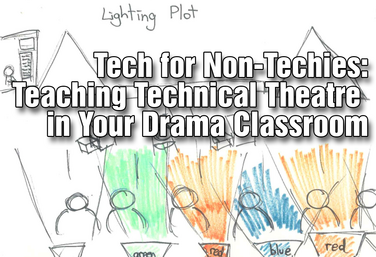
Tech for Non-Techies: Teaching Technical Theatre in Your Drama Classroom
by Josh Hatt
10 modules
3 hours, 23 minutes
7 Credit Hours
In this course, instructor Joshua Hatt shows you how to unpack your drama standards, articulate what you want your students to know and be able to do. The material explores how to incorporate lights, sound, makeup, staging, and costuming into your drama class at any grade level regardless of your school resources or unit structure. Bells and whistles? Awesome! Barely a classroom? We’ve still got you covered.
This 9 lesson series works from the basics and standards, though lighting, sound, costuming, staging, and makeup design, and culminates with a final project including rubrics, resources, and handouts.
A wise theatre technician once said: “the theatre mirrors life but technical theatre teachers us how to live.” Try to keep that statement in mind as you work through this course and see if we can make you a believer in all things technical theatre.
PD COURSE
Impowerment Improv
by Jennine Profeta
6 modules
56 minutes
2 Credit Hours
Jennine Profeta, Second City performer and theatre educator, leads this course. This course was designed to give a teacher tools to create a safe environment in which students can go beyond their old patterns to take risks, embrace failure, be more confident and aware of the effects of their word choice. The course includes modules on risk-taking, creating a safe environment, failure, confidence, and positive/negative speak.
View all Standards for Alberta, Canada Standards Master List