Facebook Pixel Skip to main content

North Carolina Essential Standards 2010
Beginning High School Standards - Analysis

9 units • 6 professional development courses aligned to
B.A.1.2 - Analyze informal or formal theatre productions in terms of the emotions or thoughts they evoke, characters, settings, and events.

View all Standards for North Carolina Essential Standards 2010

B.A.1.2 Analyze informal or formal theatre productions in terms of the emotions or thoughts they evoke, characters, settings, and events.

This page lists 9 units and 6 professional development courses aligned to B.A.1.2 from the North Carolina Essential Standards 2010. Designed for drama teachers, these resources directly address B.A.1.2 - Analyze informal or formal theatre productions in terms of the emotions or thoughts they evoke, characters, settings, and events.

Pantomime

by Angel Borths

Teacher Angel Borths developed this unit when she was looking for lessons to teach the basics of pantomime in the classroom. This unit culminates in a finished product for performance, either for peers, or for theatre festivals. The rubrics and written work for this unit take planning and preparation for performance into account. The exercises can be pulled out and used independently, but work best when used to build toward a finished product. You can also pull the ground plan and stage directions lesson plans to use with playwriting or directing lessons.

Ancient Greek Theatre

by Karen Loftus

This unit on Ancient Greek theatre focuses on the function of the chorus, the choral ode, and the details of the theatre space. It touches on plays and playwrights of the era, culminating in a final project of a modern version of Medea that includes a choral ode.

Ancient Greek Theatre - It's All Greek to Me! *Hyperdoc

by Lea Marshall

The purpose of this unit is to give students an introduction to independent learning as well as an overview of Ancient Greek theatre. Students will apply their knowledge throughout, and the unit culminates in a group activity. This unit is delivered in hyperdoc format. What does that mean? A hyperdoc is an interactive tool that encourages digital learning. In this case, students are given a document on a subject, and there they can read articles, watch videos, do some independent research, and apply what they’ve learned. Because they’re working on their own, students are in charge of their own pacing. Before you start the unit, ensure you read the Teacher Guide first. It will give you clear instructions on how to distribute the hyperdoc format and make it easy for you and your students.

Unit Four: Intro to Scripted Scenes

by Lindsay Johnson

Students will be introduced to the most basic of scripts: the contentless/open scene script. They will use their knowledge of character/relationships, setting, objective, and tactics to add content to a contentless scene. Students will also learn the basics of set design and blocking, and will begin using voice expression to communicate clearer characters. The unit culminates in a performance assessment in which students will work in pairs to add content to and perform a contentless scene.

Creating Your Own Musical

by Laramie Dean

Instructor Laramie Dean uses this unit as the final project for his Drama 2 students. Drawing upon any of the skills students have developed throughout, they create a product that could be used within a new piece of musical theatre. Students start by analyzing three musicals, study guides included, and practice creating musical elements. They are then given class time to prepare in groups as many elements as they can for a new musical using devised theatre techniques. There are 24 lessons in this unit which culminates in a final assessed performance.

Aristotle's Elements

by Lea Marshall

Aristotle was a huge fan of the theatre. He philosophically believed in it and argued with other great thinkers at the time about the necessity and good results of theatrical pursuits. This makes him a great topic for a drama classroom unit. Aristotle identified six elements that needed to be in a play for it to be worthy: plot, thought, character, diction, spectacle, and sound. This unit by Lea Marshall focuses on and offers exercises for each of Aristotle’s elements - from using fairy tales to examine plot, to re-imagining movie trailers to explore music.

Abstract Scene Performance

by Annie Dragoo

In this unit, students will create and perform an abstract theatre scene. Abstract is a genre that does not rely on realism and deliberately breaks the rules of a given form. In the case of theatre, this refers to the commonly presented rules of performance, acting, and the relationship with the audience. Movement is often stylized and symbolic. Ideas and themes are expressed visually and aurally with little dialogue using music, lights, costumes, and props.

The Autobiographical Monologue

by Gai Jones

All students have something to say and a story to tell. They can relate to their personal stories better than anyone else. All students have a lot of material which can be used as part of an original monologue. In this unit, students will write an autobiographical monologue based on their personal expertise, memories, distinct point of view, sense of truth, and life experiences. Through the process, students will be encouraged to explore past stories, objects, and images and other personal material.

Laban: Advanced Characterization

by Drama Teacher Academy
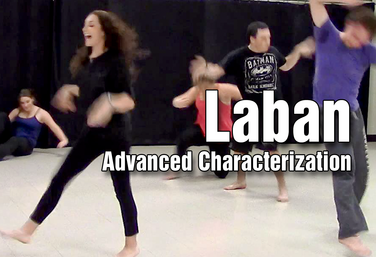
This is an advanced acting unit in playing character through the Laban movement technique. Students will explore dance theorist Rudolf Laban’s eight efforts and their component parts; turn these elements into physicalizations through which one can express character; use Laban efforts and connect them to a character’s voice and body; and demonstrate knowledge through the creation of an original character. Reminder: This is an advanced acting unit. You will need students who can do work on their own outside of class time, commit to movement and sound, and commit to making instinctual choices.

View all Standards for North Carolina Essential Standards 2010    Standards Master List