
Alberta, Canada
Junior Goal II Objectives
10 units • 12 professional development courses aligned to
become familiar with disciplines that enhance dramatic process
View all Standards for Alberta, Canada
become familiar with disciplines that enhance dramatic process
This page lists 10 units and 12 professional development courses aligned to from the Alberta, Canada. Designed for drama teachers, these resources directly address become familiar with disciplines that enhance dramatic process
Unit
2
of
14
in
Drama One
Curriculum
UNIT
Stage Movement
by Karen Loftus
3 lessons
Students will get “onstage.” They will explore what is important for onstage action, the basics of stage directions, and how to keep open. This unit will culminate with students trying out what they’ve learned in a short scene.
This unit is more about the technicalities of moving on stage. By giving students something concrete to focus on, it allows them to overcome any stage fright.
Ensemble-building exercises are also included in this unit. If you have time at the end of a lesson after you’ve completed your instruction and are wondering what to do, you can never go wrong with an ensemble-building exercise!
Unit
10
of
14
in
Drama One
Curriculum
UNIT
Playwriting
by Karen Loftus
8 lessons
Students will explore the structural elements of a play: character, objective, obstacles, tactics, resolution, and raising the stakes. They will also learn how to write character-driven dialogue and stage directions. Students will work in groups to create and present a short play.
Unit
14
of
14
in
Drama One
Curriculum
UNIT
Drama One Final Project
by Karen Loftus
5 lessons
The final project will incorporate multiple areas that students have studied over the course of the year/semester: playwriting, acting, scenic design, and marketing. They are putting everything they’ve learned into a final package, including writing, rehearsing, and performing.
UNIT
Voice
by Anna Porter
3 lessons
In this unit, students will be introduced to a key element of performance: the voice. Students will explore how to thoughtfully communicate character, story, and emotion vocally. Students will begin by exploring articulation so that they understand the importance of clearly communicating their words onstage. They will further build on this with the following lesson on the different vocal varieties of pitch, tone, rate, and volume.
The final lesson helps students explore vocal characterization as well as the details and layers that can bring that character to life vocally. This unit study of the voice culminates in a final puppet show where students are asked to bring a story and character to life by using vocal variety, articulation, and characterization.
UNIT
Puppetry
by Jenny Goodfellow
9 lessons
This unit on Puppetry is designed for middle school and up, to introduce students to the material and get them comfortable with performing in a safe and low exposure environment.
This is a unit that builds to a culminating experience for your students. Each lesson is designed to explore techniques, provide opportunities for creative collaboration among your students, and give them opportunities to perform. Some of the lessons require materials to build or create puppets. Puppetry can be as easy as drawing a face on your finger for finger puppets, to actually purchasing your own finger puppets for students to use.
While the focus of this unit is puppetry, your students will explore other skills as well. There’s the obvious ones of creative thinking, teamwork, and problem solving. They are also going to explore storytelling, performing skills, and playwriting.
Unit
4
of
7
in
Drama Two
Curriculum
UNIT
Monologues - Part 2
by Matt Webster
5 lessons
In Part 2 of the Monologue Unit (Monologue Project: Analysis, Writing, and Performance), students analyze an existing monologue to determine the criteria for a “good” monologue. They will then apply what they learned in Part 1 (Monologue Writing Made Easy), adding in the criteria for a “good” monologue, to write and perform an original monologue.
UNIT
Stage Management
by Karen Loftus
10 lessons
A unit on stage management is a great way to link technical theatre, acting, and even directing. We spend so much of our class time on performance-related projects and, when we do address technical theatre, we often do so by talking about design.
Why not introduce your students to a skill set that not only benefits your productions by ensuring a strong backstage crew and smooth production process, but also benefits the students individually? Through exploring stage management, students learn skills such as analytical thinking, organization, teamwork, and problem solving.
UNIT
Commedia dell'Arte
by Todd Espeland
14 lessons
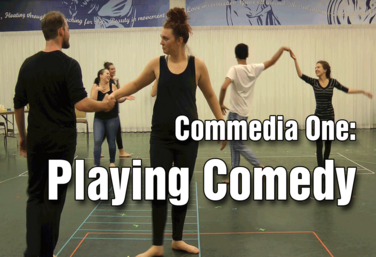
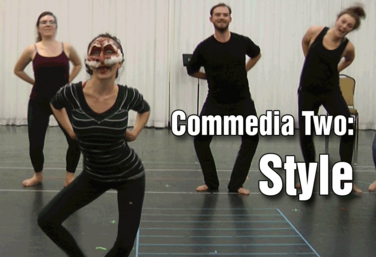
Commedia dell’arte is a 16th century masked acting form. It is the basis of all comedy, including all tv sitcoms. This form is characterized by masked types and archetypical characters and a specific way of playing comedy. To that end, this unit is divided into two parts.
Part One focuses on the foundations of commedia - playing comedy. These principles will be important to learn when it comes to developing commedia characters, specifically the physicality of the characters. Part Two will cover lazzi.
Note: there are links to video demos in many of the lessons of this unit.
UNIT
The Autobiographical Monologue
by Gai Jones
4 lessons
All students have something to say and a story to tell. They can relate to their personal stories better than anyone else. All students have a lot of material which can be used as part of an original monologue.
In this unit, students will write an autobiographical monologue based on their personal expertise, memories, distinct point of view, sense of truth, and life experiences.
Through the process, students will be encouraged to explore past stories, objects, and images and other personal material.
UNIT
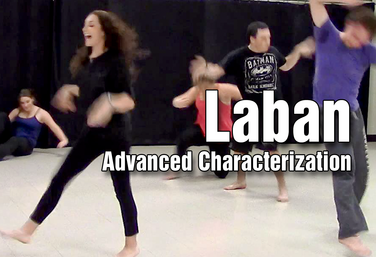
Laban: Advanced Characterization
by Drama Teacher Academy
7 lessons
This is an advanced acting unit in playing character through the Laban movement technique. Students will explore dance theorist Rudolf Laban’s eight efforts and their component parts; turn these elements into physicalizations through which one can express character; use Laban efforts and connect them to a character’s voice and body; and demonstrate knowledge through the creation of an original character.
Reminder: This is an advanced acting unit. You will need students who can do work on their own outside of class time, commit to movement and sound, and commit to making instinctual choices.

View all Standards for Alberta, Canada Standards Master List
