
Alberta, Canada
Movement Level I - Beginning
7 units • 7 professional development courses aligned to
11 - use directions and pathways
View all Standards for Alberta, Canada
11 use directions and pathways
This page lists 7 units and 7 professional development courses aligned to 11 from the Alberta, Canada. Designed for drama teachers, these resources directly address 11 - use directions and pathways
Unit
2
of
14
in
Drama One
Curriculum
UNIT
Stage Movement
by Karen Loftus
3 lessons
Students will get “onstage.” They will explore what is important for onstage action, the basics of stage directions, and how to keep open. This unit will culminate with students trying out what they’ve learned in a short scene.
This unit is more about the technicalities of moving on stage. By giving students something concrete to focus on, it allows them to overcome any stage fright.
Ensemble-building exercises are also included in this unit. If you have time at the end of a lesson after you’ve completed your instruction and are wondering what to do, you can never go wrong with an ensemble-building exercise!
Unit
3
of
14
in
Drama One
Curriculum
UNIT
Pantomime
by Karen Loftus
4 lessons
In this unit, students will explore nonverbal communication: first, through body language and gesture, and then through the specific art of pantomime. Students will learn hand position, tension, follow-through, and action/reaction/interaction with objects through warm-up games and exercises. The unit culminates in a two-person pantomime performance.
Unit
5
of
14
in
Drama One
Curriculum
UNIT
Ancient Greek Theatre
by Karen Loftus
4 lessons
This unit on Ancient Greek theatre focuses on the function of the chorus, the choral ode, and the details of the theatre space. It touches on plays and playwrights of the era, culminating in a final project of a modern version of Medea that includes a choral ode.
Unit
7
of
14
in
Drama One
Curriculum
UNIT
Commedia Dell'Arte
by Karen Loftus
5 lessons
Students will discover, analyze, and explore the history, characters, and style of commedia dell’arte.
Commedia dell’arte is a theatre history unit mixed with improvisation, physicalization, and exploring specific characters. In this unit, we’re going to focus on three main aspects:
1. Causes and Effects of Commedia (History)
2. Stock Characters
3. Commedia Performance Practices
UNIT
Introduction to Musical Theatre: Movement
by Annie Dragoo
9 lessons
Musical theatre performers use their bodies to sing, to dance, and to act. We must think of our bodies as instruments and learn to use our instruments properly in order to be better musical theatre performers.
The overall objective with this unit, by Annie Dragoo, is for students to demonstrate an understanding of the use of good movement as it connects to musical theatre. Some of the activities include using action verbs, moving as animals and inanimate characters, nonverbal communication and situational movement. Students will then perform a scene that will allow them to put to practice all the movement techniques they have learned.
Unit
3
of
11
in
Distance Learning
Curriculum
UNIT
Pantomime
by Lindsay Price and Karen Loftus
4 lessons
In this unit, students will explore nonverbal communication. First through body language and gesture, and then through the specific art of pantomime. Students will learn hand position, tension, follow-through, and action/reaction/interaction with objects through warm-up games and exercises. The unit culminates in a one-person pantomime performance.
UNIT
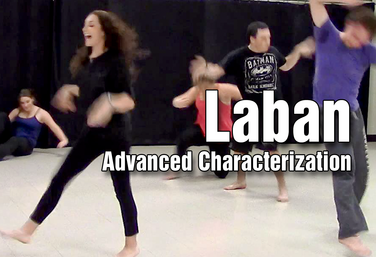
Laban: Advanced Characterization
by Drama Teacher Academy
7 lessons
This is an advanced acting unit in playing character through the Laban movement technique. Students will explore dance theorist Rudolf Laban’s eight efforts and their component parts; turn these elements into physicalizations through which one can express character; use Laban efforts and connect them to a character’s voice and body; and demonstrate knowledge through the creation of an original character.
Reminder: This is an advanced acting unit. You will need students who can do work on their own outside of class time, commit to movement and sound, and commit to making instinctual choices.


View all Standards for Alberta, Canada Standards Master List