Facebook Pixel Skip to main content

Florida Sunshine State Standards
Critical Thinking & Reflection

20 units • 12 professional development courses aligned to
TH.912.C.1.4 - Research and define the physical/visual elements necessary to create theatrical reality for a specific historical and/or geographical play.

View all Standards for Florida Sunshine State Standards

TH.912.C.1.4 Research and define the physical/visual elements necessary to create theatrical reality for a specific historical and/or geographical play.

This page lists 20 units and 12 professional development courses aligned to TH.912.C.1.4 from the Florida Sunshine State Standards. Designed for drama teachers, these resources directly address TH.912.C.1.4 - Research and define the physical/visual elements necessary to create theatrical reality for a specific historical and/or geographical play.

Ancient Greek Theatre

by Lindsay Price

In studying Ancient Greece, we’re looking at the foundations of theatre as we know it today. Without the Ancient Greek Era, we do not get actors, theatres, plays, and the definitions of tragedy and comedy. The issue with studying theatre history, or anything historical is that it can become an exercise in memorizing dates and reciting facts. When the truth of the matter is no one in the 21st century benefits from learning by rote. This is especially true when studying history in the framework of a drama classroom. We need exercises that bring history to life, instead of having students plot dates on a timeline. To that end, this unit does not focus on dates and data. The essential question for the unit is how can we connect the past to the present and this question is explored through the theatricalization of information. Students will access all four 21st century skills, critical thinking, creative thinking, collaboration and communication as they explore this amazing world. Reflections, exit slips, and rubrics are included throughout the unit as well as a mid assignment evaluation for the culminating project.

Elizabethan Theatre

by Karen Loftus

How do you introduce students to Shakespeare? This unit introduces the Bard through life in Elizabethan England and the playwrights, players, and playhouses. It also explores how to approach unfamiliar words and context clues in Shakespeare’s texts.

Scenic Design

by Karen Loftus

This unit will focus on the basics: what is scenic design? How do the scenic designer and director collaborate? What is the process that the scenic designer goes through? The unit will also explore basic drafting techniques, and rendering techniques. Based on what they learn, students will create a ground plan and a rendering. Please refer to the Pacing Guide for more details and ways to supplement with other DTA materials.

Agatha Rex and Ancient Greek Theatre

by Angel Borths

Help…It’s all Greek to me! Join Angel Borths in this unit that uses a modern adaptation of the Ancient Greek play Antigone to introduce Middle School students to Ancient Greek Theatre. Have your students read Percy Jackson and want to find out more about Ancient Greece? Then, this unit is for you. This unit is designed for middle and high school students and will take you through the basics of classical Greek theatre and pairs it with a modern adaptation of the story of Antigone called Agatha Rex by Lindsay Price. Students will learn vocabulary, design, and basic theory surrounding classical Greek theatre. Students will also enjoy the mask building component of this unit, as they learn to disappear into the character of a mask, like the first actors did on a Greek stage thousands of years ago. The unit culminates in a scene performance with masks.

Unlocking Shakespeare's Text

by Anna Porter

Shakespeare’s text holds valuable tools that students can use to unlock and understand meaning. In this unit by Anna Porter, students explore how to use the tools of research, context, textual analysis, imagery and punctuation to help them unlock meaning in Shakespeare’s text. This unit is created for an Intermediate to Advanced drama class with a basic background in plot structure and acting technique. Through this five lesson series, students will use journals, participate in class discussions, activities and performance to explore the tools used to unlock a text. Assessment tools include informal assessment as well as a final group presentation and performance.

Costuming

by Holly Beardsley

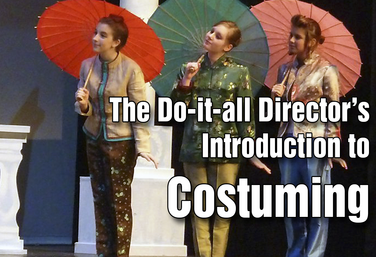
A costume designer and a costumer are two different things. A costume designer creates pieces from the drawing board to the stage, while a costumer pulls from already existing pieces to create fully realized characters. This means that the approach is different. In this six lesson unit students will learn the tools of a successful costumer. They will start by reflecting on their own personal style and the choices that go into that style. They’ll move on to look at versatility and adapting costume staples, creating a costuming vision, period clothing as the costumer, how to use the colour wheel as a costuming tool and everything culminates in a final project (two options).

Staging

by Josh Hatt

This is a mini-unit on staging. Along with the driving question for the unit, students will explore about how staging affects the performance. Students will draw a plot design (ground plan) to emphasize the need to plan where scenic elements will be placed. They will also practice taking cues from the script, in order to create staging.

Stage Management

by Karen Loftus

A unit on stage management is a great way to link technical theatre, acting, and even directing. We spend so much of our class time on performance-related projects and, when we do address technical theatre, we often do so by talking about design. Why not introduce your students to a skill set that not only benefits your productions by ensuring a strong backstage crew and smooth production process, but also benefits the students individually? Through exploring stage management, students learn skills such as analytical thinking, organization, teamwork, and problem solving.

Ancient Greek Theatre - It's All Greek to Me! *Hyperdoc

by Lea Marshall

The purpose of this unit is to give students an introduction to independent learning as well as an overview of Ancient Greek theatre. Students will apply their knowledge throughout, and the unit culminates in a group activity. This unit is delivered in hyperdoc format. What does that mean? A hyperdoc is an interactive tool that encourages digital learning. In this case, students are given a document on a subject, and there they can read articles, watch videos, do some independent research, and apply what they’ve learned. Because they’re working on their own, students are in charge of their own pacing. Before you start the unit, ensure you read the Teacher Guide first. It will give you clear instructions on how to distribute the hyperdoc format and make it easy for you and your students.

Production Classroom Units Overview

by Karen Loftus

The overview lays out the all of the parts of The Production Classroom Units - which is divided into three parts. In Part One, you’ll take your students through a series of pre-production units designed to help students gain as much comprehension as possible about putting on a successful production. Part Two offers articles on each step in the process, samples and forms, a suggested pacing, role definitions and task checklists, an outline for a typical class, as well as performance duties. This section also outlines the assessment piece for The Production Classroom – the production binder. Part Three provides a Post-Performance Reflection. Unpack the experience with students, reflect back on what went right and what could be changed for next time. A written Reflection is included as well as a Rubric for student production binders.

Part One - Pre-Production

by Karen Loftus

In Part One of The Production Classroom, you’ll take your students through a series of pre-production units designed to help students gain as much comprehension as possible about putting on a successful production.

Part Two - Rehearsal and Performance

by Karen Loftus

Part Two offers articles on each step in the process, samples and forms, a suggested pacing, role definitions and task checklists, an outline for a typical class, as well as performance duties. This section also outlines the assessment piece for The Production Classroom – the production binder.

Part Two - Documents

by Karen Loftus

This section provides samples and worksheets for actor forms, costume department, general binder, lighting and sound, marketing samples, scenic and prop samples, and stage management and production manager samples and forms.

Part Three - Reflection and Assessment

by Karen Loftus

Part Three provides a Post-Performance Reflection. Unpack the experience with students, reflect back on what went right and what could be changed for next time. A written Reflection is included as well as a Rubric for student production binders.

Scenic Design

by Karen Loftus

Students will explore the creation of an environment through the art of scenic design. They will identify what scenic design is and how it helps to tell a story in theatre. Students will also identify and demonstrate some skills of a scenic designer as they analyze an excerpt of a script for scenic clues and demonstrate basic drafting and rendering.

Props

by Karen Loftus and Kerry Hishon

Students will identify categories of props and which people create or obtain props. They’ll analyze a script for needed props, use critical-thinking skills to problem solve prop issues, and create a prop.

Our Town Unit

by Lindsay Price

This is a read, discuss, and apply literature unit. Students will study the play Our Town by Thornton Wilder. Our Town is often referred to as “nostalgic.” It’s seen as an antiquated look at a moment in time. But this play is called Our Town, not My Town. What’s happening in Grover’s Corners happened in the past, the distant past, in our present, and even in the future. The themes of the play—the ordinary versus universality, the concept of time, the cycle of life, the ignorance of humanity to the eternal—these are just as relevant in the twenty-first century as they were when the play was written. The purpose of the unit is not to have students recall knowledge about the play. Students will be able to identify, articulate, and dramatize text themes and concepts and compare/contrast these concepts to their own experiences.

Tech Theatre Unit: Costuming When You Don't Sew

by Drama Teacher Academy

In this unit, students will take on the role of the costumer, which is different from a costume designer. It introduces costuming concepts in order to execute a costume. No complicated sewing is required, which is great if you don’t have the background, the access, or the resources to have a class of students create costumes. Instead of making costumes from scratch, as a designer would, students will create costumes from stock, borrowed items, or low-cost finds. They will take finished products and adapt them into what they need to create the right atmosphere. In order to help with their adaptations, students will try different distressing techniques and learn three SIMPLE stitches that they’ll be able to use over and over again. It’s a valuable tech theatre skill to teach students how to execute on costumes when you (and they) don’t sew!

The Crucible Unit

by Lindsay Price

This is a research, read, discuss, and apply theatrical literature unit. Students will study the play The Crucible by Arthur Miller. The Crucible is Miller’s most produced play. There are hundreds of high school productions each year, and the play is in many high school curricula. As with every Miller work, there is much to discuss and many rich themes to explore. The unit is divided into three sections. Each section is a complete set of lessons. You can choose to do all three sections, or if you have your own way to teach the play, you can pick and choose exercises.

A Midsummer Night's Dream

by Drama Teacher Academy
Shakespeare is sometimes avoided in the drama classroom because not only do the students not want to take on the language difficulties but neither do the teachers. Monologue and scenework becomes more challenging and a lot of times, students falter in their blocking action and character development because they are so challenged. How do we give students the opportunity to rehearse and present Shakespearean text as they would modern text? In this play study unit, students will read a Shakespeare play while learning specific tools and techniques in order to stage text from that play. And more often than not, these techniques are ones that they have already used with other plays. It’s all about reframing Shakespeare so that students enjoy the experience of bringing the characters and stories to life.

View all Standards for Florida Sunshine State Standards    Standards Master List