Facebook Pixel Skip to main content

Texas Essential Knowledge and Skills for Theatre Arts
HS 117.315 LI - Foundations: Inquiry and Understanding

14 units • 9 professional development courses aligned to
C.1.H - define the roles of and appreciate the collaborative relationships between all artistic partners such as playwrights, composers, directors, actors, designers, technicians, and audience.
View all Standards for Texas Essential Knowledge and Skills for Theatre Arts

C.1.H define the roles of and appreciate the collaborative relationships between all artistic partners such as playwrights, composers, directors, actors, designers, technicians, and audience.

This page lists 14 units and 9 professional development courses aligned to C.1.H from the Texas Essential Knowledge and Skills for Theatre Arts. Designed for drama teachers, these resources directly address C.1.H - define the roles of and appreciate the collaborative relationships between all artistic partners such as playwrights, composers, directors, actors, designers, technicians, and audience.

Unit 1 of 14 in Drama One Curriculum

What is Theatre?

by Karen Loftus

2 lessons
Students will explore the question “What is theatre?” and contrast theatre to film. They will also begin their introduction to a couple of theatre roles.
Unit 12 of 14 in Drama One Curriculum

Scenic Design

by Karen Loftus

7 lessons
This unit will focus on the basics: what is scenic design? How do the scenic designer and director collaborate? What is the process that the scenic designer goes through? The unit will also explore basic drafting techniques, and rendering techniques. Based on what they learn, students will create a ground plan and a rendering. Please refer to the Pacing Guide for more details and ways to supplement with other DTA materials.
Unit 14 of 14 in Drama One Curriculum

Drama One Final Project

by Karen Loftus

5 lessons
The final project will incorporate multiple areas that students have studied over the course of the year/semester: playwriting, acting, scenic design, and marketing. They are putting everything they’ve learned into a final package, including writing, rehearsing, and performing.
Unit 7 of 7 in Drama Two Curriculum

Devising

by Corinna Rezzelle

13 lessons
While the Drama Two Curriculum has a focus on acting, it’s always important to include a unit on the technical theatre skills that are necessary to any production. Students will also be able to use what they’ve learned in this unit in their upcoming devising project. Students will begin by exploring design for the stage by experimenting with line, shape, texture, size, and color. They will expand their understanding of stage properties and scenic flats. They will then apply their knowledge of these building blocks of design to create a high-concept design for a miniature “stage.”
Unit 2 of 6 in Technical Theatre Mini Units Curriculum

Sound

by Josh Hatt

5 lessons
This is an introductory mini-unit to sound that you can use whether or not you have a sound system. Students will work toward being able to demonstrate their knowledge of sound effectiveness. The questions of the unit include: What is effective sound? What sounds and music do we need in order to make our scene effective? How will we know our sound cues are effective?
Unit 3 of 6 in Technical Theatre Mini Units Curriculum

Costuming

by Josh Hatt

5 lessons
If the costumes in a play are going to be effective, we need to be thoughtful about how we use them. In this mini-unit, students will demonstrate their understanding costume effectiveness and address the following questions: What is the role of costume in the performance? How does color contribute? How does the style of costume affect a performance? How does costume indicate setting? Do you need costumes in a scene?
Unit 4 of 6 in Technical Theatre Mini Units Curriculum

Staging

by Josh Hatt

5 lessons
This is a mini-unit on staging. Along with the driving question for the unit, students will explore about how staging affects the performance. Students will draw a plot design (ground plan) to emphasize the need to plan where scenic elements will be placed. They will also practice taking cues from the script, in order to create staging.
Unit 5 of 6 in Technical Theatre Mini Units Curriculum

Free Play Makeup

by Josh Hatt

8 lessons
This is a student centred mini-unit on makeup design. Makeup is useful in transporting an audience to a different world. The purpose is for students to understand that makeup is a tool that theatre technicians can use in order to contribute to effective performance aesthetics; to understand basic makeup rules and care instruction; to understand how to complete a makeup design plot; to look at a project and figure out for themselves what they need to succeed.
Unit 6 of 6 in Technical Theatre Mini Units Curriculum

Culminating Project

by Josh Hatt

Once students have completed the five Tech Theatre Units (Lighting, Sound, Costume, Staging, Free Play Makeup), you can give them this culminating project. Depending on how you structured your technical theatre unit, you can adapt this project to suit your needs and context. Up to this point, all the work in the units have been exploratory. This is where students will apply their skills and knowledge.

Commedia dell'Arte

by Todd Espeland

14 lessons
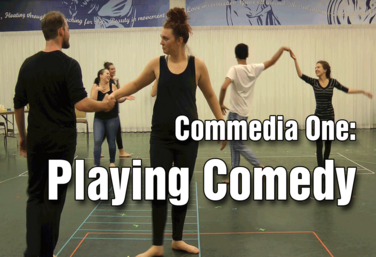
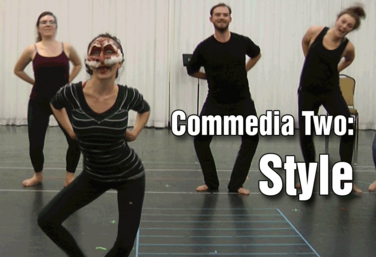
Commedia dell’arte is a 16th century masked acting form. It is the basis of all comedy, including all tv sitcoms. This form is characterized by masked types and archetypical characters and a specific way of playing comedy. To that end, this unit is divided into two parts. Part One focuses on the foundations of commedia - playing comedy. These principles will be important to learn when it comes to developing commedia characters, specifically the physicality of the characters. Part Two will cover lazzi. Note: there are links to video demos in many of the lessons of this unit.

Theatre Etiquette

by Kerry Hishon

5 lessons
When teaching students who are brand new to theatre, it’s important to discuss and apply the expectations of the drama classroom and the theatrical world. How do you implement and instill theatre etiquette in your classroom and your rehearsals – before a show and backstage? A cohesive theatrical community starts with the rules and codes of behaviour both onstage and off. Topics covered within the unit include: What is Etiquette, Real World vs Theatre World Etiquette, Audience Etiquette, Audition Etiquette, Pre-Show and Performance Etiquette. The unit ends with a culminating activity which included a rubric and reflection.
Unit 9 of 13 in Stagecraft Without a Theatre Curriculum

Costume Design

by Holly Beardsley, Karen Loftus, and Josh Hatt

3 lessons
Students are exposed to research, concepts, and skill sets while they explore costume design and the different roles of the costume designer and the costumer. They will be able to demonstrate their knowledge of costume effectiveness.
Unit 11 of 13 in Stagecraft Without a Theatre Curriculum

Make-Up Design

by Karen Loftus and Josh Hatt

1 lesson
Students will be able to explore the use of make-up as a theatrical tool and demonstrate their knowledge of make-up effectiveness.
Unit 1 of 11 in Distance Learning Curriculum

What is Theatre?

by Lindsay Price and Karen Loftus

3 lessons
Students will establish a definition of theatre, know the difference between theatre and film, and start to explore who’s who in the theatre.

View all Standards for Texas Essential Knowledge and Skills for Theatre Arts    Standards Master List