Facebook Pixel Skip to main content

Texas Essential Knowledge and Skills for Theatre Arts
MS 117.212 LII - Creative Expression: performance

21 units • 4 professional development courses aligned to
B.2.E - apply knowledge of effective voice and diction techniques to express thoughts and feelings.

View all Standards for Texas Essential Knowledge and Skills for Theatre Arts

B.2.E apply knowledge of effective voice and diction techniques to express thoughts and feelings.

This page lists 21 units and 4 professional development courses aligned to B.2.E from the Texas Essential Knowledge and Skills for Theatre Arts. Designed for drama teachers, these resources directly address B.2.E - apply knowledge of effective voice and diction techniques to express thoughts and feelings.

Ancient Greek Theatre

by Karen Loftus

This unit on Ancient Greek theatre focuses on the function of the chorus, the choral ode, and the details of the theatre space. It touches on plays and playwrights of the era, culminating in a final project of a modern version of Medea that includes a choral ode.

Improvisation

by Karen Loftus

Students sharpen their listening and reaction skills through improv games, exercises, and scenes. They will learn five specific guidelines to apply to their improvisation: accept the offer, bring information to the scene, make active choices, make your partner look good, and don’t force the humour. There are so many different ways to approach a unit on improvisation. Keep in mind that you will have students who are really excited about this unit and some students who dread it. It’s best to start with low-risk games and exercises and then build up to higher-risk ones. Low-risk games in this situation mean partnered interactions that aren’t shared with the whole class.

Commedia Dell'Arte

by Karen Loftus

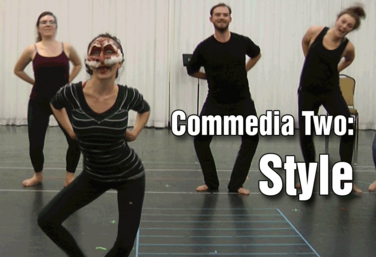
Students will discover, analyze, and explore the history, characters, and style of commedia dell’arte. Commedia dell’arte is a theatre history unit mixed with improvisation, physicalization, and exploring specific characters. In this unit, we’re going to focus on three main aspects: 1. Causes and Effects of Commedia (History) 2. Stock Characters 3. Commedia Performance Practices

Drama One Final Project

by Karen Loftus

The final project will incorporate multiple areas that students have studied over the course of the year/semester: playwriting, acting, scenic design, and marketing. They are putting everything they’ve learned into a final package, including writing, rehearsing, and performing.

Musical Theatre

by Anna Porter

Musical Theatre has two components that separate it from straight plays: song and dance. This unit gives students the opportunity to try out both. In musical theatre, music signifies heightened emotion. We can’t express ourselves with just words, we need music (and through extension, song and dance) to take it further. This unit includes three lesson plans: 1. Acting the Song - “Musical Tactics” 2. Acting the Song - “Textual Analysis” 3. Introduction to Dance A solo performance assignment is also included, and the unit includes assessment tools - rubrics, reflections, and self-evaluations.

Mock Audition

by Lindsay Price

In this Mock Audition Unit, students will start by discussing the audition process. They will make connections between their personal views and the process. Students will then apply the steps of auditioning from putting together a resume, to choosing a piece based on provided information, to audition etiquette, to the actual audition itself. A final reflection and rubric are provided for use at the end of this unit. A short play is included that can be used as the source material. You can also choose your own play for this process.

Voice

by Anna Porter

In this unit, students will be introduced to a key element of performance: the voice. Students will explore how to thoughtfully communicate character, story, and emotion vocally. Students will begin by exploring articulation so that they understand the importance of clearly communicating their words onstage. They will further build on this with the following lesson on the different vocal varieties of pitch, tone, rate, and volume. The final lesson helps students explore vocal characterization as well as the details and layers that can bring that character to life vocally. This unit study of the voice culminates in a final puppet show where students are asked to bring a story and character to life by using vocal variety, articulation, and characterization.

Shakespeare Performance

by Anna Porter

In this unit by Anna Porter, students are introduced to the works of Shakespeare and explore how to bring a character to life in a monologue performance. Students are also introduced to the tools to help them unlock meaning in Shakespeare’s text. Through this eleven lesson series, students will participate in class discussions, activities and performance. Assessment tools include informal assessment, submission of textual analysis work and a final performance.

Unlocking Shakespeare's Text

by Anna Porter

Shakespeare’s text holds valuable tools that students can use to unlock and understand meaning. In this unit by Anna Porter, students explore how to use the tools of research, context, textual analysis, imagery and punctuation to help them unlock meaning in Shakespeare’s text. This unit is created for an Intermediate to Advanced drama class with a basic background in plot structure and acting technique. Through this five lesson series, students will use journals, participate in class discussions, activities and performance to explore the tools used to unlock a text. Assessment tools include informal assessment as well as a final group presentation and performance.

Production Classroom Units Overview

by Karen Loftus

The overview lays out the all of the parts of The Production Classroom Units - which is divided into three parts. In Part One, you’ll take your students through a series of pre-production units designed to help students gain as much comprehension as possible about putting on a successful production. Part Two offers articles on each step in the process, samples and forms, a suggested pacing, role definitions and task checklists, an outline for a typical class, as well as performance duties. This section also outlines the assessment piece for The Production Classroom – the production binder. Part Three provides a Post-Performance Reflection. Unpack the experience with students, reflect back on what went right and what could be changed for next time. A written Reflection is included as well as a Rubric for student production binders.

Part One - Pre-Production

by Karen Loftus

In Part One of The Production Classroom, you’ll take your students through a series of pre-production units designed to help students gain as much comprehension as possible about putting on a successful production.

Part Two - Rehearsal and Performance

by Karen Loftus

Part Two offers articles on each step in the process, samples and forms, a suggested pacing, role definitions and task checklists, an outline for a typical class, as well as performance duties. This section also outlines the assessment piece for The Production Classroom – the production binder.

Part Two - Documents

by Karen Loftus

This section provides samples and worksheets for actor forms, costume department, general binder, lighting and sound, marketing samples, scenic and prop samples, and stage management and production manager samples and forms.

Part Three - Reflection and Assessment

by Karen Loftus

Part Three provides a Post-Performance Reflection. Unpack the experience with students, reflect back on what went right and what could be changed for next time. A written Reflection is included as well as a Rubric for student production binders.

The Actor in Transition: From Presentational to Three-Dimensional

by John Minigan

The objective of this unit by John Minigan is to move students from a traditional presentational model of performance to a three-dimensional model. You’re going to achieve this by having students - Develop tactics to achieve character goals, despite obstacles - Connect physical choices to scene structure and relationships - Clarify tactics and story rather than forcing emotion - And focus on the scene partner rather than the self This unit was created to use with grade nine students as a transition from middle school to high school acting approaches. It would also be appropriate for a beginning-of-the-year unit for a program that includes Drama 1. But any class that is at the beginning of their acting process will find value. Each lesson comes with an engagement Rubric to assess how students participated in the activities and discussions.

Unit Three: Building Improvised Scenes

by Lindsay Johnson

Students will understand the basic building blocks of a scene: The Who (characters/ relationship), the Where (setting), and the What (conflict – objectives/tactics). They will learn how to use both verbal and nonverbal (pantomime) clues to communicate these scene details to an audience. They will continue to work on voice clarity, while also learning to open their body to an audience. The unit culminates in a performance assessment in which students work in pairs to improvise a scene.

Improvisation

by Lindsay Price and Karen Loftus

Students sharpen their listening and reaction skills through improv games, exercises, and scenes. They will learn five specific guidelines to apply to their improvisation: accept the offer, bring information to the scene, make active choices, make your partner look good, and don’t force the humor.

Mock Audition

by Lindsay Price

In this Mock Audition Unit, students will discuss the audition process and make connections between their personal views and the process. Students will apply the steps of auditioning from putting together a resume to choosing a piece based on provided information to audition etiquette to the actual audition itself. A final reflection and rubrics are provided for use at the end of this unit. A short play is included that can be used as the source material for your audition. You can also choose your own play for this process.

Impowerment Improv

by Jennine Profeta

Taking risks, learning to see failure as a gift, finding courage when we don't feel it, and having the awareness that what we say has an impact are social and emotional skills students will take beyond the classroom. These are skills that can be built through improv exercises. The exercises in this unit are designed to create a safe environment in which students can go beyond their old patterns to take risks, embrace failure, and be more confident and aware of the effects of their word choices. Improv gives you the opportunity to draw attention to these important concepts and to talk about them.

Spoken Word Poetry

by Quincy Young

In this unit, students will create a performance of a spoken word poem designed to engage, entertain, and affect an audience. They will also write a poet’s statement in which they describe the purpose(s) or inspiration(s) of their poetry. This is not a technical writing unit and is geared more toward students self-expression and engaging an audience. If your students are not skilled poets, this unit is still accessible.

A Midsummer Night's Dream

by Drama Teacher Academy

Shakespeare is sometimes avoided in the drama classroom because not only do the students not want to take on the language difficulties but neither do the teachers. Monologue and scenework becomes more challenging and a lot of times, students falter in their blocking action and character development because they are so challenged. How do we give students the opportunity to rehearse and present Shakespearean text as they would modern text? In this play study unit, students will read a Shakespeare play while learning specific tools and techniques in order to stage text from that play. And more often than not, these techniques are ones that they have already used with other plays. It’s all about reframing Shakespeare so that students enjoy the experience of bringing the characters and stories to life.

View all Standards for Texas Essential Knowledge and Skills for Theatre Arts    Standards Master List