Facebook Pixel Skip to main content

Texas Essential Knowledge and Skills for Theatre Arts
MS 117.213 LIII - Foundations: Inquiry and Understanding

14 units • 5 professional development courses aligned to
B.1.C - create expressive movement and mime to define space and characters.

View all Standards for Texas Essential Knowledge and Skills for Theatre Arts

B.1.C create expressive movement and mime to define space and characters.

This page lists 14 units and 5 professional development courses aligned to B.1.C from the Texas Essential Knowledge and Skills for Theatre Arts. Designed for drama teachers, these resources directly address B.1.C - create expressive movement and mime to define space and characters.

Pantomime

by Karen Loftus

In this unit, students will explore nonverbal communication: first, through body language and gesture, and then through the specific art of pantomime. Students will learn hand position, tension, follow-through, and action/reaction/interaction with objects through warm-up games and exercises. The unit culminates in a two-person pantomime performance.

Ancient Greek Theatre

by Karen Loftus

This unit on Ancient Greek theatre focuses on the function of the chorus, the choral ode, and the details of the theatre space. It touches on plays and playwrights of the era, culminating in a final project of a modern version of Medea that includes a choral ode.

Improvisation

by Karen Loftus

Students sharpen their listening and reaction skills through improv games, exercises, and scenes. They will learn five specific guidelines to apply to their improvisation: accept the offer, bring information to the scene, make active choices, make your partner look good, and don’t force the humour. There are so many different ways to approach a unit on improvisation. Keep in mind that you will have students who are really excited about this unit and some students who dread it. It’s best to start with low-risk games and exercises and then build up to higher-risk ones. Low-risk games in this situation mean partnered interactions that aren’t shared with the whole class.

Commedia Dell'Arte

by Karen Loftus

Students will discover, analyze, and explore the history, characters, and style of commedia dell’arte. Commedia dell’arte is a theatre history unit mixed with improvisation, physicalization, and exploring specific characters. In this unit, we’re going to focus on three main aspects: 1. Causes and Effects of Commedia (History) 2. Stock Characters 3. Commedia Performance Practices

Musical Theatre

by Anna Porter

Musical Theatre has two components that separate it from straight plays: song and dance. This unit gives students the opportunity to try out both. In musical theatre, music signifies heightened emotion. We can’t express ourselves with just words, we need music (and through extension, song and dance) to take it further. This unit includes three lesson plans: 1. Acting the Song - “Musical Tactics” 2. Acting the Song - “Textual Analysis” 3. Introduction to Dance A solo performance assignment is also included, and the unit includes assessment tools - rubrics, reflections, and self-evaluations.

Pantomime

by Anna Porter

In this unit, students explore how to communicate with their body by exploring elements of physicality and Pantomime. Lesson one helps students explore body awareness as well as the use of the senses and details in pantomime performance. In lesson two, students explore body language and how it is used to communicate by examining the art of flirting. Lesson three helps students create a distinct physical characterization. Lesson four introduces students to the quality of Pantomime – Consistency. In lesson five, students explore the quality of exaggeration in pantomime. In the final lesson, students prepare a pantomime story for performance. Through this six lesson series, students will use journals, participate in class discussions and practice the elements taught by performing for their peers and as a class. Assessment tools include both informal assessment as well as a final Pantomime performance.

Introduction to Musical Theatre: Movement

by Annie Dragoo

Musical theatre performers use their bodies to sing, to dance, and to act. We must think of our bodies as instruments and learn to use our instruments properly in order to be better musical theatre performers. The overall objective with this unit, by Annie Dragoo, is for students to demonstrate an understanding of the use of good movement as it connects to musical theatre. Some of the activities include using action verbs, moving as animals and inanimate characters, nonverbal communication and situational movement. Students will then perform a scene that will allow them to put to practice all the movement techniques they have learned.

Improvisation

by Lindsay Price and Karen Loftus

Students sharpen their listening and reaction skills through improv games, exercises, and scenes. They will learn five specific guidelines to apply to their improvisation: accept the offer, bring information to the scene, make active choices, make your partner look good, and don’t force the humor.

Pantomime

by Lindsay Price and Karen Loftus

In this unit, students will explore nonverbal communication. First through body language and gesture, and then through the specific art of pantomime. Students will learn hand position, tension, follow-through, and action/reaction/interaction with objects through warm-up games and exercises. The unit culminates in a one-person pantomime performance.

Impowerment Improv

by Jennine Profeta

Taking risks, learning to see failure as a gift, finding courage when we don't feel it, and having the awareness that what we say has an impact are social and emotional skills students will take beyond the classroom. These are skills that can be built through improv exercises. The exercises in this unit are designed to create a safe environment in which students can go beyond their old patterns to take risks, embrace failure, and be more confident and aware of the effects of their word choices. Improv gives you the opportunity to draw attention to these important concepts and to talk about them.

Unit 4: Commedia Dell'Arte

by Drama Teacher Academy

We take a side trip to Italy to discover a secular comedic form: Commedia Dell’arte. Students will be introduced to the form, explore the characters and themes, and put their knowledge to practical application by creating a commedia character.

Introduction to Stanislavski

by Drama Teacher Academy

This is an in-depth unit with instruction and activities about the Stanislavski acting method. It is followed by scene work in which students learn how to score a scene, do a comprehensive character analysis, and use what they have learned in rehearsals in a performance. Students will also watch their own work and evaluate their process after the performance. The purpose of this unit is to give students an introduction and understanding of Stanislavski’s method and to put it into use as they prepare scenes for performance. After seeing their work, and spending time reflecting on how they used the principles of the method, students should take away a concrete understanding of how to prepare a role for performance.

Virtual Introduction to Stanislavski

by Drama Teacher Academy

The unit has been adapted for a virtual environment. This is an in-depth unit with instruction and activities about the Stanislavski acting method. It is followed by scene work in which students learn how to score a scene, do a comprehensive character analysis, and use what they have learned in rehearsals in a performance. Students will also watch their own work and evaluate their process after the performance. The purpose of this unit is to give students an introduction and understanding of Stanislavski’s method and to put it into use as they prepare scenes for performance. After seeing their work, and spending time reflecting on how they used the principles of the method, students should take away a concrete understanding of how to prepare a role for performance.

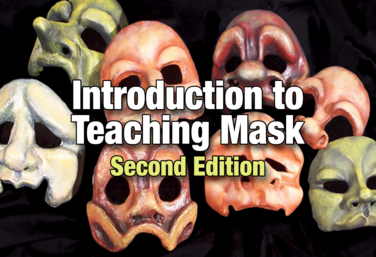
Introduction to Mask

by Allison Williams
This unit focuses on having students gain an understanding of basic physical acting and learn some specific tools to use in mask work. Instructor Allison Williams has developed this unit, and explains "What I love most about mask work is how, by having students cover their faces, they are able to find freedom to express themselves physically. They often make bigger choices than we’re normally used to seeing them make in class." In this unit, students will work step by step from identifying shapes in the mask to using those shapes to creating a character zero to learning how to move in the mask utilizing the qualities of movement to applying everything they’ve learned in short scenes. The unit will culminate with students working in pairs to create original mask scenes. You will need masks to complete the unit. And while mask-making can be a lot of fun, it’s a lengthy and messy project. A list is provided in the Overview of where you may be able to buy or rent masks for use in your classroom.

View all Standards for Texas Essential Knowledge and Skills for Theatre Arts    Standards Master List