PD COURSE
Practical Approaches to Shakespeare in the Drama Classroom
by Julie Hartley
19 modules
3 hours, 9 minutes
5 Credit Hours
Shakespeare is one of the greatest resources a drama teacher can have: scenes packed with action; opportunities to explore comedy and physical theatre; rich themes and characters to act as springboards for devised theatre; the chance to work with our language at its finest and – most importantly – ideas that relate directly to the experiences and preoccupations of students.
Yet Shakespeare isn’t easy. The language can seem dense, and finding a way in can be tough – especially for drama teachers who have not themselves studied Shakespeare. That’s the goal of this course – to help teachers find a way in.
This course presents teachers with as many ways in to the exploration of Shakespeare as possible. Action scenes, themes, characters, different theatre styles, and devised theatre projects. Students will be armed with the tools they need to begin individually exploring monologues, or working together on scenes.
PD COURSE
Creating the Ensemble-Based Classroom
by Gai Jones
5 modules
2 hours, 12 minutes
4 Credit Hours
Gai Jones will help you establish an ensemble-based environment from the first day of class or rehearsal.
Learn how to set up your ensemble-based classroom from day one, get students to set classroom norms, and find the balance between creative activity and structure. You’ll learn how to give your students creative freedom through structure and classroom management. The cornerstone of this course are the detailed ensemble experiences from large group to small group and even individual experiences.
This course culminates in a devising model that you can use with your students, and takes you through process, product, performance and an evaluation.
You too can create the ensemble-based classroom.
PD COURSE
Hands-On Theatre History: Creating a Modern Day Morality Play
by Wendy-Marie Martin
11 modules
1 hours, 25 minutes
3 Credit Hours
Who says theatre history has to be boring? Hands-On Theatre History: Creating a Modern Day Morality play is an interactive course by Wendy-Marie Martin, combining hands-on activities with research and analysis techniques leading to a full performance of the popular medieval morality play, Everyman.
This course gives students an overview of the medieval period and the various medieval play forms and teaches students the key points of storytelling and adaptation.
It includes dynamic individual and group exercises leading students from the first steps of the adaptation process through a final, full-class performance of Everyman—and proves, once and for all, that theatre history can be fun and exciting to learn.
PD COURSE
Theatre Etiquette 101
by Kerry Hishon
11 modules
1 hours, 40 minutes
3 Credit Hours
Instructor Kerry Hishon is an actor, director, writer, and stage combatant with years of experience in youth theatre. Her course, Theatre Etiquette 101, is designed to help students be successful in their theatrical journeys.
When teaching students who are brand new to theatre, it’s important to discuss and apply the expectations of the drama classroom and the theatrical world.
This course starts by explaining "what is theatre etiquette", and then moves through every step in the production process from audition to post-show recovery.
Every module has tips for both you and your students, classroom exercises, rehearsal exercises, and reflections. There are also printable posters included to use in your classroom or backstage.
PD COURSE
SEL Through the Lens of Theatre
by Christa Vogt
2 modules
22 minutes
1 Credit Hour
SEL stands for Social Emotional Learning. Theatre teachers know that Social Emotional Learning and its categories: Self-Awareness, Self-Management, Social Awareness, Relationship Skills and Responsible Decision Making, are innate in what we do.
The goal of this mini-course is to show you that you can take SEL in the way that your administration wants you to, using the language they want you to use, and apply it to lessons you already teach.
Instructor Christa Vogt will take you through the facets of SEL, and then take you step by step through an activity - to show you how you can apply SEL to each and every step.
PD COURSE
Impowerment Improv
by Jennine Profeta
6 modules
56 minutes
2 Credit Hours
Jennine Profeta, Second City performer and theatre educator, leads this course. This course was designed to give a teacher tools to create a safe environment in which students can go beyond their old patterns to take risks, embrace failure, be more confident and aware of the effects of their word choice. The course includes modules on risk-taking, creating a safe environment, failure, confidence, and positive/negative speak.
PD COURSE
Introduction to Stage Management Part Two
by Karen Loftus
8 modules
1 hours, 28 minutes
3 Credit Hours
Karen Loftus instructs this second course in stage management - a companion to Introduction to Stage Management Part One.
This course will review the major concepts covered in Introduction to Stage Management, and discuss the different types of technical rehearsals and how student stage managers prepare for and run them. You’ll learn how to teach your students to notate and call cues for a show. The course will also introduce strategies for student stage managers who work with student crews. It will discuss how you can provide the support your student stage managers need to be effective, and how that support helps to strengthen your overall program and theatre community.
Student stage managers start in the classroom, train during school productions, and can take these newly discovered and acquired skills on with them to colleges and careers and theatre (and beyond)!
PD COURSE
Beyond the Basics: Rehearsal Strategies to Grow Your Actors
by Julie Hartley
16 modules
3 hours, 3 minutes
5 Credit Hours
The focus of the teacher-director should be not only on the quality of the show, but on the value of the experience offered to student actors. This course takes you on this journey through practical rehearsal strategies that apply an ensemble approach.
This course starts with those all important first rehearsals, explores warm ups, and looks at character development. We examine specific types of plays, like classical texts and comedy, and conclude with strategies to solve common rehearsal problems.
Go beyond the basics!
PD COURSE
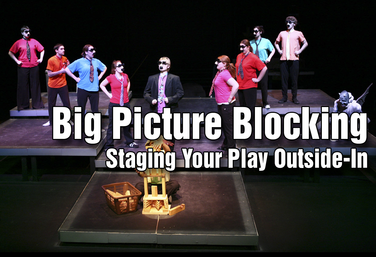
Big Picture Blocking: Staging Your Play Outside-In
by Todd Espeland
10 modules
2 hours, 3 minutes
6 Credit Hours
Working in educational theatre I know how easy it is to get bogged down in actor coaching and away from the bigger picture storytelling when directing a show. I saw a need for a method of text analysis and physical staging tools that help the director stay focused on the bigger picture of telling the story of the play.
This class is in two parts: The first consists of the text analysis tools P.A.S.T.O and Major Dramatic Question. From these tools you will brainstorm keywords to define your vision of the story.
In the second part of the class you will focus on taking the information generated in the text analysis and crafting the ideas into vibrant physical pictures through an exercise called Starburst.
PD COURSE
From Audition to Curtain Call: Directing Youth Theatre
by Steven Stack
11 modules
1 hours, 42 minutes
3 Credit Hours
Directing youth theatre can be one of the most thrilling, rewarding, and exhausting jobs there is – because it’s not just about staging a play. It’s about creating an environment that fosters hard work, dedication, trust, and the willingness to take chances, to “play without fear.”
As a writer/teacher/director of youth theatre for over 15 years, I have developed tools and strategies that enable my students and me to focus on the process of creating theatre while fostering an environment that leads to creative freedom and a cohesive groups that doesn't act as individual “stars,” but as a community of one.
In this course, I will share with you these tips and strategies, along with the ways to implement them in your theatre environment.
PD COURSE
Organized Chaos: 2nd Edition
by Matt Webster
10 modules
2 hours, 18 minutes
6 Credit Hours
Organized Chaos: Discipline in the Theatre Classroom will give you tools and strategies to prepare you for challenges you may face as you step up in front of a class of students and introduce them to the art of theatre.
Whether you are a student teacher finishing college, a first-year teacher just starting out in the classroom, or an established teacher with a few years of experience under your belt, these lessons will provide insight and support as you establish discipline in your classroom.
This is a revised, 2nd edition of a favourite original course in the DTA, brought to you by experienced theatre educator, Matt Webster.

PD COURSE
The Top Ten Playwriting Exercises
by Lindsay Price
11 modules
3 hours, 1 minutes
6 Credit Hours
The Top Ten Playwriting Exercises Course not only gives you ten great exercises to ease your students into the playwriting waters, it's also going to give you the confidence to teach playwriting to your students.
Each exercise comes with instruction, why the exercise is important, how to assess the exercise and something specific for you to try.
Many of the modules include assignments and rubrics so you will be fully prepared to comprehend, apply and teach every these exercises.
PD COURSE
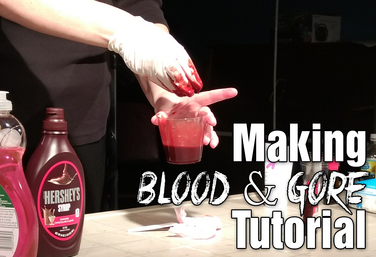
Making Blood and Gore Tutorial
by Linda Veneris
7 modules
33 minutes
2 Credit Hours
This tutorial, led by Linda Veneris, shows teachers and students how to make blood and gore with easy to find, everyday ingredients.
Included are recipes, video demonstrations, and top 10 tips for working with students on blood and gore. This tutorial can be part of a stage makeup unit in your classroom as well as for productions.

PD COURSE
Social Emotional Learning through Game Play
by Matt Webster
7 modules
57 minutes
2 Credit Hours
The skills identified in Social Emotional Learning are the same skills theatre teachers spotlight in the warmups, games, and activities, as well as group work and theater-related assignments found in the drama curriculum every day.
This course will break down the various games and activities in the drama classroom to identify, incorporate, and intensify the Social Emotional Learning outcomes we want our students to achieve. By the end of this course, you will be able to identify the five components of Social Emotional Learning and see the places in the curriculum where they intersect with basic games and activities in the drama classroom.
PD COURSE
Exploring Viewpoints
by Erin Carr
11 modules
3 hours, 28 minutes
5 Credit Hours
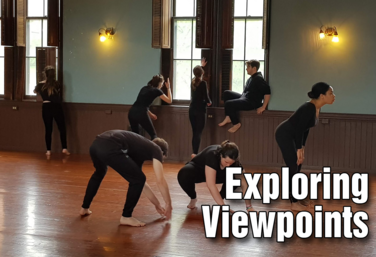
Viewpoints is used to create dynamic moments of theatre by simply existing on the stage. However, Viewpoints is more than just an acting technique to understand your own physicality and more than a directing technique to create “ah-ha!” moments on stage. It is first and foremost the philosophy that to create an organic performance, you must see obstacle as opportunity, and that by simply standing in space, your creativity can spark.
This course by Erin Carr will help your students discover fresh impulses that motivate their performance in the moment. We will go through the Viewpoints technique, as created by Mary Overlie, and learn how to tap into kinesthetic awareness as individuals and as an ensemble. Through this style of play, students learn to release their thoughts on what they “should” do, and instead just respond organically to their surroundings and ensemble!
We’re going to break down each of the Viewpoints, there’s lots of visual demonstration, so you can see each Viewpoint in action, and I’m going to provide tips and side coaching examples.
PD COURSE
Introduction to Stage Management Part One
by Karen Loftus
8 modules
1 hours, 16 minutes
3 Credit Hours
In this course, instructor Karen Loftus explores the responsibilities of a stage manager. You'll learn exercises that will help you demonstrate those responsibilities and the necessary skills of a stage manager to your students. You'll learn how to train your students to serve as stage managers for your school’s productions.
The course takes you through what a stage manager does prior to rehearsal and throughout the rehearsal and performance process to have a smooth-running backstage. It includes learning about the paperwork required, including prompt scripts, rehearsal preparations, notating blocking, and a stage manager’s kit and checklist to wrap it all together.
PD COURSE
Tech Knowledge: Integrating Tech Throughout Your Rehearsal Process
by Claire Broome
17 modules
1 hours, 52 minutes
3 Credit Hours
This course will help you integrate technical theatre earlier in the creative process to help reduce the stress of tech week, and make sure you have what you need before choosing a show. We will explore how to include your technical theatre team from day one and will help you have an easier experience throughout the rehearsal process and final performances.

PD COURSE
Marketing the Arts
by James Van Leishout
8 modules
2 hours, 1 minutes
4 Credit Hours
This course covers the four stages of creating and implementing a marketing plan. It starts with the question, what are you selling?, and goes all the way through to evaluation. The course covers both traditional and new media, with examples and opportunities to apply the learning to each teacher's own situation.
PD COURSE
Laban: Advanced Characterization
by Todd Espeland
9 modules
2 hours, 5 minutes
8 Credit Hours
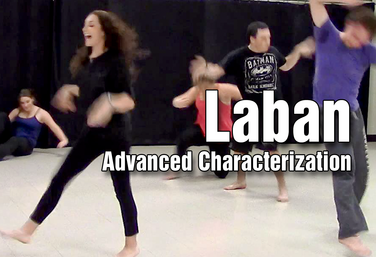
Learn about the Laban system to teach your students to physically and vocally discover character. This is an advanced course, which means that the course goes deep into exploring character and exploring character work through the work of Rudolph Laban.
PD COURSE
Get Students to Embrace Failure in the Drama Classroom
by Lindsay Price
5 modules
38 minutes
1 Credit Hour
This course by Lindsay Price explores strategies you can use to encourage students to embrace failure rather than see it as a point of shame or something to hide from.
Our goal for students is to embrace a try/fail/try again/fail/try again/succeed formula. Each module in this course comes with exercises and activities that you’ll be able to take into the classroom right away.
It’s one thing to talk about embracing failure, it’s another to give students practical tools to help them achieve that goal. Join Lindsay in getting students to embrace failure in the drama classroom as we look at Failure from a Yes! perspective.