
Facebook Pixel Skip to main content

Common Core
Language

24 units • 1 lesson plan • 8 professional development courses aligned to
CCSS.ELA-LITERACY.CCRA.L.4 - Determine or clarify the meaning of unknown and multiple-meaning words and phrases by using context clues, analyzing meaningful word parts, and consulting general and specialized reference materials, as appropriate.
View all Standards for Common Core

CCSS.ELA-LITERACY.CCRA.L.4 Determine or clarify the meaning of unknown and multiple-meaning words and phrases by using context clues, analyzing meaningful word parts, and consulting general and specialized reference materials, as appropriate.

This page lists 24 units, 1 lesson plan, and 8 professional development courses aligned to CCSS.ELA-LITERACY.CCRA.L.4 from the Common Core. Designed for drama teachers, these resources directly address CCSS.ELA-LITERACY.CCRA.L.4 - Determine or clarify the meaning of unknown and multiple-meaning words and phrases by using context clues, analyzing meaningful word parts, and consulting general and specialized reference materials, as appropriate.

Basic Lighting for Drama Teachers

by Claire Broome
6 modules 36 minutes 1 Credit Hour
Join drama teacher Claire Broome and explore the basics of lighting, including lighting systems and instruments, lighting plots, how to record a lighting cue, and alternative sources of lighting. You’ll learn some practical, hands-on ways of using lighting in your classroom or theatre, whether you have a lighting system or not. This course is packed with hands-on examples, activities for your students, and videos to develop your students’ understanding. Find out why lighting is such an important character in a production.

The Production Classroom

by Karen Loftus
8 modules 1 hours, 46 minutes 4 Credit Hours
In The Production Classroom, instructor Karen Loftus will show you how to explore ways that you can produce shows during your regular class time. The course gives you a series of exercises and reflections that help you determine everything, from the type of show you may want to do, to the way you can divide up your class and responsibilities, to specific assignments that will keep your students engaged and focused. The Production Classroom is the ultimate in project-based learning. Students learn to work collaboratively while setting goals and working towards a successful finished project. The course includes exercises and strategies to use with students to help assure their success in the production. Multiple examples and anecdotes help you to envision what the production classroom could look like in your room, performance space or theatre.

Teaching Musical Theatre in the Drama Classroom

by Colin Oliver
7 modules 1 hours, 51 minutes 4 Credit Hours
Colin Oliver leads this introduction to teaching Musical Theatre in the Drama Classroom. In this course, you will learn how to build musical theatre into your dramatic courses of study. “Why might you want to do that? Singing is scary! You want me to teach my students how to do it? I don’t even know how to do it.” This course approaches musical theatre preparation performance much as we would approach preparing a monologue in drama. If you use script analysis in monologue preparation in your class, you can teach musical theatre. By the end of this course, you’ll have a great, full-body physical warm-up, a student-driven research assignment, character development exercises, a little bit of musical theory, and a performance assignment complete with assessment. So, join us for teaching Musical Theatre in the Drama Classroom. It’s as easy as Do-Re-Mi!

Shakespeare's Toolkit

by Todd Espeland
9 modules 3 hours, 3 minutes 6 Credit Hours
Todd Espeland has the experience to know that having more tools in your toolbox makes you a better actor. This is especially important when teaching students how to approach Shakespeare. They need help breaking through the language barrier and into the character’s needs and into the character’s thoughts. The tools that you’ll receive in this course will do just that. The course looks at scansion as a tool for breaking down Shakespeare’s verse, the importance of end of lines, and caesura. Caesura is an inner-line pause which is a lot of fun to play with and really, helps us provide insight to the character’s thoughts and into their needs. The course provides numerous examples and handouts, and culminates in a performance assignment to use with your students.

21st Century Skills Through Devising

by Allison Williams
12 modules 1 hours, 18 minutes 4 Credit Hours
Allison Williams leads the course: 21st Century Skills Through Devising. This course covers what devising is, why to do it, how to do it, and how your students can master the 21st Century Skills of collaborations and cooperation, critical thinking, creative thinking through devising. High school is a great place to try devising with your students. But it’s not something you want to throw at your students without any preparation. Framework is important and this course takes you through a number of exercises you can take into the classroom tomorrow to help build a place of physical safety, a place where students work at making a lot of choices instead of waiting for the perfect choice, and a place where students feel comfortable making creative choices. The material also reviews the process of putting together a show from the idea/research stage to editing, to giving feedback. Your students have what it takes to create their own material, collaborate with each other, and have a unique theatrical experience!

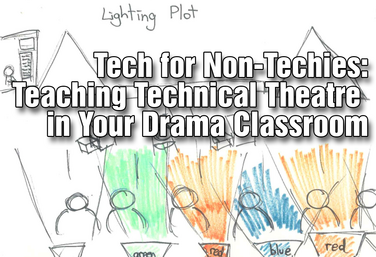
Tech for Non-Techies: Teaching Technical Theatre in Your Drama Classroom

by Josh Hatt
10 modules 3 hours, 23 minutes 7 Credit Hours
In this course, instructor Joshua Hatt shows you how to unpack your drama standards, articulate what you want your students to know and be able to do. The material explores how to incorporate lights, sound, makeup, staging, and costuming into your drama class at any grade level regardless of your school resources or unit structure. Bells and whistles? Awesome! Barely a classroom? We’ve still got you covered. This 9 lesson series works from the basics and standards, though lighting, sound, costuming, staging, and makeup design, and culminates with a final project including rubrics, resources, and handouts. A wise theatre technician once said: “the theatre mirrors life but technical theatre teachers us how to live.” Try to keep that statement in mind as you work through this course and see if we can make you a believer in all things technical theatre.

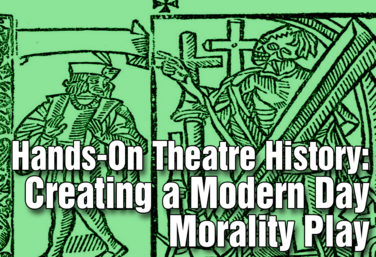
Hands-On Theatre History: Creating a Modern Day Morality Play

by Wendy-Marie Martin
11 modules 1 hours, 25 minutes 3 Credit Hours
Who says theatre history has to be boring? Hands-On Theatre History: Creating a Modern Day Morality play is an interactive course by Wendy-Marie Martin, combining hands-on activities with research and analysis techniques leading to a full performance of the popular medieval morality play, Everyman. This course gives students an overview of the medieval period and the various medieval play forms and teaches students the key points of storytelling and adaptation. It includes dynamic individual and group exercises leading students from the first steps of the adaptation process through a final, full-class performance of Everyman—and proves, once and for all, that theatre history can be fun and exciting to learn.

Tech Knowledge: Integrating Tech Throughout Your Rehearsal Process

by Claire Broome

17 modules 1 hours, 52 minutes 3 Credit Hours
This course will help you integrate technical theatre earlier in the creative process to help reduce the stress of tech week, and make sure you have what you need before choosing a show. We will explore how to include your technical theatre team from day one and will help you have an easier experience throughout the rehearsal process and final performances.

View all Standards for Common Core    Standards Master List