
California VAPA Standards (2019)
Acc.TH:Pr4 Select, analyze, and interpret artistic work for presentation.
15 units • 10 professional development courses aligned to
Acc.TH:Pr4.a - Discover how unique choices shape believable and sustainable drama/ theatre work.
View all Standards for California VAPA Standards (2019)
Acc.TH:Pr4.a Discover how unique choices shape believable and sustainable drama/ theatre work.
This page lists 15 units and 10 professional development courses aligned to Acc.TH:Pr4.a from the California VAPA Standards (2019). Designed for drama teachers, these resources directly address Acc.TH:Pr4.a - Discover how unique choices shape believable and sustainable drama/ theatre work.
PD COURSE
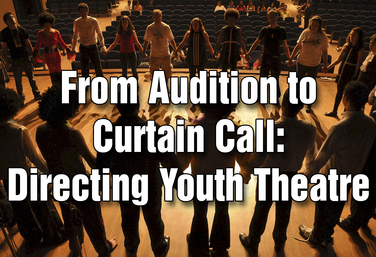
From Audition to Curtain Call: Directing Youth Theatre
by Steven Stack
11 modules
1 hours, 42 minutes
3 Credit Hours
Directing youth theatre can be one of the most thrilling, rewarding, and exhausting jobs there is – because it’s not just about staging a play. It’s about creating an environment that fosters hard work, dedication, trust, and the willingness to take chances, to “play without fear.”
As a writer/teacher/director of youth theatre for over 15 years, I have developed tools and strategies that enable my students and me to focus on the process of creating theatre while fostering an environment that leads to creative freedom and a cohesive groups that doesn't act as individual “stars,” but as a community of one.
In this course, I will share with you these tips and strategies, along with the ways to implement them in your theatre environment.
PD COURSE
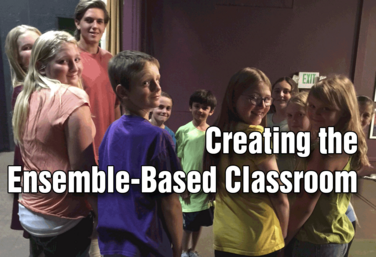
Creating the Ensemble-Based Classroom
by Gai Jones
5 modules
2 hours, 12 minutes
4 Credit Hours
Gai Jones will help you establish an ensemble-based environment from the first day of class or rehearsal.
Learn how to set up your ensemble-based classroom from day one, get students to set classroom norms, and find the balance between creative activity and structure. You’ll learn how to give your students creative freedom through structure and classroom management. The cornerstone of this course are the detailed ensemble experiences from large group to small group and even individual experiences.
This course culminates in a devising model that you can use with your students, and takes you through process, product, performance and an evaluation.
You too can create the ensemble-based classroom.
PD COURSE
Theatre Etiquette 101
by Kerry Hishon
11 modules
1 hours, 40 minutes
3 Credit Hours
Instructor Kerry Hishon is an actor, director, writer, and stage combatant with years of experience in youth theatre. Her course, Theatre Etiquette 101, is designed to help students be successful in their theatrical journeys.
When teaching students who are brand new to theatre, it’s important to discuss and apply the expectations of the drama classroom and the theatrical world.
This course starts by explaining "what is theatre etiquette", and then moves through every step in the production process from audition to post-show recovery.
Every module has tips for both you and your students, classroom exercises, rehearsal exercises, and reflections. There are also printable posters included to use in your classroom or backstage.
PD COURSE
21st Century Skills Through Devising
by Allison Williams
12 modules
1 hours, 18 minutes
4 Credit Hours
Allison Williams leads the course: 21st Century Skills Through Devising. This course covers what devising is, why to do it, how to do it, and how your students can master the 21st Century Skills of collaborations and cooperation, critical thinking, creative thinking through devising.
High school is a great place to try devising with your students. But it’s not something you want to throw at your students without any preparation. Framework is important and this course takes you through a number of exercises you can take into the classroom tomorrow to help build a place of physical safety, a place where students work at making a lot of choices instead of waiting for the perfect choice, and a place where students feel comfortable making creative choices. The material also reviews the process of putting together a show from the idea/research stage to editing, to giving feedback.
Your students have what it takes to create their own material, collaborate with each other, and have a unique theatrical experience!
PD COURSE
Beyond the Basics: Rehearsal Strategies to Grow Your Actors
by Julie Hartley
16 modules
3 hours, 3 minutes
5 Credit Hours
The focus of the teacher-director should be not only on the quality of the show, but on the value of the experience offered to student actors. This course takes you on this journey through practical rehearsal strategies that apply an ensemble approach.
This course starts with those all important first rehearsals, explores warm ups, and looks at character development. We examine specific types of plays, like classical texts and comedy, and conclude with strategies to solve common rehearsal problems.
Go beyond the basics!
PD COURSE
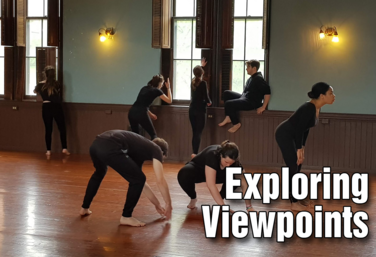
Exploring Viewpoints
by Erin Carr
11 modules
3 hours, 28 minutes
5 Credit Hours
Viewpoints is used to create dynamic moments of theatre by simply existing on the stage. However, Viewpoints is more than just an acting technique to understand your own physicality and more than a directing technique to create “ah-ha!” moments on stage. It is first and foremost the philosophy that to create an organic performance, you must see obstacle as opportunity, and that by simply standing in space, your creativity can spark.
This course by Erin Carr will help your students discover fresh impulses that motivate their performance in the moment. We will go through the Viewpoints technique, as created by Mary Overlie, and learn how to tap into kinesthetic awareness as individuals and as an ensemble. Through this style of play, students learn to release their thoughts on what they “should” do, and instead just respond organically to their surroundings and ensemble!
We’re going to break down each of the Viewpoints, there’s lots of visual demonstration, so you can see each Viewpoint in action, and I’m going to provide tips and side coaching examples.
PD COURSE
How to Give Feedback to Student Playwrights
by Nicholas Pappas
6 modules
1 hours, 23 minutes
3 Credit Hours
The two big questions we’re going to answer in this course are: What is feedback? And, What is useful feedback? Now, if you asked a hundred people to answer these two questions, you’ll likely get a hundred different answers, but at its core, all the answers will focus on giving notes that will improve the work, which, in this case, is our student’s plays. And, as a teacher, that’s what your hope is, right? To help your students improve as writers, one work at a time.
We want our students to write, and to grow through their writing. If we want our students to get better, we need to get better. Understanding the definition of feedback, and understanding how to provide useful feedback is the key to all of us getting better.
Join Nick Pappas in this course designed to give you the tools to help your student writers find their voice.

PD COURSE
Playwriting Outside the Lines
by Steven Stack
6 modules
1 hours, 34 minutes
3 Credit Hours
Instructor Steven Stack leads this course in a unique way to teach playwriting. He will show you how to set foundations and guide posts for your students, and then give them freedom to play. The intent is to help students develop their own voice and create for creating sake. The 5 modules lead teachers through how to use this style of teaching playwriting, and includes handouts and resources to support the learning.
PD COURSE
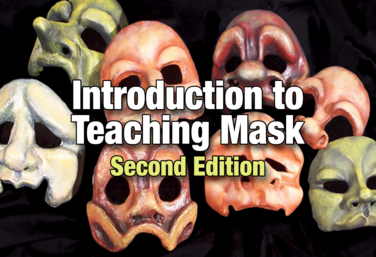
Introduction to Teaching Mask: 2nd Edition
by Allison Williams
13 modules
2 hours, 13 minutes
6 Credit Hours
In Introduction to Teaching Mask: 2nd Edition, Allison Williams gives you a toolkit of mask and movement exercises to teach students to make big, confident physical choices, to work in their bodies, and play different characters - masked and unmasked.
By working through the exercises in this course, you, the teacher, will also gain an understanding of basic physical acting and learn some easy specific tools to coach your students – not just in mask, but in all their performance work.
Access to masks is required, but previous experience with masks is not.
PD COURSE
Screenplays 101 - Part 1: Basic Structure
by Nicholas Pappas
8 modules
1 hours, 22 minutes
3 Credit Hours
Screenwriter Nick Pappas leads a two-part course on screenplays 101. Great scriptwriting is not something that can be covered in a single course: so we're going to start with the basics. Those basics are going to be split up into a Part 1 and a Part 2. Part 1, this course, will concentrate on basic film structure. Part 2 will concentrate on screenplay formatting.
By the end of this course, students should have a basic understanding of history, terminology, and are able to identify the barest bones of the three-act structure, all with an eye toward developing their own screenplay.
View all Standards for California VAPA Standards (2019) Standards Master List