
Alberta, Canada
Movement Level I - Beginning
10 units • 10 professional development courses aligned to
4 - recognize the need for and demonstrate warmup activities
View all Standards for Alberta, Canada
4 recognize the need for and demonstrate warmup activities
This page lists 10 units and 10 professional development courses aligned to 4 from the Alberta, Canada. Designed for drama teachers, these resources directly address 4 - recognize the need for and demonstrate warmup activities

PD COURSE
Friendly Shakespeare
by Todd Espeland
9 modules
2 hours, 5 minutes
4 Credit Hours
Friendly Shakespeare teaches a simple and effective method of script analysis for Shakespeare. It uses punctuation and keywords in the text to help students understand the characters' needs, make specific acting choices, and get them on their feet immediately.
This is not dry, sitting in a classroom discussion. It’s physicalizing the text, focusing on the character’s needs and tactics (something every drama student should know full well) and bringing Shakespeare to life.
At the end of the class you will be able to demystify Shakespeare's text and understand how to help your actors make clear, active and emotionally connected choices in Shakespeare's plays.
PD COURSE
Strong Ensemble = Strong Play
by Craig Mason
5 modules
1 hours, 8 minutes
2 Credit Hours
This mini-course will give you a toolkit to bring your shows to the next level by having an engaged, active, ensemble.
The ensemble is a critical part of a large cast show. But you can't leave them to fend for themselves. They need structure. They need exercises and activities.
In Strong Ensemble = Strong Play, you'll be given ensemble-building exercises. You'll also discover specific activities that will help your ensemble become three-dimensional characters who have something to do and something to play in every moment they are on stage.
We'll look at case studies that take the exercises learned in the course and apply them to specific shows.
PD COURSE
Serious Play: Theatre Games and Warmups for Rehearsal and Ensemble Building
by Todd Espeland
8 modules
1 hours, 36 minutes
3 Credit Hours
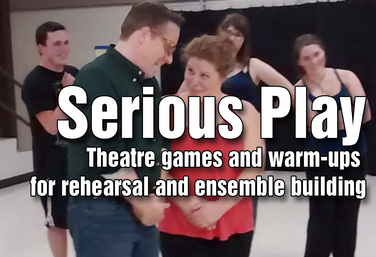
In this class, Serious Play, the instructor will lead you through a series of games in risk, movement, focus, and voice. You will get access to a series of all inclusive games that you can string together to make one giant game that is great to use in rehearsal. You will learn how and when to use these games.
You'll get ideas on how to craft your own warm-up lesson plan; and, most importantly, you'll learn about about a pre-class warm-up that you can do on your own so that you can get yourself into that third stage of the creative brain, so that you can begin trying out interesting, creative, and risky choices for yourself in your classes and in rehearsals.
PD COURSE
Teaching Musical Theatre in the Drama Classroom
by Colin Oliver
7 modules
1 hours, 51 minutes
4 Credit Hours
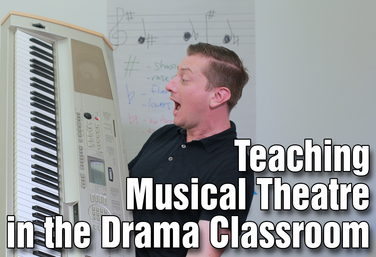
Colin Oliver leads this introduction to teaching Musical Theatre in the Drama Classroom.
In this course, you will learn how to build musical theatre into your dramatic courses of study. “Why might you want to do that? Singing is scary! You want me to teach my students how to do it? I don’t even know how to do it.” This course approaches musical theatre preparation performance much as we would approach preparing a monologue in drama. If you use script analysis in monologue preparation in your class, you can teach musical theatre.
By the end of this course, you’ll have a great, full-body physical warm-up, a student-driven research assignment, character development exercises, a little bit of musical theory, and a performance assignment complete with assessment.
So, join us for teaching Musical Theatre in the Drama Classroom. It’s as easy as Do-Re-Mi!
PD COURSE
The Process of Creativity in the Theatre Classroom
by Gai Jones
6 modules
2 hours, 38 minutes
5 Credit Hours
Gai Jones leads this course in establishing an environment of creative experimentation in the theatre classroom, in order to have a group of student actors who value the creative process.
Each lesson shares experiences to foster creativity without the stress of performance by student actors. For the creative process which honors out-of-the-box thinking, there is no assessment section included. There is no product or performance. The important thing is the student actor’s engagement. Their reflections and your observations are valued for positive learning.
This set of lessons includes Tips for the Theatre Educator, based on Gai's own Theatre practice. Scripts are also provided and contain text of what you can say to your students to facilitate their creative processes.
PD COURSE
Exploring Viewpoints
by Erin Carr
11 modules
3 hours, 28 minutes
5 Credit Hours
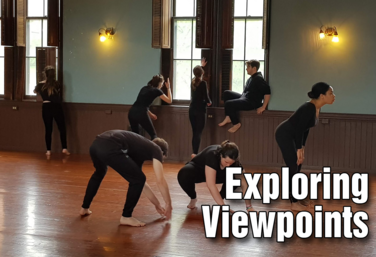
Viewpoints is used to create dynamic moments of theatre by simply existing on the stage. However, Viewpoints is more than just an acting technique to understand your own physicality and more than a directing technique to create “ah-ha!” moments on stage. It is first and foremost the philosophy that to create an organic performance, you must see obstacle as opportunity, and that by simply standing in space, your creativity can spark.
This course by Erin Carr will help your students discover fresh impulses that motivate their performance in the moment. We will go through the Viewpoints technique, as created by Mary Overlie, and learn how to tap into kinesthetic awareness as individuals and as an ensemble. Through this style of play, students learn to release their thoughts on what they “should” do, and instead just respond organically to their surroundings and ensemble!
We’re going to break down each of the Viewpoints, there’s lots of visual demonstration, so you can see each Viewpoint in action, and I’m going to provide tips and side coaching examples.
PD COURSE
Mindfulness & Wellness in the Drama Classroom
by Claire Broome
13 modules
3 hours, 30 minutes
5 Credit Hours
In this course, instructor Claire Broome shares what mindfulness is, and why it is so important in the Drama Classroom. The course covers how mindfulness and wellness can help both students and teachers.
Claire discusses how to prepare students for this kind of learning, and provides various activities to bring into your classroom, as well as a variety of extensions for these activities that can be applied to character creation and possible projects.
PD COURSE
SEL Through the Lens of Theatre
by Christa Vogt
2 modules
22 minutes
1 Credit Hour
SEL stands for Social Emotional Learning. Theatre teachers know that Social Emotional Learning and its categories: Self-Awareness, Self-Management, Social Awareness, Relationship Skills and Responsible Decision Making, are innate in what we do.
The goal of this mini-course is to show you that you can take SEL in the way that your administration wants you to, using the language they want you to use, and apply it to lessons you already teach.
Instructor Christa Vogt will take you through the facets of SEL, and then take you step by step through an activity - to show you how you can apply SEL to each and every step.
PD COURSE
Maximizing Your Ensemble: Shoestring 101
by Michael Calderone
8 modules
2 hours, 53 minutes
4 Credit Hours
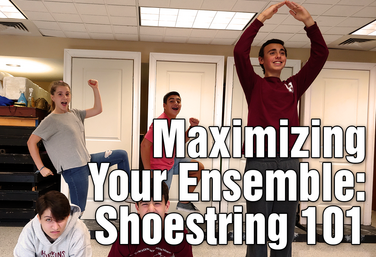
This seven-part series is designed to transform that gaggle of actors cluttering your backstage from cumbersome extras into nothing less than the very center of your production.
Instructor Michael Calderone leads this course, through games and exercises geared to maximize your ensemble for your next production. These lessons are based on the ensemble technique that he's been using for the last 30 years, called the shoestring method.
The ensemble has a responsibility to work as one, and no role is more important than another. Without each actor playing their part, the other actors cannot tell the story to the best of their abilities. So join Michael in learning more about this exciting, practical and dramatic method.
PD COURSE
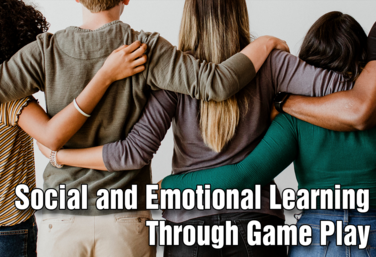
Social Emotional Learning through Game Play
by Matt Webster
7 modules
57 minutes
2 Credit Hours
The skills identified in Social Emotional Learning are the same skills theatre teachers spotlight in the warmups, games, and activities, as well as group work and theater-related assignments found in the drama curriculum every day.
This course will break down the various games and activities in the drama classroom to identify, incorporate, and intensify the Social Emotional Learning outcomes we want our students to achieve. By the end of this course, you will be able to identify the five components of Social Emotional Learning and see the places in the curriculum where they intersect with basic games and activities in the drama classroom.
View all Standards for Alberta, Canada Standards Master List