
Alberta, Canada
Movement Drama 10
14 units • 9 professional development courses aligned to
4 - perform a physical warmup
View all Standards for Alberta, Canada
4 perform a physical warmup
This page lists 14 units and 9 professional development courses aligned to 4 from the Alberta, Canada. Designed for drama teachers, these resources directly address 4 - perform a physical warmup
Unit
7
of
14
in
Drama One
Curriculum
UNIT
Commedia Dell'Arte
by Karen Loftus
5 lessons
Students will discover, analyze, and explore the history, characters, and style of commedia dell’arte.
Commedia dell’arte is a theatre history unit mixed with improvisation, physicalization, and exploring specific characters. In this unit, we’re going to focus on three main aspects:
1. Causes and Effects of Commedia (History)
2. Stock Characters
3. Commedia Performance Practices
UNIT
Shakespeare Performance
by Anna Porter
11 lessons
In this unit by Anna Porter, students are introduced to the works of Shakespeare and explore how to bring a character to life in a monologue performance. Students are also introduced to the tools to help them unlock meaning in Shakespeare’s text. Through this eleven lesson series, students will participate in class discussions, activities and performance. Assessment tools include informal assessment, submission of textual analysis work and a final performance.
UNIT
Unlocking Shakespeare's Text
by Anna Porter
5 lessons
Shakespeare’s text holds valuable tools that students can use to unlock and understand meaning. In this unit by Anna Porter, students explore how to use the tools of research, context, textual analysis, imagery and punctuation to help them unlock meaning in Shakespeare’s text. This unit is created for an Intermediate to Advanced drama class with a basic background in plot structure and acting technique.
Through this five lesson series, students will use journals, participate in class discussions, activities and performance to explore the tools used to unlock a text. Assessment tools include informal assessment as well as a final group presentation and performance.
UNIT
Improvisation in Musical Theatre
by Annie Dragoo
7 lessons
Understanding basic improvisation skills will help musical theatre performers understand that musical theatre is more than just singing and dancing. It’s about using all the tools (voice, body, and mind) an actor has at their disposal to create a character.
This unit focuses more on the improv aspect rather than the musical theatre aspects - in fact students need no prior musical theatre knowledge. Annie Dragoo, creator of the unit, uses this material as her first unit in her musical theatre class. It’s a great introduction and will get your students in the right frame of mind to approach musical theatre.
The lessons explore a variety of improv skills such as vocal responses, movement, character study, sensory awareness and culminate in an improv scene and unit essay.
UNIT
The Actor in Transition: From Presentational to Three-Dimensional
by John Minigan
6 lessons
The objective of this unit by John Minigan is to move students from a traditional presentational model of performance to a three-dimensional model. You’re going to achieve this by having students
- Develop tactics to achieve character goals, despite obstacles
- Connect physical choices to scene structure and relationships
- Clarify tactics and story rather than forcing emotion
- And focus on the scene partner rather than the self
This unit was created to use with grade nine students as a transition from middle school to high school acting approaches. It would also be appropriate for a beginning-of-the-year unit for a program that includes Drama 1. But any class that is at the beginning of their acting process will find value.
Each lesson comes with an engagement Rubric to assess how students participated in the activities and discussions.
UNIT
Creating a Musical: Project
by Annie Dragoo
6 lessons
Want a fun project that has your students collaborating and creating? In this unit by Annie Dragoo, students in groups will write and perform an original musical by adding modern songs to a traditional fairy tale story.
The six lessons take students from writing their script, to choreography and planned movement, to rehearsing, performing and evaluation.
The Rubric will focus on student performance. That means vocal delivery, emotional delivery, blocking/choreography, energy, focus, and characters.
UNIT
Introduction to Musical Theatre: Movement
by Annie Dragoo
9 lessons
Musical theatre performers use their bodies to sing, to dance, and to act. We must think of our bodies as instruments and learn to use our instruments properly in order to be better musical theatre performers.
The overall objective with this unit, by Annie Dragoo, is for students to demonstrate an understanding of the use of good movement as it connects to musical theatre. Some of the activities include using action verbs, moving as animals and inanimate characters, nonverbal communication and situational movement. Students will then perform a scene that will allow them to put to practice all the movement techniques they have learned.
UNIT
Perspective Taking
by Lindsay Price
5 lessons
Perspective taking is the ability to understand a situation from another person’s perspective or point of view: What are they thinking? What are they feeling? How does their background influence their perspective? Perspective taking allows students to develop self-awareness, to recognize differences, to understand an opposing point of view, to assess nonverbal language, and more.
In this unit, students will practice perspective taking as they:
• Assess their own perspective.
• Demonstrate understanding of the perspective of others in specific situations.
• Analyze characters in a text.
UNIT
Abstract Scene Performance
by Annie Dragoo
5 lessons
In this unit, students will create and perform an abstract theatre scene. Abstract is a genre that does not rely on realism and deliberately breaks the rules of a given form. In the case of theatre, this refers to the commonly presented rules of performance, acting, and the relationship with the audience. Movement is often stylized and symbolic. Ideas and themes are expressed visually and aurally with little dialogue using music, lights, costumes, and props.
UNIT
Introduction to Stanislavski
by Drama Teacher Academy
6 lessons
This is an in-depth unit with instruction and activities about the Stanislavski acting method. It is followed by scene work in which students learn how to score a scene, do a comprehensive character analysis, and use what they have learned in rehearsals in a performance. Students will also watch their own work and evaluate their process after the performance.
The purpose of this unit is to give students an introduction and understanding of Stanislavski’s method and to put it into use as they prepare scenes for performance. After seeing their work, and spending time reflecting on how they used the principles of the method, students should take away a concrete understanding of how to prepare a role for performance.
UNIT
Virtual Introduction to Stanislavski
by Drama Teacher Academy
6 lessons
The unit has been adapted for a virtual environment.
This is an in-depth unit with instruction and activities about the Stanislavski acting method. It is followed by scene work in which students learn how to score a scene, do a comprehensive character analysis, and use what they have learned in rehearsals in a performance. Students will also watch their own work and evaluate their process after the performance.
The purpose of this unit is to give students an introduction and understanding of Stanislavski’s method and to put it into use as they prepare scenes for performance. After seeing their work, and spending time reflecting on how they used the principles of the method, students should take away a concrete understanding of how to prepare a role for performance.
UNIT
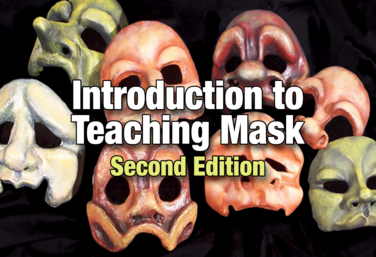
Introduction to Mask
by Allison Williams
7 lessons
This unit focuses on having students gain an understanding of basic physical acting and learn some specific tools to use in mask work. Instructor Allison Williams has developed this unit, and explains "What I love most about mask work is how, by having students cover their faces, they are able to find freedom to express themselves physically. They often make bigger choices than we’re normally used to seeing them make in class."
In this unit, students will work step by step from identifying shapes in the mask to using those shapes to creating a character zero to learning how to move in the mask utilizing the qualities of movement to applying everything they’ve learned in short scenes. The unit will culminate with students working in pairs to create original mask scenes.
You will need masks to complete the unit. And while mask-making can be a lot of fun, it’s a lengthy and messy project. A list is provided in the Overview of where you may be able to buy or rent masks for use in your classroom.
UNIT
Spoken Word Poetry
by Quincy Young
4 lessons
In this unit, students will create a performance of a spoken word poem designed to engage, entertain, and affect an audience. They will also write a poet’s statement in which they describe the purpose(s) or inspiration(s) of their poetry.
This is not a technical writing unit and is geared more toward students self-expression and engaging an audience. If your students are not skilled poets, this unit is still accessible.
UNIT
A Midsummer Night's Dream
by Drama Teacher Academy
9 lessons
Shakespeare is sometimes avoided in the drama classroom because not only do the students not want to take on the language difficulties but neither do the teachers. Monologue and scenework becomes more challenging and a lot of times, students falter in their blocking action and character development because they are so challenged. How do we give students the opportunity to rehearse and present Shakespearean text as they would modern text?
In this play study unit, students will read a Shakespeare play while learning specific tools and techniques in order to stage text from that play. And more often than not, these techniques are ones that they have already used with other plays. It’s all about reframing Shakespeare so that students enjoy the experience of bringing the characters and stories to life.

View all Standards for Alberta, Canada Standards Master List
