Facebook Pixel Skip to main content

British Columbia (2018)
GRADE 6 - ARTS - Communicating and documenting

15 units • 11 professional development courses aligned to
Adapt learned skills, understandings, and processes for use in new contexts and for different purposes and audiences

View all Standards for British Columbia (2018)

Adapt learned skills, understandings, and processes for use in new contexts and for different purposes and audiences

This page lists 15 units and 11 professional development courses aligned to from the British Columbia (2018). Designed for drama teachers, these resources directly address Adapt learned skills, understandings, and processes for use in new contexts and for different purposes and audiences

Unit Six: Directed Scenes Take 1: Same Scene, Different Visions

by Lindsay Johnson

Students will now start applying the skills they’ve learned thus far in the context of existing, fleshed-out scripts. They will also have opportunities to shift from actor to director and hone such skills as collaboration, self-confidence, and problem-solving which can be used in many other areas of their lives.

Unit Seven: Directed Scenes Take 2: A Variety of Scenes

by Lindsay Johnson

Students will have another opportunity to participate in student-directed scenes, only this time each director will be assigned a different script, and actors for each group will be chosen by the teacher based on individual strengths and challenges, rather than holding auditions. Actors will take a deeper dive into character physicality and use of levels in staging this unit. Directors will continue to create a set design and block the scenes, adding props as well in this unit. The unit culminates in actors presenting their directed scenes to the class.

Unit Eight: Theatre of the Oppressed

by Lindsay Johnson

Students will have a chance to merge their understanding of scene elements with their improvisation skills in this final unit based on Augusto Boal’s Theatre of the Oppressed. Theatre of the Oppressed is a style of theatre specifically created to highlight the injustices of power and oppression in society and to problem-solve ways to bring about change. Starting with image theatre techniques to identify issues of power and oppression, students will then use forum theatre to create scenarios of oppression taken from their own lives and improvise realistic solutions. The unit culminates in a performance in which students participate as both actors in a scene they create themselves and spect-actors in scenes created by their peers.

Theatrical Arguments: Pursuing Objectives, Communication, and Conflict

by Rachel Atkins

In this middle school unit by Rachel Atkins, students will explore how to strengthen a theatrical argument through objectives, communication, and conflict: What characters do, what they say, and how they say it when they make an argument or try to achieve an objective. To do this, students will use tableaux, dialogue, and improv. There are presentations and post-lesson writing assignments that you can use for assessment. How do characters, actors and writers use a variety of actions to achieve an objective or support an argument? How do they enhance their communication by word choice and emotion? How do they develop and strengthen their own arguments by understanding other points of view?

Monologue Writing Made Easy

by Matthew Banaszynski

Join Matt Banaszynski in this dynamic unit designed to introduce students to the process of starting, drafting, polishing, and performing a self-created, stand-alone monologue. This unit introduces students to writing their own stand-alone monologues. Students will learn the steps involved in going from a simple idea to a written piece to performing that piece. They will also provide feedback to others and give themselves a self-assessment. This unit has been prepared for a middle school drama class but could be adapted for high school. It was designed as a way to get non-theatre students more involved in theatre.

Pantomime

by Angel Borths

Teacher Angel Borths developed this unit when she was looking for lessons to teach the basics of pantomime in the classroom. This unit culminates in a finished product for performance, either for peers, or for theatre festivals. The rubrics and written work for this unit take planning and preparation for performance into account. The exercises can be pulled out and used independently, but work best when used to build toward a finished product. You can also pull the ground plan and stage directions lesson plans to use with playwriting or directing lessons.

Improvisation

by Karen Loftus

Students sharpen their listening and reaction skills through improv games, exercises, and scenes. They will learn five specific guidelines to apply to their improvisation: accept the offer, bring information to the scene, make active choices, make your partner look good, and don’t force the humour. There are so many different ways to approach a unit on improvisation. Keep in mind that you will have students who are really excited about this unit and some students who dread it. It’s best to start with low-risk games and exercises and then build up to higher-risk ones. Low-risk games in this situation mean partnered interactions that aren’t shared with the whole class.

Japanese Theatre

by Karen Loftus

This unit will enable students to identify, compare, and contrast three different styles of Japanese theatre: Noh, Bunraku, and Kabuki. There are three proposed projects in this unit: a research assignment where groups delve into further detail about one of the three styles; a performance project where students utilize what they’ve learned by enacting a scene from a Kyogen (comedic) play; and a Bunraku puppet play.

Front of House

by Karen Loftus

This unit looks at theatre jobs in the business category: front of house, marketing, and box office. The aim of these jobs is to interact with the public. Students are able to identify what “front of house” refers to and understand the various roles of a theatre company’s front of house members. Students will also explore how a show is marketed and demonstrate their knowledge of marketing by creating a simple marketing campaign for an original show.

Drama One Final Project

by Karen Loftus

The final project will incorporate multiple areas that students have studied over the course of the year/semester: playwriting, acting, scenic design, and marketing. They are putting everything they’ve learned into a final package, including writing, rehearsing, and performing.

Commedia dell'Arte

by Todd Espeland

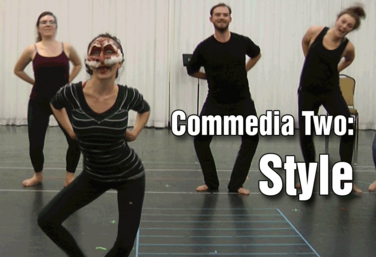
Commedia dell’arte is a 16th century masked acting form. It is the basis of all comedy, including all tv sitcoms. This form is characterized by masked types and archetypical characters and a specific way of playing comedy. To that end, this unit is divided into two parts. Part One focuses on the foundations of commedia - playing comedy. These principles will be important to learn when it comes to developing commedia characters, specifically the physicality of the characters. Part Two will cover lazzi. Note: there are links to video demos in many of the lessons of this unit.

Improvisation

by Lindsay Price and Karen Loftus

Students sharpen their listening and reaction skills through improv games, exercises, and scenes. They will learn five specific guidelines to apply to their improvisation: accept the offer, bring information to the scene, make active choices, make your partner look good, and don’t force the humor.

Impowerment Improv

by Jennine Profeta

Taking risks, learning to see failure as a gift, finding courage when we don't feel it, and having the awareness that what we say has an impact are social and emotional skills students will take beyond the classroom. These are skills that can be built through improv exercises. The exercises in this unit are designed to create a safe environment in which students can go beyond their old patterns to take risks, embrace failure, and be more confident and aware of the effects of their word choices. Improv gives you the opportunity to draw attention to these important concepts and to talk about them.

30 Second Monologues

by Lindsay Price

A monologue unit is an excellent way for students to demonstrate learned skills: vocal skills, movement skills, memorization skills, and character development. It also touches on soft skills such as communication, confidence, and attitude. That being said, monologues are not easy. A typical monologue is two minutes long. That is a lot of text to memorize, block, and develop into an engaging presentation. How often have you sat through a bad monologue performance with little to no characterization, wandering blocking, and a tenuous grasp of the lines? Performing a monologue is a learned skill. And the best way to learn a skill is in steps. Instead of starting with the end goal—that two-minute piece—start at the beginning. This four-lesson unit will take students up the ladder toward the goal of a longer monologue.

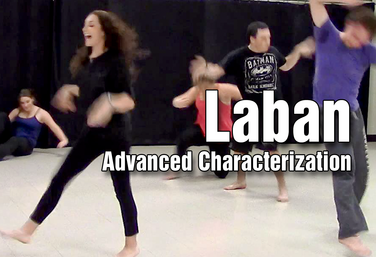
Laban: Advanced Characterization

by Drama Teacher Academy

This is an advanced acting unit in playing character through the Laban movement technique. Students will explore dance theorist Rudolf Laban’s eight efforts and their component parts; turn these elements into physicalizations through which one can express character; use Laban efforts and connect them to a character’s voice and body; and demonstrate knowledge through the creation of an original character. Reminder: This is an advanced acting unit. You will need students who can do work on their own outside of class time, commit to movement and sound, and commit to making instinctual choices.

View all Standards for British Columbia (2018)    Standards Master List