Facebook Pixel Skip to main content

British Columbia (2018)
GRADE 6 - ARTS - Communicating and documenting

15 units • 11 professional development courses aligned to
Adapt learned skills, understandings, and processes for use in new contexts and for different purposes and audiences
View all Standards for British Columbia (2018)

Adapt learned skills, understandings, and processes for use in new contexts and for different purposes and audiences

This page lists 15 units and 11 professional development courses aligned to from the British Columbia (2018). Designed for drama teachers, these resources directly address Adapt learned skills, understandings, and processes for use in new contexts and for different purposes and audiences

The Top Ten Playwriting Exercises

by Lindsay Price
11 modules 3 hours, 1 minutes 6 Credit Hours
The Top Ten Playwriting Exercises Course not only gives you ten great exercises to ease your students into the playwriting waters, it's also going to give you the confidence to teach playwriting to your students. Each exercise comes with instruction, why the exercise is important, how to assess the exercise and something specific for you to try. Many of the modules include assignments and rubrics so you will be fully prepared to comprehend, apply and teach every these exercises.

Breath Control and Projection

by Elisabeth Oppelt
8 modules 53 minutes 2 Credit Hours
In this course, you will learn what breath control and projection are, how to breathe from your diaphragm and speak loudly without yelling, and how to teach these skills to your students. Led by teacher and singer Elisabeth Oppelt, this course will be helpful both in your teaching practices and in creating material to teach your students. This course also includes both formal and informal assessments for you to use in your classroom.

Laban: Advanced Characterization

by Todd Espeland
9 modules 2 hours, 5 minutes 8 Credit Hours
Learn about the Laban system to teach your students to physically and vocally discover character. This is an advanced course, which means that the course goes deep into exploring character and exploring character work through the work of Rudolph Laban.

Introduction to Stage Management Part One

by Karen Loftus
8 modules 1 hours, 16 minutes 3 Credit Hours
In this course, instructor Karen Loftus explores the responsibilities of a stage manager. You'll learn exercises that will help you demonstrate those responsibilities and the necessary skills of a stage manager to your students. You'll learn how to train your students to serve as stage managers for your school’s productions. The course takes you through what a stage manager does prior to rehearsal and throughout the rehearsal and performance process to have a smooth-running backstage. It includes learning about the paperwork required, including prompt scripts, rehearsal preparations, notating blocking, and a stage manager’s kit and checklist to wrap it all together.

Close Reading in the Drama Classroom

by Lindsay Price
11 modules 3 hours, 38 minutes 7 Credit Hours
Close reading is an activity that puts curriculum standards into practice and it can be easily applied to the drama classroom. Close reading asks a lot of your students. They have to read and think at the same time. This course teaches drama teachers how the close reading process works, and gives them exercises and tools to apply it in the classroom.

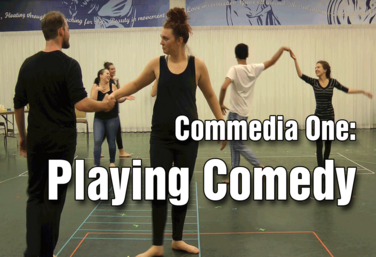
Commedia I: Playing Comedy

by Todd Espeland
8 modules 2 hours, 31 minutes 7 Credit Hours
Commedia dell’arte is a 16th Century masked acting form. It’s the basis of all comedy and it’s a form that many teachers want to include in their curriculum. Instructor Todd Espeland has designed two courses that work hand-in-hand with teaching this fantastic physical form. In Commedia I: Playing Comedy - Todd teaches the principles of comedy through four key elements: status, appetite, swing, and intention/invention. This course provides an excellent foundation upon which to explore Commedia to its fullest. Includes bonus videos, handouts, reflections, and exit slip question ideas for each lesson.

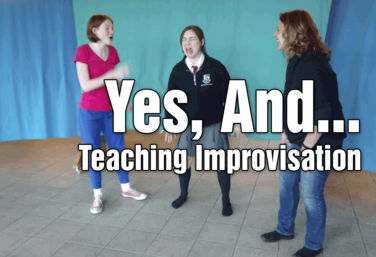
Yes, And... How to Teach Improv

by Jennine Profeta
10 modules 2 hours, 10 minutes 4 Credit Hours
“Yes, and…” is the guiding principle behind all improv. This course will teach you how to teach improv, and more importantly how to give feedback to your students. The course looks at making strong offers and also using gibberish to ironically improv communication skills. You will also see how feelings can safely be used to add flavour and get laughs in our scenes. Jennine Profeta, Second City performer and theatre educator, leads this course with a clear methodology for teaching and giving positive nurturing feedback. This course will give you all the tools and the insight you need to teach improv with confidence.

Creating the Ensemble-Based Classroom

by Gai Jones
5 modules 2 hours, 12 minutes 4 Credit Hours
Gai Jones will help you establish an ensemble-based environment from the first day of class or rehearsal. Learn how to set up your ensemble-based classroom from day one, get students to set classroom norms, and find the balance between creative activity and structure. You’ll learn how to give your students creative freedom through structure and classroom management. The cornerstone of this course are the detailed ensemble experiences from large group to small group and even individual experiences. This course culminates in a devising model that you can use with your students, and takes you through process, product, performance and an evaluation. You too can create the ensemble-based classroom.

Introduction to Stage Management Part Two

by Karen Loftus
8 modules 1 hours, 28 minutes 3 Credit Hours
Karen Loftus instructs this second course in stage management - a companion to Introduction to Stage Management Part One. This course will review the major concepts covered in Introduction to Stage Management, and discuss the different types of technical rehearsals and how student stage managers prepare for and run them. You’ll learn how to teach your students to notate and call cues for a show. The course will also introduce strategies for student stage managers who work with student crews. It will discuss how you can provide the support your student stage managers need to be effective, and how that support helps to strengthen your overall program and theatre community. Student stage managers start in the classroom, train during school productions, and can take these newly discovered and acquired skills on with them to colleges and careers and theatre (and beyond)!

Commedia II: Style

by Todd Espeland

11 modules 2 hours, 31 minutes 7 Credit Hours
Commedia dell’arte is a 16th Century masked acting form. It’s the basis of all comedy and it’s a form that many teachers want to include in their curriculum. Instructor Todd Espeland has designed two courses that work hand-in-hand with teaching this fantastic physical form. In Commedia II: Style - Todd moves on to the specific style of Commedia dell’arte. This includes a history of commedia, the stock characters and how to physicalize them, sample lazzi and a capstone assignment. The course includes video demonstrations so you can see the exercises and activities in action.

Google Tools in the Theatre Arts Classroom

by Anna Porter

9 modules 1 hours, 32 minutes 3 Credit Hours
Have you been wanting to find some new ways to enhance your classroom with technology? Have you been told you need to integrate technology in your classroom but don’t know where to start or what would even make sense to use in the drama classroom? Whether you want to find some new ways to diversify your instruction and assessment, provide new resources and opportunities for your students, or simply needs some help with organization and communication, Google Tools has a treasure trove of resources ready for you to use today. Instructor Anna Porter covers the tools of Google Forms, Photos, Calendar, Earth, Custom Search and Sites. Each lesson has video examples of how to use the tools as well as tips and resources for each module.

View all Standards for British Columbia (2018)    Standards Master List