Facebook Pixel Skip to main content

British Columbia (2018)
GRADE 10 - DRAMA - Explore and Create

21 units • 9 professional development courses aligned to
Explore and create dramatic works to express ideas and emotions

View all Standards for British Columbia (2018)

Explore and create dramatic works to express ideas and emotions

This page lists 21 units and 9 professional development courses aligned to from the British Columbia (2018). Designed for drama teachers, these resources directly address Explore and create dramatic works to express ideas and emotions

Playwriting Unit: Beginner

by Lindsay Price

11 lessons
This unit provides an introduction to the process of playwriting in a practical step-by-step framework. Playwriting can be a practical task-driven process that any student can accomplish, given the right parameters. This playwriting unit will give students the tools they need to write their first short play and gain the confidence they need to write further. The culminating project for this unit is a three- to five-page play or extended scene.

Our Town Unit

by Lindsay Price

8 lessons
This is a read, discuss, and apply literature unit. Students will study the play Our Town by Thornton Wilder. Our Town is often referred to as “nostalgic.” It’s seen as an antiquated look at a moment in time. But this play is called Our Town, not My Town. What’s happening in Grover’s Corners happened in the past, the distant past, in our present, and even in the future. The themes of the play—the ordinary versus universality, the concept of time, the cycle of life, the ignorance of humanity to the eternal—these are just as relevant in the twenty-first century as they were when the play was written. The purpose of the unit is not to have students recall knowledge about the play. Students will be able to identify, articulate, and dramatize text themes and concepts and compare/contrast these concepts to their own experiences.
Unit 5 of 11 in Distance Learning Curriculum

Playwriting: Part 1

by Lindsay Price

7 lessons
Every drama program should have a playwriting unit. Playwriting applies creative thinking skills and, through feedback and revision, critical thinking skills. Playwriting also allows students to engage in self-expression. It is a powerful act to take one’s thoughts, give them to a character, and have them said aloud. Playwriting can be a practical task-driven process that any student can accomplish, given the right parameters. This playwriting unit is broken into two parts. This unit is Part 1. Part 1 is a standalone playwriting unit for beginning writers. Students go step by step through the elements of the playwriting process, which culminates in a short scene, monologue, and character profile. All the exercises can be done synchronously in your class sessions or small groups through breakout rooms.

Pantomime

by Anna Porter

6 lessons
In this unit, students explore how to communicate with their body by exploring elements of physicality and Pantomime. Lesson one helps students explore body awareness as well as the use of the senses and details in pantomime performance. In lesson two, students explore body language and how it is used to communicate by examining the art of flirting. Lesson three helps students create a distinct physical characterization. Lesson four introduces students to the quality of Pantomime – Consistency. In lesson five, students explore the quality of exaggeration in pantomime. In the final lesson, students prepare a pantomime story for performance. Through this six lesson series, students will use journals, participate in class discussions and practice the elements taught by performing for their peers and as a class. Assessment tools include both informal assessment as well as a final Pantomime performance.

Monologue Writing Made Easy

by Matthew Banaszynski

7 lessons
Join Matt Banaszynski in this dynamic unit designed to introduce students to the process of starting, drafting, polishing, and performing a self-created, stand-alone monologue. This unit introduces students to writing their own stand-alone monologues. Students will learn the steps involved in going from a simple idea to a written piece to performing that piece. They will also provide feedback to others and give themselves a self-assessment. This unit has been prepared for a middle school drama class but could be adapted for high school. It was designed as a way to get non-theatre students more involved in theatre.

Musical Theatre

by Anna Porter

4 lessons
Musical Theatre has two components that separate it from straight plays: song and dance. This unit gives students the opportunity to try out both. In musical theatre, music signifies heightened emotion. We can’t express ourselves with just words, we need music (and through extension, song and dance) to take it further. This unit includes three lesson plans: 1. Acting the Song - “Musical Tactics” 2. Acting the Song - “Textual Analysis” 3. Introduction to Dance A solo performance assignment is also included, and the unit includes assessment tools - rubrics, reflections, and self-evaluations.
Unit 7 of 7 in Drama Two Curriculum

Devising

by Corinna Rezzelle

13 lessons
While the Drama Two Curriculum has a focus on acting, it’s always important to include a unit on the technical theatre skills that are necessary to any production. Students will also be able to use what they’ve learned in this unit in their upcoming devising project. Students will begin by exploring design for the stage by experimenting with line, shape, texture, size, and color. They will expand their understanding of stage properties and scenic flats. They will then apply their knowledge of these building blocks of design to create a high-concept design for a miniature “stage.”

Playwriting Kickstart: Multi platform

by Lindsay Price

4 lessons
This unit focuses on the idea stage of playwriting. Before you start a playwriting project, take students through these lessons to provide students a step-by-step process for idea generation. When students are told they’re going to write a play, they often freeze. I can’t do it. I’m not creative; my ideas are stupid. The purpose of this unit is to give students a place to start and a way to move from finding a topic to creating an idea to writing theatrically on ideas. This unit is designed to reach as many classroom environments as possible and includes: standard in-class lessons, instruction videos, instruction handouts, and quizzes.
Unit 5 of 14 in Drama One Curriculum

Ancient Greek Theatre

by Karen Loftus

4 lessons
This unit on Ancient Greek theatre focuses on the function of the chorus, the choral ode, and the details of the theatre space. It touches on plays and playwrights of the era, culminating in a final project of a modern version of Medea that includes a choral ode.
Unit 8 of 14 in Drama One Curriculum

Script Analysis: The Actor's Perspective

by Karen Loftus

5 lessons
How does an actor analyze a script? Students start with character analysis (how do we learn about a character in a script? what are the facts/inferences about a character?) and then explore the ideas of “objective,” “obstacle,” “stakes,” and “tactics.” The unit culminates with students applying learned script-analysis techniques on an assigned scene.
Unit 9 of 14 in Drama One Curriculum

Elizabethan Theatre

by Karen Loftus

6 lessons
How do you introduce students to Shakespeare? This unit introduces the Bard through life in Elizabethan England and the playwrights, players, and playhouses. It also explores how to approach unfamiliar words and context clues in Shakespeare’s texts.
Unit 14 of 14 in Drama One Curriculum

Drama One Final Project

by Karen Loftus

5 lessons
The final project will incorporate multiple areas that students have studied over the course of the year/semester: playwriting, acting, scenic design, and marketing. They are putting everything they’ve learned into a final package, including writing, rehearsing, and performing.
Unit 4 of 7 in Drama Two Curriculum

Monologues - Part 2

by Matt Webster

5 lessons
In Part 2 of the Monologue Unit (Monologue Project: Analysis, Writing, and Performance), students analyze an existing monologue to determine the criteria for a “good” monologue. They will then apply what they learned in Part 1 (Monologue Writing Made Easy), adding in the criteria for a “good” monologue, to write and perform an original monologue.
Unit 5 of 7 in Drama Two Curriculum

Performing Shakespeare

by Matt Webster

5 lessons
In this unit, students are introduced to a series of lesson plans that explore non-traditional approaches to performing the works of William Shakespeare. By the end of the unit students will be exposed to a unique set of tools they can utilize as the foundations for analyzing, staging and performing a scene from Shakespeare’s canon. Students will then rehearse and perform a two-person Shakespearean scene.

Character Creation: Superhero Series: Multi platform

by Lindsay Price and Kerry Hishon

6 lessons
This unit focuses on character creation: How do you create a character from the ground up? Use this unit as a precursor to a playwriting unit, to a devising unit, or to a class production. Using the archetypes of the superhero, the sidekick, and the supervillain, students work on exercises to help them create unique characters through physical and vocal qualities, character profiles, and theatrical writing. Because many of the exercises have an individual focus, this unit works in a distance learning environment or for your no-technology students.

Abstract Scene Performance

by Annie Dragoo

5 lessons
In this unit, students will create and perform an abstract theatre scene. Abstract is a genre that does not rely on realism and deliberately breaks the rules of a given form. In the case of theatre, this refers to the commonly presented rules of performance, acting, and the relationship with the audience. Movement is often stylized and symbolic. Ideas and themes are expressed visually and aurally with little dialogue using music, lights, costumes, and props.

Self-Management Playwriting

by Lindsay Price

6 lessons
In this unit, students will decide on a topic they care about and write a short play within a designated time frame. They will mostly write on their own, using class to discuss and share how they are managing their time, monitoring their progress, and adapting their writing plan of action. The goal of this unit is not the final product but rather the self-management skills they apply throughout. In this unit, students will demonstrate their self-management skills by setting a goal, identifying a strategy to achieve the goal, creating a plan of action, monitoring their process, reflecting on what is working and what’s not working, taking personality responsibility throughout as they write on their own, and demonstrating an ownership mindset through self-assessment.

30 Second Monologues

by Lindsay Price

4 lessons
A monologue unit is an excellent way for students to demonstrate learned skills: vocal skills, movement skills, memorization skills, and character development. It also touches on soft skills such as communication, confidence, and attitude. That being said, monologues are not easy. A typical monologue is two minutes long. That is a lot of text to memorize, block, and develop into an engaging presentation. How often have you sat through a bad monologue performance with little to no characterization, wandering blocking, and a tenuous grasp of the lines? Performing a monologue is a learned skill. And the best way to learn a skill is in steps. Instead of starting with the end goal—that two-minute piece—start at the beginning. This four-lesson unit will take students up the ladder toward the goal of a longer monologue.

Introduction to Mask

by Allison Williams

7 lessons
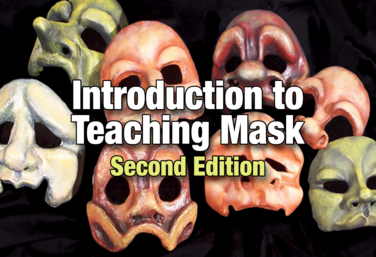
This unit focuses on having students gain an understanding of basic physical acting and learn some specific tools to use in mask work. Instructor Allison Williams has developed this unit, and explains "What I love most about mask work is how, by having students cover their faces, they are able to find freedom to express themselves physically. They often make bigger choices than we’re normally used to seeing them make in class." In this unit, students will work step by step from identifying shapes in the mask to using those shapes to creating a character zero to learning how to move in the mask utilizing the qualities of movement to applying everything they’ve learned in short scenes. The unit will culminate with students working in pairs to create original mask scenes. You will need masks to complete the unit. And while mask-making can be a lot of fun, it’s a lengthy and messy project. A list is provided in the Overview of where you may be able to buy or rent masks for use in your classroom.

Screenplays 101: Basic Formatting Unit

by Nicholas Pappas

8 lessons
Screenplays 101 is divided into two separate units: Basic Structure and Basic Formatting. **It is highly recommended that you complete the Basic Structure unit before moving on to the Basic Formatting unit.** Screenplays are used in every aspect of a film’s production. Depending on the size of the film, anywhere from a few dozen to a few thousand people use the screenplay to do their jobs. Because so many people need the screenplay to perform a job to the best of their abilities, a screenplay must be formatted immaculately. Once completing this unit, students will have a basic understanding of how a screenplay is formatted and why it is formatted that way, all with an eye toward students developing their own screenplay.

The Crucible Unit

by Lindsay Price

8 lessons
This is a research, read, discuss, and apply theatrical literature unit. Students will study the play The Crucible by Arthur Miller. The Crucible is Miller’s most produced play. There are hundreds of high school productions each year, and the play is in many high school curricula. As with every Miller work, there is much to discuss and many rich themes to explore. The unit is divided into three sections. Each section is a complete set of lessons. You can choose to do all three sections, or if you have your own way to teach the play, you can pick and choose exercises.

View all Standards for British Columbia (2018)    Standards Master List