Ontario, Canada
Grade 11 - Reflecting, Responding and Analyzing - Connections Beyond the Classroom

24 units • 9 professional development courses aligned to
B.3.2 - analyse their use of the creative process in drama activities, and explain what they learned from it and how that learning can be applied in work and other social contexts
View all Standards for Ontario, Canada

B.3.2 analyse their use of the creative process in drama activities, and explain what they learned from it and how that learning can be applied in work and other social contexts

This page lists 24 units and 9 professional development courses aligned to B.3.2 from the Ontario, Canada. Designed for drama teachers, these resources directly address B.3.2 - analyse their use of the creative process in drama activities, and explain what they learned from it and how that learning can be applied in work and other social contexts

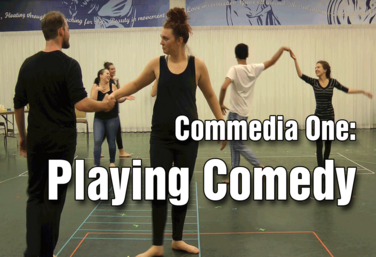
Commedia I: Playing Comedy

by Todd Espeland
8 modules 2 hours, 31 minutes 7 Credit Hours
Commedia dell’arte is a 16th Century masked acting form. It’s the basis of all comedy and it’s a form that many teachers want to include in their curriculum. Instructor Todd Espeland has designed two courses that work hand-in-hand with teaching this fantastic physical form. In Commedia I: Playing Comedy - Todd teaches the principles of comedy through four key elements: status, appetite, swing, and intention/invention. This course provides an excellent foundation upon which to explore Commedia to its fullest. Includes bonus videos, handouts, reflections, and exit slip question ideas for each lesson.

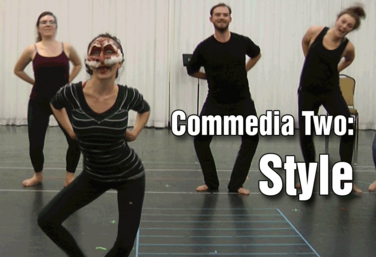
Commedia II: Style

by Todd Espeland

11 modules 2 hours, 31 minutes 7 Credit Hours
Commedia dell’arte is a 16th Century masked acting form. It’s the basis of all comedy and it’s a form that many teachers want to include in their curriculum. Instructor Todd Espeland has designed two courses that work hand-in-hand with teaching this fantastic physical form. In Commedia II: Style - Todd moves on to the specific style of Commedia dell’arte. This includes a history of commedia, the stock characters and how to physicalize them, sample lazzi and a capstone assignment. The course includes video demonstrations so you can see the exercises and activities in action.

Close Reading in the Drama Classroom

by Lindsay Price
11 modules 3 hours, 38 minutes 7 Credit Hours
Close reading is an activity that puts curriculum standards into practice and it can be easily applied to the drama classroom. Close reading asks a lot of your students. They have to read and think at the same time. This course teaches drama teachers how the close reading process works, and gives them exercises and tools to apply it in the classroom.

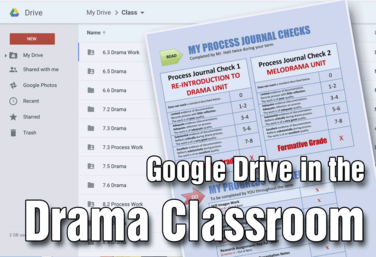
Google Drive in the Drama Classroom

by Josh Hatt
10 modules 1 hours, 21 minutes 3 Credit Hours
Instructor Joshua Hatt has taught drama students all over the world. He is passionate about the power of drama to connect people and the importance of reflection and journaling to build creative, critical thinkers. He started using Google Drive as a response to the frustration of having his students lose curriculum booklets time and time again. His work developed into a powerful online home whereby students and teachers can communicate, contribute, collaborate, edit, and house all their documents online. In this course, Josh will show you how to use Google Drive and Slides in your drama classroom. He's included step-by-step guided instruction, as well as activities to help you solidify your knowledge. Your drama classroom will be forever transformed!

Play Adaptation Project

by Lindsay Price

6 modules 44 minutes 2 Credit Hours
Adaptation is a fabulous classroom project: it requires students to analyze, adapt, modify, plan synthesize, devise. All the higher order thinking skills. But you can’t just throw a narrator into a script and call it a day. You have to have a preparation process leading up to the writing process. In this course you will learn practical exercises and a path to prepare your students to take on their own adaptation project. We’ll look at the guidelines to adaptation, things to think about when choosing a text, how to analyze the source material and writing that first draft. So join me, Lindsay Price, in the Play Adaptation Project.

How to Give Feedback to Student Playwrights

by Nicholas Pappas

6 modules 1 hours, 23 minutes 3 Credit Hours
The two big questions we’re going to answer in this course are: What is feedback? And, What is useful feedback? Now, if you asked a hundred people to answer these two questions, you’ll likely get a hundred different answers, but at its core, all the answers will focus on giving notes that will improve the work, which, in this case, is our student’s plays. And, as a teacher, that’s what your hope is, right? To help your students improve as writers, one work at a time. We want our students to write, and to grow through their writing. If we want our students to get better, we need to get better. Understanding the definition of feedback, and understanding how to provide useful feedback is the key to all of us getting better. Join Nick Pappas in this course designed to give you the tools to help your student writers find their voice.

Playwriting Outside the Lines

by Steven Stack
6 modules 1 hours, 34 minutes 3 Credit Hours
Instructor Steven Stack leads this course in a unique way to teach playwriting. He will show you how to set foundations and guide posts for your students, and then give them freedom to play. The intent is to help students develop their own voice and create for creating sake. The 5 modules lead teachers through how to use this style of teaching playwriting, and includes handouts and resources to support the learning.

Screenplays 101 - Part 1: Basic Structure

by Nicholas Pappas
8 modules 1 hours, 22 minutes 3 Credit Hours
Screenwriter Nick Pappas leads a two-part course on screenplays 101. Great scriptwriting is not something that can be covered in a single course: so we're going to start with the basics. Those basics are going to be split up into a Part 1 and a Part 2. Part 1, this course, will concentrate on basic film structure. Part 2 will concentrate on screenplay formatting. By the end of this course, students should have a basic understanding of history, terminology, and are able to identify the barest bones of the three-act structure, all with an eye toward developing their own screenplay.

From Audition to Curtain Call: Directing Youth Theatre

by Steven Stack

11 modules 1 hours, 42 minutes 3 Credit Hours
Directing youth theatre can be one of the most thrilling, rewarding, and exhausting jobs there is – because it’s not just about staging a play. It’s about creating an environment that fosters hard work, dedication, trust, and the willingness to take chances, to “play without fear.” As a writer/teacher/director of youth theatre for over 15 years, I have developed tools and strategies that enable my students and me to focus on the process of creating theatre while fostering an environment that leads to creative freedom and a cohesive groups that doesn't act as individual “stars,” but as a community of one. In this course, I will share with you these tips and strategies, along with the ways to implement them in your theatre environment.

View all Standards for Ontario, Canada    Standards Master List