
Alberta, Canada
Movement Level I - Beginning
13 units • 9 professional development courses aligned to
10 - use varying speed of movement
View all Standards for Alberta, Canada
10 use varying speed of movement
This page lists 13 units and 9 professional development courses aligned to 10 from the Alberta, Canada. Designed for drama teachers, these resources directly address 10 - use varying speed of movement
Unit
2
of
14
in
Drama One
Curriculum
UNIT
Stage Movement
by Karen Loftus
3 lessons
Students will get “onstage.” They will explore what is important for onstage action, the basics of stage directions, and how to keep open. This unit will culminate with students trying out what they’ve learned in a short scene.
This unit is more about the technicalities of moving on stage. By giving students something concrete to focus on, it allows them to overcome any stage fright.
Ensemble-building exercises are also included in this unit. If you have time at the end of a lesson after you’ve completed your instruction and are wondering what to do, you can never go wrong with an ensemble-building exercise!
Unit
3
of
14
in
Drama One
Curriculum
UNIT
Pantomime
by Karen Loftus
4 lessons
In this unit, students will explore nonverbal communication: first, through body language and gesture, and then through the specific art of pantomime. Students will learn hand position, tension, follow-through, and action/reaction/interaction with objects through warm-up games and exercises. The unit culminates in a two-person pantomime performance.
Unit
5
of
14
in
Drama One
Curriculum
UNIT
Ancient Greek Theatre
by Karen Loftus
4 lessons
This unit on Ancient Greek theatre focuses on the function of the chorus, the choral ode, and the details of the theatre space. It touches on plays and playwrights of the era, culminating in a final project of a modern version of Medea that includes a choral ode.
Unit
11
of
14
in
Drama One
Curriculum
UNIT
Japanese Theatre
by Karen Loftus
4 lessons
This unit will enable students to identify, compare, and contrast three different styles of Japanese theatre: Noh, Bunraku, and Kabuki. There are three proposed projects in this unit: a research assignment where groups delve into further detail about one of the three styles; a performance project where students utilize what they’ve learned by enacting a scene from a Kyogen (comedic) play; and a Bunraku puppet play.
UNIT
Commedia dell'Arte
by Todd Espeland
14 lessons
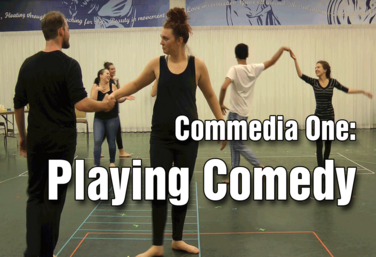
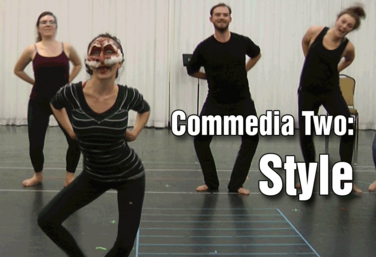
Commedia dell’arte is a 16th century masked acting form. It is the basis of all comedy, including all tv sitcoms. This form is characterized by masked types and archetypical characters and a specific way of playing comedy. To that end, this unit is divided into two parts.
Part One focuses on the foundations of commedia - playing comedy. These principles will be important to learn when it comes to developing commedia characters, specifically the physicality of the characters. Part Two will cover lazzi.
Note: there are links to video demos in many of the lessons of this unit.
UNIT
Introduction to Musical Theatre: Movement
by Annie Dragoo
9 lessons
Musical theatre performers use their bodies to sing, to dance, and to act. We must think of our bodies as instruments and learn to use our instruments properly in order to be better musical theatre performers.
The overall objective with this unit, by Annie Dragoo, is for students to demonstrate an understanding of the use of good movement as it connects to musical theatre. Some of the activities include using action verbs, moving as animals and inanimate characters, nonverbal communication and situational movement. Students will then perform a scene that will allow them to put to practice all the movement techniques they have learned.
Unit
3
of
11
in
Distance Learning
Curriculum
UNIT
Pantomime
by Lindsay Price and Karen Loftus
4 lessons
In this unit, students will explore nonverbal communication. First through body language and gesture, and then through the specific art of pantomime. Students will learn hand position, tension, follow-through, and action/reaction/interaction with objects through warm-up games and exercises. The unit culminates in a one-person pantomime performance.
Unit
4
of
10
in
Theatre History
Curriculum
UNIT
Unit 4: Commedia Dell'Arte
by Drama Teacher Academy
4 lessons
We take a side trip to Italy to discover a secular comedic form: Commedia Dell’arte.
Students will be introduced to the form, explore the characters and themes, and put their knowledge to practical application by creating a commedia character.
Unit
6
of
10
in
Theatre History
Curriculum
UNIT
Unit 6: Theatre of the Renaissance
by Drama Teacher Academy
5 lessons
In this unit, we return to Western theatre and to Italy, where we will witness the birth of the Renaissance and the discovery of linear perspective. Then we travel on to the Golden Age of Spanish theatre. We will pass by the Elizabethan Golden age (we’ll cover it in the next unit) and end the Renaissance journey by discovering French neoclassicism and the Rules of Drama.
UNIT
Introduction to Stanislavski
by Drama Teacher Academy
6 lessons
This is an in-depth unit with instruction and activities about the Stanislavski acting method. It is followed by scene work in which students learn how to score a scene, do a comprehensive character analysis, and use what they have learned in rehearsals in a performance. Students will also watch their own work and evaluate their process after the performance.
The purpose of this unit is to give students an introduction and understanding of Stanislavski’s method and to put it into use as they prepare scenes for performance. After seeing their work, and spending time reflecting on how they used the principles of the method, students should take away a concrete understanding of how to prepare a role for performance.
UNIT
Virtual Introduction to Stanislavski
by Drama Teacher Academy
6 lessons
The unit has been adapted for a virtual environment.
This is an in-depth unit with instruction and activities about the Stanislavski acting method. It is followed by scene work in which students learn how to score a scene, do a comprehensive character analysis, and use what they have learned in rehearsals in a performance. Students will also watch their own work and evaluate their process after the performance.
The purpose of this unit is to give students an introduction and understanding of Stanislavski’s method and to put it into use as they prepare scenes for performance. After seeing their work, and spending time reflecting on how they used the principles of the method, students should take away a concrete understanding of how to prepare a role for performance.
UNIT
Realism and Naturalism
by Drama Teacher Academy
6 lessons
This unit looks at the origins of realism and naturalism. The Realism/Naturalism movements in Europe came about as a response to the artificiality of the Romantic Movement. Realism/Naturalism strove for real-life characters and situations. This unit looks at early realist playwrights and their plays as well as the Independent Theatre Movement, which provided venues for the new forms when established theatres refused to produce these plays. In America, this became the Little Theatre Movement, where groups experimented with theatre away from the strictures of the syndicated houses. In the meantime, professional theatre was developing on Broadway, including early Black performers. Realism finally came to the American stage with the plays of Eugene O’Neill.
UNIT
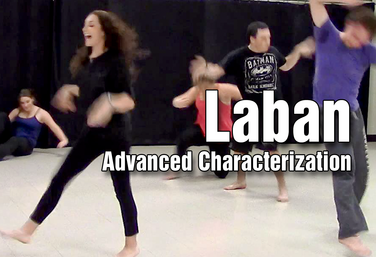
Laban: Advanced Characterization
by Drama Teacher Academy
7 lessons
This is an advanced acting unit in playing character through the Laban movement technique. Students will explore dance theorist Rudolf Laban’s eight efforts and their component parts; turn these elements into physicalizations through which one can express character; use Laban efforts and connect them to a character’s voice and body; and demonstrate knowledge through the creation of an original character.
Reminder: This is an advanced acting unit. You will need students who can do work on their own outside of class time, commit to movement and sound, and commit to making instinctual choices.



View all Standards for Alberta, Canada Standards Master List