
Alberta, Canada
Orientation Drama 10
23 units • 11 professional development courses aligned to
demonstrate willingness to challenge and extend oneself: physically, emotionally, intellectually and artistically
View all Standards for Alberta, Canada
demonstrate willingness to challenge and extend oneself: physically, emotionally, intellectually and artistically
This page lists 23 units and 11 professional development courses aligned to from the Alberta, Canada. Designed for drama teachers, these resources directly address demonstrate willingness to challenge and extend oneself: physically, emotionally, intellectually and artistically
PD COURSE
Strong Ensemble = Strong Play
by Craig Mason
5 modules
1 hours, 8 minutes
2 Credit Hours
This mini-course will give you a toolkit to bring your shows to the next level by having an engaged, active, ensemble.
The ensemble is a critical part of a large cast show. But you can't leave them to fend for themselves. They need structure. They need exercises and activities.
In Strong Ensemble = Strong Play, you'll be given ensemble-building exercises. You'll also discover specific activities that will help your ensemble become three-dimensional characters who have something to do and something to play in every moment they are on stage.
We'll look at case studies that take the exercises learned in the course and apply them to specific shows.
PD COURSE
The Top Ten Playwriting Exercises
by Lindsay Price
11 modules
3 hours, 1 minutes
6 Credit Hours
The Top Ten Playwriting Exercises Course not only gives you ten great exercises to ease your students into the playwriting waters, it's also going to give you the confidence to teach playwriting to your students.
Each exercise comes with instruction, why the exercise is important, how to assess the exercise and something specific for you to try.
Many of the modules include assignments and rubrics so you will be fully prepared to comprehend, apply and teach every these exercises.

PD COURSE
Copyright for Drama Teachers
by Craig Mason
9 modules
2 hours, 24 minutes
5 Credit Hours
An in-depth and interactive look at copyright as it applies to school theatre programs. Learn about how works become copyrighted, how long it lasts, how to get permission to use copyrighted work, and more.
PD COURSE
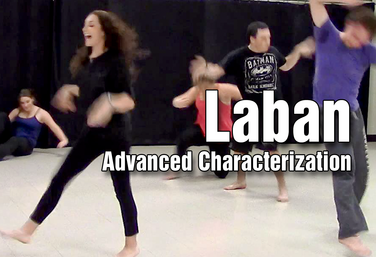
Laban: Advanced Characterization
by Todd Espeland
9 modules
2 hours, 5 minutes
8 Credit Hours
Learn about the Laban system to teach your students to physically and vocally discover character. This is an advanced course, which means that the course goes deep into exploring character and exploring character work through the work of Rudolph Laban.
PD COURSE
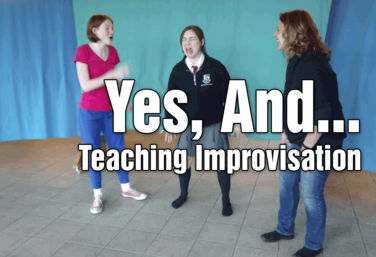
Yes, And... How to Teach Improv
by Jennine Profeta
10 modules
2 hours, 10 minutes
4 Credit Hours
“Yes, and…” is the guiding principle behind all improv. This course will teach you how to teach improv, and more importantly how to give feedback to your students. The course looks at making strong offers and also using gibberish to ironically improv communication skills. You will also see how feelings can safely be used to add flavour and get laughs in our scenes.
Jennine Profeta, Second City performer and theatre educator, leads this course with a clear methodology for teaching and giving positive nurturing feedback. This course will give you all the tools and the insight you need to teach improv with confidence.
PD COURSE
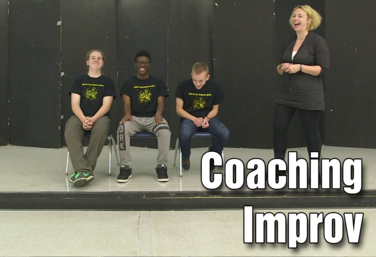
Coaching Improv
by Jennine Profeta
9 modules
2 hours, 14 minutes
4 Credit Hours
Second City performer and theatre educator Jennine Profeta is back and ready to help you take your Improv classes to the next level. It’s all getting students to perform - and how to be a great improv coach who can keep them supported and grounded (and having fun!)
In this course, you’ll learn the golden rules of improv. You’ll learn a bunch of improv games (great for warm-ups, teaching tools, and even for competitions). You’ll learn Jennine’s tips and tricks for what to look for when coaching and how to troubleshoot common issues.
The course is designed to help you improv as an ensemble and give you the know-how to coach with confidence whether it’s in the classroom or on the stage!
PD COURSE
21st Century Skills Through Devising
by Allison Williams
12 modules
1 hours, 18 minutes
4 Credit Hours
Allison Williams leads the course: 21st Century Skills Through Devising. This course covers what devising is, why to do it, how to do it, and how your students can master the 21st Century Skills of collaborations and cooperation, critical thinking, creative thinking through devising.
High school is a great place to try devising with your students. But it’s not something you want to throw at your students without any preparation. Framework is important and this course takes you through a number of exercises you can take into the classroom tomorrow to help build a place of physical safety, a place where students work at making a lot of choices instead of waiting for the perfect choice, and a place where students feel comfortable making creative choices. The material also reviews the process of putting together a show from the idea/research stage to editing, to giving feedback.
Your students have what it takes to create their own material, collaborate with each other, and have a unique theatrical experience!
PD COURSE
Teaching Musical Theatre in the Drama Classroom
by Colin Oliver
7 modules
1 hours, 51 minutes
4 Credit Hours
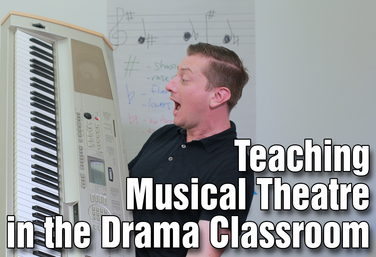
Colin Oliver leads this introduction to teaching Musical Theatre in the Drama Classroom.
In this course, you will learn how to build musical theatre into your dramatic courses of study. “Why might you want to do that? Singing is scary! You want me to teach my students how to do it? I don’t even know how to do it.” This course approaches musical theatre preparation performance much as we would approach preparing a monologue in drama. If you use script analysis in monologue preparation in your class, you can teach musical theatre.
By the end of this course, you’ll have a great, full-body physical warm-up, a student-driven research assignment, character development exercises, a little bit of musical theory, and a performance assignment complete with assessment.
So, join us for teaching Musical Theatre in the Drama Classroom. It’s as easy as Do-Re-Mi!
PD COURSE
Teaching Theatre with Divergent Students and Class Sizes in Mind
by Steven Stack
5 modules
1 hours, 41 minutes
3 Credit Hours
Have you ever wondered how in the world you can have a successful theatre classroom with so many variables that you have absolutely no control over? The two biggest ones being the size of your class and the students that you’re in charge of turning into some truly talented theatre geeks. This course by Steven Stack explores that wonderful and often ridiculous world of theatre classrooms while giving you the tools for you and your students to not only succeed but to flourish as well.
Lessons will include how to make any size class the Goldilocks class as in "just right", defining and working with all types of students you may encounter in your classroom, the seven must-haves of any theatre class, and the importance of structure in the theatre classroom by providing a guideline for setting up your day-to-day class time.
The course also provides tons of ideas, games and activities that you can use instantly in your classroom. So, if you’re a first-time theatre teacher or one just looking for new ideas, this is the course for you.
PD COURSE
Hands-On Theatre History: Creating a Modern Day Morality Play
by Wendy-Marie Martin
11 modules
1 hours, 25 minutes
3 Credit Hours
Who says theatre history has to be boring? Hands-On Theatre History: Creating a Modern Day Morality play is an interactive course by Wendy-Marie Martin, combining hands-on activities with research and analysis techniques leading to a full performance of the popular medieval morality play, Everyman.
This course gives students an overview of the medieval period and the various medieval play forms and teaches students the key points of storytelling and adaptation.
It includes dynamic individual and group exercises leading students from the first steps of the adaptation process through a final, full-class performance of Everyman—and proves, once and for all, that theatre history can be fun and exciting to learn.
PD COURSE
Impowerment Improv
by Jennine Profeta
6 modules
56 minutes
2 Credit Hours
Jennine Profeta, Second City performer and theatre educator, leads this course. This course was designed to give a teacher tools to create a safe environment in which students can go beyond their old patterns to take risks, embrace failure, be more confident and aware of the effects of their word choice. The course includes modules on risk-taking, creating a safe environment, failure, confidence, and positive/negative speak.
View all Standards for Alberta, Canada Standards Master List