Facebook Pixel Skip to main content

National Core Arts Standards
Develop and refine artistic techniques and work for presentation - Grade HS Advanced

7 units • 12 professional development courses aligned to
TH:Pr5.1.HSIII.a - Use and justify a collection of acting exercises from reliable resources to prepare a believable and sustainable performance.

View all Standards for National Core Arts Standards

TH:Pr5.1.HSIII.a Use and justify a collection of acting exercises from reliable resources to prepare a believable and sustainable performance.

This page lists 7 units and 12 professional development courses aligned to TH:Pr5.1.HSIII.a from the National Core Arts Standards. Designed for drama teachers, these resources directly address TH:Pr5.1.HSIII.a - Use and justify a collection of acting exercises from reliable resources to prepare a believable and sustainable performance.

Improv

by Anna Porter

Improv is a fantastic method to engage your students; this 3 lesson mini unit is a great way to introduce improvisation. This unit focuses on learning the rules of Improv, trying games to build improvisation skills, and developing conflict and story line.Through the three lesson series, students will use journals, participate in class discussions, learn six different improv games, and perform for their peers. Assessment tools include both informal assessment as well as a formal quiz that’s included in the unit.

Devising

by Corinna Rezzelle

While the Drama Two Curriculum has a focus on acting, it’s always important to include a unit on the technical theatre skills that are necessary to any production. Students will also be able to use what they’ve learned in this unit in their upcoming devising project. Students will begin by exploring design for the stage by experimenting with line, shape, texture, size, and color. They will expand their understanding of stage properties and scenic flats. They will then apply their knowledge of these building blocks of design to create a high-concept design for a miniature “stage.”

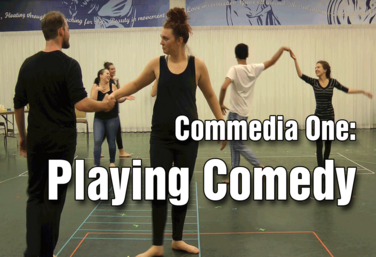
Commedia dell'Arte

by Todd Espeland

Commedia dell’arte is a 16th century masked acting form. It is the basis of all comedy, including all tv sitcoms. This form is characterized by masked types and archetypical characters and a specific way of playing comedy. To that end, this unit is divided into two parts. Part One focuses on the foundations of commedia - playing comedy. These principles will be important to learn when it comes to developing commedia characters, specifically the physicality of the characters. Part Two will cover lazzi. Note: there are links to video demos in many of the lessons of this unit.

Introduction to Stanislavski

by Drama Teacher Academy

This is an in-depth unit with instruction and activities about the Stanislavski acting method. It is followed by scene work in which students learn how to score a scene, do a comprehensive character analysis, and use what they have learned in rehearsals in a performance. Students will also watch their own work and evaluate their process after the performance. The purpose of this unit is to give students an introduction and understanding of Stanislavski’s method and to put it into use as they prepare scenes for performance. After seeing their work, and spending time reflecting on how they used the principles of the method, students should take away a concrete understanding of how to prepare a role for performance.

Virtual Introduction to Stanislavski

by Drama Teacher Academy

The unit has been adapted for a virtual environment. This is an in-depth unit with instruction and activities about the Stanislavski acting method. It is followed by scene work in which students learn how to score a scene, do a comprehensive character analysis, and use what they have learned in rehearsals in a performance. Students will also watch their own work and evaluate their process after the performance. The purpose of this unit is to give students an introduction and understanding of Stanislavski’s method and to put it into use as they prepare scenes for performance. After seeing their work, and spending time reflecting on how they used the principles of the method, students should take away a concrete understanding of how to prepare a role for performance.

The Autobiographical Monologue

by Gai Jones

All students have something to say and a story to tell. They can relate to their personal stories better than anyone else. All students have a lot of material which can be used as part of an original monologue. In this unit, students will write an autobiographical monologue based on their personal expertise, memories, distinct point of view, sense of truth, and life experiences. Through the process, students will be encouraged to explore past stories, objects, and images and other personal material.

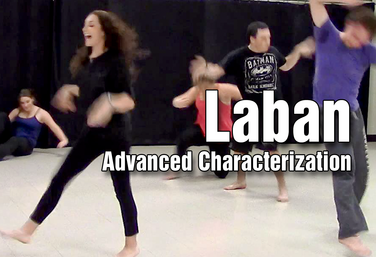
Laban: Advanced Characterization

by Drama Teacher Academy

This is an advanced acting unit in playing character through the Laban movement technique. Students will explore dance theorist Rudolf Laban’s eight efforts and their component parts; turn these elements into physicalizations through which one can express character; use Laban efforts and connect them to a character’s voice and body; and demonstrate knowledge through the creation of an original character. Reminder: This is an advanced acting unit. You will need students who can do work on their own outside of class time, commit to movement and sound, and commit to making instinctual choices.

View all Standards for National Core Arts Standards    Standards Master List