
British Columbia (2018)
GRADE 7 - ARTS - Reasoning and reflecting
19 units • 7 professional development courses aligned to
Interpret works of art using knowledge and skills from various areas of learning
View all Standards for British Columbia (2018)
Interpret works of art using knowledge and skills from various areas of learning
This page lists 19 units and 7 professional development courses aligned to from the British Columbia (2018). Designed for drama teachers, these resources directly address Interpret works of art using knowledge and skills from various areas of learning
PD COURSE
Close Reading in the Drama Classroom
by Lindsay Price
11 modules
3 hours, 38 minutes
7 Credit Hours
Close reading is an activity that puts curriculum standards into practice and it can be easily applied to the drama classroom.
Close reading asks a lot of your students. They have to read and think at the same time.
This course teaches drama teachers how the close reading process works, and gives them exercises and tools to apply it in the classroom.
PD COURSE
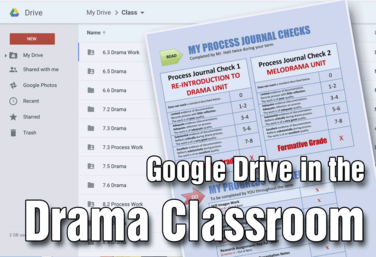
Google Drive in the Drama Classroom
by Josh Hatt
10 modules
1 hours, 21 minutes
3 Credit Hours
Instructor Joshua Hatt has taught drama students all over the world. He is passionate about the power of drama to connect people and the importance of reflection and journaling to build creative, critical thinkers.
He started using Google Drive as a response to the frustration of having his students lose curriculum booklets time and time again. His work developed into a powerful online home whereby students and teachers can communicate, contribute, collaborate, edit, and house all their documents online.
In this course, Josh will show you how to use Google Drive and Slides in your drama classroom. He's included step-by-step guided instruction, as well as activities to help you solidify your knowledge. Your drama classroom will be forever transformed!
PD COURSE
The Production Classroom
by Karen Loftus
8 modules
1 hours, 46 minutes
4 Credit Hours
In The Production Classroom, instructor Karen Loftus will show you how to explore ways that you can produce shows during your regular class time. The course gives you a series of exercises and reflections that help you determine everything, from the type of show you may want to do, to the way you can divide up your class and responsibilities, to specific assignments that will keep your students engaged and focused.
The Production Classroom is the ultimate in project-based learning. Students learn to work collaboratively while setting goals and working towards a successful finished project. The course includes exercises and strategies to use with students to help assure their success in the production. Multiple examples and anecdotes help you to envision what the production classroom could look like in your room, performance space or theatre.

PD COURSE
Marketing the Arts
by James Van Leishout
8 modules
2 hours, 1 minutes
4 Credit Hours
This course covers the four stages of creating and implementing a marketing plan. It starts with the question, what are you selling?, and goes all the way through to evaluation. The course covers both traditional and new media, with examples and opportunities to apply the learning to each teacher's own situation.
.png)
PD COURSE
Shakespeare's Toolkit
by Todd Espeland
9 modules
3 hours, 3 minutes
6 Credit Hours
Todd Espeland has the experience to know that having more tools in your toolbox makes you a better actor. This is especially important when teaching students how to approach Shakespeare. They need help breaking through the language barrier and into the character’s needs and into the character’s thoughts.
The tools that you’ll receive in this course will do just that. The course looks at scansion as a tool for breaking down Shakespeare’s verse, the importance of end of lines, and caesura. Caesura is an inner-line pause which is a lot of fun to play with and really, helps us provide insight to the character’s thoughts and into their needs.
The course provides numerous examples and handouts, and culminates in a performance assignment to use with your students.
PD COURSE
Screenplays 101 - Part 1: Basic Structure
by Nicholas Pappas
8 modules
1 hours, 22 minutes
3 Credit Hours
Screenwriter Nick Pappas leads a two-part course on screenplays 101. Great scriptwriting is not something that can be covered in a single course: so we're going to start with the basics. Those basics are going to be split up into a Part 1 and a Part 2. Part 1, this course, will concentrate on basic film structure. Part 2 will concentrate on screenplay formatting.
By the end of this course, students should have a basic understanding of history, terminology, and are able to identify the barest bones of the three-act structure, all with an eye toward developing their own screenplay.
PD COURSE
Tech Knowledge: Integrating Tech Throughout Your Rehearsal Process
by Claire Broome
17 modules
1 hours, 52 minutes
3 Credit Hours
This course will help you integrate technical theatre earlier in the creative process to help reduce the stress of tech week, and make sure you have what you need before choosing a show. We will explore how to include your technical theatre team from day one and will help you have an easier experience throughout the rehearsal process and final performances.
View all Standards for British Columbia (2018) Standards Master List