Facebook Pixel Skip to main content

British Columbia (2018)
GRADE 11 - DRAMA - Explore and Create

31 units • 18 professional development courses aligned to
Create dramatic works for an intended audience

View all Standards for British Columbia (2018)

Create dramatic works for an intended audience

This page lists 31 units and 18 professional development courses aligned to from the British Columbia (2018). Designed for drama teachers, these resources directly address Create dramatic works for an intended audience

Unit 7 of 7 in Drama Two Curriculum

Devising

by Corinna Rezzelle

13 lessons
While the Drama Two Curriculum has a focus on acting, it’s always important to include a unit on the technical theatre skills that are necessary to any production. Students will also be able to use what they’ve learned in this unit in their upcoming devising project. Students will begin by exploring design for the stage by experimenting with line, shape, texture, size, and color. They will expand their understanding of stage properties and scenic flats. They will then apply their knowledge of these building blocks of design to create a high-concept design for a miniature “stage.”

Improv

by Anna Porter

3 lessons
Improv is a fantastic method to engage your students; this 3 lesson mini unit is a great way to introduce improvisation. This unit focuses on learning the rules of Improv, trying games to build improvisation skills, and developing conflict and story line.Through the three lesson series, students will use journals, participate in class discussions, learn six different improv games, and perform for their peers. Assessment tools include both informal assessment as well as a formal quiz that’s included in the unit.

Ancient Greek Theatre

by Lindsay Price

8 lessons
In studying Ancient Greece, we’re looking at the foundations of theatre as we know it today. Without the Ancient Greek Era, we do not get actors, theatres, plays, and the definitions of tragedy and comedy. The issue with studying theatre history, or anything historical is that it can become an exercise in memorizing dates and reciting facts. When the truth of the matter is no one in the 21st century benefits from learning by rote. This is especially true when studying history in the framework of a drama classroom. We need exercises that bring history to life, instead of having students plot dates on a timeline. To that end, this unit does not focus on dates and data. The essential question for the unit is how can we connect the past to the present and this question is explored through the theatricalization of information. Students will access all four 21st century skills, critical thinking, creative thinking, collaboration and communication as they explore this amazing world. Reflections, exit slips, and rubrics are included throughout the unit as well as a mid assignment evaluation for the culminating project.

Pantomime

by Angel Borths

9 lessons
Teacher Angel Borths developed this unit when she was looking for lessons to teach the basics of pantomime in the classroom. This unit culminates in a finished product for performance, either for peers, or for theatre festivals. The rubrics and written work for this unit take planning and preparation for performance into account. The exercises can be pulled out and used independently, but work best when used to build toward a finished product. You can also pull the ground plan and stage directions lesson plans to use with playwriting or directing lessons.
Unit 5 of 14 in Drama One Curriculum

Ancient Greek Theatre

by Karen Loftus

4 lessons
This unit on Ancient Greek theatre focuses on the function of the chorus, the choral ode, and the details of the theatre space. It touches on plays and playwrights of the era, culminating in a final project of a modern version of Medea that includes a choral ode.
Unit 7 of 14 in Drama One Curriculum

Commedia Dell'Arte

by Karen Loftus

5 lessons
Students will discover, analyze, and explore the history, characters, and style of commedia dell’arte. Commedia dell’arte is a theatre history unit mixed with improvisation, physicalization, and exploring specific characters. In this unit, we’re going to focus on three main aspects: 1. Causes and Effects of Commedia (History) 2. Stock Characters 3. Commedia Performance Practices
Unit 14 of 14 in Drama One Curriculum

Drama One Final Project

by Karen Loftus

5 lessons
The final project will incorporate multiple areas that students have studied over the course of the year/semester: playwriting, acting, scenic design, and marketing. They are putting everything they’ve learned into a final package, including writing, rehearsing, and performing.

Monologue Writing Made Easy

by Matthew Banaszynski

7 lessons
Join Matt Banaszynski in this dynamic unit designed to introduce students to the process of starting, drafting, polishing, and performing a self-created, stand-alone monologue. This unit introduces students to writing their own stand-alone monologues. Students will learn the steps involved in going from a simple idea to a written piece to performing that piece. They will also provide feedback to others and give themselves a self-assessment. This unit has been prepared for a middle school drama class but could be adapted for high school. It was designed as a way to get non-theatre students more involved in theatre.

Puppetry

by Jenny Goodfellow

9 lessons
This unit on Puppetry is designed for middle school and up, to introduce students to the material and get them comfortable with performing in a safe and low exposure environment. This is a unit that builds to a culminating experience for your students. Each lesson is designed to explore techniques, provide opportunities for creative collaboration among your students, and give them opportunities to perform. Some of the lessons require materials to build or create puppets. Puppetry can be as easy as drawing a face on your finger for finger puppets, to actually purchasing your own finger puppets for students to use. While the focus of this unit is puppetry, your students will explore other skills as well. There’s the obvious ones of creative thinking, teamwork, and problem solving. They are also going to explore storytelling, performing skills, and playwriting.

Agatha Rex and Ancient Greek Theatre

by Angel Borths

10 lessons
Help…It’s all Greek to me! Join Angel Borths in this unit that uses a modern adaptation of the Ancient Greek play Antigone to introduce Middle School students to Ancient Greek Theatre. Have your students read Percy Jackson and want to find out more about Ancient Greece? Then, this unit is for you. This unit is designed for middle and high school students and will take you through the basics of classical Greek theatre and pairs it with a modern adaptation of the story of Antigone called Agatha Rex by Lindsay Price. Students will learn vocabulary, design, and basic theory surrounding classical Greek theatre. Students will also enjoy the mask building component of this unit, as they learn to disappear into the character of a mask, like the first actors did on a Greek stage thousands of years ago. The unit culminates in a scene performance with masks.

Shakespeare Performance

by Anna Porter

11 lessons
In this unit by Anna Porter, students are introduced to the works of Shakespeare and explore how to bring a character to life in a monologue performance. Students are also introduced to the tools to help them unlock meaning in Shakespeare’s text. Through this eleven lesson series, students will participate in class discussions, activities and performance. Assessment tools include informal assessment, submission of textual analysis work and a final performance.

Unlocking Shakespeare's Text

by Anna Porter

5 lessons
Shakespeare’s text holds valuable tools that students can use to unlock and understand meaning. In this unit by Anna Porter, students explore how to use the tools of research, context, textual analysis, imagery and punctuation to help them unlock meaning in Shakespeare’s text. This unit is created for an Intermediate to Advanced drama class with a basic background in plot structure and acting technique. Through this five lesson series, students will use journals, participate in class discussions, activities and performance to explore the tools used to unlock a text. Assessment tools include informal assessment as well as a final group presentation and performance.

Pantomime

by Anna Porter

6 lessons
In this unit, students explore how to communicate with their body by exploring elements of physicality and Pantomime. Lesson one helps students explore body awareness as well as the use of the senses and details in pantomime performance. In lesson two, students explore body language and how it is used to communicate by examining the art of flirting. Lesson three helps students create a distinct physical characterization. Lesson four introduces students to the quality of Pantomime – Consistency. In lesson five, students explore the quality of exaggeration in pantomime. In the final lesson, students prepare a pantomime story for performance. Through this six lesson series, students will use journals, participate in class discussions and practice the elements taught by performing for their peers and as a class. Assessment tools include both informal assessment as well as a final Pantomime performance.
Unit 1 of 7 in Drama Two Curriculum

Character Analysis - Part 1

by Matt Webster

5 lessons
The Drama Two Curriculum has been developed to expand and deepen students’ skills as artists. In this unit, students will explore character analysis, which is key to developing three-dimensional characters in monologues, scenes, and plays. In Part 1, they will start with Uta Hagen’s nine questions for character analysis.
Unit 4 of 7 in Drama Two Curriculum

Monologues - Part 2

by Matt Webster

5 lessons
In Part 2 of the Monologue Unit (Monologue Project: Analysis, Writing, and Performance), students analyze an existing monologue to determine the criteria for a “good” monologue. They will then apply what they learned in Part 1 (Monologue Writing Made Easy), adding in the criteria for a “good” monologue, to write and perform an original monologue.
Unit 5 of 7 in Drama Two Curriculum

Performing Shakespeare

by Matt Webster

5 lessons
In this unit, students are introduced to a series of lesson plans that explore non-traditional approaches to performing the works of William Shakespeare. By the end of the unit students will be exposed to a unique set of tools they can utilize as the foundations for analyzing, staging and performing a scene from Shakespeare’s canon. Students will then rehearse and perform a two-person Shakespearean scene.

East Meets West: Theatre Traditions

by Marsha Walner

9 lessons
We spend a lot of time in the classroom exploring, applying, and creating in a western theatrical tradition. But there are many more styles that students can explore, particularly to the east: Kabuki, Noh, Chinese Opera, and Sanskrit Theatre, for example. In this unit, students will be introduced to an element from each of these eastern styles, they will apply that element and build towards a culminating project. Throughout, students will develop a stronger understanding of both the theatre from their own culture and that of Eastern cultures.

Creating Your Own Musical

by Laramie Dean

24 lessons
Instructor Laramie Dean uses this unit as the final project for his Drama 2 students. Drawing upon any of the skills students have developed throughout, they create a product that could be used within a new piece of musical theatre. Students start by analyzing three musicals, study guides included, and practice creating musical elements. They are then given class time to prepare in groups as many elements as they can for a new musical using devised theatre techniques. There are 24 lessons in this unit which culminates in a final assessed performance.
Unit 8 of 8 in Middle School Curriculum

Unit Eight: Theatre of the Oppressed

by Lindsay Johnson

10 lessons
Students will have a chance to merge their understanding of scene elements with their improvisation skills in this final unit based on Augusto Boal’s Theatre of the Oppressed. Theatre of the Oppressed is a style of theatre specifically created to highlight the injustices of power and oppression in society and to problem-solve ways to bring about change. Starting with image theatre techniques to identify issues of power and oppression, students will then use forum theatre to create scenarios of oppression taken from their own lives and improvise realistic solutions. The unit culminates in a performance in which students participate as both actors in a scene they create themselves and spect-actors in scenes created by their peers.

Our Town Unit

by Lindsay Price

8 lessons
This is a read, discuss, and apply literature unit. Students will study the play Our Town by Thornton Wilder. Our Town is often referred to as “nostalgic.” It’s seen as an antiquated look at a moment in time. But this play is called Our Town, not My Town. What’s happening in Grover’s Corners happened in the past, the distant past, in our present, and even in the future. The themes of the play—the ordinary versus universality, the concept of time, the cycle of life, the ignorance of humanity to the eternal—these are just as relevant in the twenty-first century as they were when the play was written. The purpose of the unit is not to have students recall knowledge about the play. Students will be able to identify, articulate, and dramatize text themes and concepts and compare/contrast these concepts to their own experiences.

Abstract Scene Performance

by Annie Dragoo

5 lessons
In this unit, students will create and perform an abstract theatre scene. Abstract is a genre that does not rely on realism and deliberately breaks the rules of a given form. In the case of theatre, this refers to the commonly presented rules of performance, acting, and the relationship with the audience. Movement is often stylized and symbolic. Ideas and themes are expressed visually and aurally with little dialogue using music, lights, costumes, and props.

The Dilemma Project

by Claire Broome

12 lessons
The Dilemma Project is based on a situation that requires a decision: push a button and get a great reward, but there’s also a great consequence. Don’t push the button and there’s no reward. This unit will lead to a group performance including characters, costumes, set, acting theory, acting tools, and a student written script. The final script will be about ten pages in length which means roughly ten minutes of stage time.

The Autobiographical Monologue

by Gai Jones

4 lessons
All students have something to say and a story to tell. They can relate to their personal stories better than anyone else. All students have a lot of material which can be used as part of an original monologue. In this unit, students will write an autobiographical monologue based on their personal expertise, memories, distinct point of view, sense of truth, and life experiences. Through the process, students will be encouraged to explore past stories, objects, and images and other personal material.

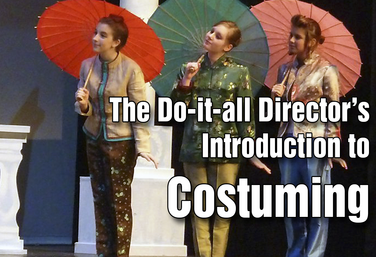
Tech Theatre Unit: Costuming When You Don't Sew

by Drama Teacher Academy
8 lessons
In this unit, students will take on the role of the costumer, which is different from a costume designer. It introduces costuming concepts in order to execute a costume. No complicated sewing is required, which is great if you don’t have the background, the access, or the resources to have a class of students create costumes. Instead of making costumes from scratch, as a designer would, students will create costumes from stock, borrowed items, or low-cost finds. They will take finished products and adapt them into what they need to create the right atmosphere. In order to help with their adaptations, students will try different distressing techniques and learn three SIMPLE stitches that they’ll be able to use over and over again. It’s a valuable tech theatre skill to teach students how to execute on costumes when you (and they) don’t sew!

30 Second Monologues

by Lindsay Price

4 lessons
A monologue unit is an excellent way for students to demonstrate learned skills: vocal skills, movement skills, memorization skills, and character development. It also touches on soft skills such as communication, confidence, and attitude. That being said, monologues are not easy. A typical monologue is two minutes long. That is a lot of text to memorize, block, and develop into an engaging presentation. How often have you sat through a bad monologue performance with little to no characterization, wandering blocking, and a tenuous grasp of the lines? Performing a monologue is a learned skill. And the best way to learn a skill is in steps. Instead of starting with the end goal—that two-minute piece—start at the beginning. This four-lesson unit will take students up the ladder toward the goal of a longer monologue.

Scene Staging

by Lindsay Price

15 lessons
The goal for this unit is to give students a process to work primarily on their own to create a staged scene with specific, dynamic blocking and three-dimensional characters. This unit would work well as a culminating project for a semester. In this unit, students will work independently to analyze, block, build character, experiment, and rehearse a scene. Their performance can count as a summative assessment for the class. Material: This unit requires that students have access to scenes from plays. Ideally, students should work in pairs and prepare duet scenes.

Introduction to Mask

by Allison Williams

7 lessons
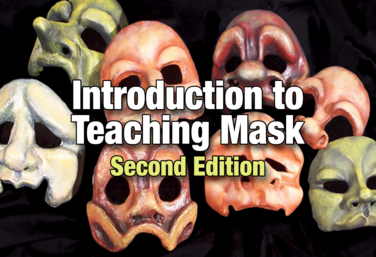
This unit focuses on having students gain an understanding of basic physical acting and learn some specific tools to use in mask work. Instructor Allison Williams has developed this unit, and explains "What I love most about mask work is how, by having students cover their faces, they are able to find freedom to express themselves physically. They often make bigger choices than we’re normally used to seeing them make in class." In this unit, students will work step by step from identifying shapes in the mask to using those shapes to creating a character zero to learning how to move in the mask utilizing the qualities of movement to applying everything they’ve learned in short scenes. The unit will culminate with students working in pairs to create original mask scenes. You will need masks to complete the unit. And while mask-making can be a lot of fun, it’s a lengthy and messy project. A list is provided in the Overview of where you may be able to buy or rent masks for use in your classroom.

Spoken Word Poetry

by Quincy Young

4 lessons
In this unit, students will create a performance of a spoken word poem designed to engage, entertain, and affect an audience. They will also write a poet’s statement in which they describe the purpose(s) or inspiration(s) of their poetry. This is not a technical writing unit and is geared more toward students self-expression and engaging an audience. If your students are not skilled poets, this unit is still accessible.

Screenplays 101: Basic Formatting Unit

by Nicholas Pappas

8 lessons
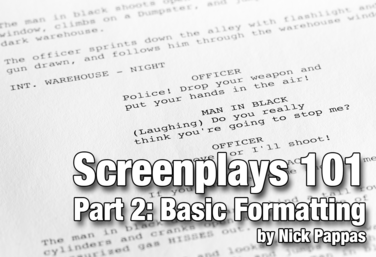
Screenplays 101 is divided into two separate units: Basic Structure and Basic Formatting. **It is highly recommended that you complete the Basic Structure unit before moving on to the Basic Formatting unit.** Screenplays are used in every aspect of a film’s production. Depending on the size of the film, anywhere from a few dozen to a few thousand people use the screenplay to do their jobs. Because so many people need the screenplay to perform a job to the best of their abilities, a screenplay must be formatted immaculately. Once completing this unit, students will have a basic understanding of how a screenplay is formatted and why it is formatted that way, all with an eye toward students developing their own screenplay.

The Crucible Unit

by Lindsay Price

8 lessons
This is a research, read, discuss, and apply theatrical literature unit. Students will study the play The Crucible by Arthur Miller. The Crucible is Miller’s most produced play. There are hundreds of high school productions each year, and the play is in many high school curricula. As with every Miller work, there is much to discuss and many rich themes to explore. The unit is divided into three sections. Each section is a complete set of lessons. You can choose to do all three sections, or if you have your own way to teach the play, you can pick and choose exercises.

A Midsummer Night's Dream

by Drama Teacher Academy
9 lessons
Shakespeare is sometimes avoided in the drama classroom because not only do the students not want to take on the language difficulties but neither do the teachers. Monologue and scenework becomes more challenging and a lot of times, students falter in their blocking action and character development because they are so challenged. How do we give students the opportunity to rehearse and present Shakespearean text as they would modern text? In this play study unit, students will read a Shakespeare play while learning specific tools and techniques in order to stage text from that play. And more often than not, these techniques are ones that they have already used with other plays. It’s all about reframing Shakespeare so that students enjoy the experience of bringing the characters and stories to life.

View all Standards for British Columbia (2018)    Standards Master List