
Alberta, Canada
Senior Goal II Objectives
12 units • 7 professional development courses aligned to
extend the ability to give form and expression to feelings, ideas and images
View all Standards for Alberta, Canada
extend the ability to give form and expression to feelings, ideas and images
This page lists 12 units and 7 professional development courses aligned to from the Alberta, Canada. Designed for drama teachers, these resources directly address extend the ability to give form and expression to feelings, ideas and images
UNIT
Improv
by Anna Porter
3 lessons
Improv is a fantastic method to engage your students; this 3 lesson mini unit is a great way to introduce improvisation.
This unit focuses on learning the rules of Improv, trying games to build improvisation skills, and developing conflict and story line.Through the three lesson series, students will use journals, participate in class discussions, learn six different improv games, and perform for their peers.
Assessment tools include both informal assessment as well as a formal quiz that’s included in the unit.
Unit
6
of
14
in
Drama One
Curriculum
UNIT
Improvisation
by Karen Loftus
6 lessons
Students sharpen their listening and reaction skills through improv games, exercises, and scenes. They will learn five specific guidelines to apply to their improvisation: accept the offer, bring information to the scene, make active choices, make your partner look good, and don’t force the humour.
There are so many different ways to approach a unit on improvisation. Keep in mind that you will have students who are really excited about this unit and some students who dread it. It’s best to start with low-risk games and exercises and then build up to higher-risk ones. Low-risk games in this situation mean partnered interactions that aren’t shared with the whole class.
Unit
14
of
14
in
Drama One
Curriculum
UNIT
Drama One Final Project
by Karen Loftus
5 lessons
The final project will incorporate multiple areas that students have studied over the course of the year/semester: playwriting, acting, scenic design, and marketing. They are putting everything they’ve learned into a final package, including writing, rehearsing, and performing.
UNIT
Musical Theatre
by Anna Porter
4 lessons
Musical Theatre has two components that separate it from straight plays: song and dance. This unit gives students the opportunity to try out both. In musical theatre, music signifies heightened emotion. We can’t express ourselves with just words, we need music (and through extension, song and dance) to take it further.
This unit includes three lesson plans:
1. Acting the Song - “Musical Tactics”
2. Acting the Song - “Textual Analysis”
3. Introduction to Dance
A solo performance assignment is also included, and the unit includes assessment tools - rubrics, reflections, and self-evaluations.
UNIT
Mock Audition
by Lindsay Price
11 lessons
In this Mock Audition Unit, students will start by discussing the audition process. They will make connections between their personal views and the process. Students will then apply the steps of auditioning from putting together a resume, to choosing a piece based on provided information, to audition etiquette, to the actual audition itself. A final reflection and rubric are provided for use at the end of this unit.
A short play is included that can be used as the source material. You can also choose your own play for this process.
UNIT
Introduction to Musical Theatre: Movement
by Annie Dragoo
9 lessons
Musical theatre performers use their bodies to sing, to dance, and to act. We must think of our bodies as instruments and learn to use our instruments properly in order to be better musical theatre performers.
The overall objective with this unit, by Annie Dragoo, is for students to demonstrate an understanding of the use of good movement as it connects to musical theatre. Some of the activities include using action verbs, moving as animals and inanimate characters, nonverbal communication and situational movement. Students will then perform a scene that will allow them to put to practice all the movement techniques they have learned.
UNIT
Our Town Unit
by Lindsay Price
8 lessons
This is a read, discuss, and apply literature unit. Students will study the play Our Town by Thornton Wilder.
Our Town is often referred to as “nostalgic.” It’s seen as an antiquated look at a moment in time. But this play is called Our Town, not My Town. What’s happening in Grover’s Corners happened in the past, the distant past, in our present, and even in the future. The themes of the play—the ordinary versus universality, the concept of time, the cycle of life, the ignorance of humanity to the eternal—these are just as relevant in the twenty-first century as they were when the play was written.
The purpose of the unit is not to have students recall knowledge about the play. Students will be able to identify, articulate, and dramatize text themes and concepts and compare/contrast these concepts to their own experiences.
Unit
2
of
11
in
Distance Learning
Curriculum
UNIT
Improvisation
by Lindsay Price and Karen Loftus
6 lessons
Students sharpen their listening and reaction skills through improv games, exercises, and scenes. They will learn five specific guidelines to apply to their improvisation: accept the offer, bring information to the scene, make active choices, make your partner look good, and don’t force the humor.
Unit
8
of
11
in
Distance Learning
Curriculum
UNIT
Mock Audition
by Lindsay Price
12 lessons
In this Mock Audition Unit, students will discuss the audition process and make connections between their personal views and the process. Students will apply the steps of auditioning from putting together a resume to choosing a piece based on provided information to audition etiquette to the actual audition itself.
A final reflection and rubrics are provided for use at the end of this unit.
A short play is included that can be used as the source material for your audition. You can also choose your own play for this process.
UNIT
Impowerment Improv
by Jennine Profeta
4 lessons
Taking risks, learning to see failure as a gift, finding courage when we don't feel it, and having the awareness that what we say has an impact are social and emotional skills students will take beyond the classroom. These are skills that can be built through improv exercises.
The exercises in this unit are designed to create a safe environment in which students can go beyond their old patterns to take risks, embrace failure, and be more confident and aware of the effects of their word choices. Improv gives you the opportunity to draw attention to these important concepts and to talk about them.
UNIT
The Crucible Unit
by Lindsay Price
8 lessons
This is a research, read, discuss, and apply theatrical literature unit. Students will study the play The Crucible by Arthur Miller.
The Crucible is Miller’s most produced play. There are hundreds of high school productions each year, and the play is in many high school curricula. As with every Miller work, there is much to discuss and many rich themes to explore.
The unit is divided into three sections. Each section is a complete set of lessons. You can choose to do all three sections, or if you have your own way to teach the play, you can pick and choose exercises.
UNIT
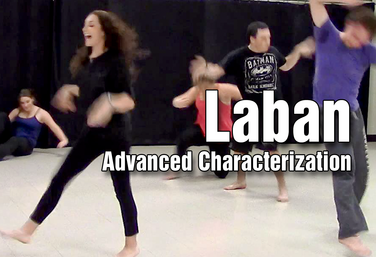
Laban: Advanced Characterization
by Drama Teacher Academy
7 lessons
This is an advanced acting unit in playing character through the Laban movement technique. Students will explore dance theorist Rudolf Laban’s eight efforts and their component parts; turn these elements into physicalizations through which one can express character; use Laban efforts and connect them to a character’s voice and body; and demonstrate knowledge through the creation of an original character.
Reminder: This is an advanced acting unit. You will need students who can do work on their own outside of class time, commit to movement and sound, and commit to making instinctual choices.

View all Standards for Alberta, Canada Standards Master List