Facebook Pixel Skip to main content

Ontario, Canada
Grades 9 & 10 - Creating and Presenting - Elements and Conventions

15 units • 16 professional development courses aligned to
A.2.2 - use a variety of conventions to create a distinct voice that reflects a particular global, social, or personal perspective (e.g., use voices in the head, role on the wall, and hot seating to create a complex character from another region or country)

View all Standards for Ontario, Canada

A.2.2 use a variety of conventions to create a distinct voice that reflects a particular global, social, or personal perspective (e.g., use voices in the head, role on the wall, and hot seating to create a complex character from another region or country)

This page lists 15 units and 16 professional development courses aligned to A.2.2 from the Ontario, Canada. Designed for drama teachers, these resources directly address A.2.2 - use a variety of conventions to create a distinct voice that reflects a particular global, social, or personal perspective (e.g., use voices in the head, role on the wall, and hot seating to create a complex character from another region or country)

Pantomime

by Angel Borths

Teacher Angel Borths developed this unit when she was looking for lessons to teach the basics of pantomime in the classroom. This unit culminates in a finished product for performance, either for peers, or for theatre festivals. The rubrics and written work for this unit take planning and preparation for performance into account. The exercises can be pulled out and used independently, but work best when used to build toward a finished product. You can also pull the ground plan and stage directions lesson plans to use with playwriting or directing lessons.

Monologues - Part 2

by Matt Webster

In Part 2 of the Monologue Unit (Monologue Project: Analysis, Writing, and Performance), students analyze an existing monologue to determine the criteria for a “good” monologue. They will then apply what they learned in Part 1 (Monologue Writing Made Easy), adding in the criteria for a “good” monologue, to write and perform an original monologue.

Devising

by Corinna Rezzelle

While the Drama Two Curriculum has a focus on acting, it’s always important to include a unit on the technical theatre skills that are necessary to any production. Students will also be able to use what they’ve learned in this unit in their upcoming devising project. Students will begin by exploring design for the stage by experimenting with line, shape, texture, size, and color. They will expand their understanding of stage properties and scenic flats. They will then apply their knowledge of these building blocks of design to create a high-concept design for a miniature “stage.”

Playwriting Unit: 10 to 15 Minute Play

by Lindsay Price

This playwriting unit offers lessons for students to complete a 10- to 15-minute play, instructed by professional playwright Lindsay Price. The unit includes class writing time as well as students writing on their own; in setting it up this way, the unit can be interspersed between other lessons. Students are challenged to apply themselves to write on their own - as all writers must do. Class time also focuses on giving and receiving feedback.

Playwriting Unit: Beginner

by Lindsay Price

This unit provides an introduction to the process of playwriting in a practical step-by-step framework. Playwriting can be a practical task-driven process that any student can accomplish, given the right parameters. This playwriting unit will give students the tools they need to write their first short play and gain the confidence they need to write further. The culminating project for this unit is a three- to five-page play or extended scene.

The Working Playwright *Hyperdoc

by Lindsay Price

In this unit, students will gain insight into the day to day responsibilities of a working artist. This unit aims to illuminate for students that creative expression is only one element in a sustainable arts career, and attempt to address the essential question: How does a playwright turn creative expression into a career? The culminating project for the unit is a playwright submissions packet for a theatre company. This unit is delivered in hyperdoc format. What does that mean? A hyperdoc is an interactive tool that encourages digital learning. In this case, students are given a document on a subject, and there they can read articles, watch videos, do some independent research, and apply what they’ve learned. Because they’re working on their own, students are in charge of their own pacing. Before you start the unit, ensure you read the Teacher Guide first. It will give you clear instructions on how to distribute the hyperdoc format and make it easy for you and your students.

Playwriting: Part 1

by Lindsay Price

Every drama program should have a playwriting unit. Playwriting applies creative thinking skills and, through feedback and revision, critical thinking skills. Playwriting also allows students to engage in self-expression. It is a powerful act to take one’s thoughts, give them to a character, and have them said aloud. Playwriting can be a practical task-driven process that any student can accomplish, given the right parameters. This playwriting unit is broken into two parts. This unit is Part 1. Part 1 is a standalone playwriting unit for beginning writers. Students go step by step through the elements of the playwriting process, which culminates in a short scene, monologue, and character profile. All the exercises can be done synchronously in your class sessions or small groups through breakout rooms.

Playwriting: Part 2

by Lindsay Price

Every drama program should have a playwriting unit. Playwriting applies creative thinking skills and, through feedback and revision, critical thinking skills. Playwriting also allows students to engage in self-expression. It is a powerful act to take one’s thoughts, give them to a character, and have them said aloud. Playwriting can be a practical task-driven process that any student can accomplish, given the right parameters. This playwriting unit is broken into two parts - this unit is Part 2. You can continue the playwriting process from Part 1 by having students apply what they’ve learned through writing a five- to 10-page play. Or, if your students are familiar with the playwriting elements, perhaps they just do Part 2 of this unit. Students will write a first draft, revise, give and receive feedback, and read their work aloud. The unit assumes that either students have completed Part 1 or they already have a grounding in the playwriting form.

Playwriting Kickstart: Multi platform

by Lindsay Price

This unit focuses on the idea stage of playwriting. Before you start a playwriting project, take students through these lessons to provide students a step-by-step process for idea generation. When students are told they’re going to write a play, they often freeze. I can’t do it. I’m not creative; my ideas are stupid. The purpose of this unit is to give students a place to start and a way to move from finding a topic to creating an idea to writing theatrically on ideas. This unit is designed to reach as many classroom environments as possible and includes: standard in-class lessons, instruction videos, instruction handouts, and quizzes.

Theatre Radically Reimagined: Exploring Artaud, Grotowski, and Boal

by Ruthie Tutterow

In this unit, students will learn about Antonin Artaud and how his ideas influenced avant-garde theatre in the 20th and 21st centuries. They will also learn how Jerzy Grotowski took Artaud’s theories into new directions. This is done through direct instruction. A culminating presentation will ask students to take common stories and reimagine them using some of these ideas. They will present a “pitch” of an avant-garde version of their story. In the second lesson, students learn about some of the ideas of Augusto Boal and try a session of Forum Theatre.

The Autobiographical Monologue

by Gai Jones

All students have something to say and a story to tell. They can relate to their personal stories better than anyone else. All students have a lot of material which can be used as part of an original monologue. In this unit, students will write an autobiographical monologue based on their personal expertise, memories, distinct point of view, sense of truth, and life experiences. Through the process, students will be encouraged to explore past stories, objects, and images and other personal material.

Self-Management Playwriting

by Lindsay Price

In this unit, students will decide on a topic they care about and write a short play within a designated time frame. They will mostly write on their own, using class to discuss and share how they are managing their time, monitoring their progress, and adapting their writing plan of action. The goal of this unit is not the final product but rather the self-management skills they apply throughout. In this unit, students will demonstrate their self-management skills by setting a goal, identifying a strategy to achieve the goal, creating a plan of action, monitoring their process, reflecting on what is working and what’s not working, taking personality responsibility throughout as they write on their own, and demonstrating an ownership mindset through self-assessment.

Scene Staging

by Lindsay Price

The goal for this unit is to give students a process to work primarily on their own to create a staged scene with specific, dynamic blocking and three-dimensional characters. This unit would work well as a culminating project for a semester. In this unit, students will work independently to analyze, block, build character, experiment, and rehearse a scene. Their performance can count as a summative assessment for the class. Material: This unit requires that students have access to scenes from plays. Ideally, students should work in pairs and prepare duet scenes.

Introduction to Mask

by Allison Williams

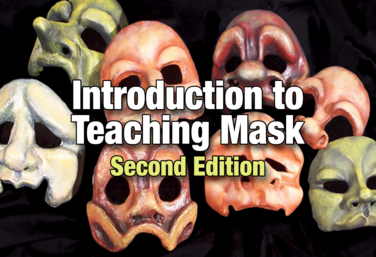
This unit focuses on having students gain an understanding of basic physical acting and learn some specific tools to use in mask work. Instructor Allison Williams has developed this unit, and explains "What I love most about mask work is how, by having students cover their faces, they are able to find freedom to express themselves physically. They often make bigger choices than we’re normally used to seeing them make in class." In this unit, students will work step by step from identifying shapes in the mask to using those shapes to creating a character zero to learning how to move in the mask utilizing the qualities of movement to applying everything they’ve learned in short scenes. The unit will culminate with students working in pairs to create original mask scenes. You will need masks to complete the unit. And while mask-making can be a lot of fun, it’s a lengthy and messy project. A list is provided in the Overview of where you may be able to buy or rent masks for use in your classroom.

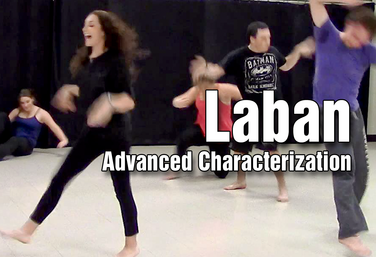
Laban: Advanced Characterization

by Drama Teacher Academy
This is an advanced acting unit in playing character through the Laban movement technique. Students will explore dance theorist Rudolf Laban’s eight efforts and their component parts; turn these elements into physicalizations through which one can express character; use Laban efforts and connect them to a character’s voice and body; and demonstrate knowledge through the creation of an original character. Reminder: This is an advanced acting unit. You will need students who can do work on their own outside of class time, commit to movement and sound, and commit to making instinctual choices.

View all Standards for Ontario, Canada    Standards Master List