Facebook Pixel Skip to main content

National Core Arts Standards
Select, analyze, and interpret artistic work for presentation - Grade 7

34 units • 18 professional development courses aligned to
TH:Pr4.1.7.b - Use various character objectives in a drama/theatre work.

View all Standards for National Core Arts Standards

TH:Pr4.1.7.b Use various character objectives in a drama/theatre work.

This page lists 34 units and 18 professional development courses aligned to TH:Pr4.1.7.b from the National Core Arts Standards. Designed for drama teachers, these resources directly address TH:Pr4.1.7.b - Use various character objectives in a drama/theatre work.

Playwriting

by Karen Loftus

Students will explore the structural elements of a play: character, objective, obstacles, tactics, resolution, and raising the stakes. They will also learn how to write character-driven dialogue and stage directions. Students will work in groups to create and present a short play.

Mock Audition

by Lindsay Price

In this Mock Audition Unit, students will start by discussing the audition process. They will make connections between their personal views and the process. Students will then apply the steps of auditioning from putting together a resume, to choosing a piece based on provided information, to audition etiquette, to the actual audition itself. A final reflection and rubric are provided for use at the end of this unit. A short play is included that can be used as the source material. You can also choose your own play for this process.

Monologue Writing Made Easy

by Matthew Banaszynski

Join Matt Banaszynski in this dynamic unit designed to introduce students to the process of starting, drafting, polishing, and performing a self-created, stand-alone monologue. This unit introduces students to writing their own stand-alone monologues. Students will learn the steps involved in going from a simple idea to a written piece to performing that piece. They will also provide feedback to others and give themselves a self-assessment. This unit has been prepared for a middle school drama class but could be adapted for high school. It was designed as a way to get non-theatre students more involved in theatre.

Theatre of the Absurd

by Lea Marshall

WARNING: This unit is ABSURD. However, instructor Lea Marshall decided to do something really ABSURD with the unit, which was make it a bit more predictable. First, the unit takes two lessons to go over the Historical and Philosophical background of Theatre of the Absurd. It starts with just a visual exercise to really bring students into the emotional bleakness of the landscape and then group work to look at some of the other foundational elements that will drive the Absurdist movement into the Theatres. Next, students break down absurd scripts into some “recognizable” elements of language, plot structure, acting choices, and storyline. With each lesson that introduces an Absurdist Element, there is an opportunity for students to “play” with the element. Then, students explore the element through an Absurdist text. This will help familiarize the students with the 4 Absurdist scripts used in the unit. These bite sized forays into the scripts will help students to choose a script to fully immerse themselves in for the final project. As a final project, students will choose one script to work with, and choose the format of their project (performance, costume or set design, or playwright).

Shakespeare Performance

by Anna Porter

In this unit by Anna Porter, students are introduced to the works of Shakespeare and explore how to bring a character to life in a monologue performance. Students are also introduced to the tools to help them unlock meaning in Shakespeare’s text. Through this eleven lesson series, students will participate in class discussions, activities and performance. Assessment tools include informal assessment, submission of textual analysis work and a final performance.

Unlocking Shakespeare's Text

by Anna Porter

Shakespeare’s text holds valuable tools that students can use to unlock and understand meaning. In this unit by Anna Porter, students explore how to use the tools of research, context, textual analysis, imagery and punctuation to help them unlock meaning in Shakespeare’s text. This unit is created for an Intermediate to Advanced drama class with a basic background in plot structure and acting technique. Through this five lesson series, students will use journals, participate in class discussions, activities and performance to explore the tools used to unlock a text. Assessment tools include informal assessment as well as a final group presentation and performance.

Pantomime

by Anna Porter

In this unit, students explore how to communicate with their body by exploring elements of physicality and Pantomime. Lesson one helps students explore body awareness as well as the use of the senses and details in pantomime performance. In lesson two, students explore body language and how it is used to communicate by examining the art of flirting. Lesson three helps students create a distinct physical characterization. Lesson four introduces students to the quality of Pantomime – Consistency. In lesson five, students explore the quality of exaggeration in pantomime. In the final lesson, students prepare a pantomime story for performance. Through this six lesson series, students will use journals, participate in class discussions and practice the elements taught by performing for their peers and as a class. Assessment tools include both informal assessment as well as a final Pantomime performance.

Monologues - Part 2

by Matt Webster

In Part 2 of the Monologue Unit (Monologue Project: Analysis, Writing, and Performance), students analyze an existing monologue to determine the criteria for a “good” monologue. They will then apply what they learned in Part 1 (Monologue Writing Made Easy), adding in the criteria for a “good” monologue, to write and perform an original monologue.

Tools of Scene Work

by Anna Porter

Students are introduced to scene work performance through a simple, contentless scene unit. In this unit, performers will use exercises like “Show and Tell” to learn how to fill in the gaps of a story by creating scenarios and detailed characters with backgrounds. Students will further fill in the gaps by exploring environmental and physical conflict as well as stage business. The lesson “Thou Shalts of Staging” will guide students through basic staging and performance technique.

Commedia dell'Arte

by Todd Espeland

Commedia dell’arte is a 16th century masked acting form. It is the basis of all comedy, including all tv sitcoms. This form is characterized by masked types and archetypical characters and a specific way of playing comedy. To that end, this unit is divided into two parts. Part One focuses on the foundations of commedia - playing comedy. These principles will be important to learn when it comes to developing commedia characters, specifically the physicality of the characters. Part Two will cover lazzi. Note: there are links to video demos in many of the lessons of this unit.

Theatrical Arguments: Pursuing Objectives, Communication, and Conflict

by Rachel Atkins

In this middle school unit by Rachel Atkins, students will explore how to strengthen a theatrical argument through objectives, communication, and conflict: What characters do, what they say, and how they say it when they make an argument or try to achieve an objective. To do this, students will use tableaux, dialogue, and improv. There are presentations and post-lesson writing assignments that you can use for assessment. How do characters, actors and writers use a variety of actions to achieve an objective or support an argument? How do they enhance their communication by word choice and emotion? How do they develop and strengthen their own arguments by understanding other points of view?

The Actor in Transition: From Presentational to Three-Dimensional

by John Minigan

The objective of this unit by John Minigan is to move students from a traditional presentational model of performance to a three-dimensional model. You’re going to achieve this by having students - Develop tactics to achieve character goals, despite obstacles - Connect physical choices to scene structure and relationships - Clarify tactics and story rather than forcing emotion - And focus on the scene partner rather than the self This unit was created to use with grade nine students as a transition from middle school to high school acting approaches. It would also be appropriate for a beginning-of-the-year unit for a program that includes Drama 1. But any class that is at the beginning of their acting process will find value. Each lesson comes with an engagement Rubric to assess how students participated in the activities and discussions.

Unit Six: Directed Scenes Take 1: Same Scene, Different Visions

by Lindsay Johnson

Students will now start applying the skills they’ve learned thus far in the context of existing, fleshed-out scripts. They will also have opportunities to shift from actor to director and hone such skills as collaboration, self-confidence, and problem-solving which can be used in many other areas of their lives.

Unit Seven: Directed Scenes Take 2: A Variety of Scenes

by Lindsay Johnson

Students will have another opportunity to participate in student-directed scenes, only this time each director will be assigned a different script, and actors for each group will be chosen by the teacher based on individual strengths and challenges, rather than holding auditions. Actors will take a deeper dive into character physicality and use of levels in staging this unit. Directors will continue to create a set design and block the scenes, adding props as well in this unit. The unit culminates in actors presenting their directed scenes to the class.

Unit Eight: Theatre of the Oppressed

by Lindsay Johnson

Students will have a chance to merge their understanding of scene elements with their improvisation skills in this final unit based on Augusto Boal’s Theatre of the Oppressed. Theatre of the Oppressed is a style of theatre specifically created to highlight the injustices of power and oppression in society and to problem-solve ways to bring about change. Starting with image theatre techniques to identify issues of power and oppression, students will then use forum theatre to create scenarios of oppression taken from their own lives and improvise realistic solutions. The unit culminates in a performance in which students participate as both actors in a scene they create themselves and spect-actors in scenes created by their peers.

Introduction to Musical Theatre: Movement

by Annie Dragoo

Musical theatre performers use their bodies to sing, to dance, and to act. We must think of our bodies as instruments and learn to use our instruments properly in order to be better musical theatre performers. The overall objective with this unit, by Annie Dragoo, is for students to demonstrate an understanding of the use of good movement as it connects to musical theatre. Some of the activities include using action verbs, moving as animals and inanimate characters, nonverbal communication and situational movement. Students will then perform a scene that will allow them to put to practice all the movement techniques they have learned.

Mock Audition

by Lindsay Price

In this Mock Audition Unit, students will discuss the audition process and make connections between their personal views and the process. Students will apply the steps of auditioning from putting together a resume to choosing a piece based on provided information to audition etiquette to the actual audition itself. A final reflection and rubrics are provided for use at the end of this unit. A short play is included that can be used as the source material for your audition. You can also choose your own play for this process.

Theatre of the Absurd

by Lea Marshall

We included this unit in our Distance Learning Curriculum because if any group of students would understand how the world turned upside down and then apply it to theatre, it would be the students dealing with a global pandemic. First, we take two lessons to go over the historical and philosophical background of Theatre of the Absurd. We start with a visual exercise to bring students into the emotional bleakness of the landscape and then group work to look at some of the other foundational elements that will drive the absurdist movement into the theatres. Next, we break down absurd scripts into some “recognizable” elements of language, plot structure, acting choices, and storyline. In each lesson that introduces an absurdist element, there is an opportunity for students to “play” with the element.

Scene Work: Part 2, Student Self Staging

by Lindsay Price

In Part 2 of Scene Work, students take everything they learned in Part 1 and apply it to the staging of a scene. Students work independently to block, build character, experiment and rehearse a scene. You can continue the scene work process from Part 1, or if your students have a grounding with scene work basics, perhaps they just do Part 2 of this unit.

Acting for the Camera

by Ruthie Tutterow

The purpose of this unit is for students to know the differences and practice skills for film versus stage acting. They should also know the basic vocabulary of acting for the camera. It will also be helpful for them to get practice in editing. By seeing both sides of the camera, they will gain valuable experience in seeing what works from both the producing and acting side. Students will be able to see and reflect on their work.

Virtual Acting for the Camera

by Ruthie Tutterow

The unit is adapted for a virtual environment. The purpose of this unit is for students to know the differences and practice skills for film versus stage acting. They should also know the basic vocabulary of acting for the camera. It will also be helpful for them to get practice in editing. By seeing both sides of the camera, they will gain valuable experience in seeing what works from both the producing and acting side. Students will be able to see and reflect on their work.

Character Creation: Superhero Series: Multi platform

by Lindsay Price and Kerry Hishon

This unit focuses on character creation: How do you create a character from the ground up? Use this unit as a precursor to a playwriting unit, to a devising unit, or to a class production. Using the archetypes of the superhero, the sidekick, and the supervillain, students work on exercises to help them create unique characters through physical and vocal qualities, character profiles, and theatrical writing. Because many of the exercises have an individual focus, this unit works in a distance learning environment or for your no-technology students.

Decolonizing Monologues

by Nicholas Pappas

In this unit, students will write a monologue authentic to their unique voice rather than to a Eurocentric canon model. We are going to decolonize the monologue. The goal in decolonizing monologues is to be inclusive of all voices in the classroom and to allow those voices to grow out of the unique style and cultural background of every student.

Scene Work: Part 1, Tools of Scene Work

by Lindsay Price

Students are introduced to scene work performance through a contentless scene unit. Students prepare and perform a contentless scene to demonstrate their understanding of characterization, staging technique, and working with conflict and stage business in a performance context.

The Dilemma Project

by Claire Broome

The Dilemma Project is based on a situation that requires a decision: push a button and get a great reward, but there’s also a great consequence. Don’t push the button and there’s no reward. This unit will lead to a group performance including characters, costumes, set, acting theory, acting tools, and a student written script. The final script will be about ten pages in length which means roughly ten minutes of stage time.

Introduction to Stanislavski

by Drama Teacher Academy

This is an in-depth unit with instruction and activities about the Stanislavski acting method. It is followed by scene work in which students learn how to score a scene, do a comprehensive character analysis, and use what they have learned in rehearsals in a performance. Students will also watch their own work and evaluate their process after the performance. The purpose of this unit is to give students an introduction and understanding of Stanislavski’s method and to put it into use as they prepare scenes for performance. After seeing their work, and spending time reflecting on how they used the principles of the method, students should take away a concrete understanding of how to prepare a role for performance.

Virtual Introduction to Stanislavski

by Drama Teacher Academy

The unit has been adapted for a virtual environment. This is an in-depth unit with instruction and activities about the Stanislavski acting method. It is followed by scene work in which students learn how to score a scene, do a comprehensive character analysis, and use what they have learned in rehearsals in a performance. Students will also watch their own work and evaluate their process after the performance. The purpose of this unit is to give students an introduction and understanding of Stanislavski’s method and to put it into use as they prepare scenes for performance. After seeing their work, and spending time reflecting on how they used the principles of the method, students should take away a concrete understanding of how to prepare a role for performance.

The Autobiographical Monologue

by Gai Jones

All students have something to say and a story to tell. They can relate to their personal stories better than anyone else. All students have a lot of material which can be used as part of an original monologue. In this unit, students will write an autobiographical monologue based on their personal expertise, memories, distinct point of view, sense of truth, and life experiences. Through the process, students will be encouraged to explore past stories, objects, and images and other personal material.

30 Second Monologues

by Lindsay Price

A monologue unit is an excellent way for students to demonstrate learned skills: vocal skills, movement skills, memorization skills, and character development. It also touches on soft skills such as communication, confidence, and attitude. That being said, monologues are not easy. A typical monologue is two minutes long. That is a lot of text to memorize, block, and develop into an engaging presentation. How often have you sat through a bad monologue performance with little to no characterization, wandering blocking, and a tenuous grasp of the lines? Performing a monologue is a learned skill. And the best way to learn a skill is in steps. Instead of starting with the end goal—that two-minute piece—start at the beginning. This four-lesson unit will take students up the ladder toward the goal of a longer monologue.

Absurdism: Beyond the Origins

by Drama Teacher Academy
In most units that cover the Theatre of the Absurd, the number of playwrights addressed are few and the time period is limited. While it is certainly true that the era identified as “The Theatre of the Absurd” was a reaction to the distorted reality of life after World War II, there are many environments that create distorted realities and many playwrights who use those realities as catalysts for absurdist plays. In this unit, we will start with a traditional look at the Theatre of the Absurd and then expand our exploration beyond its origins.

Spoken Word Poetry

by Quincy Young

In this unit, students will create a performance of a spoken word poem designed to engage, entertain, and affect an audience. They will also write a poet’s statement in which they describe the purpose(s) or inspiration(s) of their poetry. This is not a technical writing unit and is geared more toward students self-expression and engaging an audience. If your students are not skilled poets, this unit is still accessible.

Play Adaptation Project

by Lindsay Price

Adaptation is a fabulous classroom project: it requires students to analyze, adapt, modify, plan, synthesize, and devise. However, it takes skill to write a successful adaptation; you can’t just throw a narrator into a script and consider the work done. In this unit, students will go through a step by step pre-writing process in order to prepare them to write their own adaptations. They will learn and practice the elements of adaptation before writing the first draft of their own theatrical adaptations.

A Midsummer Night's Dream

by Drama Teacher Academy

Shakespeare is sometimes avoided in the drama classroom because not only do the students not want to take on the language difficulties but neither do the teachers. Monologue and scenework becomes more challenging and a lot of times, students falter in their blocking action and character development because they are so challenged. How do we give students the opportunity to rehearse and present Shakespearean text as they would modern text? In this play study unit, students will read a Shakespeare play while learning specific tools and techniques in order to stage text from that play. And more often than not, these techniques are ones that they have already used with other plays. It’s all about reframing Shakespeare so that students enjoy the experience of bringing the characters and stories to life.

Laban: Advanced Characterization

by Drama Teacher Academy

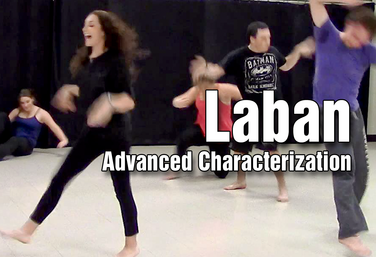
This is an advanced acting unit in playing character through the Laban movement technique. Students will explore dance theorist Rudolf Laban’s eight efforts and their component parts; turn these elements into physicalizations through which one can express character; use Laban efforts and connect them to a character’s voice and body; and demonstrate knowledge through the creation of an original character. Reminder: This is an advanced acting unit. You will need students who can do work on their own outside of class time, commit to movement and sound, and commit to making instinctual choices.

View all Standards for National Core Arts Standards    Standards Master List