Facebook Pixel Skip to main content

North Carolina Essential Standards 2010
Beginning High School Standards - Communication

35 units • 12 professional development courses aligned to
B.C.1.3 - Understand how to read and write scripts that communicate conflict, plot, and character.

View all Standards for North Carolina Essential Standards 2010

B.C.1.3 Understand how to read and write scripts that communicate conflict, plot, and character.

This page lists 35 units and 12 professional development courses aligned to B.C.1.3 from the North Carolina Essential Standards 2010. Designed for drama teachers, these resources directly address B.C.1.3 - Understand how to read and write scripts that communicate conflict, plot, and character.
Laban: Advanced Characterization

by Todd Espeland
9 modules 2 hours, 5 minutes 8 Credit Hours
Learn about the Laban system to teach your students to physically and vocally discover character. This is an advanced course, which means that the course goes deep into exploring character and exploring character work through the work of Rudolph Laban.

Working With Monologues For Rehearsal And Development

by Gai Jones
11 modules 2 hours, 9 minutes 4 Credit Hours
In "Working With Monologues For Rehearsal And Development" you will develop ten sessions of study on monologues. The study contains the definition and history of the monologue; monologue vocabulary; analysis of a practice monologue, staging a short monologue; working with musical theatre lyrics as a monologue; writing short autobiographical monologues. At the end of this course, you will have a curriculum which can be used as introduction to monologue work.

Close Reading in the Drama Classroom

by Lindsay Price

11 modules 3 hours, 38 minutes 7 Credit Hours
Close reading is an activity that puts curriculum standards into practice and it can be easily applied to the drama classroom. Close reading asks a lot of your students. They have to read and think at the same time. This course teaches drama teachers how the close reading process works, and gives them exercises and tools to apply it in the classroom.

Shakespeare's Toolkit

by Todd Espeland
9 modules 3 hours, 3 minutes 6 Credit Hours
Todd Espeland has the experience to know that having more tools in your toolbox makes you a better actor. This is especially important when teaching students how to approach Shakespeare. They need help breaking through the language barrier and into the character’s needs and into the character’s thoughts. The tools that you’ll receive in this course will do just that. The course looks at scansion as a tool for breaking down Shakespeare’s verse, the importance of end of lines, and caesura. Caesura is an inner-line pause which is a lot of fun to play with and really, helps us provide insight to the character’s thoughts and into their needs. The course provides numerous examples and handouts, and culminates in a performance assignment to use with your students.

21st Century Skills Through Devising

by Allison Williams

12 modules 1 hours, 18 minutes 4 Credit Hours
Allison Williams leads the course: 21st Century Skills Through Devising. This course covers what devising is, why to do it, how to do it, and how your students can master the 21st Century Skills of collaborations and cooperation, critical thinking, creative thinking through devising. High school is a great place to try devising with your students. But it’s not something you want to throw at your students without any preparation. Framework is important and this course takes you through a number of exercises you can take into the classroom tomorrow to help build a place of physical safety, a place where students work at making a lot of choices instead of waiting for the perfect choice, and a place where students feel comfortable making creative choices. The material also reviews the process of putting together a show from the idea/research stage to editing, to giving feedback. Your students have what it takes to create their own material, collaborate with each other, and have a unique theatrical experience!

Director's Toolbox 2: Teaching Students to Direct

by James Van Leishout
8 modules 2 hours, 47 minutes 4 Credit Hours
Director’s Toolbox 2: Teaching Students to Direct, explores the tools of the actor, rehearsal, space, and design. The tool of the actor will focus on creating a safe place to play, auditions, and how to communicate with actors. Rehearsals will look at the whole process from the first meeting to opening night. The tool of space will explore how to direct in different spaces and how to create focus through stage composition. Discover how an understanding of the elements of design help student-directors communicate with designers. The final step is a return to self and the mastery of self evaluation.

Play Adaptation Project

by Lindsay Price

6 modules 44 minutes 2 Credit Hours
Adaptation is a fabulous classroom project: it requires students to analyze, adapt, modify, plan synthesize, devise. All the higher order thinking skills. But you can’t just throw a narrator into a script and call it a day. You have to have a preparation process leading up to the writing process. In this course you will learn practical exercises and a path to prepare your students to take on their own adaptation project. We’ll look at the guidelines to adaptation, things to think about when choosing a text, how to analyze the source material and writing that first draft. So join me, Lindsay Price, in the Play Adaptation Project.

The Dilemma Project

by Claire Broome

16 modules 1 hours, 29 minutes 3 Credit Hours
Moral dilemmas are not only faced by characters in gripping plays, but are also faced by our students. The project outlined in this course will help students develop their critical thinking skills through the use of one of the dilemma questions to shape a student written production. If you had the choice to press a button and earn $25,000,000... but a species (not of your choosing) would become extinct, what would you do? More importantly, what would your character do? Join drama teacher and playwright Claire Broome through this course which includes role-playing, Stanislavski’s Magic If, character creation, playwriting and staging.

Hands-On Theatre History: Creating a Modern Day Morality Play

by Wendy-Marie Martin
11 modules 1 hours, 25 minutes 3 Credit Hours
Who says theatre history has to be boring? Hands-On Theatre History: Creating a Modern Day Morality play is an interactive course by Wendy-Marie Martin, combining hands-on activities with research and analysis techniques leading to a full performance of the popular medieval morality play, Everyman. This course gives students an overview of the medieval period and the various medieval play forms and teaches students the key points of storytelling and adaptation. It includes dynamic individual and group exercises leading students from the first steps of the adaptation process through a final, full-class performance of Everyman—and proves, once and for all, that theatre history can be fun and exciting to learn.

Story Theatre

by Matt Webster

10 modules 1 hours, 23 minutes 2 Credit Hours
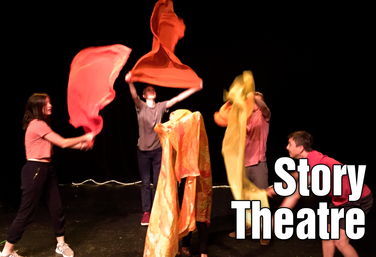
Instructor Matt Webster believes that Story Theatre is one of the most creative, most imaginative, most unique forms of theatre ever to make its way to the stage. His course introduces the style of theatre called story theatre, explores the steps needed to choose the best stories to perform, explains how to adapt a story into a script, and demonstrates a variety of story theatre styles from simple and contained to complex and crazy and everything in between. When you are finished with this course, you’ll be able to bring nearly any story to any stage and present it to any audience. That is the power and promise of story theatre. Learn how to bring the page to the stage.

How to Give Feedback to Student Playwrights

by Nicholas Pappas

6 modules 1 hours, 23 minutes 3 Credit Hours
The two big questions we’re going to answer in this course are: What is feedback? And, What is useful feedback? Now, if you asked a hundred people to answer these two questions, you’ll likely get a hundred different answers, but at its core, all the answers will focus on giving notes that will improve the work, which, in this case, is our student’s plays. And, as a teacher, that’s what your hope is, right? To help your students improve as writers, one work at a time. We want our students to write, and to grow through their writing. If we want our students to get better, we need to get better. Understanding the definition of feedback, and understanding how to provide useful feedback is the key to all of us getting better. Join Nick Pappas in this course designed to give you the tools to help your student writers find their voice.

Playwriting Outside the Lines

by Steven Stack

6 modules 1 hours, 34 minutes 3 Credit Hours
Instructor Steven Stack leads this course in a unique way to teach playwriting. He will show you how to set foundations and guide posts for your students, and then give them freedom to play. The intent is to help students develop their own voice and create for creating sake. The 5 modules lead teachers through how to use this style of teaching playwriting, and includes handouts and resources to support the learning.

View all Standards for North Carolina Essential Standards 2010    Standards Master List