Facebook Pixel Skip to main content

British Columbia (2018)
GRADE 9 - DRAMA - Reasoning and reflecting

27 units • 11 professional development courses aligned to
Describe, interpret, and evaluate how performers and playwrights use dramatic structures, elements, and techniques to create and communicate ideas

View all Standards for British Columbia (2018)

Describe, interpret, and evaluate how performers and playwrights use dramatic structures, elements, and techniques to create and communicate ideas

This page lists 27 units and 11 professional development courses aligned to from the British Columbia (2018). Designed for drama teachers, these resources directly address Describe, interpret, and evaluate how performers and playwrights use dramatic structures, elements, and techniques to create and communicate ideas

Playwriting Unit: Beginner

by Lindsay Price

This unit provides an introduction to the process of playwriting in a practical step-by-step framework. Playwriting can be a practical task-driven process that any student can accomplish, given the right parameters. This playwriting unit will give students the tools they need to write their first short play and gain the confidence they need to write further. The culminating project for this unit is a three- to five-page play or extended scene.

Lighting

by Josh Hatt

This is an introductory mini-unit to lighting that can be achieved whether or not you have a lighting system. Students will work toward being able to demonstrate their knowledge of lighting effectiveness. The questions of the unit include: How can light affect a scene? How can lighting affect the audience? What is the mood of the scene? How does lighting play a part in creating mood? How can you use shadows onstage? How does color impact the scene?

Sound

by Josh Hatt

This is an introductory mini-unit to sound that you can use whether or not you have a sound system. Students will work toward being able to demonstrate their knowledge of sound effectiveness. The questions of the unit include: What is effective sound? What sounds and music do we need in order to make our scene effective? How will we know our sound cues are effective?

Costuming

by Josh Hatt

If the costumes in a play are going to be effective, we need to be thoughtful about how we use them. In this mini-unit, students will demonstrate their understanding costume effectiveness and address the following questions: What is the role of costume in the performance? How does color contribute? How does the style of costume affect a performance? How does costume indicate setting? Do you need costumes in a scene?

Staging

by Josh Hatt

This is a mini-unit on staging. Along with the driving question for the unit, students will explore about how staging affects the performance. Students will draw a plot design (ground plan) to emphasize the need to plan where scenic elements will be placed. They will also practice taking cues from the script, in order to create staging.

Free Play Makeup

by Josh Hatt

This is a student centred mini-unit on makeup design. Makeup is useful in transporting an audience to a different world. The purpose is for students to understand that makeup is a tool that theatre technicians can use in order to contribute to effective performance aesthetics; to understand basic makeup rules and care instruction; to understand how to complete a makeup design plot; to look at a project and figure out for themselves what they need to succeed.

Culminating Project

by Josh Hatt

Once students have completed the five Tech Theatre Units (Lighting, Sound, Costume, Staging, Free Play Makeup), you can give them this culminating project. Depending on how you structured your technical theatre unit, you can adapt this project to suit your needs and context. Up to this point, all the work in the units have been exploratory. This is where students will apply their skills and knowledge.

Our Town Unit

by Lindsay Price

This is a read, discuss, and apply literature unit. Students will study the play Our Town by Thornton Wilder. Our Town is often referred to as “nostalgic.” It’s seen as an antiquated look at a moment in time. But this play is called Our Town, not My Town. What’s happening in Grover’s Corners happened in the past, the distant past, in our present, and even in the future. The themes of the play—the ordinary versus universality, the concept of time, the cycle of life, the ignorance of humanity to the eternal—these are just as relevant in the twenty-first century as they were when the play was written. The purpose of the unit is not to have students recall knowledge about the play. Students will be able to identify, articulate, and dramatize text themes and concepts and compare/contrast these concepts to their own experiences.

Playwriting: Part 1

by Lindsay Price

Every drama program should have a playwriting unit. Playwriting applies creative thinking skills and, through feedback and revision, critical thinking skills. Playwriting also allows students to engage in self-expression. It is a powerful act to take one’s thoughts, give them to a character, and have them said aloud. Playwriting can be a practical task-driven process that any student can accomplish, given the right parameters. This playwriting unit is broken into two parts. This unit is Part 1. Part 1 is a standalone playwriting unit for beginning writers. Students go step by step through the elements of the playwriting process, which culminates in a short scene, monologue, and character profile. All the exercises can be done synchronously in your class sessions or small groups through breakout rooms.

The Role of the Theatre Critic

by Lindsay Price

In the 21st century, we are living in a time of great change for criticism and the role of the critic. Previously, one negative review from the New York Times could close a Broadway show. Now the audience as critic is a topic of much debate. Are professional critics and informed opinions necessary? What is the power of the audience critic? What is the role of the critic and the role of criticism in today’s theatre? This unit will take students through a brief history of the theatre critic from the 500 reviews that came out of Ibsen’s one-night performance of Ghosts in 1891, to the tumultuous landscape of social media criticism. Students will then apply what they’ve learned by writing on or theatricalizing the role of the critic in a culminating assignment.

Introduction to Film Analysis: Mise en scène

by Lindsay Price

Lindsay Price has developed this Introduction to Film Analysis Unit: Mise en scène. In order to develop visual literacy, students have to be able to analyze what they see. In a film, the composition of everything you see on screen is called mise-en-scène. In this unit, students will explore the individual elements that make up mise-en-scène, be able to identify those elements in stills and film scenes, and apply their knowledge in a culminating analysis activity. Heads up. You’re going to need some technology for this unit. Students need to be able to view, either as a class or 1:1 images, a google slide deck and selected film scenes.

Elements of Costume Design *Hyperdoc

by Anna Porter

In this unit, students will explore and collaboratively take on the role of costume designers. Students will explore the elements of design, director’s concept, and the considerations for costume design. They will then apply this knowledge in a culminating project. This unit has been designed to integrate technology into the curriculum. Students will utilize technology throughout via HyperDocs, internet research, and Google tools such as Google Drive, Google Forms, Google Slides, and Google Docs. A digital Learning Tools Introduction resource is provided for additional help in using the different tools and applications.

Shakespeare Performance

by Anna Porter

In this unit by Anna Porter, students are introduced to the works of Shakespeare and explore how to bring a character to life in a monologue performance. Students are also introduced to the tools to help them unlock meaning in Shakespeare’s text. Through this eleven lesson series, students will participate in class discussions, activities and performance. Assessment tools include informal assessment, submission of textual analysis work and a final performance.

Unlocking Shakespeare's Text

by Anna Porter

Shakespeare’s text holds valuable tools that students can use to unlock and understand meaning. In this unit by Anna Porter, students explore how to use the tools of research, context, textual analysis, imagery and punctuation to help them unlock meaning in Shakespeare’s text. This unit is created for an Intermediate to Advanced drama class with a basic background in plot structure and acting technique. Through this five lesson series, students will use journals, participate in class discussions, activities and performance to explore the tools used to unlock a text. Assessment tools include informal assessment as well as a final group presentation and performance.

Ancient Greek Theatre

by Lindsay Price

In studying Ancient Greece, we’re looking at the foundations of theatre as we know it today. Without the Ancient Greek Era, we do not get actors, theatres, plays, and the definitions of tragedy and comedy. The issue with studying theatre history, or anything historical is that it can become an exercise in memorizing dates and reciting facts. When the truth of the matter is no one in the 21st century benefits from learning by rote. This is especially true when studying history in the framework of a drama classroom. We need exercises that bring history to life, instead of having students plot dates on a timeline. To that end, this unit does not focus on dates and data. The essential question for the unit is how can we connect the past to the present and this question is explored through the theatricalization of information. Students will access all four 21st century skills, critical thinking, creative thinking, collaboration and communication as they explore this amazing world. Reflections, exit slips, and rubrics are included throughout the unit as well as a mid assignment evaluation for the culminating project.

Character Analysis - Part 1

by Matt Webster

The Drama Two Curriculum has been developed to expand and deepen students’ skills as artists. In this unit, students will explore character analysis, which is key to developing three-dimensional characters in monologues, scenes, and plays. In Part 1, they will start with Uta Hagen’s nine questions for character analysis.

Playwriting Kickstart: Multi platform

by Lindsay Price

This unit focuses on the idea stage of playwriting. Before you start a playwriting project, take students through these lessons to provide students a step-by-step process for idea generation. When students are told they’re going to write a play, they often freeze. I can’t do it. I’m not creative; my ideas are stupid. The purpose of this unit is to give students a place to start and a way to move from finding a topic to creating an idea to writing theatrically on ideas. This unit is designed to reach as many classroom environments as possible and includes: standard in-class lessons, instruction videos, instruction handouts, and quizzes.

Script Analysis: The Actor's Perspective

by Karen Loftus

How does an actor analyze a script? Students start with character analysis (how do we learn about a character in a script? what are the facts/inferences about a character?) and then explore the ideas of “objective,” “obstacle,” “stakes,” and “tactics.” The unit culminates with students applying learned script-analysis techniques on an assigned scene.

Elizabethan Theatre

by Karen Loftus

How do you introduce students to Shakespeare? This unit introduces the Bard through life in Elizabethan England and the playwrights, players, and playhouses. It also explores how to approach unfamiliar words and context clues in Shakespeare’s texts.

Culminating Project

by Karen Loftus

Now it’s time for your students to take everything they’ve learned and creatively apply those skills. The goal is for students to take what they’ve been exposed to, explored, and researched about each of the arts and crafts of technical theatre and apply it to a project.

Self-Management Playwriting

by Lindsay Price

In this unit, students will decide on a topic they care about and write a short play within a designated time frame. They will mostly write on their own, using class to discuss and share how they are managing their time, monitoring their progress, and adapting their writing plan of action. The goal of this unit is not the final product but rather the self-management skills they apply throughout. In this unit, students will demonstrate their self-management skills by setting a goal, identifying a strategy to achieve the goal, creating a plan of action, monitoring their process, reflecting on what is working and what’s not working, taking personality responsibility throughout as they write on their own, and demonstrating an ownership mindset through self-assessment.

Spoken Word Poetry

by Quincy Young

In this unit, students will create a performance of a spoken word poem designed to engage, entertain, and affect an audience. They will also write a poet’s statement in which they describe the purpose(s) or inspiration(s) of their poetry. This is not a technical writing unit and is geared more toward students self-expression and engaging an audience. If your students are not skilled poets, this unit is still accessible.

Screenplays 101: Basic Formatting Unit

by Nicholas Pappas

Screenplays 101 is divided into two separate units: Basic Structure and Basic Formatting. **It is highly recommended that you complete the Basic Structure unit before moving on to the Basic Formatting unit.** Screenplays are used in every aspect of a film’s production. Depending on the size of the film, anywhere from a few dozen to a few thousand people use the screenplay to do their jobs. Because so many people need the screenplay to perform a job to the best of their abilities, a screenplay must be formatted immaculately. Once completing this unit, students will have a basic understanding of how a screenplay is formatted and why it is formatted that way, all with an eye toward students developing their own screenplay.

Screenplays 101: Basic Structure Unit

by Nicholas Pappas

Screenplays 101 is divided into two separate units: Basic Structure and Basic Formatting. **It is highly recommended that you complete the Basic Structure unit before moving on to the Basic Formatting unit.** In this unit, we will focus on a basic history of screenplays, screenplay terminology, and the most common screenplay structure in film—the three-act structure. Theatre is important because it allows our young artists to be trained and learn about work ethic and discipline, and it creates community. But, we should also give our students opportunity and access to the cinematic arts. This is primarily a lecture-based unit with a lot of new information, with opportunities for students to apply knowledge including a final culminating project.

The Crucible Unit

by Lindsay Price

This is a research, read, discuss, and apply theatrical literature unit. Students will study the play The Crucible by Arthur Miller. The Crucible is Miller’s most produced play. There are hundreds of high school productions each year, and the play is in many high school curricula. As with every Miller work, there is much to discuss and many rich themes to explore. The unit is divided into three sections. Each section is a complete set of lessons. You can choose to do all three sections, or if you have your own way to teach the play, you can pick and choose exercises.

A Midsummer Night's Dream

by Drama Teacher Academy
Shakespeare is sometimes avoided in the drama classroom because not only do the students not want to take on the language difficulties but neither do the teachers. Monologue and scenework becomes more challenging and a lot of times, students falter in their blocking action and character development because they are so challenged. How do we give students the opportunity to rehearse and present Shakespearean text as they would modern text? In this play study unit, students will read a Shakespeare play while learning specific tools and techniques in order to stage text from that play. And more often than not, these techniques are ones that they have already used with other plays. It’s all about reframing Shakespeare so that students enjoy the experience of bringing the characters and stories to life.

Laban: Advanced Characterization

by Drama Teacher Academy

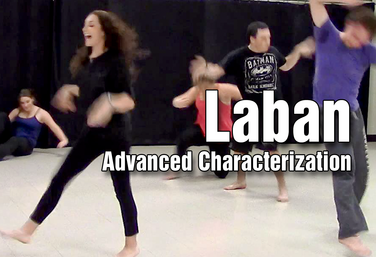
This is an advanced acting unit in playing character through the Laban movement technique. Students will explore dance theorist Rudolf Laban’s eight efforts and their component parts; turn these elements into physicalizations through which one can express character; use Laban efforts and connect them to a character’s voice and body; and demonstrate knowledge through the creation of an original character. Reminder: This is an advanced acting unit. You will need students who can do work on their own outside of class time, commit to movement and sound, and commit to making instinctual choices.

View all Standards for British Columbia (2018)    Standards Master List