Facebook Pixel Skip to main content

Ontario, Canada
Grades 9 & 10 - Reflecting, Responding and Analyzing - Connections Beyond the Classroom

7 units • 17 professional development courses aligned to
B.3.2 - identify skills they have developed through drama activities and explain how they can be useful in work and other social contexts (e.g., explain in a journal how their brainstorming and negotiation skills support teamwork in a variety of contexts)
View all Standards for Ontario, Canada

B.3.2 identify skills they have developed through drama activities and explain how they can be useful in work and other social contexts (e.g., explain in a journal how their brainstorming and negotiation skills support teamwork in a variety of contexts)

This page lists 7 units and 17 professional development courses aligned to B.3.2 from the Ontario, Canada. Designed for drama teachers, these resources directly address B.3.2 - identify skills they have developed through drama activities and explain how they can be useful in work and other social contexts (e.g., explain in a journal how their brainstorming and negotiation skills support teamwork in a variety of contexts)

Improv

by Anna Porter

Improv is a fantastic method to engage your students; this 3 lesson mini unit is a great way to introduce improvisation. This unit focuses on learning the rules of Improv, trying games to build improvisation skills, and developing conflict and story line.Through the three lesson series, students will use journals, participate in class discussions, learn six different improv games, and perform for their peers. Assessment tools include both informal assessment as well as a formal quiz that’s included in the unit.

Front of House

by Karen Loftus

This unit looks at theatre jobs in the business category: front of house, marketing, and box office. The aim of these jobs is to interact with the public. Students are able to identify what “front of house” refers to and understand the various roles of a theatre company’s front of house members. Students will also explore how a show is marketed and demonstrate their knowledge of marketing by creating a simple marketing campaign for an original show.

Tools of Scene Work

by Anna Porter

Students are introduced to scene work performance through a simple, contentless scene unit. In this unit, performers will use exercises like “Show and Tell” to learn how to fill in the gaps of a story by creating scenarios and detailed characters with backgrounds. Students will further fill in the gaps by exploring environmental and physical conflict as well as stage business. The lesson “Thou Shalts of Staging” will guide students through basic staging and performance technique.

Commedia dell'Arte

by Todd Espeland

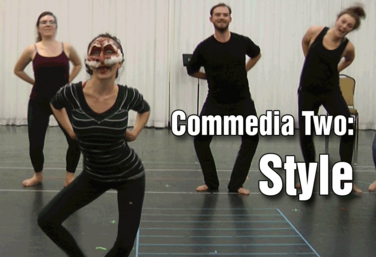
Commedia dell’arte is a 16th century masked acting form. It is the basis of all comedy, including all tv sitcoms. This form is characterized by masked types and archetypical characters and a specific way of playing comedy. To that end, this unit is divided into two parts. Part One focuses on the foundations of commedia - playing comedy. These principles will be important to learn when it comes to developing commedia characters, specifically the physicality of the characters. Part Two will cover lazzi. Note: there are links to video demos in many of the lessons of this unit.

Scene Work: Part 2, Student Self Staging

by Lindsay Price

In Part 2 of Scene Work, students take everything they learned in Part 1 and apply it to the staging of a scene. Students work independently to block, build character, experiment and rehearse a scene. You can continue the scene work process from Part 1, or if your students have a grounding with scene work basics, perhaps they just do Part 2 of this unit.

Scene Work: Part 1, Tools of Scene Work

by Lindsay Price

Students are introduced to scene work performance through a contentless scene unit. Students prepare and perform a contentless scene to demonstrate their understanding of characterization, staging technique, and working with conflict and stage business in a performance context.

Scene Staging

by Lindsay Price

The goal for this unit is to give students a process to work primarily on their own to create a staged scene with specific, dynamic blocking and three-dimensional characters. This unit would work well as a culminating project for a semester. In this unit, students will work independently to analyze, block, build character, experiment, and rehearse a scene. Their performance can count as a summative assessment for the class. Material: This unit requires that students have access to scenes from plays. Ideally, students should work in pairs and prepare duet scenes.

View all Standards for Ontario, Canada    Standards Master List