
Texas Essential Knowledge and Skills for Theatre Arts
HS 117.315 LI - Creative Expression: performance
46 units • 8 professional development courses aligned to
C.2.A - demonstrate safe use of the voice and body.
View all Standards for Texas Essential Knowledge and Skills for Theatre Arts
C.2.A demonstrate safe use of the voice and body.
This page lists 46 units and 8 professional development courses aligned to C.2.A from the Texas Essential Knowledge and Skills for Theatre Arts. Designed for drama teachers, these resources directly address C.2.A - demonstrate safe use of the voice and body.
PD COURSE
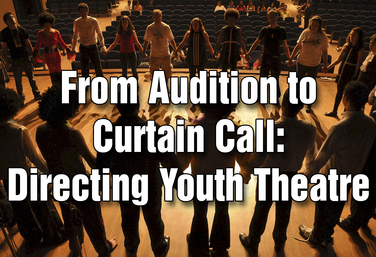
From Audition to Curtain Call: Directing Youth Theatre
by Steven Stack
11 modules
1 hours, 42 minutes
3 Credit Hours
Directing youth theatre can be one of the most thrilling, rewarding, and exhausting jobs there is – because it’s not just about staging a play. It’s about creating an environment that fosters hard work, dedication, trust, and the willingness to take chances, to “play without fear.”
As a writer/teacher/director of youth theatre for over 15 years, I have developed tools and strategies that enable my students and me to focus on the process of creating theatre while fostering an environment that leads to creative freedom and a cohesive groups that doesn't act as individual “stars,” but as a community of one.
In this course, I will share with you these tips and strategies, along with the ways to implement them in your theatre environment.
PD COURSE
The Production Classroom
by Karen Loftus
8 modules
1 hours, 46 minutes
4 Credit Hours
In The Production Classroom, instructor Karen Loftus will show you how to explore ways that you can produce shows during your regular class time. The course gives you a series of exercises and reflections that help you determine everything, from the type of show you may want to do, to the way you can divide up your class and responsibilities, to specific assignments that will keep your students engaged and focused.
The Production Classroom is the ultimate in project-based learning. Students learn to work collaboratively while setting goals and working towards a successful finished project. The course includes exercises and strategies to use with students to help assure their success in the production. Multiple examples and anecdotes help you to envision what the production classroom could look like in your room, performance space or theatre.
PD COURSE
21st Century Skills Through Devising
by Allison Williams
12 modules
1 hours, 18 minutes
4 Credit Hours
Allison Williams leads the course: 21st Century Skills Through Devising. This course covers what devising is, why to do it, how to do it, and how your students can master the 21st Century Skills of collaborations and cooperation, critical thinking, creative thinking through devising.
High school is a great place to try devising with your students. But it’s not something you want to throw at your students without any preparation. Framework is important and this course takes you through a number of exercises you can take into the classroom tomorrow to help build a place of physical safety, a place where students work at making a lot of choices instead of waiting for the perfect choice, and a place where students feel comfortable making creative choices. The material also reviews the process of putting together a show from the idea/research stage to editing, to giving feedback.
Your students have what it takes to create their own material, collaborate with each other, and have a unique theatrical experience!
PD COURSE
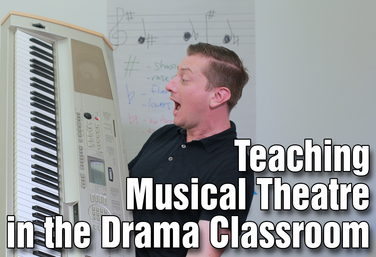
Teaching Musical Theatre in the Drama Classroom
by Colin Oliver
7 modules
1 hours, 51 minutes
4 Credit Hours
Colin Oliver leads this introduction to teaching Musical Theatre in the Drama Classroom.
In this course, you will learn how to build musical theatre into your dramatic courses of study. “Why might you want to do that? Singing is scary! You want me to teach my students how to do it? I don’t even know how to do it.” This course approaches musical theatre preparation performance much as we would approach preparing a monologue in drama. If you use script analysis in monologue preparation in your class, you can teach musical theatre.
By the end of this course, you’ll have a great, full-body physical warm-up, a student-driven research assignment, character development exercises, a little bit of musical theory, and a performance assignment complete with assessment.
So, join us for teaching Musical Theatre in the Drama Classroom. It’s as easy as Do-Re-Mi!
PD COURSE
Practical Approaches to Shakespeare in the Drama Classroom
by Julie Hartley
19 modules
3 hours, 9 minutes
5 Credit Hours
Shakespeare is one of the greatest resources a drama teacher can have: scenes packed with action; opportunities to explore comedy and physical theatre; rich themes and characters to act as springboards for devised theatre; the chance to work with our language at its finest and – most importantly – ideas that relate directly to the experiences and preoccupations of students.
Yet Shakespeare isn’t easy. The language can seem dense, and finding a way in can be tough – especially for drama teachers who have not themselves studied Shakespeare. That’s the goal of this course – to help teachers find a way in.
This course presents teachers with as many ways in to the exploration of Shakespeare as possible. Action scenes, themes, characters, different theatre styles, and devised theatre projects. Students will be armed with the tools they need to begin individually exploring monologues, or working together on scenes.
PD COURSE
Exploring Viewpoints
by Erin Carr
11 modules
3 hours, 28 minutes
5 Credit Hours
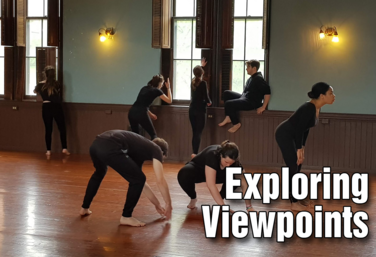
Viewpoints is used to create dynamic moments of theatre by simply existing on the stage. However, Viewpoints is more than just an acting technique to understand your own physicality and more than a directing technique to create “ah-ha!” moments on stage. It is first and foremost the philosophy that to create an organic performance, you must see obstacle as opportunity, and that by simply standing in space, your creativity can spark.
This course by Erin Carr will help your students discover fresh impulses that motivate their performance in the moment. We will go through the Viewpoints technique, as created by Mary Overlie, and learn how to tap into kinesthetic awareness as individuals and as an ensemble. Through this style of play, students learn to release their thoughts on what they “should” do, and instead just respond organically to their surroundings and ensemble!
We’re going to break down each of the Viewpoints, there’s lots of visual demonstration, so you can see each Viewpoint in action, and I’m going to provide tips and side coaching examples.
PD COURSE
Mindfulness & Wellness in the Drama Classroom
by Claire Broome
13 modules
3 hours, 30 minutes
5 Credit Hours
In this course, instructor Claire Broome shares what mindfulness is, and why it is so important in the Drama Classroom. The course covers how mindfulness and wellness can help both students and teachers.
Claire discusses how to prepare students for this kind of learning, and provides various activities to bring into your classroom, as well as a variety of extensions for these activities that can be applied to character creation and possible projects.
PD COURSE
Tech Knowledge: Integrating Tech Throughout Your Rehearsal Process
by Claire Broome
17 modules
1 hours, 52 minutes
3 Credit Hours
This course will help you integrate technical theatre earlier in the creative process to help reduce the stress of tech week, and make sure you have what you need before choosing a show. We will explore how to include your technical theatre team from day one and will help you have an easier experience throughout the rehearsal process and final performances.
View all Standards for Texas Essential Knowledge and Skills for Theatre Arts Standards Master List