
British Columbia (2018)
GRADE 9 - DRAMA - Communicating and documenting
31 units • 11 professional development courses aligned to
Compose, interpret, and expand ideas using symbolism, imagery, and elements
View all Standards for British Columbia (2018)
Compose, interpret, and expand ideas using symbolism, imagery, and elements
This page lists 31 units and 11 professional development courses aligned to from the British Columbia (2018). Designed for drama teachers, these resources directly address Compose, interpret, and expand ideas using symbolism, imagery, and elements

PD COURSE
The Top Ten Playwriting Exercises
by Lindsay Price
11 modules
3 hours, 1 minutes
6 Credit Hours
The Top Ten Playwriting Exercises Course not only gives you ten great exercises to ease your students into the playwriting waters, it's also going to give you the confidence to teach playwriting to your students.
Each exercise comes with instruction, why the exercise is important, how to assess the exercise and something specific for you to try.
Many of the modules include assignments and rubrics so you will be fully prepared to comprehend, apply and teach every these exercises.
PD COURSE
The Production Classroom
by Karen Loftus
8 modules
1 hours, 46 minutes
4 Credit Hours
In The Production Classroom, instructor Karen Loftus will show you how to explore ways that you can produce shows during your regular class time. The course gives you a series of exercises and reflections that help you determine everything, from the type of show you may want to do, to the way you can divide up your class and responsibilities, to specific assignments that will keep your students engaged and focused.
The Production Classroom is the ultimate in project-based learning. Students learn to work collaboratively while setting goals and working towards a successful finished project. The course includes exercises and strategies to use with students to help assure their success in the production. Multiple examples and anecdotes help you to envision what the production classroom could look like in your room, performance space or theatre.
.png)
PD COURSE
Shakespeare's Toolkit
by Todd Espeland
9 modules
3 hours, 3 minutes
6 Credit Hours
Todd Espeland has the experience to know that having more tools in your toolbox makes you a better actor. This is especially important when teaching students how to approach Shakespeare. They need help breaking through the language barrier and into the character’s needs and into the character’s thoughts.
The tools that you’ll receive in this course will do just that. The course looks at scansion as a tool for breaking down Shakespeare’s verse, the importance of end of lines, and caesura. Caesura is an inner-line pause which is a lot of fun to play with and really, helps us provide insight to the character’s thoughts and into their needs.
The course provides numerous examples and handouts, and culminates in a performance assignment to use with your students.
PD COURSE
The Process of Creativity in the Theatre Classroom
by Gai Jones
6 modules
2 hours, 38 minutes
5 Credit Hours
Gai Jones leads this course in establishing an environment of creative experimentation in the theatre classroom, in order to have a group of student actors who value the creative process.
Each lesson shares experiences to foster creativity without the stress of performance by student actors. For the creative process which honors out-of-the-box thinking, there is no assessment section included. There is no product or performance. The important thing is the student actor’s engagement. Their reflections and your observations are valued for positive learning.
This set of lessons includes Tips for the Theatre Educator, based on Gai's own Theatre practice. Scripts are also provided and contain text of what you can say to your students to facilitate their creative processes.
PD COURSE
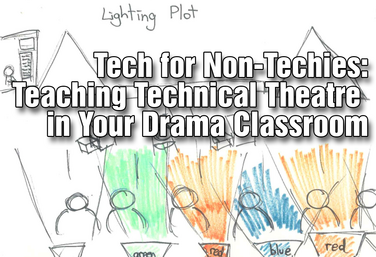
Tech for Non-Techies: Teaching Technical Theatre in Your Drama Classroom
by Josh Hatt
10 modules
3 hours, 23 minutes
7 Credit Hours
In this course, instructor Joshua Hatt shows you how to unpack your drama standards, articulate what you want your students to know and be able to do. The material explores how to incorporate lights, sound, makeup, staging, and costuming into your drama class at any grade level regardless of your school resources or unit structure. Bells and whistles? Awesome! Barely a classroom? We’ve still got you covered.
This 9 lesson series works from the basics and standards, though lighting, sound, costuming, staging, and makeup design, and culminates with a final project including rubrics, resources, and handouts.
A wise theatre technician once said: “the theatre mirrors life but technical theatre teachers us how to live.” Try to keep that statement in mind as you work through this course and see if we can make you a believer in all things technical theatre.
PD COURSE
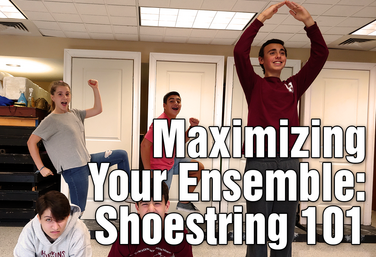
Maximizing Your Ensemble: Shoestring 101
by Michael Calderone
8 modules
2 hours, 53 minutes
4 Credit Hours
This seven-part series is designed to transform that gaggle of actors cluttering your backstage from cumbersome extras into nothing less than the very center of your production.
Instructor Michael Calderone leads this course, through games and exercises geared to maximize your ensemble for your next production. These lessons are based on the ensemble technique that he's been using for the last 30 years, called the shoestring method.
The ensemble has a responsibility to work as one, and no role is more important than another. Without each actor playing their part, the other actors cannot tell the story to the best of their abilities. So join Michael in learning more about this exciting, practical and dramatic method.
PD COURSE
Director's Toolbox 2: Teaching Students to Direct
by James Van Leishout
8 modules
2 hours, 47 minutes
4 Credit Hours
Director’s Toolbox 2: Teaching Students to Direct, explores the tools of the actor, rehearsal, space, and design.
The tool of the actor will focus on creating a safe place to play, auditions, and how to communicate with actors.
Rehearsals will look at the whole process from the first meeting to opening night.
The tool of space will explore how to direct in different spaces and how to create focus through stage composition.
Discover how an understanding of the elements of design help student-directors communicate with designers. The final step is a return to self and the mastery of self evaluation.

PD COURSE
Get Students to Embrace Failure in the Drama Classroom
by Lindsay Price
5 modules
38 minutes
1 Credit Hour
This course by Lindsay Price explores strategies you can use to encourage students to embrace failure rather than see it as a point of shame or something to hide from.
Our goal for students is to embrace a try/fail/try again/fail/try again/succeed formula. Each module in this course comes with exercises and activities that you’ll be able to take into the classroom right away.
It’s one thing to talk about embracing failure, it’s another to give students practical tools to help them achieve that goal. Join Lindsay in getting students to embrace failure in the drama classroom as we look at Failure from a Yes! perspective.
PD COURSE
Director's Toolbox 1: Teaching Students to Direct
by James Van Leishout
8 modules
2 hours, 12 minutes
3 Credit Hours
In this course, James Van Leishout explores why students should direct, and covers the first two tools in the director’s toolbox: self and the script. What background should every director have? Why should they learn to love research? What should happen in the first four reads of a script?
With every step along the way, there will be exercises and activities your student directors can take on before they step into the rehearsal process.
PD COURSE
Introduction to Teaching Mask: 2nd Edition
by Allison Williams
13 modules
2 hours, 13 minutes
6 Credit Hours
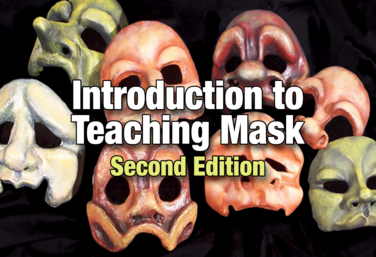
In Introduction to Teaching Mask: 2nd Edition, Allison Williams gives you a toolkit of mask and movement exercises to teach students to make big, confident physical choices, to work in their bodies, and play different characters - masked and unmasked.
By working through the exercises in this course, you, the teacher, will also gain an understanding of basic physical acting and learn some easy specific tools to coach your students – not just in mask, but in all their performance work.
Access to masks is required, but previous experience with masks is not.
PD COURSE
Tech Knowledge: Integrating Tech Throughout Your Rehearsal Process
by Claire Broome
17 modules
1 hours, 52 minutes
3 Credit Hours
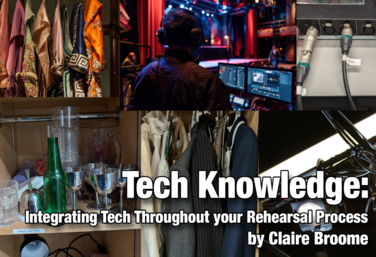
This course will help you integrate technical theatre earlier in the creative process to help reduce the stress of tech week, and make sure you have what you need before choosing a show. We will explore how to include your technical theatre team from day one and will help you have an easier experience throughout the rehearsal process and final performances.
View all Standards for British Columbia (2018) Standards Master List