Facebook Pixel Skip to main content

Florida Sunshine State Standards
Innovation, Technology & the Future

36 units • 18 professional development courses aligned to
TH.912.F.1.1 - Synthesize research, analysis, and imagination to create believable characters and settings.
View all Standards for Florida Sunshine State Standards

TH.912.F.1.1 Synthesize research, analysis, and imagination to create believable characters and settings.

This page lists 36 units and 18 professional development courses aligned to TH.912.F.1.1 from the Florida Sunshine State Standards. Designed for drama teachers, these resources directly address TH.912.F.1.1 - Synthesize research, analysis, and imagination to create believable characters and settings.

From Audition to Curtain Call: Directing Youth Theatre

by Steven Stack

11 modules 1 hours, 42 minutes 3 Credit Hours
Directing youth theatre can be one of the most thrilling, rewarding, and exhausting jobs there is – because it’s not just about staging a play. It’s about creating an environment that fosters hard work, dedication, trust, and the willingness to take chances, to “play without fear.” As a writer/teacher/director of youth theatre for over 15 years, I have developed tools and strategies that enable my students and me to focus on the process of creating theatre while fostering an environment that leads to creative freedom and a cohesive groups that doesn't act as individual “stars,” but as a community of one. In this course, I will share with you these tips and strategies, along with the ways to implement them in your theatre environment.

Friendly Shakespeare

by Todd Espeland
9 modules 2 hours, 5 minutes 4 Credit Hours
Friendly Shakespeare teaches a simple and effective method of script analysis for Shakespeare. It uses punctuation and keywords in the text to help students understand the characters' needs, make specific acting choices, and get them on their feet immediately. This is not dry, sitting in a classroom discussion. It’s physicalizing the text, focusing on the character’s needs and tactics (something every drama student should know full well) and bringing Shakespeare to life. At the end of the class you will be able to demystify Shakespeare's text and understand how to help your actors make clear, active and emotionally connected choices in Shakespeare's plays.

Strong Ensemble = Strong Play

by Craig Mason

5 modules 1 hours, 8 minutes 2 Credit Hours
This mini-course will give you a toolkit to bring your shows to the next level by having an engaged, active, ensemble. The ensemble is a critical part of a large cast show. But you can't leave them to fend for themselves. They need structure. They need exercises and activities. In Strong Ensemble = Strong Play, you'll be given ensemble-building exercises. You'll also discover specific activities that will help your ensemble become three-dimensional characters who have something to do and something to play in every moment they are on stage. We'll look at case studies that take the exercises learned in the course and apply them to specific shows.

The Top Ten Playwriting Exercises

by Lindsay Price
11 modules 3 hours, 1 minutes 6 Credit Hours
The Top Ten Playwriting Exercises Course not only gives you ten great exercises to ease your students into the playwriting waters, it's also going to give you the confidence to teach playwriting to your students. Each exercise comes with instruction, why the exercise is important, how to assess the exercise and something specific for you to try. Many of the modules include assignments and rubrics so you will be fully prepared to comprehend, apply and teach every these exercises.

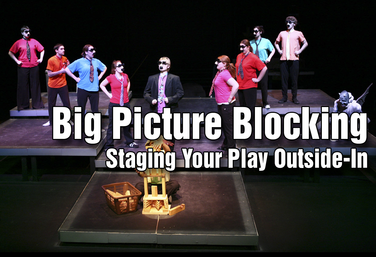
Big Picture Blocking: Staging Your Play Outside-In

by Todd Espeland
10 modules 2 hours, 3 minutes 6 Credit Hours
Working in educational theatre I know how easy it is to get bogged down in actor coaching and away from the bigger picture storytelling when directing a show. I saw a need for a method of text analysis and physical staging tools that help the director stay focused on the bigger picture of telling the story of the play. This class is in two parts: The first consists of the text analysis tools P.A.S.T.O and Major Dramatic Question. From these tools you will brainstorm keywords to define your vision of the story. In the second part of the class you will focus on taking the information generated in the text analysis and crafting the ideas into vibrant physical pictures through an exercise called Starburst.

Working With Monologues For Rehearsal And Development

by Gai Jones
11 modules 2 hours, 9 minutes 4 Credit Hours
In "Working With Monologues For Rehearsal And Development" you will develop ten sessions of study on monologues. The study contains the definition and history of the monologue; monologue vocabulary; analysis of a practice monologue, staging a short monologue; working with musical theatre lyrics as a monologue; writing short autobiographical monologues. At the end of this course, you will have a curriculum which can be used as introduction to monologue work.

The Production Classroom

by Karen Loftus
8 modules 1 hours, 46 minutes 4 Credit Hours
In The Production Classroom, instructor Karen Loftus will show you how to explore ways that you can produce shows during your regular class time. The course gives you a series of exercises and reflections that help you determine everything, from the type of show you may want to do, to the way you can divide up your class and responsibilities, to specific assignments that will keep your students engaged and focused. The Production Classroom is the ultimate in project-based learning. Students learn to work collaboratively while setting goals and working towards a successful finished project. The course includes exercises and strategies to use with students to help assure their success in the production. Multiple examples and anecdotes help you to envision what the production classroom could look like in your room, performance space or theatre.

Teaching Musical Theatre in the Drama Classroom

by Colin Oliver
7 modules 1 hours, 51 minutes 4 Credit Hours
Colin Oliver leads this introduction to teaching Musical Theatre in the Drama Classroom. In this course, you will learn how to build musical theatre into your dramatic courses of study. “Why might you want to do that? Singing is scary! You want me to teach my students how to do it? I don’t even know how to do it.” This course approaches musical theatre preparation performance much as we would approach preparing a monologue in drama. If you use script analysis in monologue preparation in your class, you can teach musical theatre. By the end of this course, you’ll have a great, full-body physical warm-up, a student-driven research assignment, character development exercises, a little bit of musical theory, and a performance assignment complete with assessment. So, join us for teaching Musical Theatre in the Drama Classroom. It’s as easy as Do-Re-Mi!

Beyond the Basics: Rehearsal Strategies to Grow Your Actors

by Julie Hartley
16 modules 3 hours, 3 minutes 5 Credit Hours
The focus of the teacher-director should be not only on the quality of the show, but on the value of the experience offered to student actors. This course takes you on this journey through practical rehearsal strategies that apply an ensemble approach. This course starts with those all important first rehearsals, explores warm ups, and looks at character development. We examine specific types of plays, like classical texts and comedy, and conclude with strategies to solve common rehearsal problems. Go beyond the basics!

Play Adaptation Project

by Lindsay Price
6 modules 44 minutes 2 Credit Hours
Adaptation is a fabulous classroom project: it requires students to analyze, adapt, modify, plan synthesize, devise. All the higher order thinking skills. But you can’t just throw a narrator into a script and call it a day. You have to have a preparation process leading up to the writing process. In this course you will learn practical exercises and a path to prepare your students to take on their own adaptation project. We’ll look at the guidelines to adaptation, things to think about when choosing a text, how to analyze the source material and writing that first draft. So join me, Lindsay Price, in the Play Adaptation Project.

The Dilemma Project

by Claire Broome

16 modules 1 hours, 29 minutes 3 Credit Hours
Moral dilemmas are not only faced by characters in gripping plays, but are also faced by our students. The project outlined in this course will help students develop their critical thinking skills through the use of one of the dilemma questions to shape a student written production. If you had the choice to press a button and earn $25,000,000... but a species (not of your choosing) would become extinct, what would you do? More importantly, what would your character do? Join drama teacher and playwright Claire Broome through this course which includes role-playing, Stanislavski’s Magic If, character creation, playwriting and staging.

How to Give Feedback to Student Playwrights

by Nicholas Pappas
6 modules 1 hours, 23 minutes 3 Credit Hours
The two big questions we’re going to answer in this course are: What is feedback? And, What is useful feedback? Now, if you asked a hundred people to answer these two questions, you’ll likely get a hundred different answers, but at its core, all the answers will focus on giving notes that will improve the work, which, in this case, is our student’s plays. And, as a teacher, that’s what your hope is, right? To help your students improve as writers, one work at a time. We want our students to write, and to grow through their writing. If we want our students to get better, we need to get better. Understanding the definition of feedback, and understanding how to provide useful feedback is the key to all of us getting better. Join Nick Pappas in this course designed to give you the tools to help your student writers find their voice.

Introduction to Teaching Mask: 2nd Edition

by Allison Williams

13 modules 2 hours, 13 minutes 6 Credit Hours
In Introduction to Teaching Mask: 2nd Edition, Allison Williams gives you a toolkit of mask and movement exercises to teach students to make big, confident physical choices, to work in their bodies, and play different characters - masked and unmasked. By working through the exercises in this course, you, the teacher, will also gain an understanding of basic physical acting and learn some easy specific tools to coach your students – not just in mask, but in all their performance work. Access to masks is required, but previous experience with masks is not.

Playwriting Outside the Lines

by Steven Stack
6 modules 1 hours, 34 minutes 3 Credit Hours
Instructor Steven Stack leads this course in a unique way to teach playwriting. He will show you how to set foundations and guide posts for your students, and then give them freedom to play. The intent is to help students develop their own voice and create for creating sake. The 5 modules lead teachers through how to use this style of teaching playwriting, and includes handouts and resources to support the learning.

Tech Knowledge: Integrating Tech Throughout Your Rehearsal Process

by Claire Broome
17 modules 1 hours, 52 minutes 3 Credit Hours
This course will help you integrate technical theatre earlier in the creative process to help reduce the stress of tech week, and make sure you have what you need before choosing a show. We will explore how to include your technical theatre team from day one and will help you have an easier experience throughout the rehearsal process and final performances.

Creating the Ensemble-Based Classroom

by Gai Jones
5 modules 2 hours, 12 minutes 4 Credit Hours
Gai Jones will help you establish an ensemble-based environment from the first day of class or rehearsal. Learn how to set up your ensemble-based classroom from day one, get students to set classroom norms, and find the balance between creative activity and structure. You’ll learn how to give your students creative freedom through structure and classroom management. The cornerstone of this course are the detailed ensemble experiences from large group to small group and even individual experiences. This course culminates in a devising model that you can use with your students, and takes you through process, product, performance and an evaluation. You too can create the ensemble-based classroom.

21st Century Skills Through Devising

by Allison Williams

12 modules 1 hours, 18 minutes 4 Credit Hours
Allison Williams leads the course: 21st Century Skills Through Devising. This course covers what devising is, why to do it, how to do it, and how your students can master the 21st Century Skills of collaborations and cooperation, critical thinking, creative thinking through devising. High school is a great place to try devising with your students. But it’s not something you want to throw at your students without any preparation. Framework is important and this course takes you through a number of exercises you can take into the classroom tomorrow to help build a place of physical safety, a place where students work at making a lot of choices instead of waiting for the perfect choice, and a place where students feel comfortable making creative choices. The material also reviews the process of putting together a show from the idea/research stage to editing, to giving feedback. Your students have what it takes to create their own material, collaborate with each other, and have a unique theatrical experience!

Shakespeare's Toolkit

by Todd Espeland

9 modules 3 hours, 3 minutes 6 Credit Hours
Todd Espeland has the experience to know that having more tools in your toolbox makes you a better actor. This is especially important when teaching students how to approach Shakespeare. They need help breaking through the language barrier and into the character’s needs and into the character’s thoughts. The tools that you’ll receive in this course will do just that. The course looks at scansion as a tool for breaking down Shakespeare’s verse, the importance of end of lines, and caesura. Caesura is an inner-line pause which is a lot of fun to play with and really, helps us provide insight to the character’s thoughts and into their needs. The course provides numerous examples and handouts, and culminates in a performance assignment to use with your students.

View all Standards for Florida Sunshine State Standards    Standards Master List