Facebook Pixel Skip to main content

British Columbia (2018)
GRADE 7 - ARTS - Reasoning and reflecting

49 units • 16 professional development courses aligned to
Reflect on works of art and creative processes to understand artists’ intentions

View all Standards for British Columbia (2018)

Reflect on works of art and creative processes to understand artists’ intentions

This page lists 49 units and 16 professional development courses aligned to from the British Columbia (2018). Designed for drama teachers, these resources directly address Reflect on works of art and creative processes to understand artists’ intentions

Friendly Shakespeare

by Todd Espeland

9 modules 2 hours, 5 minutes 4 Credit Hours
Friendly Shakespeare teaches a simple and effective method of script analysis for Shakespeare. It uses punctuation and keywords in the text to help students understand the characters' needs, make specific acting choices, and get them on their feet immediately. This is not dry, sitting in a classroom discussion. It’s physicalizing the text, focusing on the character’s needs and tactics (something every drama student should know full well) and bringing Shakespeare to life. At the end of the class you will be able to demystify Shakespeare's text and understand how to help your actors make clear, active and emotionally connected choices in Shakespeare's plays.

Copyright for Drama Teachers

by Craig Mason
9 modules 2 hours, 24 minutes 5 Credit Hours
An in-depth and interactive look at copyright as it applies to school theatre programs. Learn about how works become copyrighted, how long it lasts, how to get permission to use copyrighted work, and more.

The Do-it-All Director's Introduction to Costuming

by Holly Beardsley
10 modules 2 hours, 12 minutes 4 Credit Hours
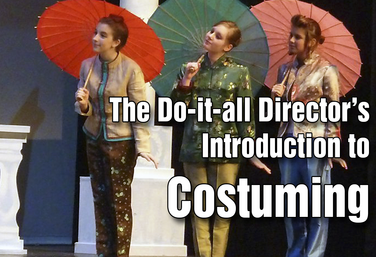
Do you know the difference between a bustle and a buckram frame? Or what works best as an emergency hem? Some directors are blessed with a big budget and a full support staff—a choreographer, a set designer, and a costumer. But the drama teacher often becomes director, choreographer, set designer, and costumer all in one. And a budget? What’s a budget? The Do-It-All Director’s Introduction to Costuming will give you, the director, who must do it all, the confidence and skills to costume and direct, no matter your experience or budget. This course will teach you costuming basics, budget tricks, organization, and most importantly, the art of costuming as a director.

Close Reading in the Drama Classroom

by Lindsay Price
11 modules 3 hours, 38 minutes 7 Credit Hours
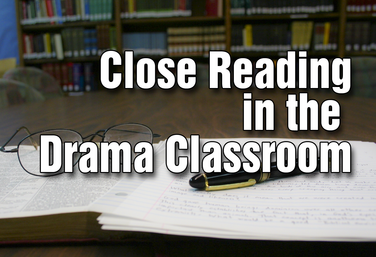
Close reading is an activity that puts curriculum standards into practice and it can be easily applied to the drama classroom. Close reading asks a lot of your students. They have to read and think at the same time. This course teaches drama teachers how the close reading process works, and gives them exercises and tools to apply it in the classroom.

Google Drive in the Drama Classroom

by Josh Hatt
10 modules 1 hours, 21 minutes 3 Credit Hours
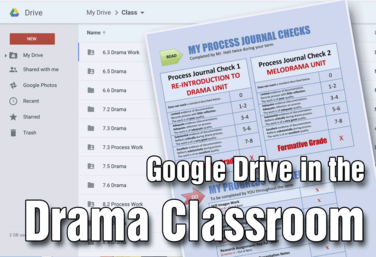
Instructor Joshua Hatt has taught drama students all over the world. He is passionate about the power of drama to connect people and the importance of reflection and journaling to build creative, critical thinkers. He started using Google Drive as a response to the frustration of having his students lose curriculum booklets time and time again. His work developed into a powerful online home whereby students and teachers can communicate, contribute, collaborate, edit, and house all their documents online. In this course, Josh will show you how to use Google Drive and Slides in your drama classroom. He's included step-by-step guided instruction, as well as activities to help you solidify your knowledge. Your drama classroom will be forever transformed!

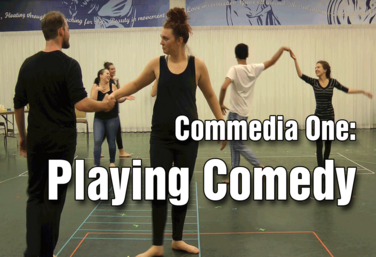
Commedia I: Playing Comedy

by Todd Espeland
8 modules 2 hours, 31 minutes 7 Credit Hours
Commedia dell’arte is a 16th Century masked acting form. It’s the basis of all comedy and it’s a form that many teachers want to include in their curriculum. Instructor Todd Espeland has designed two courses that work hand-in-hand with teaching this fantastic physical form. In Commedia I: Playing Comedy - Todd teaches the principles of comedy through four key elements: status, appetite, swing, and intention/invention. This course provides an excellent foundation upon which to explore Commedia to its fullest. Includes bonus videos, handouts, reflections, and exit slip question ideas for each lesson.

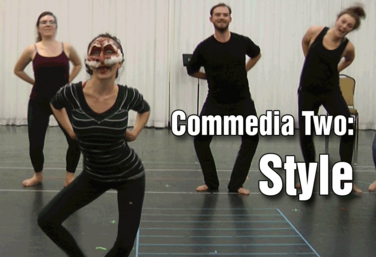
Commedia II: Style

by Todd Espeland

11 modules 2 hours, 31 minutes 7 Credit Hours
Commedia dell’arte is a 16th Century masked acting form. It’s the basis of all comedy and it’s a form that many teachers want to include in their curriculum. Instructor Todd Espeland has designed two courses that work hand-in-hand with teaching this fantastic physical form. In Commedia II: Style - Todd moves on to the specific style of Commedia dell’arte. This includes a history of commedia, the stock characters and how to physicalize them, sample lazzi and a capstone assignment. The course includes video demonstrations so you can see the exercises and activities in action.

Shakespeare's Toolkit

by Todd Espeland
9 modules 3 hours, 3 minutes 6 Credit Hours
Todd Espeland has the experience to know that having more tools in your toolbox makes you a better actor. This is especially important when teaching students how to approach Shakespeare. They need help breaking through the language barrier and into the character’s needs and into the character’s thoughts. The tools that you’ll receive in this course will do just that. The course looks at scansion as a tool for breaking down Shakespeare’s verse, the importance of end of lines, and caesura. Caesura is an inner-line pause which is a lot of fun to play with and really, helps us provide insight to the character’s thoughts and into their needs. The course provides numerous examples and handouts, and culminates in a performance assignment to use with your students.

Screenplays 101 - Part 1: Basic Structure

by Nicholas Pappas
8 modules 1 hours, 22 minutes 3 Credit Hours
Screenwriter Nick Pappas leads a two-part course on screenplays 101. Great scriptwriting is not something that can be covered in a single course: so we're going to start with the basics. Those basics are going to be split up into a Part 1 and a Part 2. Part 1, this course, will concentrate on basic film structure. Part 2 will concentrate on screenplay formatting. By the end of this course, students should have a basic understanding of history, terminology, and are able to identify the barest bones of the three-act structure, all with an eye toward developing their own screenplay.

Screenplays 101 - Part 2: Basic Formatting

by Nicholas Pappas
9 modules 1 hours, 34 minutes 3 Credit Hours
This course is a Part 2. In a Screenplays 101 course, screenwriter Nick Pappas covers both Structure and Formatting. Here in Part 2 we'll cover Basic Formatting. If you have not already watched Screenplays 101 – Part 1: Basic Structure, I highly recommend you go back and do so now. Having that knowledge under your belt will help you navigate Part 2 of this course. The goal is that, by the end of this course, your students have a basic understanding of how a screenplay is formatted and why it is formatted that way, all with an eye toward developing their own screenplay.

From Audition to Curtain Call: Directing Youth Theatre

by Steven Stack
11 modules 1 hours, 42 minutes 3 Credit Hours
Directing youth theatre can be one of the most thrilling, rewarding, and exhausting jobs there is – because it’s not just about staging a play. It’s about creating an environment that fosters hard work, dedication, trust, and the willingness to take chances, to “play without fear.” As a writer/teacher/director of youth theatre for over 15 years, I have developed tools and strategies that enable my students and me to focus on the process of creating theatre while fostering an environment that leads to creative freedom and a cohesive groups that doesn't act as individual “stars,” but as a community of one. In this course, I will share with you these tips and strategies, along with the ways to implement them in your theatre environment.

Laban: Advanced Characterization

by Todd Espeland
9 modules 2 hours, 5 minutes 8 Credit Hours
Learn about the Laban system to teach your students to physically and vocally discover character. This is an advanced course, which means that the course goes deep into exploring character and exploring character work through the work of Rudolph Laban.

Practical Approaches to Shakespeare in the Drama Classroom

by Julie Hartley

19 modules 3 hours, 9 minutes 5 Credit Hours
Shakespeare is one of the greatest resources a drama teacher can have: scenes packed with action; opportunities to explore comedy and physical theatre; rich themes and characters to act as springboards for devised theatre; the chance to work with our language at its finest and – most importantly – ideas that relate directly to the experiences and preoccupations of students. Yet Shakespeare isn’t easy. The language can seem dense, and finding a way in can be tough – especially for drama teachers who have not themselves studied Shakespeare. That’s the goal of this course – to help teachers find a way in. This course presents teachers with as many ways in to the exploration of Shakespeare as possible. Action scenes, themes, characters, different theatre styles, and devised theatre projects. Students will be armed with the tools they need to begin individually exploring monologues, or working together on scenes.

The Empathetic Classroom

by Steven Stack

8 modules 2 hours, 6 minutes 4 Credit Hours
Why should you take a class on empathy? And why is theatre the perfect vehicle for empathy? Empathy, the more sought-after and inclusive cousin of sympathy, is the experiencing of someone else’s experience in the world. What it would be like if you were wearing their clothes, their life? Teaching students to understand the clothes that they’re putting on, the characters and their lives teaches students not how to act but how to be. It allows the students to feel what someone else feels and experiences, which can and should translate to their fellow actors and peers away from the stage. It will lead to a stronger class connection, stronger performances and stronger students who will seek out understanding instead of isolation and fear.

Empathy 2.0

by Steven Stack

7 modules 1 hours, 30 minutes 3 Credit Hours
Brought to you by instructor Steven Stack, creator of The Empathetic Classroom, this course looks at ways to move on from the worldwide pandemic, while honoring the past and learning from it. In the past year, students had many things taken from them: school, hanging out with friends, freedom, hope, and innocence. With this course, each session will highlight one specific topic relating to moving on. There will also be activities for each session that will help your students own the past, embrace their own and others’ narratives and scars, create a stronger classroom community, find ways to be where their feet are planted, and learn to play again.

Soft Skills, The Tangible Value of the Drama Curriculum

by Matt Webster

6 modules 48 minutes 2 Credit Hours
This course is about the fact that so-called soft skills are sought after and highly valued in professional work environments, educational settings, and in everyday social interactions. They're valuable life skills, but we can't always identify these skills within a standard educational setting, and yet, they are incredibly useful in education and beyond. That's why it's important to be able to identify these soft skills in the classroom and in the educational process and to recognize that these soft skills are being taught every day in the drama curriculum. We need to concentrate our efforts into making sure that these skills are identified and utilized within our classrooms. They are built into every arts curriculum a school offers, especially the theater arts.

View all Standards for British Columbia (2018)    Standards Master List