Facebook Pixel Skip to main content

North Carolina Essential Standards 2010
Proficient High School Standards - Aesthetics

31 units • 12 professional development courses aligned to
P.AE.1.2 - Apply working knowledge to solve problems in the major technical elements, such as sound, lights, set, and costumes, for formal or informal audiences.

View all Standards for North Carolina Essential Standards 2010

P.AE.1.2 Apply working knowledge to solve problems in the major technical elements, such as sound, lights, set, and costumes, for formal or informal audiences.

This page lists 31 units and 12 professional development courses aligned to P.AE.1.2 from the North Carolina Essential Standards 2010. Designed for drama teachers, these resources directly address P.AE.1.2 - Apply working knowledge to solve problems in the major technical elements, such as sound, lights, set, and costumes, for formal or informal audiences.

Drama One Final Project

by Karen Loftus

The final project will incorporate multiple areas that students have studied over the course of the year/semester: playwriting, acting, scenic design, and marketing. They are putting everything they’ve learned into a final package, including writing, rehearsing, and performing.

Theatre of the Absurd

by Lea Marshall

WARNING: This unit is ABSURD. However, instructor Lea Marshall decided to do something really ABSURD with the unit, which was make it a bit more predictable. First, the unit takes two lessons to go over the Historical and Philosophical background of Theatre of the Absurd. It starts with just a visual exercise to really bring students into the emotional bleakness of the landscape and then group work to look at some of the other foundational elements that will drive the Absurdist movement into the Theatres. Next, students break down absurd scripts into some “recognizable” elements of language, plot structure, acting choices, and storyline. With each lesson that introduces an Absurdist Element, there is an opportunity for students to “play” with the element. Then, students explore the element through an Absurdist text. This will help familiarize the students with the 4 Absurdist scripts used in the unit. These bite sized forays into the scripts will help students to choose a script to fully immerse themselves in for the final project. As a final project, students will choose one script to work with, and choose the format of their project (performance, costume or set design, or playwright).

Sound

by Josh Hatt

This is an introductory mini-unit to sound that you can use whether or not you have a sound system. Students will work toward being able to demonstrate their knowledge of sound effectiveness. The questions of the unit include: What is effective sound? What sounds and music do we need in order to make our scene effective? How will we know our sound cues are effective?

Costuming

by Josh Hatt

If the costumes in a play are going to be effective, we need to be thoughtful about how we use them. In this mini-unit, students will demonstrate their understanding costume effectiveness and address the following questions: What is the role of costume in the performance? How does color contribute? How does the style of costume affect a performance? How does costume indicate setting? Do you need costumes in a scene?

Staging

by Josh Hatt

This is a mini-unit on staging. Along with the driving question for the unit, students will explore about how staging affects the performance. Students will draw a plot design (ground plan) to emphasize the need to plan where scenic elements will be placed. They will also practice taking cues from the script, in order to create staging.

Free Play Makeup

by Josh Hatt

This is a student centred mini-unit on makeup design. Makeup is useful in transporting an audience to a different world. The purpose is for students to understand that makeup is a tool that theatre technicians can use in order to contribute to effective performance aesthetics; to understand basic makeup rules and care instruction; to understand how to complete a makeup design plot; to look at a project and figure out for themselves what they need to succeed.

Culminating Project

by Josh Hatt

Once students have completed the five Tech Theatre Units (Lighting, Sound, Costume, Staging, Free Play Makeup), you can give them this culminating project. Depending on how you structured your technical theatre unit, you can adapt this project to suit your needs and context. Up to this point, all the work in the units have been exploratory. This is where students will apply their skills and knowledge.

Stage Management

by Karen Loftus

A unit on stage management is a great way to link technical theatre, acting, and even directing. We spend so much of our class time on performance-related projects and, when we do address technical theatre, we often do so by talking about design. Why not introduce your students to a skill set that not only benefits your productions by ensuring a strong backstage crew and smooth production process, but also benefits the students individually? Through exploring stage management, students learn skills such as analytical thinking, organization, teamwork, and problem solving.

Production Classroom Units Overview

by Karen Loftus

The overview lays out the all of the parts of The Production Classroom Units - which is divided into three parts. In Part One, you’ll take your students through a series of pre-production units designed to help students gain as much comprehension as possible about putting on a successful production. Part Two offers articles on each step in the process, samples and forms, a suggested pacing, role definitions and task checklists, an outline for a typical class, as well as performance duties. This section also outlines the assessment piece for The Production Classroom – the production binder. Part Three provides a Post-Performance Reflection. Unpack the experience with students, reflect back on what went right and what could be changed for next time. A written Reflection is included as well as a Rubric for student production binders.

Part One - Pre-Production

by Karen Loftus

In Part One of The Production Classroom, you’ll take your students through a series of pre-production units designed to help students gain as much comprehension as possible about putting on a successful production.

Part Two - Rehearsal and Performance

by Karen Loftus

Part Two offers articles on each step in the process, samples and forms, a suggested pacing, role definitions and task checklists, an outline for a typical class, as well as performance duties. This section also outlines the assessment piece for The Production Classroom – the production binder.

Part Two - Documents

by Karen Loftus

This section provides samples and worksheets for actor forms, costume department, general binder, lighting and sound, marketing samples, scenic and prop samples, and stage management and production manager samples and forms.

Part Three - Reflection and Assessment

by Karen Loftus

Part Three provides a Post-Performance Reflection. Unpack the experience with students, reflect back on what went right and what could be changed for next time. A written Reflection is included as well as a Rubric for student production binders.

Introduction to Set Design *Hyperdoc

by Lea Marshall

The purpose of this unit is to give students an introduction to independent learning as well as an overview of Set Design. Students will apply their knowledge throughout, and the unit culminates in a group activity. This unit is delivered in hyperdoc format. What does that mean? A hyperdoc is an interactive tool that encourages digital learning. In this case, students are given a document on a subject, and there they can read articles, watch videos, do some independent research, and apply what they’ve learned. Because they’re working on their own, students are in charge of their own pacing. Before you start the unit, ensure you read the Teacher Guide first. It will give you clear instructions on how to distribute the hyperdoc format and make it easy for you and your students.

Elements of Costume Design *Hyperdoc

by Anna Porter

In this unit, students will explore and collaboratively take on the role of costume designers. Students will explore the elements of design, director’s concept, and the considerations for costume design. They will then apply this knowledge in a culminating project. This unit has been designed to integrate technology into the curriculum. Students will utilize technology throughout via HyperDocs, internet research, and Google tools such as Google Drive, Google Forms, Google Slides, and Google Docs. A digital Learning Tools Introduction resource is provided for additional help in using the different tools and applications.

Scenic Design

by Karen Loftus

Students will explore the creation of an environment through the art of scenic design. They will identify what scenic design is and how it helps to tell a story in theatre. Students will also identify and demonstrate some skills of a scenic designer as they analyze an excerpt of a script for scenic clues and demonstrate basic drafting and rendering.

Scenic Construction

by Karen Loftus

Students will be able to identify the various tools used in a set shop, identify appropropriate shop safety procedures, including personal protective equipment, and demonstrate how to build a flat.

Scenic Painting

by Holly Beardsley and Karen Loftus

Students identify and practice some basic painting techniques.

Lighting

by Karen Loftus, Josh Hatt, and Kerry Hishon

Students will be able to demonstrate their knowledge of lighting effectiveness. They’ll also be able to identify, analyze, and evaluate how lighting is used in a theatre production.

Sound

by Karen Loftus and Josh Hatt

Students will be able to demonstrate their knowledge of sound effectiveness. How do we use sound to create a technically effective performance?

Costume Design

by Holly Beardsley, Karen Loftus, and Josh Hatt

Students are exposed to research, concepts, and skill sets while they explore costume design and the different roles of the costume designer and the costumer. They will be able to demonstrate their knowledge of costume effectiveness.

Costume Construction

by Karen Loftus

Students identify vocabulary, techniques, and roles of costume construction. They demonstrate costume measurement and other construction techniques, including a basic stitch.

Culminating Project

by Karen Loftus

Now it’s time for your students to take everything they’ve learned and creatively apply those skills. The goal is for students to take what they’ve been exposed to, explored, and researched about each of the arts and crafts of technical theatre and apply it to a project.

Make-Up Design

by Karen Loftus and Josh Hatt

Students will be able to explore the use of make-up as a theatrical tool and demonstrate their knowledge of make-up effectiveness.

Introduction to Technical Theatre: Distance Learning

by Lindsay Price

When an audience watches a piece of theatre, they never see what goes on behind the scenes or know the people who work to make the production look their best. But theatre is a collaboration between what happens onstage and off. This distance learning unit will introduce students to the world of technical theatre. Through video, they will learn information on specific technical theatre roles and how they work together, types of stages, parts of a theatre and stage geography, and then apply this knowledge through synchronous exercises. For example, students will take on the role of a producer and decide how a budget will be divided among different departments. They will practice the calls a stage manager uses. The culminating assignment has students solve a common technical theatre issue: a unique stage direction in a play. NOTE - Please read the Troubleshooting Hyperdocs instructions in the Overview, if you are having issues. If your students have trouble accessing the videos, try VERSION 2 Hyperdoc links provided under each module.

Introduction to Technical Theatre: Flipped Learning

by Lindsay Price

When an audience watches a piece of theatre, they never see what goes on behind the scenes or know the people who work to make the production look its best. But theatre is a collaboration between what happens onstage and off. This flipped learning unit will introduce students to the world of technical theatre. Through video, they will learn information on specific technical theatre roles and how they work together, types of stages, parts of a theatre and stage geography, and then apply this knowledge through in-class active-learning exercises. For example, students will take on the role of a producer and decide how a budget will be divided among different departments. They will practice the calls a stage manager uses. The culminating assignment has students solve a common technical theatre issue: to design, create, and implement a solution for a unique stage direction in a play.

Theatre of the Absurd

by Lea Marshall

We included this unit in our Distance Learning Curriculum because if any group of students would understand how the world turned upside down and then apply it to theatre, it would be the students dealing with a global pandemic. First, we take two lessons to go over the historical and philosophical background of Theatre of the Absurd. We start with a visual exercise to bring students into the emotional bleakness of the landscape and then group work to look at some of the other foundational elements that will drive the absurdist movement into the theatres. Next, we break down absurd scripts into some “recognizable” elements of language, plot structure, acting choices, and storyline. In each lesson that introduces an absurdist element, there is an opportunity for students to “play” with the element.

Designing with Light: No Tech Required

by Kerry Hishon

The exercises within this unit are meant for students to explore the concept of lighting for theatre without the need for extensive tech or even a theatrical lighting grid. This unit is useful for students with no prior experience with lighting or students who may be intimidated by the idea of theatre technology. Each exercise is meant to build upon the previous one, as students grow in their confidence with thinking about lighting in different ways.

Technical Theatre: Leadership in Theatre

by Michelle LoRicco

This Technical Theatre unit is designed to empower student leaders to analyze management roles in producing theatre while also using collaborative activities and reflection exercises to strengthen soft skills that every student should have. The unit covers the roles of producer, director, technical director, and stage manager, and ends in a culminating project.

Absurdism: Beyond the Origins

by Drama Teacher Academy

In most units that cover the Theatre of the Absurd, the number of playwrights addressed are few and the time period is limited. While it is certainly true that the era identified as “The Theatre of the Absurd” was a reaction to the distorted reality of life after World War II, there are many environments that create distorted realities and many playwrights who use those realities as catalysts for absurdist plays. In this unit, we will start with a traditional look at the Theatre of the Absurd and then expand our exploration beyond its origins.

Blood, Blisters & Bruises Makeup

by Matt Webster
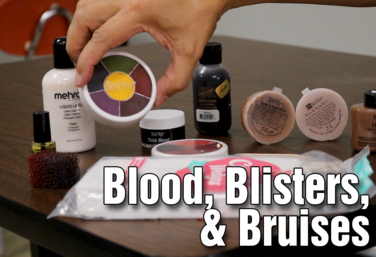
The most common special-effects makeup technique used with student performers is wounds such as cuts, bruises, and blisters. In order to create these wounds, students must understand what physically happens to the human body when a wound is suffered and then successfully recreate that wound with specialized makeup. This unit will provide students with information they will need to successfully design and execute specific wound makeup techniques for the stage. This unit is designed to lead students through a hands-on exploration of the techniques used to create a wound effect with makeup. By focusing on a variety of materials and techniques, students will learn the process of creating simple special-effects wound makeup designs.

View all Standards for North Carolina Essential Standards 2010    Standards Master List