Facebook Pixel Skip to main content

Colorado Academic Standards - Drama and Theatre Arts
Sixth Grade

32 units • 15 professional development courses aligned to
DT.6.1.4.b - Students Can: Identify and employ effective physical and vocal traits of characters in an improvised or scripted drama/theatre work.

View all Standards for Colorado Academic Standards - Drama and Theatre Arts

DT.6.1.4.b Students Can: Identify and employ effective physical and vocal traits of characters in an improvised or scripted drama/theatre work.

This page lists 32 units and 15 professional development courses aligned to DT.6.1.4.b from the Colorado Academic Standards - Drama and Theatre Arts. Designed for drama teachers, these resources directly address DT.6.1.4.b - Students Can: Identify and employ effective physical and vocal traits of characters in an improvised or scripted drama/theatre work.

Improvisation

by Karen Loftus

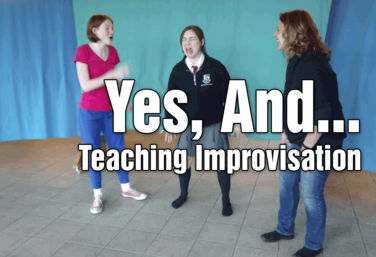
Students sharpen their listening and reaction skills through improv games, exercises, and scenes. They will learn five specific guidelines to apply to their improvisation: accept the offer, bring information to the scene, make active choices, make your partner look good, and don’t force the humour. There are so many different ways to approach a unit on improvisation. Keep in mind that you will have students who are really excited about this unit and some students who dread it. It’s best to start with low-risk games and exercises and then build up to higher-risk ones. Low-risk games in this situation mean partnered interactions that aren’t shared with the whole class.

Commedia Dell'Arte

by Karen Loftus

Students will discover, analyze, and explore the history, characters, and style of commedia dell’arte. Commedia dell’arte is a theatre history unit mixed with improvisation, physicalization, and exploring specific characters. In this unit, we’re going to focus on three main aspects: 1. Causes and Effects of Commedia (History) 2. Stock Characters 3. Commedia Performance Practices

Drama One Final Project

by Karen Loftus

The final project will incorporate multiple areas that students have studied over the course of the year/semester: playwriting, acting, scenic design, and marketing. They are putting everything they’ve learned into a final package, including writing, rehearsing, and performing.

Musical Theatre

by Anna Porter

Musical Theatre has two components that separate it from straight plays: song and dance. This unit gives students the opportunity to try out both. In musical theatre, music signifies heightened emotion. We can’t express ourselves with just words, we need music (and through extension, song and dance) to take it further. This unit includes three lesson plans: 1. Acting the Song - “Musical Tactics” 2. Acting the Song - “Textual Analysis” 3. Introduction to Dance A solo performance assignment is also included, and the unit includes assessment tools - rubrics, reflections, and self-evaluations.

Mock Audition

by Lindsay Price

In this Mock Audition Unit, students will start by discussing the audition process. They will make connections between their personal views and the process. Students will then apply the steps of auditioning from putting together a resume, to choosing a piece based on provided information, to audition etiquette, to the actual audition itself. A final reflection and rubric are provided for use at the end of this unit. A short play is included that can be used as the source material. You can also choose your own play for this process.

Voice

by Anna Porter

In this unit, students will be introduced to a key element of performance: the voice. Students will explore how to thoughtfully communicate character, story, and emotion vocally. Students will begin by exploring articulation so that they understand the importance of clearly communicating their words onstage. They will further build on this with the following lesson on the different vocal varieties of pitch, tone, rate, and volume. The final lesson helps students explore vocal characterization as well as the details and layers that can bring that character to life vocally. This unit study of the voice culminates in a final puppet show where students are asked to bring a story and character to life by using vocal variety, articulation, and characterization.

Puppetry

by Jenny Goodfellow

This unit on Puppetry is designed for middle school and up, to introduce students to the material and get them comfortable with performing in a safe and low exposure environment. This is a unit that builds to a culminating experience for your students. Each lesson is designed to explore techniques, provide opportunities for creative collaboration among your students, and give them opportunities to perform. Some of the lessons require materials to build or create puppets. Puppetry can be as easy as drawing a face on your finger for finger puppets, to actually purchasing your own finger puppets for students to use. While the focus of this unit is puppetry, your students will explore other skills as well. There’s the obvious ones of creative thinking, teamwork, and problem solving. They are also going to explore storytelling, performing skills, and playwriting.

Agatha Rex and Ancient Greek Theatre

by Angel Borths

Help…It’s all Greek to me! Join Angel Borths in this unit that uses a modern adaptation of the Ancient Greek play Antigone to introduce Middle School students to Ancient Greek Theatre. Have your students read Percy Jackson and want to find out more about Ancient Greece? Then, this unit is for you. This unit is designed for middle and high school students and will take you through the basics of classical Greek theatre and pairs it with a modern adaptation of the story of Antigone called Agatha Rex by Lindsay Price. Students will learn vocabulary, design, and basic theory surrounding classical Greek theatre. Students will also enjoy the mask building component of this unit, as they learn to disappear into the character of a mask, like the first actors did on a Greek stage thousands of years ago. The unit culminates in a scene performance with masks.

Shakespeare Performance

by Anna Porter

In this unit by Anna Porter, students are introduced to the works of Shakespeare and explore how to bring a character to life in a monologue performance. Students are also introduced to the tools to help them unlock meaning in Shakespeare’s text. Through this eleven lesson series, students will participate in class discussions, activities and performance. Assessment tools include informal assessment, submission of textual analysis work and a final performance.

Unlocking Shakespeare's Text

by Anna Porter

Shakespeare’s text holds valuable tools that students can use to unlock and understand meaning. In this unit by Anna Porter, students explore how to use the tools of research, context, textual analysis, imagery and punctuation to help them unlock meaning in Shakespeare’s text. This unit is created for an Intermediate to Advanced drama class with a basic background in plot structure and acting technique. Through this five lesson series, students will use journals, participate in class discussions, activities and performance to explore the tools used to unlock a text. Assessment tools include informal assessment as well as a final group presentation and performance.

Commedia dell'Arte

by Todd Espeland

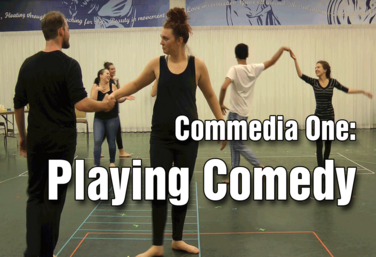
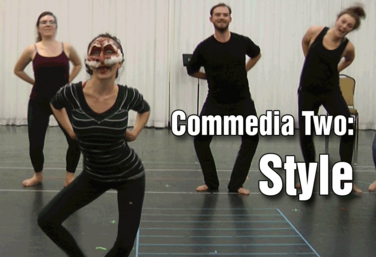
Commedia dell’arte is a 16th century masked acting form. It is the basis of all comedy, including all tv sitcoms. This form is characterized by masked types and archetypical characters and a specific way of playing comedy. To that end, this unit is divided into two parts. Part One focuses on the foundations of commedia - playing comedy. These principles will be important to learn when it comes to developing commedia characters, specifically the physicality of the characters. Part Two will cover lazzi. Note: there are links to video demos in many of the lessons of this unit.

Improvisation in Musical Theatre

by Annie Dragoo

Understanding basic improvisation skills will help musical theatre performers understand that musical theatre is more than just singing and dancing. It’s about using all the tools (voice, body, and mind) an actor has at their disposal to create a character. This unit focuses more on the improv aspect rather than the musical theatre aspects - in fact students need no prior musical theatre knowledge. Annie Dragoo, creator of the unit, uses this material as her first unit in her musical theatre class. It’s a great introduction and will get your students in the right frame of mind to approach musical theatre. The lessons explore a variety of improv skills such as vocal responses, movement, character study, sensory awareness and culminate in an improv scene and unit essay.

Unit Two: Improvisation Basics

by Lindsay Johnson

In this unit, students will learn, practice and apply three important rules of improv: accepting and building on offers, quick thinking, and strong offers. For each step, they will work with the Improvisation Rubric by both giving and receiving feedback. Students will also start to practice techniques to improve their vocal clarity. The unit culminates in a performance assessment in which students will play an improv game in front of an audience.

Unit Three: Building Improvised Scenes

by Lindsay Johnson

Students will understand the basic building blocks of a scene: The Who (characters/ relationship), the Where (setting), and the What (conflict – objectives/tactics). They will learn how to use both verbal and nonverbal (pantomime) clues to communicate these scene details to an audience. They will continue to work on voice clarity, while also learning to open their body to an audience. The unit culminates in a performance assessment in which students work in pairs to improvise a scene.

Unit Four: Intro to Scripted Scenes

by Lindsay Johnson

Students will be introduced to the most basic of scripts: the contentless/open scene script. They will use their knowledge of character/relationships, setting, objective, and tactics to add content to a contentless scene. Students will also learn the basics of set design and blocking, and will begin using voice expression to communicate clearer characters. The unit culminates in a performance assessment in which students will work in pairs to add content to and perform a contentless scene.

Creating a Musical: Project

by Annie Dragoo

Want a fun project that has your students collaborating and creating? In this unit by Annie Dragoo, students in groups will write and perform an original musical by adding modern songs to a traditional fairy tale story. The six lessons take students from writing their script, to choreography and planned movement, to rehearsing, performing and evaluation. The Rubric will focus on student performance. That means vocal delivery, emotional delivery, blocking/choreography, energy, focus, and characters.

Unit Six: Directed Scenes Take 1: Same Scene, Different Visions

by Lindsay Johnson

Students will now start applying the skills they’ve learned thus far in the context of existing, fleshed-out scripts. They will also have opportunities to shift from actor to director and hone such skills as collaboration, self-confidence, and problem-solving which can be used in many other areas of their lives.

Unit Seven: Directed Scenes Take 2: A Variety of Scenes

by Lindsay Johnson

Students will have another opportunity to participate in student-directed scenes, only this time each director will be assigned a different script, and actors for each group will be chosen by the teacher based on individual strengths and challenges, rather than holding auditions. Actors will take a deeper dive into character physicality and use of levels in staging this unit. Directors will continue to create a set design and block the scenes, adding props as well in this unit. The unit culminates in actors presenting their directed scenes to the class.

Introduction to Musical Theatre: Movement

by Annie Dragoo

Musical theatre performers use their bodies to sing, to dance, and to act. We must think of our bodies as instruments and learn to use our instruments properly in order to be better musical theatre performers. The overall objective with this unit, by Annie Dragoo, is for students to demonstrate an understanding of the use of good movement as it connects to musical theatre. Some of the activities include using action verbs, moving as animals and inanimate characters, nonverbal communication and situational movement. Students will then perform a scene that will allow them to put to practice all the movement techniques they have learned.

Improvisation

by Lindsay Price and Karen Loftus

Students sharpen their listening and reaction skills through improv games, exercises, and scenes. They will learn five specific guidelines to apply to their improvisation: accept the offer, bring information to the scene, make active choices, make your partner look good, and don’t force the humor.

Mock Audition

by Lindsay Price

In this Mock Audition Unit, students will discuss the audition process and make connections between their personal views and the process. Students will apply the steps of auditioning from putting together a resume to choosing a piece based on provided information to audition etiquette to the actual audition itself. A final reflection and rubrics are provided for use at the end of this unit. A short play is included that can be used as the source material for your audition. You can also choose your own play for this process.

Character Creation: Superhero Series: Multi platform

by Lindsay Price and Kerry Hishon

This unit focuses on character creation: How do you create a character from the ground up? Use this unit as a precursor to a playwriting unit, to a devising unit, or to a class production. Using the archetypes of the superhero, the sidekick, and the supervillain, students work on exercises to help them create unique characters through physical and vocal qualities, character profiles, and theatrical writing. Because many of the exercises have an individual focus, this unit works in a distance learning environment or for your no-technology students.

Impowerment Improv

by Jennine Profeta

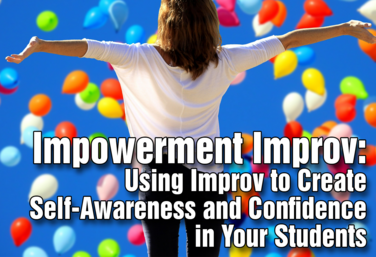
Taking risks, learning to see failure as a gift, finding courage when we don't feel it, and having the awareness that what we say has an impact are social and emotional skills students will take beyond the classroom. These are skills that can be built through improv exercises. The exercises in this unit are designed to create a safe environment in which students can go beyond their old patterns to take risks, embrace failure, and be more confident and aware of the effects of their word choices. Improv gives you the opportunity to draw attention to these important concepts and to talk about them.

Foundations of Acting

by Annie Dragoo

Students will demonstrate an understanding of the foundations of acting. At the end of the unit, students will be able to understand the value of making rich acting choices on stage. This unit gives students an opportunity to explore and develop acting skills on a more advanced level, regardless of experience. They will explore skills, including voice, movement, emotional recall, memory, playing objectives, and character development culminating in a final scene.

Theatre Radically Reimagined: Exploring Artaud, Grotowski, and Boal

by Ruthie Tutterow

In this unit, students will learn about Antonin Artaud and how his ideas influenced avant-garde theatre in the 20th and 21st centuries. They will also learn how Jerzy Grotowski took Artaud’s theories into new directions. This is done through direct instruction. A culminating presentation will ask students to take common stories and reimagine them using some of these ideas. They will present a “pitch” of an avant-garde version of their story. In the second lesson, students learn about some of the ideas of Augusto Boal and try a session of Forum Theatre.

Introduction to Stanislavski

by Drama Teacher Academy
This is an in-depth unit with instruction and activities about the Stanislavski acting method. It is followed by scene work in which students learn how to score a scene, do a comprehensive character analysis, and use what they have learned in rehearsals in a performance. Students will also watch their own work and evaluate their process after the performance. The purpose of this unit is to give students an introduction and understanding of Stanislavski’s method and to put it into use as they prepare scenes for performance. After seeing their work, and spending time reflecting on how they used the principles of the method, students should take away a concrete understanding of how to prepare a role for performance.

Virtual Introduction to Stanislavski

by Drama Teacher Academy

The unit has been adapted for a virtual environment. This is an in-depth unit with instruction and activities about the Stanislavski acting method. It is followed by scene work in which students learn how to score a scene, do a comprehensive character analysis, and use what they have learned in rehearsals in a performance. Students will also watch their own work and evaluate their process after the performance. The purpose of this unit is to give students an introduction and understanding of Stanislavski’s method and to put it into use as they prepare scenes for performance. After seeing their work, and spending time reflecting on how they used the principles of the method, students should take away a concrete understanding of how to prepare a role for performance.

The Autobiographical Monologue

by Gai Jones

All students have something to say and a story to tell. They can relate to their personal stories better than anyone else. All students have a lot of material which can be used as part of an original monologue. In this unit, students will write an autobiographical monologue based on their personal expertise, memories, distinct point of view, sense of truth, and life experiences. Through the process, students will be encouraged to explore past stories, objects, and images and other personal material.

Introduction to Mask

by Allison Williams

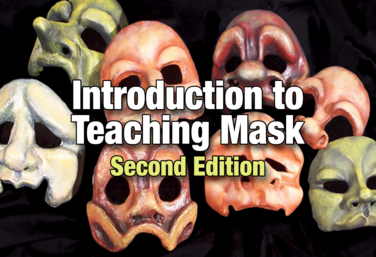
This unit focuses on having students gain an understanding of basic physical acting and learn some specific tools to use in mask work. Instructor Allison Williams has developed this unit, and explains "What I love most about mask work is how, by having students cover their faces, they are able to find freedom to express themselves physically. They often make bigger choices than we’re normally used to seeing them make in class." In this unit, students will work step by step from identifying shapes in the mask to using those shapes to creating a character zero to learning how to move in the mask utilizing the qualities of movement to applying everything they’ve learned in short scenes. The unit will culminate with students working in pairs to create original mask scenes. You will need masks to complete the unit. And while mask-making can be a lot of fun, it’s a lengthy and messy project. A list is provided in the Overview of where you may be able to buy or rent masks for use in your classroom.

Spoken Word Poetry

by Quincy Young

In this unit, students will create a performance of a spoken word poem designed to engage, entertain, and affect an audience. They will also write a poet’s statement in which they describe the purpose(s) or inspiration(s) of their poetry. This is not a technical writing unit and is geared more toward students self-expression and engaging an audience. If your students are not skilled poets, this unit is still accessible.

A Midsummer Night's Dream

by Drama Teacher Academy

Shakespeare is sometimes avoided in the drama classroom because not only do the students not want to take on the language difficulties but neither do the teachers. Monologue and scenework becomes more challenging and a lot of times, students falter in their blocking action and character development because they are so challenged. How do we give students the opportunity to rehearse and present Shakespearean text as they would modern text? In this play study unit, students will read a Shakespeare play while learning specific tools and techniques in order to stage text from that play. And more often than not, these techniques are ones that they have already used with other plays. It’s all about reframing Shakespeare so that students enjoy the experience of bringing the characters and stories to life.

Laban: Advanced Characterization

by Drama Teacher Academy

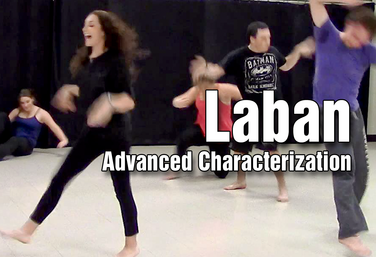
This is an advanced acting unit in playing character through the Laban movement technique. Students will explore dance theorist Rudolf Laban’s eight efforts and their component parts; turn these elements into physicalizations through which one can express character; use Laban efforts and connect them to a character’s voice and body; and demonstrate knowledge through the creation of an original character. Reminder: This is an advanced acting unit. You will need students who can do work on their own outside of class time, commit to movement and sound, and commit to making instinctual choices.

View all Standards for Colorado Academic Standards - Drama and Theatre Arts    Standards Master List