Facebook Pixel Skip to main content

California VAPA Standards (2019)
7.TH:Cr3 Refine and complete artistic work.

49 units • 14 professional development courses aligned to
7.TH:Cr3.b - Develop effective physical and vocal traits of characters in an improvised or scripted drama/theatre work.
View all Standards for California VAPA Standards (2019)

7.TH:Cr3.b Develop effective physical and vocal traits of characters in an improvised or scripted drama/theatre work.

This page lists 49 units and 14 professional development courses aligned to 7.TH:Cr3.b from the California VAPA Standards (2019). Designed for drama teachers, these resources directly address 7.TH:Cr3.b - Develop effective physical and vocal traits of characters in an improvised or scripted drama/theatre work.

Friendly Shakespeare

by Todd Espeland
9 modules 2 hours, 5 minutes 4 Credit Hours
Friendly Shakespeare teaches a simple and effective method of script analysis for Shakespeare. It uses punctuation and keywords in the text to help students understand the characters' needs, make specific acting choices, and get them on their feet immediately. This is not dry, sitting in a classroom discussion. It’s physicalizing the text, focusing on the character’s needs and tactics (something every drama student should know full well) and bringing Shakespeare to life. At the end of the class you will be able to demystify Shakespeare's text and understand how to help your actors make clear, active and emotionally connected choices in Shakespeare's plays.

From Audition to Curtain Call: Directing Youth Theatre

by Steven Stack
11 modules 1 hours, 42 minutes 3 Credit Hours
Directing youth theatre can be one of the most thrilling, rewarding, and exhausting jobs there is – because it’s not just about staging a play. It’s about creating an environment that fosters hard work, dedication, trust, and the willingness to take chances, to “play without fear.” As a writer/teacher/director of youth theatre for over 15 years, I have developed tools and strategies that enable my students and me to focus on the process of creating theatre while fostering an environment that leads to creative freedom and a cohesive groups that doesn't act as individual “stars,” but as a community of one. In this course, I will share with you these tips and strategies, along with the ways to implement them in your theatre environment.

Working With Monologues For Rehearsal And Development

by Gai Jones
11 modules 2 hours, 9 minutes 4 Credit Hours
In "Working With Monologues For Rehearsal And Development" you will develop ten sessions of study on monologues. The study contains the definition and history of the monologue; monologue vocabulary; analysis of a practice monologue, staging a short monologue; working with musical theatre lyrics as a monologue; writing short autobiographical monologues. At the end of this course, you will have a curriculum which can be used as introduction to monologue work.

Laban: Advanced Characterization

by Todd Espeland
9 modules 2 hours, 5 minutes 8 Credit Hours
Learn about the Laban system to teach your students to physically and vocally discover character. This is an advanced course, which means that the course goes deep into exploring character and exploring character work through the work of Rudolph Laban.

Commedia I: Playing Comedy

by Todd Espeland
8 modules 2 hours, 31 minutes 7 Credit Hours
Commedia dell’arte is a 16th Century masked acting form. It’s the basis of all comedy and it’s a form that many teachers want to include in their curriculum. Instructor Todd Espeland has designed two courses that work hand-in-hand with teaching this fantastic physical form. In Commedia I: Playing Comedy - Todd teaches the principles of comedy through four key elements: status, appetite, swing, and intention/invention. This course provides an excellent foundation upon which to explore Commedia to its fullest. Includes bonus videos, handouts, reflections, and exit slip question ideas for each lesson.

Coaching Improv

by Jennine Profeta

9 modules 2 hours, 14 minutes 4 Credit Hours
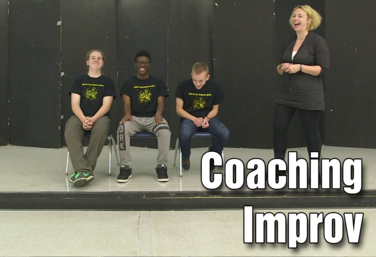
Second City performer and theatre educator Jennine Profeta is back and ready to help you take your Improv classes to the next level. It’s all getting students to perform - and how to be a great improv coach who can keep them supported and grounded (and having fun!) In this course, you’ll learn the golden rules of improv. You’ll learn a bunch of improv games (great for warm-ups, teaching tools, and even for competitions). You’ll learn Jennine’s tips and tricks for what to look for when coaching and how to troubleshoot common issues. The course is designed to help you improv as an ensemble and give you the know-how to coach with confidence whether it’s in the classroom or on the stage!

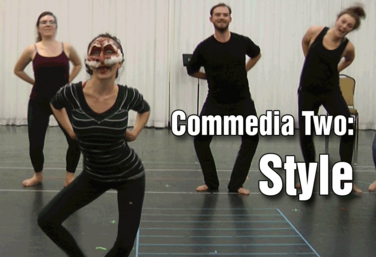
Commedia II: Style

by Todd Espeland

11 modules 2 hours, 31 minutes 7 Credit Hours
Commedia dell’arte is a 16th Century masked acting form. It’s the basis of all comedy and it’s a form that many teachers want to include in their curriculum. Instructor Todd Espeland has designed two courses that work hand-in-hand with teaching this fantastic physical form. In Commedia II: Style - Todd moves on to the specific style of Commedia dell’arte. This includes a history of commedia, the stock characters and how to physicalize them, sample lazzi and a capstone assignment. The course includes video demonstrations so you can see the exercises and activities in action.

Teaching Musical Theatre in the Drama Classroom

by Colin Oliver
7 modules 1 hours, 51 minutes 4 Credit Hours
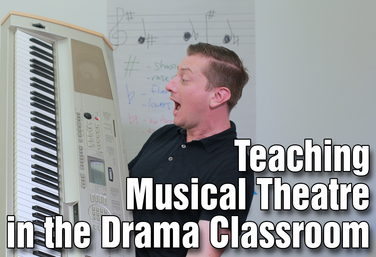
Colin Oliver leads this introduction to teaching Musical Theatre in the Drama Classroom. In this course, you will learn how to build musical theatre into your dramatic courses of study. “Why might you want to do that? Singing is scary! You want me to teach my students how to do it? I don’t even know how to do it.” This course approaches musical theatre preparation performance much as we would approach preparing a monologue in drama. If you use script analysis in monologue preparation in your class, you can teach musical theatre. By the end of this course, you’ll have a great, full-body physical warm-up, a student-driven research assignment, character development exercises, a little bit of musical theory, and a performance assignment complete with assessment. So, join us for teaching Musical Theatre in the Drama Classroom. It’s as easy as Do-Re-Mi!

The Production Classroom

by Karen Loftus
8 modules 1 hours, 46 minutes 4 Credit Hours
In The Production Classroom, instructor Karen Loftus will show you how to explore ways that you can produce shows during your regular class time. The course gives you a series of exercises and reflections that help you determine everything, from the type of show you may want to do, to the way you can divide up your class and responsibilities, to specific assignments that will keep your students engaged and focused. The Production Classroom is the ultimate in project-based learning. Students learn to work collaboratively while setting goals and working towards a successful finished project. The course includes exercises and strategies to use with students to help assure their success in the production. Multiple examples and anecdotes help you to envision what the production classroom could look like in your room, performance space or theatre.

The Process of Creativity in the Theatre Classroom

by Gai Jones
6 modules 2 hours, 38 minutes 5 Credit Hours
Gai Jones leads this course in establishing an environment of creative experimentation in the theatre classroom, in order to have a group of student actors who value the creative process. Each lesson shares experiences to foster creativity without the stress of performance by student actors. For the creative process which honors out-of-the-box thinking, there is no assessment section included. There is no product or performance. The important thing is the student actor’s engagement. Their reflections and your observations are valued for positive learning. This set of lessons includes Tips for the Theatre Educator, based on Gai's own Theatre practice. Scripts are also provided and contain text of what you can say to your students to facilitate their creative processes.

Exploring Viewpoints

by Erin Carr

11 modules 3 hours, 28 minutes 5 Credit Hours
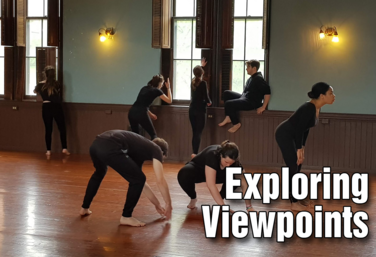
Viewpoints is used to create dynamic moments of theatre by simply existing on the stage. However, Viewpoints is more than just an acting technique to understand your own physicality and more than a directing technique to create “ah-ha!” moments on stage. It is first and foremost the philosophy that to create an organic performance, you must see obstacle as opportunity, and that by simply standing in space, your creativity can spark. This course by Erin Carr will help your students discover fresh impulses that motivate their performance in the moment. We will go through the Viewpoints technique, as created by Mary Overlie, and learn how to tap into kinesthetic awareness as individuals and as an ensemble. Through this style of play, students learn to release their thoughts on what they “should” do, and instead just respond organically to their surroundings and ensemble! We’re going to break down each of the Viewpoints, there’s lots of visual demonstration, so you can see each Viewpoint in action, and I’m going to provide tips and side coaching examples.

Impowerment Improv

by Jennine Profeta
6 modules 56 minutes 2 Credit Hours
Jennine Profeta, Second City performer and theatre educator, leads this course. This course was designed to give a teacher tools to create a safe environment in which students can go beyond their old patterns to take risks, embrace failure, be more confident and aware of the effects of their word choice. The course includes modules on risk-taking, creating a safe environment, failure, confidence, and positive/negative speak.

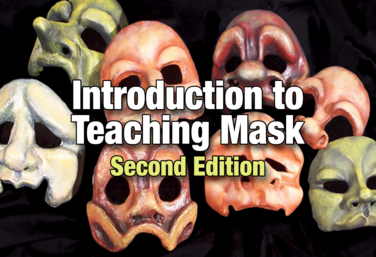
Introduction to Teaching Mask: 2nd Edition

by Allison Williams
13 modules 2 hours, 13 minutes 6 Credit Hours
In Introduction to Teaching Mask: 2nd Edition, Allison Williams gives you a toolkit of mask and movement exercises to teach students to make big, confident physical choices, to work in their bodies, and play different characters - masked and unmasked. By working through the exercises in this course, you, the teacher, will also gain an understanding of basic physical acting and learn some easy specific tools to coach your students – not just in mask, but in all their performance work. Access to masks is required, but previous experience with masks is not.

Tech Knowledge: Integrating Tech Throughout Your Rehearsal Process

by Claire Broome

17 modules 1 hours, 52 minutes 3 Credit Hours
This course will help you integrate technical theatre earlier in the creative process to help reduce the stress of tech week, and make sure you have what you need before choosing a show. We will explore how to include your technical theatre team from day one and will help you have an easier experience throughout the rehearsal process and final performances.

View all Standards for California VAPA Standards (2019)    Standards Master List