North Carolina Essential Standards 2024
Accomplished High School Present
45 units • 20 professional development courses aligned to AC.PR.2.3 - Implement technical designs to tailor theatrical works for a range of audiences, spaces, or budgets.
AC.PR.2.3 Implement technical designs to tailor theatrical works for a range of audiences, spaces, or budgets.
This page lists 45 units and 20 professional development courses aligned to AC.PR.2.3 from the North Carolina Essential Standards 2024. Designed for drama teachers, these resources directly address AC.PR.2.3 - Implement technical designs to tailor theatrical works for a range of audiences, spaces, or budgets.
While the Drama Two Curriculum has a focus on acting, it’s always important to include a unit on the technical theatre skills that are necessary to any production. Students will also be able to use what they’ve learned in this unit in their upcoming devising project.
Students will begin by exploring design for the stage by experimenting with line, shape, texture, size, and color. They will expand their understanding of stage properties and scenic flats. They will then apply their knowledge of these building blocks of design to create a high-concept design for a miniature “stage.”
Improv is a fantastic method to engage your students; this 3 lesson mini unit is a great way to introduce improvisation.
This unit focuses on learning the rules of Improv, trying games to build improvisation skills, and developing conflict and story line.Through the three lesson series, students will use journals, participate in class discussions, learn six different improv games, and perform for their peers.
Assessment tools include both informal assessment as well as a formal quiz that’s included in the unit.
In studying Ancient Greece, we’re looking at the foundations of theatre as we know it today. Without the Ancient Greek Era, we do not get actors, theatres, plays, and the definitions of tragedy and comedy.
The issue with studying theatre history, or anything historical is that it can become an exercise in memorizing dates and reciting facts. When the truth of the matter is no one in the 21st century benefits from learning by rote. This is especially true when studying history in the framework of a drama classroom. We need exercises that bring history to life, instead of having students plot dates on a timeline.
To that end, this unit does not focus on dates and data. The essential question for the unit is how can we connect the past to the present and this question is explored through the theatricalization of information. Students will access all four 21st century skills, critical thinking, creative thinking, collaboration and communication as they explore this amazing world.
Reflections, exit slips, and rubrics are included throughout the unit as well as a mid assignment evaluation for the culminating project.
Teacher Angel Borths developed this unit when she was looking for lessons to teach the basics of pantomime in the classroom.
This unit culminates in a finished product for performance, either for peers, or for theatre festivals. The rubrics and written work for this unit take planning and preparation for performance into account. The exercises can be pulled out and used independently, but work best when used to build toward a finished product. You can also pull the ground plan and stage directions lesson plans to use with playwriting or directing lessons.
Students will discover, analyze, and explore the history, characters, and style of commedia dell’arte.
Commedia dell’arte is a theatre history unit mixed with improvisation, physicalization, and exploring specific characters. In this unit, we’re going to focus on three main aspects:
1. Causes and Effects of Commedia (History)
2. Stock Characters
3. Commedia Performance Practices
The final project will incorporate multiple areas that students have studied over the course of the year/semester: playwriting, acting, scenic design, and marketing. They are putting everything they’ve learned into a final package, including writing, rehearsing, and performing.
This unit on Puppetry is designed for middle school and up, to introduce students to the material and get them comfortable with performing in a safe and low exposure environment.
This is a unit that builds to a culminating experience for your students. Each lesson is designed to explore techniques, provide opportunities for creative collaboration among your students, and give them opportunities to perform. Some of the lessons require materials to build or create puppets. Puppetry can be as easy as drawing a face on your finger for finger puppets, to actually purchasing your own finger puppets for students to use.
While the focus of this unit is puppetry, your students will explore other skills as well. There’s the obvious ones of creative thinking, teamwork, and problem solving. They are also going to explore storytelling, performing skills, and playwriting.
WARNING: This unit is ABSURD. However, instructor Lea Marshall decided to do something really ABSURD with the unit, which was make it a bit more predictable. First, the unit takes two lessons to go over the Historical and Philosophical background of Theatre of the Absurd. It starts with just a visual exercise to really bring students into the emotional bleakness of the landscape and then group work to look at some of the other foundational elements that will drive the Absurdist movement into the Theatres.
Next, students break down absurd scripts into some “recognizable” elements of language, plot structure, acting choices, and storyline. With each lesson that introduces an Absurdist Element, there is an opportunity for students to “play” with the element. Then, students explore the element through an Absurdist text. This will help familiarize the students with the 4 Absurdist scripts used in the unit. These bite sized forays into the scripts will help students to choose a script to fully immerse themselves in for the final project.
As a final project, students will choose one script to work with, and choose the format of their project (performance, costume or set design, or playwright).
This is an introductory mini-unit to sound that you can use whether or not you have a sound system. Students will work toward being able to demonstrate their knowledge of sound effectiveness.
The questions of the unit include: What is effective sound? What sounds and music do we need in order to make our scene effective? How will we know our sound cues are effective?
If the costumes in a play are going to be effective, we need to be thoughtful about how we use them.
In this mini-unit, students will demonstrate their understanding costume effectiveness and address the following questions: What is the role of costume in the performance? How does color contribute? How does the style of costume affect a performance? How does costume indicate setting? Do you need costumes in a scene?
This is a mini-unit on staging. Along with the driving question for the unit, students will explore about how staging affects the performance. Students will draw a plot design (ground plan) to emphasize the need to plan where scenic elements will be placed. They will also practice taking cues from the script, in order to create staging.
This is a student centred mini-unit on makeup design. Makeup is useful in transporting an audience to a different world.
The purpose is for students to understand that makeup is a tool that theatre technicians can use in order to contribute to effective performance aesthetics; to understand basic makeup rules and care instruction; to understand how to complete a makeup design plot; to look at a project and figure out for themselves what they need to succeed.
Once students have completed the five Tech Theatre Units (Lighting, Sound, Costume, Staging, Free Play Makeup), you can give them this culminating project.
Depending on how you structured your technical theatre unit, you can adapt this project to suit your needs and context.
Up to this point, all the work in the units have been exploratory. This is where students will apply their skills and knowledge.
A unit on stage management is a great way to link technical theatre, acting, and even directing. We spend so much of our class time on performance-related projects and, when we do address technical theatre, we often do so by talking about design.
Why not introduce your students to a skill set that not only benefits your productions by ensuring a strong backstage crew and smooth production process, but also benefits the students individually? Through exploring stage management, students learn skills such as analytical thinking, organization, teamwork, and problem solving.
The overview lays out the all of the parts of The Production Classroom Units - which is divided into three parts.
In Part One, you’ll take your students through a series of pre-production units designed to help students gain as much comprehension as possible about putting on a successful production.
Part Two offers articles on each step in the process, samples and forms, a suggested pacing, role definitions and task checklists, an outline for a typical class, as well as performance duties. This section also outlines the assessment piece for The Production Classroom – the production binder.
Part Three provides a Post-Performance Reflection. Unpack the experience with students, reflect back on what went right and what could be changed for next time. A written Reflection is included as well as a Rubric for student production binders.
In Part One of The Production Classroom, you’ll take your students through a series of pre-production units designed to help students gain as much comprehension as possible about putting on a successful production.
Part Two offers articles on each step in the process, samples and forms, a suggested pacing, role definitions and task checklists, an outline for a typical class, as well as performance duties. This section also outlines the assessment piece for The Production Classroom – the production binder.
This section provides samples and worksheets for actor forms, costume department, general binder, lighting and sound, marketing samples, scenic and prop samples, and stage management and production manager samples and forms.
Part Three provides a Post-Performance Reflection. Unpack the experience with students, reflect back on what went right and what could be changed for next time. A written Reflection is included as well as a Rubric for student production binders.
The purpose of this unit is to give students an introduction to independent learning as well as an overview of Set Design. Students will apply their knowledge throughout, and the unit culminates in a group activity.
This unit is delivered in hyperdoc format. What does that mean? A hyperdoc is an interactive tool that encourages digital learning. In this case, students are given a document on a subject, and there they can read articles, watch videos, do some independent research, and apply what they’ve learned. Because they’re working on their own, students are in charge of their own pacing.
Before you start the unit, ensure you read the Teacher Guide first. It will give you clear instructions on how to distribute the hyperdoc format and make it easy for you and your students.
In this unit, students will explore and collaboratively take on the role of costume designers. Students will explore the elements of design, director’s concept, and the considerations for costume design. They will then apply this knowledge in a culminating project.
This unit has been designed to integrate technology into the curriculum. Students will utilize technology throughout via HyperDocs, internet research, and Google tools such as Google Drive, Google Forms, Google Slides, and Google Docs. A digital Learning Tools Introduction resource is provided for additional help in using the different tools and applications.
Students will explore the creation of an environment through the art of scenic design. They will identify what scenic design is and how it helps to tell a story in theatre. Students will also identify and demonstrate some skills of a scenic designer as they analyze an excerpt of a script for scenic clues and demonstrate basic drafting and rendering.
Students will be able to identify the various tools used in a set shop, identify appropropriate shop safety procedures, including personal protective equipment, and demonstrate how to build a flat.
Students will be able to demonstrate their knowledge of lighting effectiveness. They’ll also be able to identify, analyze, and evaluate how lighting is used in a theatre production.
Students are exposed to research, concepts, and skill sets while they explore costume design and the different roles of the costume designer and the costumer. They will be able to demonstrate their knowledge of costume effectiveness.
Students identify vocabulary, techniques, and roles of costume construction. They demonstrate costume measurement and other construction techniques, including a basic stitch.
Now it’s time for your students to take everything they’ve learned and creatively apply those skills. The goal is for students to take what they’ve been exposed to, explored, and researched about each of the arts and crafts of technical theatre and apply it to a project.
Students will have a chance to merge their understanding of scene elements with their improvisation skills in this final unit based on Augusto Boal’s Theatre of the Oppressed. Theatre of the Oppressed is a style of theatre specifically created to highlight the injustices of power and oppression in society and to problem-solve ways to bring about change.
Starting with image theatre techniques to identify issues of power and oppression, students will then use forum theatre to create scenarios of oppression taken from their own lives and improvise realistic solutions.
The unit culminates in a performance in which students participate as both actors in a scene they create themselves and spect-actors in scenes created by their peers.
This is a read, discuss, and apply literature unit. Students will study the play Our Town by Thornton Wilder.
Our Town is often referred to as “nostalgic.” It’s seen as an antiquated look at a moment in time. But this play is called Our Town, not My Town. What’s happening in Grover’s Corners happened in the past, the distant past, in our present, and even in the future. The themes of the play—the ordinary versus universality, the concept of time, the cycle of life, the ignorance of humanity to the eternal—these are just as relevant in the twenty-first century as they were when the play was written.
The purpose of the unit is not to have students recall knowledge about the play. Students will be able to identify, articulate, and dramatize text themes and concepts and compare/contrast these concepts to their own experiences.
When an audience watches a piece of theatre, they never see what goes on behind the scenes or know the people who work to make the production look its best. But theatre is a collaboration between what happens onstage and off.
This flipped learning unit will introduce students to the world of technical theatre. Through video, they will learn information on specific technical theatre roles and how they work together, types of stages, parts of a theatre and stage geography, and then apply this knowledge through in-class active-learning exercises.
For example, students will take on the role of a producer and decide how a budget will be divided among different departments. They will practice the calls a stage manager uses. The culminating assignment has students solve a common technical theatre issue: to design, create, and implement a solution for a unique stage direction in a play.
When an audience watches a piece of theatre, they never see what goes on behind the scenes or know the people who work to make the production look their best. But theatre is a collaboration between what happens onstage and off.
This distance learning unit will introduce students to the world of technical theatre. Through video, they will learn information on specific technical theatre roles and how they work together, types of stages, parts of a theatre and stage geography, and then apply this knowledge through synchronous exercises.
For example, students will take on the role of a producer and decide how a budget will be divided among different departments. They will practice the calls a stage manager uses. The culminating assignment has students solve a common technical theatre issue: a unique stage direction in a play.
NOTE - Please read the Troubleshooting Hyperdocs instructions in the Overview, if you are having issues. If your students have trouble accessing the videos, try VERSION 2 Hyperdoc links provided under each module.
We included this unit in our Distance Learning Curriculum because if any group of students would understand how the world turned upside down and then apply it to theatre, it would be the students dealing with a global pandemic.
First, we take two lessons to go over the historical and philosophical background of Theatre of the Absurd. We start with a visual exercise to bring students into the emotional bleakness of the landscape and then group work to look at some of the other foundational elements that will drive the absurdist movement into the theatres. Next, we break down absurd scripts into some “recognizable” elements of language, plot structure, acting choices, and storyline. In each lesson that introduces an absurdist element, there is an opportunity for students to “play” with the element.
The exercises within this unit are meant for students to explore the concept of lighting for theatre without the need for extensive tech or even a theatrical lighting grid.
This unit is useful for students with no prior experience with lighting or students who may be intimidated by the idea of theatre technology.
Each exercise is meant to build upon the previous one, as students grow in their confidence with thinking about lighting in different ways.
The Dilemma Project is based on a situation that requires a decision: push a button and get a great reward, but there’s also a great consequence. Don’t push the button and there’s no reward.
This unit will lead to a group performance including characters, costumes, set, acting theory, acting tools, and a student written script. The final script will be about ten pages in length which means roughly ten minutes of stage time.
All students have something to say and a story to tell. They can relate to their personal stories better than anyone else. All students have a lot of material which can be used as part of an original monologue.
In this unit, students will write an autobiographical monologue based on their personal expertise, memories, distinct point of view, sense of truth, and life experiences.
Through the process, students will be encouraged to explore past stories, objects, and images and other personal material.
In this unit, students will take on the role of the costumer, which is different from a costume designer. It introduces costuming concepts in order to execute a costume. No complicated sewing is required, which is great if you don’t have the background, the access, or the resources to have a class of students create costumes.
Instead of making costumes from scratch, as a designer would, students will create costumes from stock, borrowed items, or low-cost finds. They will take finished products and adapt them into what they need to create the right atmosphere.
In order to help with their adaptations, students will try different distressing techniques and learn three SIMPLE stitches that they’ll be able to use over and over again. It’s a valuable tech theatre skill to teach students how to execute on costumes when you (and they) don’t sew!
This Technical Theatre unit is designed to empower student leaders to analyze management roles in producing theatre while also using collaborative activities and reflection exercises to strengthen soft skills that every student should have. The unit covers the roles of producer, director, technical director, and stage manager, and ends in a culminating project.
In most units that cover the Theatre of the Absurd, the number of playwrights addressed are few and the time period is limited. While it is certainly true that the era identified as “The Theatre of the Absurd” was a reaction to the distorted reality of life after World War II, there are many environments that create distorted realities and many playwrights who use those realities as catalysts for absurdist plays.
In this unit, we will start with a traditional look at the Theatre of the Absurd and then expand our exploration beyond its origins.
The most common special-effects makeup technique used with student performers is wounds such as cuts, bruises, and blisters. In order to create these wounds, students must understand what physically happens to the human body when a wound is suffered and then successfully recreate that wound with specialized makeup.
This unit will provide students with information they will need to successfully design and execute specific wound makeup techniques for the stage.
This unit is designed to lead students through a hands-on exploration of the techniques used to create a wound effect with makeup. By focusing on a variety of materials and techniques, students will learn the process of creating simple special-effects wound makeup designs.
This is a research, read, discuss, and apply theatrical literature unit. Students will study the play The Crucible by Arthur Miller.
The Crucible is Miller’s most produced play. There are hundreds of high school productions each year, and the play is in many high school curricula. As with every Miller work, there is much to discuss and many rich themes to explore.
The unit is divided into three sections. Each section is a complete set of lessons. You can choose to do all three sections, or if you have your own way to teach the play, you can pick and choose exercises.
In this unit, students will combine knowledge of the previous two units: singing and movement. Students will review singing technique and terminology and work on a song together. They will build on their vocabulary of simple dance moves. Then, students will work in groups to learn and rehearse a section of a musical theatre song by choreographing movement that expresses the song’s meaning and characters, presenting their work to the class, and working on curriculum goals of risk taking, endurance, confidence, commitment, character, and emotion.
Students will show what they have learned throughout the curriculum by writing and performing a musical. They will add modern songs to a traditional fairy tale story. In this way, students do not have to create their story from scratch—the structure and characters are already in place.
In this course, instructor Karen Loftus explores the responsibilities of a stage manager. You'll learn exercises that will help you demonstrate those responsibilities and the necessary skills of a stage manager to your students. You'll learn how to train your students to serve as stage managers for your school’s productions.
The course takes you through what a stage manager does prior to rehearsal and throughout the rehearsal and performance process to have a smooth-running backstage. It includes learning about the paperwork required, including prompt scripts, rehearsal preparations, notating blocking, and a stage manager’s kit and checklist to wrap it all together.
Concept-Based Design is a method of design that allows the director and production team to create a unified world based on the ideas, perceptions and images extracted from an in-depth analysis of the play. Matt Webster designed this course for theatre teachers in a typical school setting with limited budgets, space and materials to use towards the design of their shows. Many theatre teachers feel most unsure about their design and tech skills and Matt wanted to help those teachers look at design differently, and make designing a show a little less scary and a little more fun!
Holly Beardsley is a do-it-all director. She started directing middle and high school students in her early college years and since then has written over ten shows and directed twice as many.
Do-it-all directors are responsible for everything it seems – the direction, the costuming, the choreography and of course, the set too. And though directors are ready to direct, to costume and even dance, there is something intimidating about designing and building a set.
The Do-it-All Director’s Introduction to Set Design will give you the director, who must do-it-all, the confidence and skills to not only direct but build your own set as well - no matter your experience or budget. This course will teach you set design basics, construction tips, budget tricks, and how to tackle your precious performance space armed with a hammer, and most importantly, without fear.
Karen Loftus instructs this second course in stage management - a companion to Introduction to Stage Management Part One.
This course will review the major concepts covered in Introduction to Stage Management, and discuss the different types of technical rehearsals and how student stage managers prepare for and run them. You’ll learn how to teach your students to notate and call cues for a show. The course will also introduce strategies for student stage managers who work with student crews. It will discuss how you can provide the support your student stage managers need to be effective, and how that support helps to strengthen your overall program and theatre community.
Student stage managers start in the classroom, train during school productions, and can take these newly discovered and acquired skills on with them to colleges and careers and theatre (and beyond)!
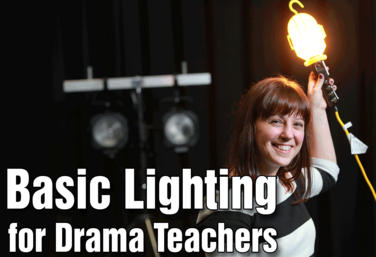
Join drama teacher Claire Broome and explore the basics of lighting, including lighting systems and instruments, lighting plots, how to record a lighting cue, and alternative sources of lighting. You’ll learn some practical, hands-on ways of using lighting in your classroom or theatre, whether you have a lighting system or not.
This course is packed with hands-on examples, activities for your students, and videos to develop your students’ understanding. Find out why lighting is such an important character in a production.
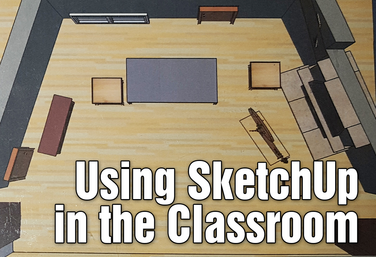
Instructor Ray Palasz leads this introductory course in using SketchUp in the classroom.
This course is broken down into five easy modules. One, downloading the program. Two, getting started with using the program. Three, drawing two and three-dimensional objects. Four, using the 3D warehouse, which will save you and your students tons of time. And five, a sample assignment and assessment for your students.
Each module also comes with a handout with visuals from SketchUp to guide you through the process. You will learn how SketchUp can add so much to your program.
In The Production Classroom, instructor Karen Loftus will show you how to explore ways that you can produce shows during your regular class time. The course gives you a series of exercises and reflections that help you determine everything, from the type of show you may want to do, to the way you can divide up your class and responsibilities, to specific assignments that will keep your students engaged and focused.
The Production Classroom is the ultimate in project-based learning. Students learn to work collaboratively while setting goals and working towards a successful finished project. The course includes exercises and strategies to use with students to help assure their success in the production. Multiple examples and anecdotes help you to envision what the production classroom could look like in your room, performance space or theatre.
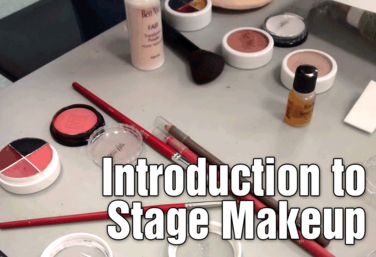
This introductory course in Stage Makeup is brought to you by Matt Webster, and covers all the basics. You’ll learn the tools you can use to build a makeup kit, how to match skin tone, what are the shapes of the face and how those shapes affect everything you do with makeup.
You’ll learn about highlight and shadow, blending, basic corrective makeup, safety and hygiene, and lastly, tips for teaching makeup. And throughout, sample exercises are included so you have the information you need to bring stage makeup into the drama classroom.
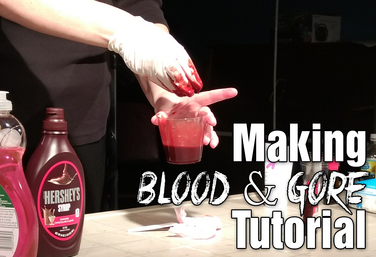
This tutorial, led by Linda Veneris, shows teachers and students how to make blood and gore with easy to find, everyday ingredients.
Included are recipes, video demonstrations, and top 10 tips for working with students on blood and gore. This tutorial can be part of a stage makeup unit in your classroom as well as for productions.
Director’s Toolbox 2: Teaching Students to Direct, explores the tools of the actor, rehearsal, space, and design.
The tool of the actor will focus on creating a safe place to play, auditions, and how to communicate with actors.
Rehearsals will look at the whole process from the first meeting to opening night.
The tool of space will explore how to direct in different spaces and how to create focus through stage composition.
Discover how an understanding of the elements of design help student-directors communicate with designers. The final step is a return to self and the mastery of self evaluation.
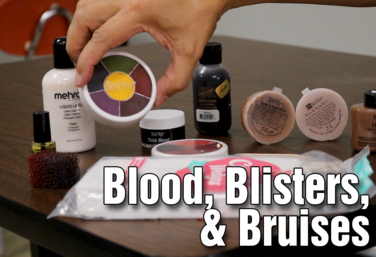
Welcome to Blood, Blisters, and Bruises. This is an introductory course to learn how to use makeup to create scars, blisters, and bruises with a little blood on the side, and a special bonus section on creating zombies. You’re going to learn the techniques and materials you will need to do these special effects, and how to teach your students to do these special effects.
This course will help you integrate technical theatre earlier in the creative process to help reduce the stress of tech week, and make sure you have what you need before choosing a show. We will explore how to include your technical theatre team from day one and will help you have an easier experience throughout the rehearsal process and final performances.
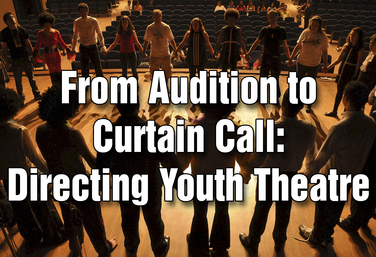
Directing youth theatre can be one of the most thrilling, rewarding, and exhausting jobs there is – because it’s not just about staging a play. It’s about creating an environment that fosters hard work, dedication, trust, and the willingness to take chances, to “play without fear.”
As a writer/teacher/director of youth theatre for over 15 years, I have developed tools and strategies that enable my students and me to focus on the process of creating theatre while fostering an environment that leads to creative freedom and a cohesive groups that doesn't act as individual “stars,” but as a community of one.
In this course, I will share with you these tips and strategies, along with the ways to implement them in your theatre environment.
This mini-course will give you a toolkit to bring your shows to the next level by having an engaged, active, ensemble.
The ensemble is a critical part of a large cast show. But you can't leave them to fend for themselves. They need structure. They need exercises and activities.
In Strong Ensemble = Strong Play, you'll be given ensemble-building exercises. You'll also discover specific activities that will help your ensemble become three-dimensional characters who have something to do and something to play in every moment they are on stage.
We'll look at case studies that take the exercises learned in the course and apply them to specific shows.
In "Working With Monologues For Rehearsal And Development" you will develop ten sessions of study on monologues. The study contains the definition and history of the monologue; monologue vocabulary; analysis of a practice monologue, staging a short monologue; working with musical theatre lyrics as a monologue; writing short autobiographical monologues.
At the end of this course, you will have a curriculum which can be used as introduction to monologue work.
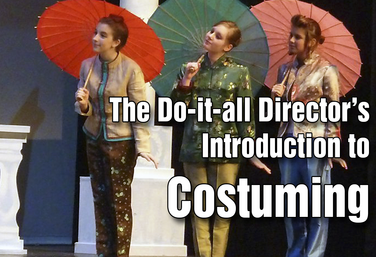
Do you know the difference between a bustle and a buckram frame? Or what works best as an emergency hem? Some directors are blessed with a big budget and a full support staff—a choreographer, a set designer, and a costumer. But the drama teacher often becomes director, choreographer, set designer, and costumer all in one.
And a budget? What’s a budget? The Do-It-All Director’s Introduction to Costuming will give you, the director, who must do it all, the confidence and skills to costume and direct, no matter your experience or budget. This course will teach you costuming basics, budget tricks, organization, and most importantly, the art of costuming as a director.
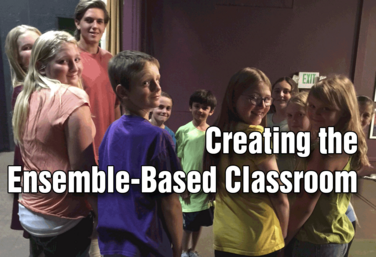
Gai Jones will help you establish an ensemble-based environment from the first day of class or rehearsal.
Learn how to set up your ensemble-based classroom from day one, get students to set classroom norms, and find the balance between creative activity and structure. You’ll learn how to give your students creative freedom through structure and classroom management. The cornerstone of this course are the detailed ensemble experiences from large group to small group and even individual experiences.
This course culminates in a devising model that you can use with your students, and takes you through process, product, performance and an evaluation.
You too can create the ensemble-based classroom.
Allison Williams leads the course: 21st Century Skills Through Devising. This course covers what devising is, why to do it, how to do it, and how your students can master the 21st Century Skills of collaborations and cooperation, critical thinking, creative thinking through devising.
High school is a great place to try devising with your students. But it’s not something you want to throw at your students without any preparation. Framework is important and this course takes you through a number of exercises you can take into the classroom tomorrow to help build a place of physical safety, a place where students work at making a lot of choices instead of waiting for the perfect choice, and a place where students feel comfortable making creative choices. The material also reviews the process of putting together a show from the idea/research stage to editing, to giving feedback.
Your students have what it takes to create their own material, collaborate with each other, and have a unique theatrical experience!
Shakespeare is one of the greatest resources a drama teacher can have: scenes packed with action; opportunities to explore comedy and physical theatre; rich themes and characters to act as springboards for devised theatre; the chance to work with our language at its finest and – most importantly – ideas that relate directly to the experiences and preoccupations of students.
Yet Shakespeare isn’t easy. The language can seem dense, and finding a way in can be tough – especially for drama teachers who have not themselves studied Shakespeare. That’s the goal of this course – to help teachers find a way in.
This course presents teachers with as many ways in to the exploration of Shakespeare as possible. Action scenes, themes, characters, different theatre styles, and devised theatre projects. Students will be armed with the tools they need to begin individually exploring monologues, or working together on scenes.
Moral dilemmas are not only faced by characters in gripping plays, but are also faced by our students. The project outlined in this course will help students develop their critical thinking skills through the use of one of the dilemma questions to shape a student written production.
If you had the choice to press a button and earn $25,000,000... but a species (not of your choosing) would become extinct, what would you do? More importantly, what would your character do?
Join drama teacher and playwright Claire Broome through this course which includes role-playing, Stanislavski’s Magic If, character creation, playwriting and staging.
Our parent company Theatrefolk offers a fantastic selection of plays written specifically for high school and middle school students.
Whether for performances or class study, there's something for everyone: relevant & relatable themes, simple sets & costumes, flexible casting options and much more - a perfect addition to any drama program!
Please note:
Plays are offered separately from your membership and can be purchased through Theatrefolk.