Facebook Pixel Skip to main content

National Core Arts Standards
Organize and develop artistic ideas and work - Grade HS Accomplished

64 units • 26 professional development courses aligned to
TH:Cr2.1.HSII.b - Cooperate as a creative team to make interpretive choices for a drama/theatre work.

View all Standards for National Core Arts Standards

TH:Cr2.1.HSII.b Cooperate as a creative team to make interpretive choices for a drama/theatre work.

This page lists 64 units and 26 professional development courses aligned to TH:Cr2.1.HSII.b from the National Core Arts Standards. Designed for drama teachers, these resources directly address TH:Cr2.1.HSII.b - Cooperate as a creative team to make interpretive choices for a drama/theatre work.

Devising

by Corinna Rezzelle

While the Drama Two Curriculum has a focus on acting, it’s always important to include a unit on the technical theatre skills that are necessary to any production. Students will also be able to use what they’ve learned in this unit in their upcoming devising project. Students will begin by exploring design for the stage by experimenting with line, shape, texture, size, and color. They will expand their understanding of stage properties and scenic flats. They will then apply their knowledge of these building blocks of design to create a high-concept design for a miniature “stage.”

Improv

by Anna Porter

Improv is a fantastic method to engage your students; this 3 lesson mini unit is a great way to introduce improvisation. This unit focuses on learning the rules of Improv, trying games to build improvisation skills, and developing conflict and story line.Through the three lesson series, students will use journals, participate in class discussions, learn six different improv games, and perform for their peers. Assessment tools include both informal assessment as well as a formal quiz that’s included in the unit.

Pantomime

by Karen Loftus

In this unit, students will explore nonverbal communication: first, through body language and gesture, and then through the specific art of pantomime. Students will learn hand position, tension, follow-through, and action/reaction/interaction with objects through warm-up games and exercises. The unit culminates in a two-person pantomime performance.

Ancient Greek Theatre

by Karen Loftus

This unit on Ancient Greek theatre focuses on the function of the chorus, the choral ode, and the details of the theatre space. It touches on plays and playwrights of the era, culminating in a final project of a modern version of Medea that includes a choral ode.

Improvisation

by Karen Loftus

Students sharpen their listening and reaction skills through improv games, exercises, and scenes. They will learn five specific guidelines to apply to their improvisation: accept the offer, bring information to the scene, make active choices, make your partner look good, and don’t force the humour. There are so many different ways to approach a unit on improvisation. Keep in mind that you will have students who are really excited about this unit and some students who dread it. It’s best to start with low-risk games and exercises and then build up to higher-risk ones. Low-risk games in this situation mean partnered interactions that aren’t shared with the whole class.

Commedia Dell'Arte

by Karen Loftus

Students will discover, analyze, and explore the history, characters, and style of commedia dell’arte. Commedia dell’arte is a theatre history unit mixed with improvisation, physicalization, and exploring specific characters. In this unit, we’re going to focus on three main aspects: 1. Causes and Effects of Commedia (History) 2. Stock Characters 3. Commedia Performance Practices

Elizabethan Theatre

by Karen Loftus

How do you introduce students to Shakespeare? This unit introduces the Bard through life in Elizabethan England and the playwrights, players, and playhouses. It also explores how to approach unfamiliar words and context clues in Shakespeare’s texts.

Playwriting

by Karen Loftus

Students will explore the structural elements of a play: character, objective, obstacles, tactics, resolution, and raising the stakes. They will also learn how to write character-driven dialogue and stage directions. Students will work in groups to create and present a short play.

Voice

by Anna Porter

In this unit, students will be introduced to a key element of performance: the voice. Students will explore how to thoughtfully communicate character, story, and emotion vocally. Students will begin by exploring articulation so that they understand the importance of clearly communicating their words onstage. They will further build on this with the following lesson on the different vocal varieties of pitch, tone, rate, and volume. The final lesson helps students explore vocal characterization as well as the details and layers that can bring that character to life vocally. This unit study of the voice culminates in a final puppet show where students are asked to bring a story and character to life by using vocal variety, articulation, and characterization.

Puppetry

by Jenny Goodfellow

This unit on Puppetry is designed for middle school and up, to introduce students to the material and get them comfortable with performing in a safe and low exposure environment. This is a unit that builds to a culminating experience for your students. Each lesson is designed to explore techniques, provide opportunities for creative collaboration among your students, and give them opportunities to perform. Some of the lessons require materials to build or create puppets. Puppetry can be as easy as drawing a face on your finger for finger puppets, to actually purchasing your own finger puppets for students to use. While the focus of this unit is puppetry, your students will explore other skills as well. There’s the obvious ones of creative thinking, teamwork, and problem solving. They are also going to explore storytelling, performing skills, and playwriting.

Theatre of the Absurd

by Lea Marshall

WARNING: This unit is ABSURD. However, instructor Lea Marshall decided to do something really ABSURD with the unit, which was make it a bit more predictable. First, the unit takes two lessons to go over the Historical and Philosophical background of Theatre of the Absurd. It starts with just a visual exercise to really bring students into the emotional bleakness of the landscape and then group work to look at some of the other foundational elements that will drive the Absurdist movement into the Theatres. Next, students break down absurd scripts into some “recognizable” elements of language, plot structure, acting choices, and storyline. With each lesson that introduces an Absurdist Element, there is an opportunity for students to “play” with the element. Then, students explore the element through an Absurdist text. This will help familiarize the students with the 4 Absurdist scripts used in the unit. These bite sized forays into the scripts will help students to choose a script to fully immerse themselves in for the final project. As a final project, students will choose one script to work with, and choose the format of their project (performance, costume or set design, or playwright).

Shakespeare Performance

by Anna Porter

In this unit by Anna Porter, students are introduced to the works of Shakespeare and explore how to bring a character to life in a monologue performance. Students are also introduced to the tools to help them unlock meaning in Shakespeare’s text. Through this eleven lesson series, students will participate in class discussions, activities and performance. Assessment tools include informal assessment, submission of textual analysis work and a final performance.

Unlocking Shakespeare's Text

by Anna Porter

Shakespeare’s text holds valuable tools that students can use to unlock and understand meaning. In this unit by Anna Porter, students explore how to use the tools of research, context, textual analysis, imagery and punctuation to help them unlock meaning in Shakespeare’s text. This unit is created for an Intermediate to Advanced drama class with a basic background in plot structure and acting technique. Through this five lesson series, students will use journals, participate in class discussions, activities and performance to explore the tools used to unlock a text. Assessment tools include informal assessment as well as a final group presentation and performance.

Pantomime

by Anna Porter

In this unit, students explore how to communicate with their body by exploring elements of physicality and Pantomime. Lesson one helps students explore body awareness as well as the use of the senses and details in pantomime performance. In lesson two, students explore body language and how it is used to communicate by examining the art of flirting. Lesson three helps students create a distinct physical characterization. Lesson four introduces students to the quality of Pantomime – Consistency. In lesson five, students explore the quality of exaggeration in pantomime. In the final lesson, students prepare a pantomime story for performance. Through this six lesson series, students will use journals, participate in class discussions and practice the elements taught by performing for their peers and as a class. Assessment tools include both informal assessment as well as a final Pantomime performance.

Costuming

by Holly Beardsley

A costume designer and a costumer are two different things. A costume designer creates pieces from the drawing board to the stage, while a costumer pulls from already existing pieces to create fully realized characters. This means that the approach is different. In this six lesson unit students will learn the tools of a successful costumer. They will start by reflecting on their own personal style and the choices that go into that style. They’ll move on to look at versatility and adapting costume staples, creating a costuming vision, period clothing as the costumer, how to use the colour wheel as a costuming tool and everything culminates in a final project (two options).

Character Analysis - Part 1

by Matt Webster

The Drama Two Curriculum has been developed to expand and deepen students’ skills as artists. In this unit, students will explore character analysis, which is key to developing three-dimensional characters in monologues, scenes, and plays. In Part 1, they will start with Uta Hagen’s nine questions for character analysis.

Performing Shakespeare

by Matt Webster

In this unit, students are introduced to a series of lesson plans that explore non-traditional approaches to performing the works of William Shakespeare. By the end of the unit students will be exposed to a unique set of tools they can utilize as the foundations for analyzing, staging and performing a scene from Shakespeare’s canon. Students will then rehearse and perform a two-person Shakespearean scene.

Production Classroom Units Overview

by Karen Loftus

The overview lays out the all of the parts of The Production Classroom Units - which is divided into three parts. In Part One, you’ll take your students through a series of pre-production units designed to help students gain as much comprehension as possible about putting on a successful production. Part Two offers articles on each step in the process, samples and forms, a suggested pacing, role definitions and task checklists, an outline for a typical class, as well as performance duties. This section also outlines the assessment piece for The Production Classroom – the production binder. Part Three provides a Post-Performance Reflection. Unpack the experience with students, reflect back on what went right and what could be changed for next time. A written Reflection is included as well as a Rubric for student production binders.

Part One - Pre-Production

by Karen Loftus

In Part One of The Production Classroom, you’ll take your students through a series of pre-production units designed to help students gain as much comprehension as possible about putting on a successful production.

Part Two - Rehearsal and Performance

by Karen Loftus

Part Two offers articles on each step in the process, samples and forms, a suggested pacing, role definitions and task checklists, an outline for a typical class, as well as performance duties. This section also outlines the assessment piece for The Production Classroom – the production binder.

Part Two - Documents

by Karen Loftus

This section provides samples and worksheets for actor forms, costume department, general binder, lighting and sound, marketing samples, scenic and prop samples, and stage management and production manager samples and forms.

Part Three - Reflection and Assessment

by Karen Loftus

Part Three provides a Post-Performance Reflection. Unpack the experience with students, reflect back on what went right and what could be changed for next time. A written Reflection is included as well as a Rubric for student production binders.

Theatre Etiquette

by Kerry Hishon

When teaching students who are brand new to theatre, it’s important to discuss and apply the expectations of the drama classroom and the theatrical world. How do you implement and instill theatre etiquette in your classroom and your rehearsals – before a show and backstage? A cohesive theatrical community starts with the rules and codes of behaviour both onstage and off. Topics covered within the unit include: What is Etiquette, Real World vs Theatre World Etiquette, Audience Etiquette, Audition Etiquette, Pre-Show and Performance Etiquette. The unit ends with a culminating activity which included a rubric and reflection.

East Meets West: Theatre Traditions

by Marsha Walner

We spend a lot of time in the classroom exploring, applying, and creating in a western theatrical tradition. But there are many more styles that students can explore, particularly to the east: Kabuki, Noh, Chinese Opera, and Sanskrit Theatre, for example. In this unit, students will be introduced to an element from each of these eastern styles, they will apply that element and build towards a culminating project. Throughout, students will develop a stronger understanding of both the theatre from their own culture and that of Eastern cultures.

The Actor in Transition: From Presentational to Three-Dimensional

by John Minigan

The objective of this unit by John Minigan is to move students from a traditional presentational model of performance to a three-dimensional model. You’re going to achieve this by having students - Develop tactics to achieve character goals, despite obstacles - Connect physical choices to scene structure and relationships - Clarify tactics and story rather than forcing emotion - And focus on the scene partner rather than the self This unit was created to use with grade nine students as a transition from middle school to high school acting approaches. It would also be appropriate for a beginning-of-the-year unit for a program that includes Drama 1. But any class that is at the beginning of their acting process will find value. Each lesson comes with an engagement Rubric to assess how students participated in the activities and discussions.

Unit Four: Intro to Scripted Scenes

by Lindsay Johnson

Students will be introduced to the most basic of scripts: the contentless/open scene script. They will use their knowledge of character/relationships, setting, objective, and tactics to add content to a contentless scene. Students will also learn the basics of set design and blocking, and will begin using voice expression to communicate clearer characters. The unit culminates in a performance assessment in which students will work in pairs to add content to and perform a contentless scene.

Culminating Project

by Karen Loftus

Now it’s time for your students to take everything they’ve learned and creatively apply those skills. The goal is for students to take what they’ve been exposed to, explored, and researched about each of the arts and crafts of technical theatre and apply it to a project.

Creating a Musical: Project

by Annie Dragoo

Want a fun project that has your students collaborating and creating? In this unit by Annie Dragoo, students in groups will write and perform an original musical by adding modern songs to a traditional fairy tale story. The six lessons take students from writing their script, to choreography and planned movement, to rehearsing, performing and evaluation. The Rubric will focus on student performance. That means vocal delivery, emotional delivery, blocking/choreography, energy, focus, and characters.

Unit Six: Directed Scenes Take 1: Same Scene, Different Visions

by Lindsay Johnson

Students will now start applying the skills they’ve learned thus far in the context of existing, fleshed-out scripts. They will also have opportunities to shift from actor to director and hone such skills as collaboration, self-confidence, and problem-solving which can be used in many other areas of their lives.

Unit Seven: Directed Scenes Take 2: A Variety of Scenes

by Lindsay Johnson

Students will have another opportunity to participate in student-directed scenes, only this time each director will be assigned a different script, and actors for each group will be chosen by the teacher based on individual strengths and challenges, rather than holding auditions. Actors will take a deeper dive into character physicality and use of levels in staging this unit. Directors will continue to create a set design and block the scenes, adding props as well in this unit. The unit culminates in actors presenting their directed scenes to the class.

Unit Eight: Theatre of the Oppressed

by Lindsay Johnson

Students will have a chance to merge their understanding of scene elements with their improvisation skills in this final unit based on Augusto Boal’s Theatre of the Oppressed. Theatre of the Oppressed is a style of theatre specifically created to highlight the injustices of power and oppression in society and to problem-solve ways to bring about change. Starting with image theatre techniques to identify issues of power and oppression, students will then use forum theatre to create scenarios of oppression taken from their own lives and improvise realistic solutions. The unit culminates in a performance in which students participate as both actors in a scene they create themselves and spect-actors in scenes created by their peers.

Our Town Unit

by Lindsay Price

This is a read, discuss, and apply literature unit. Students will study the play Our Town by Thornton Wilder. Our Town is often referred to as “nostalgic.” It’s seen as an antiquated look at a moment in time. But this play is called Our Town, not My Town. What’s happening in Grover’s Corners happened in the past, the distant past, in our present, and even in the future. The themes of the play—the ordinary versus universality, the concept of time, the cycle of life, the ignorance of humanity to the eternal—these are just as relevant in the twenty-first century as they were when the play was written. The purpose of the unit is not to have students recall knowledge about the play. Students will be able to identify, articulate, and dramatize text themes and concepts and compare/contrast these concepts to their own experiences.

Introduction to Technical Theatre: Flipped Learning

by Lindsay Price

When an audience watches a piece of theatre, they never see what goes on behind the scenes or know the people who work to make the production look its best. But theatre is a collaboration between what happens onstage and off. This flipped learning unit will introduce students to the world of technical theatre. Through video, they will learn information on specific technical theatre roles and how they work together, types of stages, parts of a theatre and stage geography, and then apply this knowledge through in-class active-learning exercises. For example, students will take on the role of a producer and decide how a budget will be divided among different departments. They will practice the calls a stage manager uses. The culminating assignment has students solve a common technical theatre issue: to design, create, and implement a solution for a unique stage direction in a play.

Introduction to Technical Theatre: Distance Learning

by Lindsay Price

When an audience watches a piece of theatre, they never see what goes on behind the scenes or know the people who work to make the production look their best. But theatre is a collaboration between what happens onstage and off. This distance learning unit will introduce students to the world of technical theatre. Through video, they will learn information on specific technical theatre roles and how they work together, types of stages, parts of a theatre and stage geography, and then apply this knowledge through synchronous exercises. For example, students will take on the role of a producer and decide how a budget will be divided among different departments. They will practice the calls a stage manager uses. The culminating assignment has students solve a common technical theatre issue: a unique stage direction in a play. NOTE - Please read the Troubleshooting Hyperdocs instructions in the Overview, if you are having issues. If your students have trouble accessing the videos, try VERSION 2 Hyperdoc links provided under each module.

Improvisation

by Lindsay Price and Karen Loftus

Students sharpen their listening and reaction skills through improv games, exercises, and scenes. They will learn five specific guidelines to apply to their improvisation: accept the offer, bring information to the scene, make active choices, make your partner look good, and don’t force the humor.

Pantomime

by Lindsay Price and Karen Loftus

In this unit, students will explore nonverbal communication. First through body language and gesture, and then through the specific art of pantomime. Students will learn hand position, tension, follow-through, and action/reaction/interaction with objects through warm-up games and exercises. The unit culminates in a one-person pantomime performance.

Theatre of the Absurd

by Lea Marshall

We included this unit in our Distance Learning Curriculum because if any group of students would understand how the world turned upside down and then apply it to theatre, it would be the students dealing with a global pandemic. First, we take two lessons to go over the historical and philosophical background of Theatre of the Absurd. We start with a visual exercise to bring students into the emotional bleakness of the landscape and then group work to look at some of the other foundational elements that will drive the absurdist movement into the theatres. Next, we break down absurd scripts into some “recognizable” elements of language, plot structure, acting choices, and storyline. In each lesson that introduces an absurdist element, there is an opportunity for students to “play” with the element.

Virtual Acting for the Camera

by Ruthie Tutterow

The unit is adapted for a virtual environment. The purpose of this unit is for students to know the differences and practice skills for film versus stage acting. They should also know the basic vocabulary of acting for the camera. It will also be helpful for them to get practice in editing. By seeing both sides of the camera, they will gain valuable experience in seeing what works from both the producing and acting side. Students will be able to see and reflect on their work.

Acting for the Camera

by Ruthie Tutterow

The purpose of this unit is for students to know the differences and practice skills for film versus stage acting. They should also know the basic vocabulary of acting for the camera. It will also be helpful for them to get practice in editing. By seeing both sides of the camera, they will gain valuable experience in seeing what works from both the producing and acting side. Students will be able to see and reflect on their work.

Impowerment Improv

by Jennine Profeta

Taking risks, learning to see failure as a gift, finding courage when we don't feel it, and having the awareness that what we say has an impact are social and emotional skills students will take beyond the classroom. These are skills that can be built through improv exercises. The exercises in this unit are designed to create a safe environment in which students can go beyond their old patterns to take risks, embrace failure, and be more confident and aware of the effects of their word choices. Improv gives you the opportunity to draw attention to these important concepts and to talk about them.

Perspective Taking

by Lindsay Price

Perspective taking is the ability to understand a situation from another person’s perspective or point of view: What are they thinking? What are they feeling? How does their background influence their perspective? Perspective taking allows students to develop self-awareness, to recognize differences, to understand an opposing point of view, to assess nonverbal language, and more. In this unit, students will practice perspective taking as they: • Assess their own perspective. • Demonstrate understanding of the perspective of others in specific situations. • Analyze characters in a text.

Unit 1: Before and Beyond Ancient Greek Theatre

by Drama Teacher Academy
In the study of theatre history, when we discuss the origins of theatre, most start with the Ancient Greeks. Unit 1 of this curriculum will look at the theatre of Ancient Egypt, Sanskrit drama, and Indigenous storytelling.

Unit 2: Greek & Roman Origins

by Drama Teacher Academy
For Ancient Greece, we will examine the ritual origins of tragedy and the Festival of Dionysus. We will explore the theatre conventions of the day including the amphitheatre, the use of masks, costumes, and other theatrical devices. Finally, we will introduce the main playwrights and their key plays. Then we will take a short look at Roman theatre with their wholesale appropriation of Greek culture.

Unit 3: Medieval Theatre

by Drama Teacher Academy
We journey from the Dark Ages to the emergence of Medieval drama. The liturgical or religious drama appeared in the churches as a means of religious instruction. Along the way, production moved from being written in Latin to the local vernacular and then outgrew the churches. The guilds then took over the production responsibilities. The plays came in four types: mystery, miracle, morality, and mummers plays. These can be remembered as the four Ms of Medieval drama.

Unit 4: Commedia Dell'Arte

by Drama Teacher Academy

We take a side trip to Italy to discover a secular comedic form: Commedia Dell’arte. Students will be introduced to the form, explore the characters and themes, and put their knowledge to practical application by creating a commedia character.

Unit 5: Asian Theatre

by Drama Teacher Academy
It’s important to step outside of Western Eurocentric Theatre. In this unit, we are going to focus on the Asian theatre forms that developed in China and Japan. Note: We acknowledge that a unit on Asian theatre that only covers the theatre origins of two countries does not represent Asia. To go beyond what is offered here please see the Diversity Document.

Unit 6: Theatre of the Renaissance

by Drama Teacher Academy
In this unit, we return to Western theatre and to Italy, where we will witness the birth of the Renaissance and the discovery of linear perspective. Then we travel on to the Golden Age of Spanish theatre. We will pass by the Elizabethan Golden age (we’ll cover it in the next unit) and end the Renaissance journey by discovering French neoclassicism and the Rules of Drama.

Unit 7: The Elizabethan Golden Age

by Drama Teacher Academy

We continue our look at the Renaissance era with the Elizabethan Golden Age. This golden age of theatre started when James Burbage built the first permanent playhouse in England, called The Theatre. Of the more than 80 playwrights in Elizabethan and Jacobean theatre, the three most significant were Christopher Marlowe, Ben Jonson, and William Shakespeare. This age came to an abrupt end when the Puritans executed King Charles I, abolished the crown, and closed all the theatres.

Unit 8: Restoration Comedy & 18th Century Theatre

by Drama Teacher Academy
We will travel through two time periods in this unit. First, we will explore Restoration Comedy in late 17th century England. When the Puritan-led Commonwealth failed and King Charles II was restored to the throne, theatre was also restored. The Comedy of Manners mocked the behaviour and loose morals of the upper class. The lack of theatrical works in the 18th century comes down to three things: playwrights tended to write for opera rather than theatre, censorship and control of theatrical content, and, more than anything, society of the day valued conformity over originality. In France and England, fearing attacks and mockery, the crown and the government passed laws that strictly censored theatre.

Unit 9: Romanticism

by Drama Teacher Academy
Romanticism broke away from the strictures of the neoclassical era preferring instead the Medieval/Gothic periods. The Romantic notion of finding beauty and humanity in the ugly is epitomized by Quasimodo in Victor Hugo’s The Hunchback of Notre Dame. The movement rejected Enlightenment, scientific rationalism, and the Industrial Revolution; rather, it embraced intuition and emotion over reason. On one hand, the tail end of neoclassicism led to the well-made play. On the other hand, the emphasis on emotion led to melodrama and an artificial declamatory acting style.

Culminating Project

by Drama Teacher Academy
The goal of this culminating assignment is to give students the opportunity to demonstrate knowledge of a variety of theatre history eras; connect, compare, and contrast between the eras; and, lastly, to connect, compare, and contrast what has happened in the past to what is happening in the present.

Theatre Radically Reimagined: Exploring Artaud, Grotowski, and Boal

by Ruthie Tutterow

In this unit, students will learn about Antonin Artaud and how his ideas influenced avant-garde theatre in the 20th and 21st centuries. They will also learn how Jerzy Grotowski took Artaud’s theories into new directions. This is done through direct instruction. A culminating presentation will ask students to take common stories and reimagine them using some of these ideas. They will present a “pitch” of an avant-garde version of their story. In the second lesson, students learn about some of the ideas of Augusto Boal and try a session of Forum Theatre.

The Dilemma Project

by Claire Broome

The Dilemma Project is based on a situation that requires a decision: push a button and get a great reward, but there’s also a great consequence. Don’t push the button and there’s no reward. This unit will lead to a group performance including characters, costumes, set, acting theory, acting tools, and a student written script. The final script will be about ten pages in length which means roughly ten minutes of stage time.

Introduction to Stanislavski

by Drama Teacher Academy
This is an in-depth unit with instruction and activities about the Stanislavski acting method. It is followed by scene work in which students learn how to score a scene, do a comprehensive character analysis, and use what they have learned in rehearsals in a performance. Students will also watch their own work and evaluate their process after the performance. The purpose of this unit is to give students an introduction and understanding of Stanislavski’s method and to put it into use as they prepare scenes for performance. After seeing their work, and spending time reflecting on how they used the principles of the method, students should take away a concrete understanding of how to prepare a role for performance.

Virtual Introduction to Stanislavski

by Drama Teacher Academy
The unit has been adapted for a virtual environment. This is an in-depth unit with instruction and activities about the Stanislavski acting method. It is followed by scene work in which students learn how to score a scene, do a comprehensive character analysis, and use what they have learned in rehearsals in a performance. Students will also watch their own work and evaluate their process after the performance. The purpose of this unit is to give students an introduction and understanding of Stanislavski’s method and to put it into use as they prepare scenes for performance. After seeing their work, and spending time reflecting on how they used the principles of the method, students should take away a concrete understanding of how to prepare a role for performance.

Tech Theatre Unit: Costuming When You Don't Sew

by Drama Teacher Academy

In this unit, students will take on the role of the costumer, which is different from a costume designer. It introduces costuming concepts in order to execute a costume. No complicated sewing is required, which is great if you don’t have the background, the access, or the resources to have a class of students create costumes. Instead of making costumes from scratch, as a designer would, students will create costumes from stock, borrowed items, or low-cost finds. They will take finished products and adapt them into what they need to create the right atmosphere. In order to help with their adaptations, students will try different distressing techniques and learn three SIMPLE stitches that they’ll be able to use over and over again. It’s a valuable tech theatre skill to teach students how to execute on costumes when you (and they) don’t sew!

Realism and Naturalism

by Drama Teacher Academy

This unit looks at the origins of realism and naturalism. The Realism/Naturalism movements in Europe came about as a response to the artificiality of the Romantic Movement. Realism/Naturalism strove for real-life characters and situations. This unit looks at early realist playwrights and their plays as well as the Independent Theatre Movement, which provided venues for the new forms when established theatres refused to produce these plays. In America, this became the Little Theatre Movement, where groups experimented with theatre away from the strictures of the syndicated houses. In the meantime, professional theatre was developing on Broadway, including early Black performers. Realism finally came to the American stage with the plays of Eugene O’Neill.

Technical Theatre: Leadership in Theatre

by Michelle LoRicco

This Technical Theatre unit is designed to empower student leaders to analyze management roles in producing theatre while also using collaborative activities and reflection exercises to strengthen soft skills that every student should have. The unit covers the roles of producer, director, technical director, and stage manager, and ends in a culminating project.

Scene Staging

by Lindsay Price

The goal for this unit is to give students a process to work primarily on their own to create a staged scene with specific, dynamic blocking and three-dimensional characters. This unit would work well as a culminating project for a semester. In this unit, students will work independently to analyze, block, build character, experiment, and rehearse a scene. Their performance can count as a summative assessment for the class. Material: This unit requires that students have access to scenes from plays. Ideally, students should work in pairs and prepare duet scenes.

Absurdism: Beyond the Origins

by Drama Teacher Academy

In most units that cover the Theatre of the Absurd, the number of playwrights addressed are few and the time period is limited. While it is certainly true that the era identified as “The Theatre of the Absurd” was a reaction to the distorted reality of life after World War II, there are many environments that create distorted realities and many playwrights who use those realities as catalysts for absurdist plays. In this unit, we will start with a traditional look at the Theatre of the Absurd and then expand our exploration beyond its origins.

Introduction to Mask

by Allison Williams

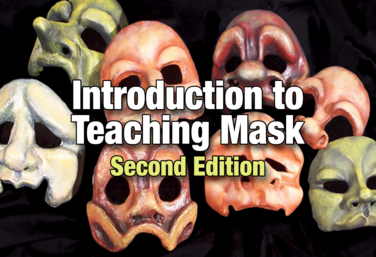
This unit focuses on having students gain an understanding of basic physical acting and learn some specific tools to use in mask work. Instructor Allison Williams has developed this unit, and explains "What I love most about mask work is how, by having students cover their faces, they are able to find freedom to express themselves physically. They often make bigger choices than we’re normally used to seeing them make in class." In this unit, students will work step by step from identifying shapes in the mask to using those shapes to creating a character zero to learning how to move in the mask utilizing the qualities of movement to applying everything they’ve learned in short scenes. The unit will culminate with students working in pairs to create original mask scenes. You will need masks to complete the unit. And while mask-making can be a lot of fun, it’s a lengthy and messy project. A list is provided in the Overview of where you may be able to buy or rent masks for use in your classroom.

Spoken Word Poetry

by Quincy Young

In this unit, students will create a performance of a spoken word poem designed to engage, entertain, and affect an audience. They will also write a poet’s statement in which they describe the purpose(s) or inspiration(s) of their poetry. This is not a technical writing unit and is geared more toward students self-expression and engaging an audience. If your students are not skilled poets, this unit is still accessible.

The Crucible Unit

by Lindsay Price

This is a research, read, discuss, and apply theatrical literature unit. Students will study the play The Crucible by Arthur Miller. The Crucible is Miller’s most produced play. There are hundreds of high school productions each year, and the play is in many high school curricula. As with every Miller work, there is much to discuss and many rich themes to explore. The unit is divided into three sections. Each section is a complete set of lessons. You can choose to do all three sections, or if you have your own way to teach the play, you can pick and choose exercises.

A Midsummer Night's Dream

by Drama Teacher Academy

Shakespeare is sometimes avoided in the drama classroom because not only do the students not want to take on the language difficulties but neither do the teachers. Monologue and scenework becomes more challenging and a lot of times, students falter in their blocking action and character development because they are so challenged. How do we give students the opportunity to rehearse and present Shakespearean text as they would modern text? In this play study unit, students will read a Shakespeare play while learning specific tools and techniques in order to stage text from that play. And more often than not, these techniques are ones that they have already used with other plays. It’s all about reframing Shakespeare so that students enjoy the experience of bringing the characters and stories to life.

View all Standards for National Core Arts Standards    Standards Master List