Facebook Pixel Skip to main content

British Columbia (2018)
GRADE 8 - ARTS - Reasoning and reflecting

48 units • 14 professional development courses aligned to
Describe, interpret and evaluate how artists (dancers, actors, musicians, and visual artists) use processes, materials, movements, technologies, tools, techniques, and environments to create and communicate ideas
View all Standards for British Columbia (2018)

Describe, interpret and evaluate how artists (dancers, actors, musicians, and visual artists) use processes, materials, movements, technologies, tools, techniques, and environments to create and communicate ideas

This page lists 48 units and 14 professional development courses aligned to from the British Columbia (2018). Designed for drama teachers, these resources directly address Describe, interpret and evaluate how artists (dancers, actors, musicians, and visual artists) use processes, materials, movements, technologies, tools, techniques, and environments to create and communicate ideas

Aristotle's Elements

by Lea Marshall

Aristotle was a huge fan of the theatre. He philosophically believed in it and argued with other great thinkers at the time about the necessity and good results of theatrical pursuits. This makes him a great topic for a drama classroom unit. Aristotle identified six elements that needed to be in a play for it to be worthy: plot, thought, character, diction, spectacle, and sound. This unit by Lea Marshall focuses on and offers exercises for each of Aristotle’s elements - from using fairy tales to examine plot, to re-imagining movie trailers to explore music.

Introduction to Film Analysis: Mise en scène

by Lindsay Price

Lindsay Price has developed this Introduction to Film Analysis Unit: Mise en scène. In order to develop visual literacy, students have to be able to analyze what they see. In a film, the composition of everything you see on screen is called mise-en-scène. In this unit, students will explore the individual elements that make up mise-en-scène, be able to identify those elements in stills and film scenes, and apply their knowledge in a culminating analysis activity. Heads up. You’re going to need some technology for this unit. Students need to be able to view, either as a class or 1:1 images, a google slide deck and selected film scenes.

Elements of Costume Design *Hyperdoc

by Anna Porter

In this unit, students will explore and collaboratively take on the role of costume designers. Students will explore the elements of design, director’s concept, and the considerations for costume design. They will then apply this knowledge in a culminating project. This unit has been designed to integrate technology into the curriculum. Students will utilize technology throughout via HyperDocs, internet research, and Google tools such as Google Drive, Google Forms, Google Slides, and Google Docs. A digital Learning Tools Introduction resource is provided for additional help in using the different tools and applications.

Stage Management

by Karen Loftus

A unit on stage management is a great way to link technical theatre, acting, and even directing. We spend so much of our class time on performance-related projects and, when we do address technical theatre, we often do so by talking about design. Why not introduce your students to a skill set that not only benefits your productions by ensuring a strong backstage crew and smooth production process, but also benefits the students individually? Through exploring stage management, students learn skills such as analytical thinking, organization, teamwork, and problem solving.

Costuming

by Holly Beardsley

A costume designer and a costumer are two different things. A costume designer creates pieces from the drawing board to the stage, while a costumer pulls from already existing pieces to create fully realized characters. This means that the approach is different. In this six lesson unit students will learn the tools of a successful costumer. They will start by reflecting on their own personal style and the choices that go into that style. They’ll move on to look at versatility and adapting costume staples, creating a costuming vision, period clothing as the costumer, how to use the colour wheel as a costuming tool and everything culminates in a final project (two options).

Pantomime

by Anna Porter

In this unit, students explore how to communicate with their body by exploring elements of physicality and Pantomime. Lesson one helps students explore body awareness as well as the use of the senses and details in pantomime performance. In lesson two, students explore body language and how it is used to communicate by examining the art of flirting. Lesson three helps students create a distinct physical characterization. Lesson four introduces students to the quality of Pantomime – Consistency. In lesson five, students explore the quality of exaggeration in pantomime. In the final lesson, students prepare a pantomime story for performance. Through this six lesson series, students will use journals, participate in class discussions and practice the elements taught by performing for their peers and as a class. Assessment tools include both informal assessment as well as a final Pantomime performance.

Agatha Rex and Ancient Greek Theatre

by Angel Borths

Help…It’s all Greek to me! Join Angel Borths in this unit that uses a modern adaptation of the Ancient Greek play Antigone to introduce Middle School students to Ancient Greek Theatre. Have your students read Percy Jackson and want to find out more about Ancient Greece? Then, this unit is for you. This unit is designed for middle and high school students and will take you through the basics of classical Greek theatre and pairs it with a modern adaptation of the story of Antigone called Agatha Rex by Lindsay Price. Students will learn vocabulary, design, and basic theory surrounding classical Greek theatre. Students will also enjoy the mask building component of this unit, as they learn to disappear into the character of a mask, like the first actors did on a Greek stage thousands of years ago. The unit culminates in a scene performance with masks.

Musical Theatre

by Anna Porter

Musical Theatre has two components that separate it from straight plays: song and dance. This unit gives students the opportunity to try out both. In musical theatre, music signifies heightened emotion. We can’t express ourselves with just words, we need music (and through extension, song and dance) to take it further. This unit includes three lesson plans: 1. Acting the Song - “Musical Tactics” 2. Acting the Song - “Textual Analysis” 3. Introduction to Dance A solo performance assignment is also included, and the unit includes assessment tools - rubrics, reflections, and self-evaluations.

Pantomime

by Angel Borths

Teacher Angel Borths developed this unit when she was looking for lessons to teach the basics of pantomime in the classroom. This unit culminates in a finished product for performance, either for peers, or for theatre festivals. The rubrics and written work for this unit take planning and preparation for performance into account. The exercises can be pulled out and used independently, but work best when used to build toward a finished product. You can also pull the ground plan and stage directions lesson plans to use with playwriting or directing lessons.

Ancient Greek Theatre

by Lindsay Price

In studying Ancient Greece, we’re looking at the foundations of theatre as we know it today. Without the Ancient Greek Era, we do not get actors, theatres, plays, and the definitions of tragedy and comedy. The issue with studying theatre history, or anything historical is that it can become an exercise in memorizing dates and reciting facts. When the truth of the matter is no one in the 21st century benefits from learning by rote. This is especially true when studying history in the framework of a drama classroom. We need exercises that bring history to life, instead of having students plot dates on a timeline. To that end, this unit does not focus on dates and data. The essential question for the unit is how can we connect the past to the present and this question is explored through the theatricalization of information. Students will access all four 21st century skills, critical thinking, creative thinking, collaboration and communication as they explore this amazing world. Reflections, exit slips, and rubrics are included throughout the unit as well as a mid assignment evaluation for the culminating project.

Devising

by Corinna Rezzelle

While the Drama Two Curriculum has a focus on acting, it’s always important to include a unit on the technical theatre skills that are necessary to any production. Students will also be able to use what they’ve learned in this unit in their upcoming devising project. Students will begin by exploring design for the stage by experimenting with line, shape, texture, size, and color. They will expand their understanding of stage properties and scenic flats. They will then apply their knowledge of these building blocks of design to create a high-concept design for a miniature “stage.”

Character Analysis - Part 1

by Matt Webster

The Drama Two Curriculum has been developed to expand and deepen students’ skills as artists. In this unit, students will explore character analysis, which is key to developing three-dimensional characters in monologues, scenes, and plays. In Part 1, they will start with Uta Hagen’s nine questions for character analysis.

What is Theatre?

by Karen Loftus

Students will explore the question “What is theatre?” and contrast theatre to film. They will also begin their introduction to a couple of theatre roles.

Voice

by Karen Loftus

This unit focuses specifically on the technical aspects of vocal production. By understanding how voice is created, students will be more aware of how to improve their vocal production. Students will explore posture and breathing exercises, as well as how to use the diaphragm, projection, and articulation. The final project will test students’ ability to properly project and articulate a joke across a large space.

Ancient Greek Theatre

by Karen Loftus

This unit on Ancient Greek theatre focuses on the function of the chorus, the choral ode, and the details of the theatre space. It touches on plays and playwrights of the era, culminating in a final project of a modern version of Medea that includes a choral ode.

Improvisation

by Karen Loftus

Students sharpen their listening and reaction skills through improv games, exercises, and scenes. They will learn five specific guidelines to apply to their improvisation: accept the offer, bring information to the scene, make active choices, make your partner look good, and don’t force the humour. There are so many different ways to approach a unit on improvisation. Keep in mind that you will have students who are really excited about this unit and some students who dread it. It’s best to start with low-risk games and exercises and then build up to higher-risk ones. Low-risk games in this situation mean partnered interactions that aren’t shared with the whole class.

Commedia Dell'Arte

by Karen Loftus

Students will discover, analyze, and explore the history, characters, and style of commedia dell’arte. Commedia dell’arte is a theatre history unit mixed with improvisation, physicalization, and exploring specific characters. In this unit, we’re going to focus on three main aspects: 1. Causes and Effects of Commedia (History) 2. Stock Characters 3. Commedia Performance Practices

Script Analysis: The Actor's Perspective

by Karen Loftus

How does an actor analyze a script? Students start with character analysis (how do we learn about a character in a script? what are the facts/inferences about a character?) and then explore the ideas of “objective,” “obstacle,” “stakes,” and “tactics.” The unit culminates with students applying learned script-analysis techniques on an assigned scene.

Elizabethan Theatre

by Karen Loftus

How do you introduce students to Shakespeare? This unit introduces the Bard through life in Elizabethan England and the playwrights, players, and playhouses. It also explores how to approach unfamiliar words and context clues in Shakespeare’s texts.

Japanese Theatre

by Karen Loftus

This unit will enable students to identify, compare, and contrast three different styles of Japanese theatre: Noh, Bunraku, and Kabuki. There are three proposed projects in this unit: a research assignment where groups delve into further detail about one of the three styles; a performance project where students utilize what they’ve learned by enacting a scene from a Kyogen (comedic) play; and a Bunraku puppet play.

Scenic Design

by Karen Loftus

This unit will focus on the basics: what is scenic design? How do the scenic designer and director collaborate? What is the process that the scenic designer goes through? The unit will also explore basic drafting techniques, and rendering techniques. Based on what they learn, students will create a ground plan and a rendering. Please refer to the Pacing Guide for more details and ways to supplement with other DTA materials.

Front of House

by Karen Loftus

This unit looks at theatre jobs in the business category: front of house, marketing, and box office. The aim of these jobs is to interact with the public. Students are able to identify what “front of house” refers to and understand the various roles of a theatre company’s front of house members. Students will also explore how a show is marketed and demonstrate their knowledge of marketing by creating a simple marketing campaign for an original show.

Monologues - Part 2

by Matt Webster

In Part 2 of the Monologue Unit (Monologue Project: Analysis, Writing, and Performance), students analyze an existing monologue to determine the criteria for a “good” monologue. They will then apply what they learned in Part 1 (Monologue Writing Made Easy), adding in the criteria for a “good” monologue, to write and perform an original monologue.

Design

by Matt Webster

In this unit, students will explore and experiment with the basic building blocks of design: Line, Shape, and Color. Once students have a solid foundation of those concepts, they will move on to stage properties and scenic flats as additional building blocks of design. They will then apply their knowledge and skills to a series of assignments, so they can demonstrate their design knowledge and creativity.

Introduction to Theatre Production

by Karen Loftus

Students will explore the question of “what is theatre production?” They’ll be able to identify and describe each of the crafts of technical theatre as well as who does what in theatre production.

Elements of Design

by Karen Loftus

Students are exposed to select elements of design, and they explore the effect those elements of design have on storytelling.

Scenic Design

by Karen Loftus

Students will explore the creation of an environment through the art of scenic design. They will identify what scenic design is and how it helps to tell a story in theatre. Students will also identify and demonstrate some skills of a scenic designer as they analyze an excerpt of a script for scenic clues and demonstrate basic drafting and rendering.

Scenic Construction

by Karen Loftus

Students will be able to identify the various tools used in a set shop, identify appropropriate shop safety procedures, including personal protective equipment, and demonstrate how to build a flat.

Scenic Painting

by Holly Beardsley and Karen Loftus

Students identify and practice some basic painting techniques.

Props

by Karen Loftus and Kerry Hishon

Students will identify categories of props and which people create or obtain props. They’ll analyze a script for needed props, use critical-thinking skills to problem solve prop issues, and create a prop.

Lighting

by Karen Loftus, Josh Hatt, and Kerry Hishon

Students will be able to demonstrate their knowledge of lighting effectiveness. They’ll also be able to identify, analyze, and evaluate how lighting is used in a theatre production.

Costume Construction

by Karen Loftus

Students identify vocabulary, techniques, and roles of costume construction. They demonstrate costume measurement and other construction techniques, including a basic stitch.

Sound

by Karen Loftus and Josh Hatt

Students will be able to demonstrate their knowledge of sound effectiveness. How do we use sound to create a technically effective performance?

Costume Design

by Holly Beardsley, Karen Loftus, and Josh Hatt

Students are exposed to research, concepts, and skill sets while they explore costume design and the different roles of the costume designer and the costumer. They will be able to demonstrate their knowledge of costume effectiveness.

Make-Up Design

by Karen Loftus and Josh Hatt

Students will be able to explore the use of make-up as a theatrical tool and demonstrate their knowledge of make-up effectiveness.

Culminating Project

by Karen Loftus

Now it’s time for your students to take everything they’ve learned and creatively apply those skills. The goal is for students to take what they’ve been exposed to, explored, and researched about each of the arts and crafts of technical theatre and apply it to a project.

Part One - Pre-Production

by Karen Loftus

In Part One of The Production Classroom, you’ll take your students through a series of pre-production units designed to help students gain as much comprehension as possible about putting on a successful production.

Part Two - Rehearsal and Performance

by Karen Loftus

Part Two offers articles on each step in the process, samples and forms, a suggested pacing, role definitions and task checklists, an outline for a typical class, as well as performance duties. This section also outlines the assessment piece for The Production Classroom – the production binder.

Part Two - Documents

by Karen Loftus

This section provides samples and worksheets for actor forms, costume department, general binder, lighting and sound, marketing samples, scenic and prop samples, and stage management and production manager samples and forms.

What is a Stage Manager? (Extra Lesson)

by Karen Loftus

We have included a stage management “extra” lesson in this curriculum as an introduction to the stage manager role. Stage management is certainly an important role when it comes to the technical elements of a theatre production. If you want to include a more realized stage management unit, we have you covered. DTA has an extensive Stage Management Unit in the curriculum section of the DTA website (see link below).

What is Theatre?

by Lindsay Price and Karen Loftus

Students will establish a definition of theatre, know the difference between theatre and film, and start to explore who’s who in the theatre.

Voice

by Lindsay Price and Karen Loftus

This unit focuses specifically on the technical aspects of vocal production. By understanding how voice is created, students will be more aware of how to improve their vocal production. Students will explore posture and breathing exercises, as well as how to use the diaphragm, projection, and articulation. The final project will test students’ abilities to properly project and articulate a joke at a distance from a microphone

Improvisation

by Lindsay Price and Karen Loftus

Students sharpen their listening and reaction skills through improv games, exercises, and scenes. They will learn five specific guidelines to apply to their improvisation: accept the offer, bring information to the scene, make active choices, make your partner look good, and don’t force the humor.

Part Three - Reflection and Assessment

by Karen Loftus

Part Three provides a Post-Performance Reflection. Unpack the experience with students, reflect back on what went right and what could be changed for next time. A written Reflection is included as well as a Rubric for student production binders.

Impowerment Improv

by Jennine Profeta

Taking risks, learning to see failure as a gift, finding courage when we don't feel it, and having the awareness that what we say has an impact are social and emotional skills students will take beyond the classroom. These are skills that can be built through improv exercises. The exercises in this unit are designed to create a safe environment in which students can go beyond their old patterns to take risks, embrace failure, and be more confident and aware of the effects of their word choices. Improv gives you the opportunity to draw attention to these important concepts and to talk about them.

Tech Theatre Unit: Costuming When You Don't Sew

by Drama Teacher Academy

In this unit, students will take on the role of the costumer, which is different from a costume designer. It introduces costuming concepts in order to execute a costume. No complicated sewing is required, which is great if you don’t have the background, the access, or the resources to have a class of students create costumes. Instead of making costumes from scratch, as a designer would, students will create costumes from stock, borrowed items, or low-cost finds. They will take finished products and adapt them into what they need to create the right atmosphere. In order to help with their adaptations, students will try different distressing techniques and learn three SIMPLE stitches that they’ll be able to use over and over again. It’s a valuable tech theatre skill to teach students how to execute on costumes when you (and they) don’t sew!

Scene Staging

by Lindsay Price

The goal for this unit is to give students a process to work primarily on their own to create a staged scene with specific, dynamic blocking and three-dimensional characters. This unit would work well as a culminating project for a semester. In this unit, students will work independently to analyze, block, build character, experiment, and rehearse a scene. Their performance can count as a summative assessment for the class. Material: This unit requires that students have access to scenes from plays. Ideally, students should work in pairs and prepare duet scenes.

Introduction to Mask

by Allison Williams

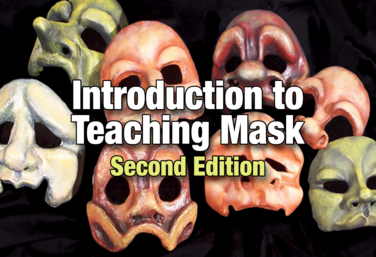
This unit focuses on having students gain an understanding of basic physical acting and learn some specific tools to use in mask work. Instructor Allison Williams has developed this unit, and explains "What I love most about mask work is how, by having students cover their faces, they are able to find freedom to express themselves physically. They often make bigger choices than we’re normally used to seeing them make in class." In this unit, students will work step by step from identifying shapes in the mask to using those shapes to creating a character zero to learning how to move in the mask utilizing the qualities of movement to applying everything they’ve learned in short scenes. The unit will culminate with students working in pairs to create original mask scenes. You will need masks to complete the unit. And while mask-making can be a lot of fun, it’s a lengthy and messy project. A list is provided in the Overview of where you may be able to buy or rent masks for use in your classroom.

View all Standards for British Columbia (2018)    Standards Master List